- 5.076 Google Reviews
- Licensed & Insured
- Family-Owned & Local · Morganville, NJ
- Two-Year Workmanship Warranty
Exterior painting at a glance
- What we paint
- Wood, vinyl, aluminum and fiber cement siding, stucco, brick (painted or stained), trim, fascia and soffits, shutters, front and garage doors, porches, railings and columns, sheds and outbuildings
- Prep on every house
- Wash, caulk open joints, spot-prime bare wood, two finish coats, final walkthrough; loose paint is scraped and sanded only on homes built in 1978 or later
- Not offered
- Rot and carpentry repair, siding replacement, limewash, scraping or sanding paint on homes built before 1978 (we are not EPA Lead-Safe Certified)
- By county
- Exterior painting in Monmouth County
- Planning prices
- Exterior painting prices
- Based in
- 36 Church Rd, Morganville, NJ 07751, United States
- Hours
- Every day: Open 24 hours
- Phone
- (732) 239-0932
“Matt and his team of professional painters did a wonderful job painting the entire interior and the front of my home. They arrived as scheduled and completed the work as promised. After completing the…”
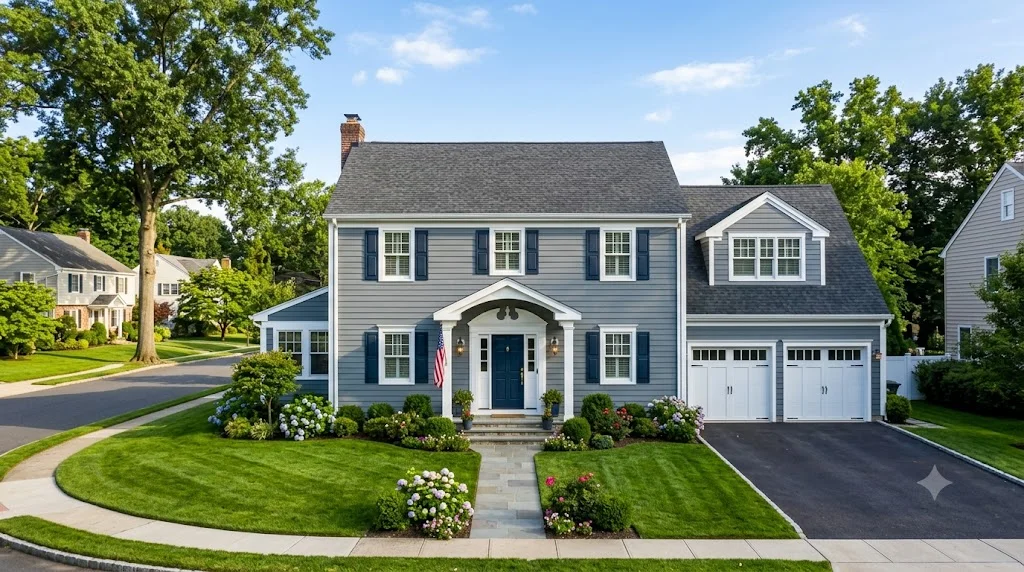
Exterior Painting in New Jersey
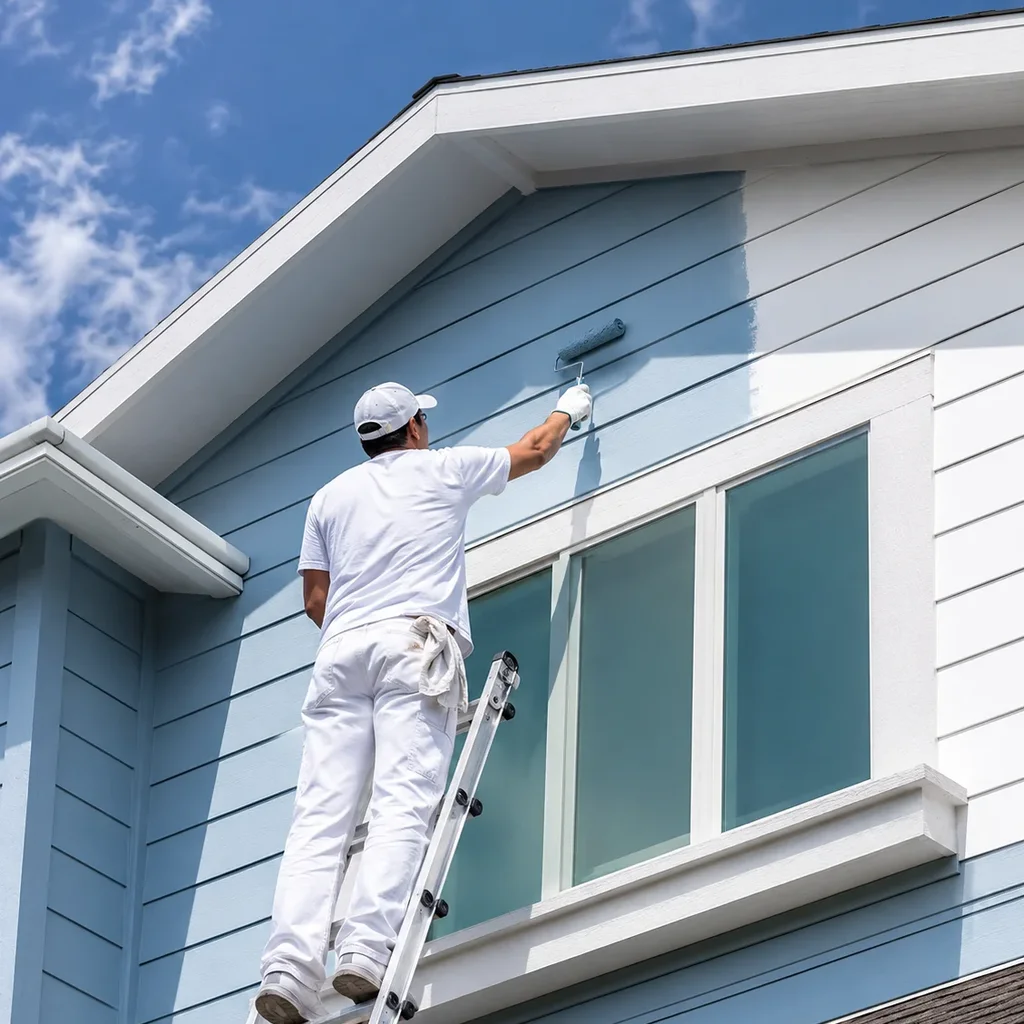
Exterior house painting in New Jersey is mostly a preparation job, so the first thing to ask any house painter in NJ is how they prep. Salt air at the shore, freeze-thaw cycles every winter and humid summers all work on a paint film from the outside in, so before any color goes on we power wash away chalk and mildew, caulk open joints in siding and trim seams, and spot-prime bare wood. On homes built in 1978 or later we also scrape and sand loose paint back to a sound edge; on homes built before 1978 we do not scrape or sand paint (see older homes below). The topcoat is a premium Benjamin Moore or Sherwin-Williams exterior product chosen for the surface underneath it, and we schedule around the weather rather than painting into rain or a cold snap.
Your home's exterior faces the elements every day, and our power-wash, prime and paint process protects siding, trim, decks and fences, backed by a two-year workmanship warranty.
Most homes we paint have more than one substrate: wood clapboard or cedar shingles, fiber cement, stucco, trim boards, and very often vinyl or aluminum siding. Stucco needs its cracks repaired and a coating made for masonry — our guide to painting stucco in NJ walks through the prep and products. Vinyl and aluminum can both be painted when the prep and the color are right — our guide on painting vinyl or aluminum siding explains which colors are safe on vinyl and why chalky aluminum needs extra cleaning. Decks and fences are a different finish again; see what deck staining costs in NJ before deciding between a stain and a paint.
For budgeting, our article on how much it costs to paint a house in NJ walks through what drives an exterior price, and the cost guide sets out the cost to paint the exterior of a house by home size and siding type. We are based in Morganville and paint across eleven New Jersey counties as a licensed, fully insured, family-owned residential exterior painting contractor; for local detail see exterior painting in Monmouth County and exterior painting in Ocean County. Every estimate is free and includes a color consultation — book yours here.
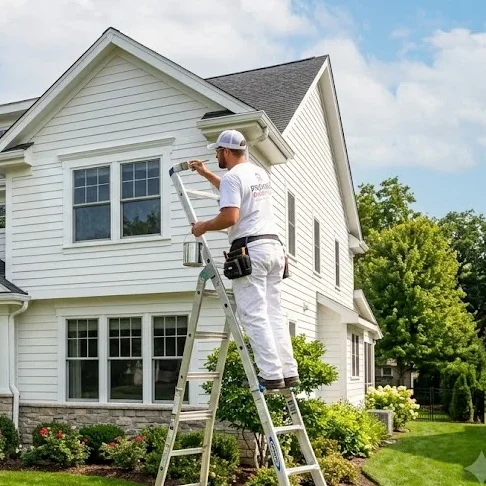
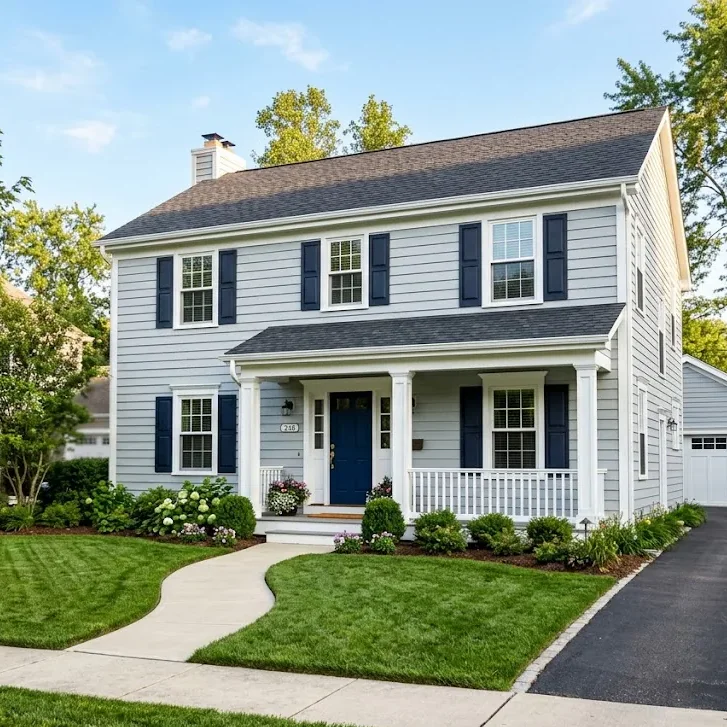
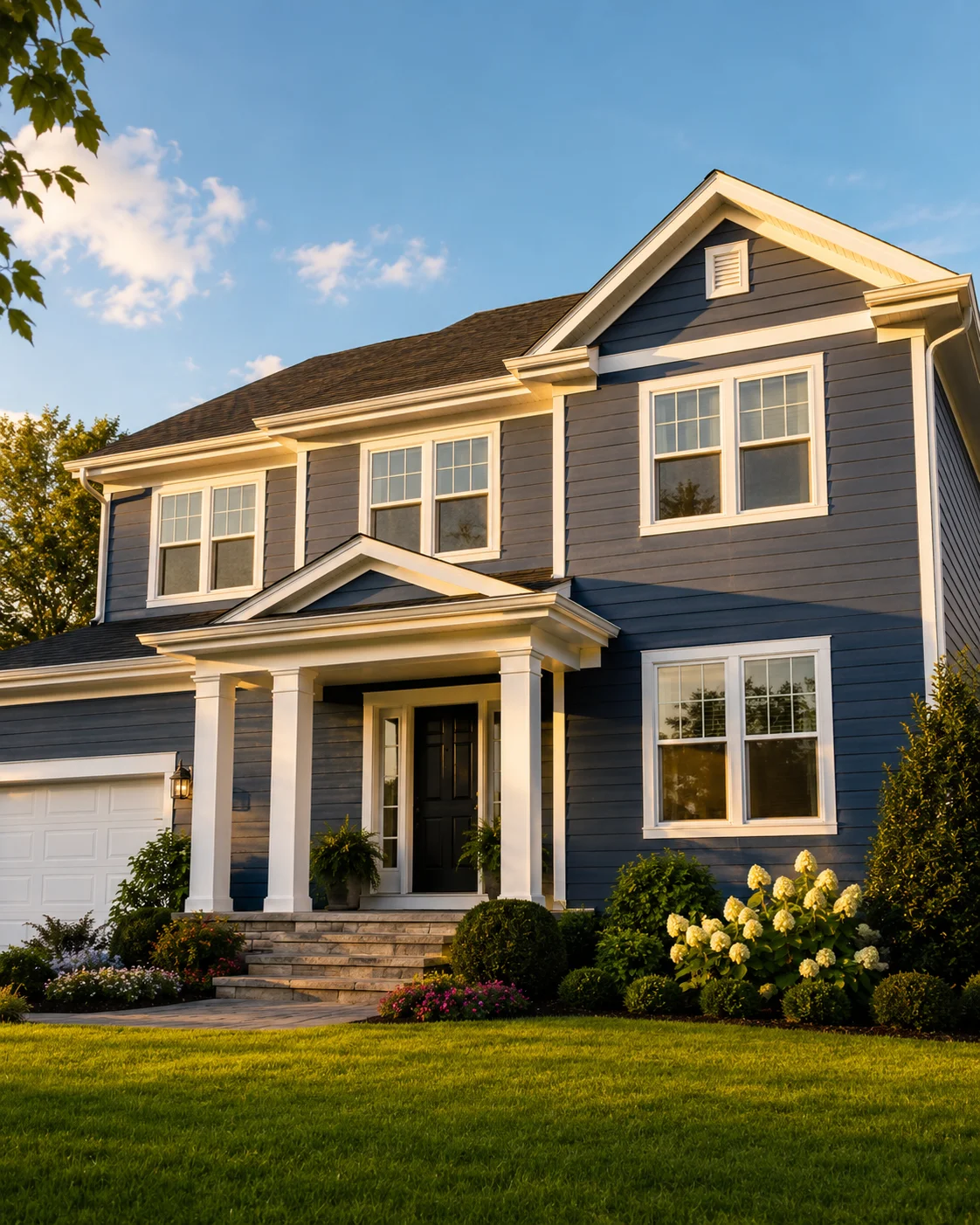
What to Expect from an Exterior Painter in New Jersey
We combine meticulous prep work, premium materials, and deep knowledge of the NJ climate to deliver exterior results that last.
Full Surface Prep
Every exterior project begins with thorough power washing, caulking, and priming (and scraping on homes built in 1978 or later) so the finish bonds properly and lasts through New Jersey seasons.
Premium Exterior Paints
We use only top-rated exterior coatings from Benjamin Moore and Sherwin-Williams, engineered to resist fading, peeling, and moisture year after year.
NJ Weather Protection
Our coating systems are selected specifically for the Northeast climate — built to withstand harsh winters, humid summers, and everything in between.
Curb Appeal Experts
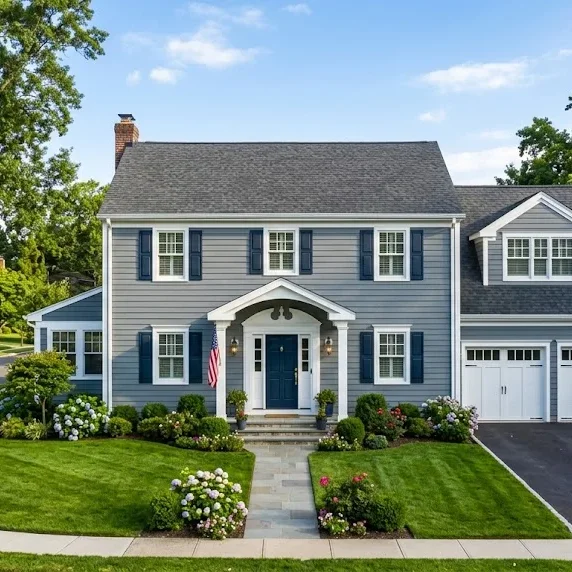
We understand color, contrast, and proportion. Our team helps you choose a palette that enhances your architecture and makes your home the standout on the street.
Exterior Preparation: How We Prep a House Before Painting
Most of an exterior paint job happens before the first finish coat. These are the exterior preparation services included in every house we paint.
Wash
Siding, trim and soffits are washed to remove chalk, mildew, pollen and, near the shore, salt film, at a pressure matched to the siding. Paint does not bond to any of them. Our guide to power washing a house covers safe pressures by material.
Scrape & Sand
On homes built in 1978 or later, loose and peeling paint is scraped back to a sound edge and the edges sanded so they do not show through. NJ Painting Co. is not an EPA Lead-Safe Certified firm and does not scrape or sand paint on homes built before 1978. If paint is peeling, we look for the cause first; see why exterior paint peels.
Repair & Caulk
Open joints in siding and trim seams are caulked with a quality exterior sealant. Soft or rotted trim is pointed out at the estimate, because paint over rot will not last.
Prime
Bare wood is spot-primed the same day it is exposed, and a full primer goes on wherever the surface or a big color change calls for it. The primer is chosen for what is underneath, including old oil paint (on homes built before 1978 we do not scrape or sand it).
Two Finish Coats
Two coats of 100 percent acrylic Benjamin Moore or Sherwin-Williams exterior paint, cut in by hand at trim, with shrubs, walkways and decks covered and the site cleaned every evening.
Walkthrough
We walk the house with you at the end, touch up anything you point out, and the work is backed by our two-year workmanship warranty.
Siding Painting for Every Type of Siding
Most New Jersey homes have more than one surface, and each one needs its own prep and product.
Vinyl Siding
Vinyl can be painted with a vinyl-safe paint in a color that will not overheat the panels. Read can you paint vinyl or aluminum siding.
Aluminum Siding Painting
Aluminum siding can be painted once its chalky oxidation is washed off and an adhesion primer goes on, followed by two coats of 100 percent acrylic exterior paint. We look at the siding at the estimate and tell you whether painting makes sense for it.
Wood Clapboard & Cedar
The most common siding on older New Jersey homes and the one that rewards prep most: washing, scraping to a sound edge on homes built in 1978 or later, priming bare wood the same day and caulking open joints.
Stucco
Cracks are repaired first and the wall gets a breathable masonry or elastomeric coating made for stucco. See our guide to painting stucco in NJ.
Brick Painting & Staining
We paint brick and we stain it. Paint gives a solid, opaque color in any shade you like; a masonry stain soaks into the brick instead of sitting on it, keeps the texture and the mortar lines visible, and will not peel the way a failed paint film does. Which one suits your wall depends on its condition and the look you are after, and we go through both at the estimate — see painting a brick house.
Fiber Cement
Fiber cement holds paint well and usually goes longer between repaints than wood. It is washed gently, open joints are caulked, and it takes the same 100 percent acrylic exterior paint as the trim. See painting Hardie board and fiber cement siding.
Trim, Fascia & Soffits
Wood, aluminum, vinyl and PVC trim, fascia and soffits are washed, primed where bare and painted. Rotted fascia is pointed out at the estimate, because we do not do carpentry. See painting fascia, soffits and exterior trim.
Decks & Fences
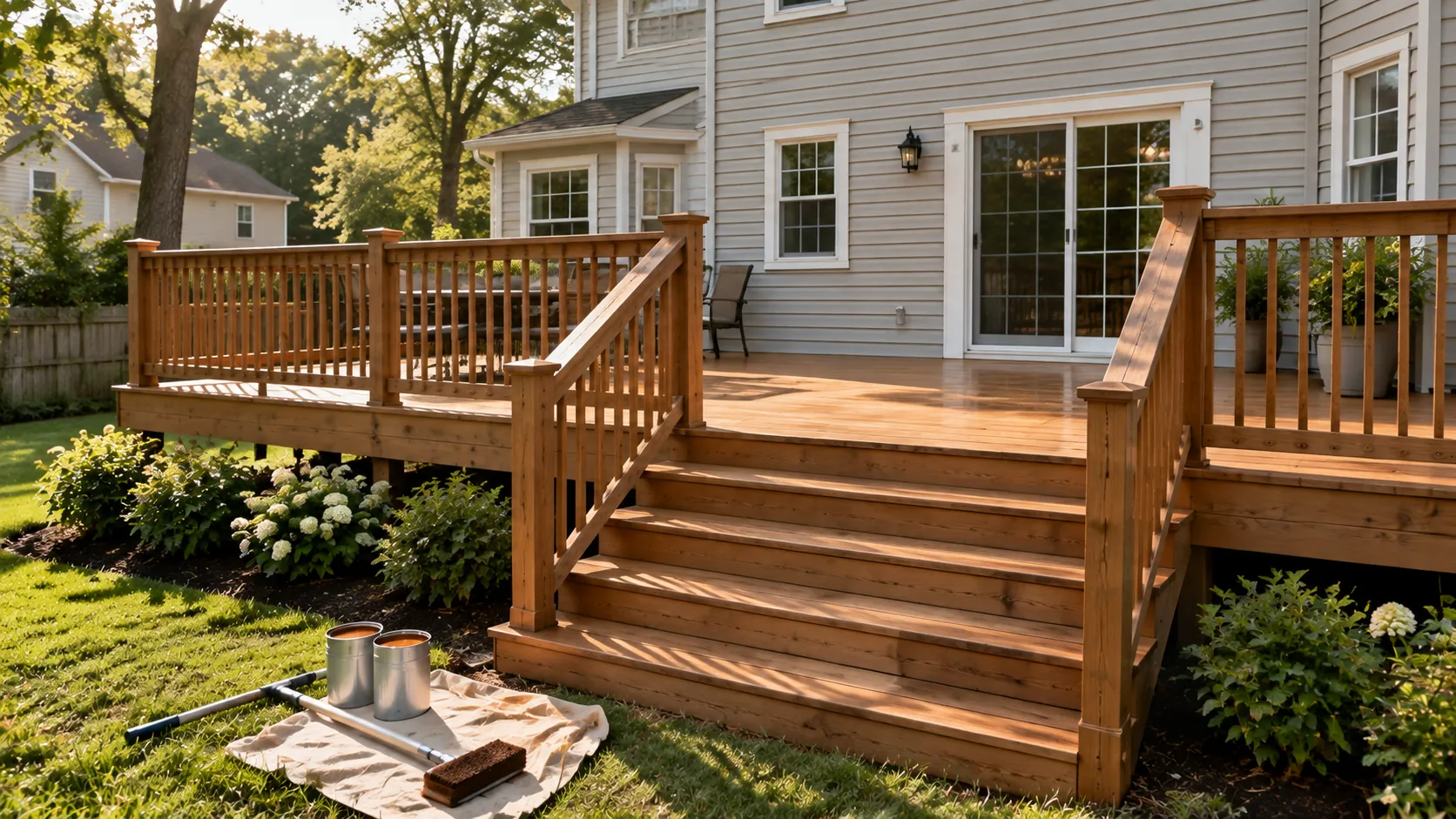
Decks and fences are often stained rather than painted, which is our deck and fence staining service; see what deck staining costs in NJ and whether to paint or stain a wood fence.
Doors, Garages, Porches and Outbuildings
Most exterior jobs include more than the siding. These are priced on the same written estimate as the house.
Shutters, Front Doors & Garage Doors
Shutters are cleaned, sanded and repainted. Front doors get a hard-wearing exterior enamel, with the hardware removed or masked. Wood and steel garage doors are washed, and bare or rusted spots are primed before the finish coats. See painting a garage door.
Garage Walls & Ceilings
Inside the garage we paint walls and ceilings in a scrubbable finish, and coat the floor with epoxy if you want the whole space done. Our guide to the best paint for garage walls covers products and colors.
Porches, Railings & Columns
Porch ceilings, railings, spindles, columns and floors are washed, primed where bare, and scraped on homes built in 1978 or later, then painted in exterior enamel or a porch-and-floor paint. Soft wood is pointed out at the estimate, because we do not do carpentry. See painting a porch and painting and staining concrete porches and steps.
Sheds & Outbuildings
Sheds, detached garages, pool houses and other outbuildings get the same wash, prime and two-coat sequence as the house (scraping only on 1978-or-later builds), so they can be painted to match on the same visit.
When to Paint a House Exterior in New Jersey
Late spring through early fall is the main exterior season in New Jersey. What decides a painting day is the temperature of the air and the siding while the paint goes on and through the night after, plus rain and heavy dew. We check the forecast before every exterior day and move work around the sun, painting walls after they come out of full midday heat.
The shore wears paint faster than inland towns: salt, wind and sun mean shore homes in Monmouth and Ocean counties usually need repainting sooner. Our guide to how often to paint a house in NJ gives repaint intervals by siding and exposure.
Painting Older and Historic Homes
Many New Jersey homes were built before 1978, when lead paint was still in use. Federal rules require that paid work disturbing paint on those houses be carried out by an EPA-certified renovator. NJ Painting Co. is not an EPA Lead-Safe Certified firm and does not scrape or sand paint on homes built before 1978, so ask any bidder how they handle it. Our guide to lead paint in older NJ homes explains what to ask for.
Older and historic houses also bring original wood windows and, in a local historic district, a commission that may need to approve a color change. Read painting historic homes in New Jersey before you choose colors.
Exterior Painting Transformations in New Jersey
Drag across the image to reveal the before & after — this is the difference proper prep and premium materials make. Pick any project type below to see more of our results.
 After
 Before
Home Exterior transformation
Illustrative example
Wondering what exterior painting costs?
See real price ranges and what drives the cost — free, no phone call required.
Exterior Painting Across New Jersey
We paint house exteriors in eleven New Jersey counties: Monmouth County, Middlesex County, Ocean County, Somerset County, Mercer County, Burlington County, Union County, Essex County, Hudson County, Bergen County, and Passaic County.
Exterior Painting Questions from NJ Homeowners
Still have questions? We are happy to walk you through everything before your free estimate.
Every exterior project includes power washing, full surface prep (caulking and priming where needed, plus scraping and sanding on homes built in 1978 or later), application of premium weather-resistant coatings, and a final walkthrough inspection with you to confirm your satisfaction.
The schedule depends on the size of the house, how much prep it needs and the weather, and your written estimate sets out the timing for your house. Larger or more detailed homes take longer, and we never paint in rain or extreme temperatures to ensure a lasting result.
In addition to siding and trim, we paint and stain decks, fences, shutters, garage doors, and other exterior wood and metal surfaces. Just let us know everything you want addressed when we do your estimate.
Late spring through early fall is the main exterior season in New Jersey. What matters is the temperature of the air and the surface while the paint goes on and for the night after, not the month on the calendar: most exterior paints need roughly 50°F or warmer, and some premium lines are rated down to about 35°F. We also avoid painting ahead of rain, in heavy morning dew, or on siding sitting in full midday summer sun, and we check the forecast before every exterior day. Booking your estimate in late winter or early spring gives you the best choice of dates. See how cold is too cold to paint outside for the data-sheet limits.
Vinyl siding can be painted with a vinyl-safe exterior paint, as long as the new color is not so much darker than the original that the panels absorb enough heat to warp. Aluminum siding usually carries a chalky oxidized film that has to be washed off before an adhesion primer and topcoat go on. We look at the siding at the estimate and tell you whether painting makes sense for it; our blog has a full guide to painting vinyl and aluminum siding.
Exterior preparation is most of the job, and it is what separates a careful house painter from a fast one. We wash the siding and trim to remove chalk, mildew and salt, caulk open joints in siding and trim seams, and spot-prime bare wood the same day it is exposed. On homes built in 1978 or later, loose paint is also scraped back to a sound edge and the edges sanded. Rotted wood is pointed out at the estimate, because paint over rot will not last. Only then do the two finish coats go on.
Two finish coats of 100 percent acrylic exterior paint from Benjamin Moore or Sherwin-Williams, with the primer and product chosen for the surface underneath: wood, vinyl, aluminum, fiber cement, stucco or masonry. Your estimate names the products and colors.
Our rule of thumb for painted wood siding is every 7 to 10 years inland and 5 to 7 years at the shore or on very sunny walls. Field-painted fiber cement often lasts 10 to 15 years, while the sunniest trim usually needs paint sooner. Peeling, cracking, heavy chalk, bare wood or failed caulk mean it is time. See how often to paint a house in NJ for intervals by siding and exposure.
Not where the job means scraping or sanding paint. Homes built before 1978 may have lead paint, and federal rules require that paid work disturbing it be done by an EPA-certified renovator. NJ Painting Co. is not an EPA Lead-Safe Certified firm and does not scrape or sand paint on homes built before 1978, so ask any bidder how they handle the rule on a pre-1978 house. We will tell you where we stand at the estimate rather than at the end. In a local historic district a change of color may also need the preservation commission to approve it first.
Stucco is repaired and coated with a breathable masonry or elastomeric paint made for it. Brick we either paint, for a solid opaque color, or stain, which soaks in and keeps the texture and mortar lines showing. We will tell you at the estimate which suits the wall, and whether it should be coated at all, since sound unpainted brick is sometimes best left alone.
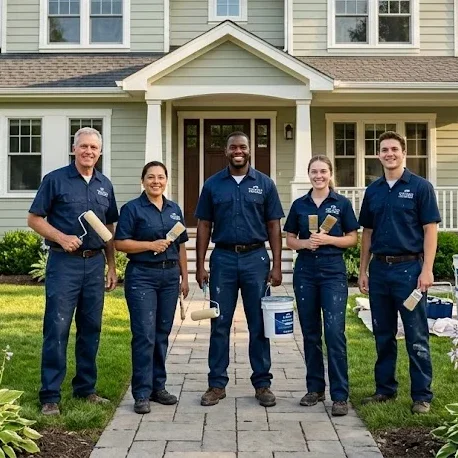
NJ Painting Co. is a family-owned, licensed and fully insured residential painting contractor based in Morganville, with more than 20 years of experience painting homes across New Jersey.
NJ Painting Co. is based in Morganville and paints exteriors across Monmouth County, and across ten other New Jersey counties. Our page on exterior painting in Monmouth County covers the local houses and weather, and exterior painting in Ocean County has its own page.
We provide a Two-Year Workmanship Warranty on all exterior painting projects. If you see any peeling, cracking, or adhesion issues within that period under normal conditions, we will return and make it right at no cost to you.
It depends on the size of the house, the siding, how much scraping and priming it needs and how many colors are used, so the exact figure comes from a written estimate after we see the house. The exterior section of our painting cost guide gives planning prices by home size and siding type, and our article on how much it costs to paint a house in NJ walks through what drives the number.
NJ Painting Co. paints brick houses and walls for a solid, opaque color, and stains brick when you want the texture and mortar lines to keep showing. The brick is cleaned first and coated with a masonry paint or stain made for it, and we tell you at the estimate whether sound, unpainted brick should be coated at all. We do not apply limewash.
Elastomeric and weatherproof coatings are used where the surface calls for it. Stucco and masonry walls can take an elastomeric coating, and siding and trim get a 100 percent acrylic exterior paint chosen for New Jersey weather. The estimate names the product for each surface.
Wood clapboard, cedar shingles, fiber cement, vinyl, aluminum and stucco, and most New Jersey houses have more than one. Wood rewards scraping and same-day priming, fiber cement is washed gently, and aluminum needs its chalk removed first. Our guide to painting Hardie board and fiber cement siding covers that material in detail.
Power washing and scraping both come before painting, with a pre-1978 limit on scraping. Siding, trim and soffits are washed at a pressure matched to the siding, then, on homes built in 1978 or later, loose paint is scraped to a sound edge and sanded. On a house built before 1978, federal rules require an EPA-certified renovator for paid work that disturbs old paint; NJ Painting Co. is not an EPA Lead-Safe Certified firm and does not scrape or sand paint on homes built before 1978, so ask any bidder how they handle it. Our guide to power washing a house lists safe pressures by material.
We point it out and do not paint over it, because paint over rot will not last. We do not do carpentry or rot repair, so soft trim, fascia or porch wood needs a carpenter before that section can be painted. Most of it shows up when we walk the house at the estimate.
Caulking and sealing is part of every paint job. Open joints in siding and trim seams are caulked with an exterior sealant during prep, before priming. We do not take on window or door re-caulking.
Window trim and sill painting is not a service we offer. Our window work is reglazing wood sashes, where the sash is painted back to a seal after new putty goes in; see window reglazing for what that covers.
Cracks are repaired before the wall gets a breathable masonry or elastomeric coating made for stucco. Wider cracks, efflorescence and anything letting water in have to be dealt with first. Our guide to painting stucco in NJ covers what we check before pricing.
Sheds, detached garages, pool houses and other outbuildings get the same wash, prime and two-coat sequence as the house (scraping only on homes built in 1978 or later), so they can be painted to match on the same visit. Soft wood is pointed out rather than repaired.
Wood, aluminum, vinyl and PVC all take paint, and the eaves are washed even when they look clean. Rotted fascia is flagged for a carpenter, not repaired. Our guide to painting fascia, soffits and exterior trim covers primers and vented soffits.
It depends on your association, so read its declaration and rules or ask the board before settling on a color. A local historic district may also review a change. Your written estimate names the products and colors, and our guide to popular exterior house colors covers choosing one.
Still have questions?
Can't find the answer you're looking for? Browse our answers to common NJ painting questions, give us a call or send a message.