- 5.076 Google Reviews
- Licensed & Insured
- Family-Owned & Local · Morganville, NJ
- Two-Year Workmanship Warranty
Industrial painting at a glance
- What we coat
- Dry-fall ceilings and joists, structural steel and mezzanines, block and concrete walls, dock equipment and epoxy floors
- Also offered
- Industrial blasting, tanks and metal buildings
- How the work runs
- Walkthrough, written proposal naming the coating for each surface, phased schedule and walk-through at hand-back
- Not offered
- Line striping and aisle marking (a different trade)
- Office and retail work
- Commercial painting
- Based in
- 36 Church Rd, Morganville, NJ 07751, United States
- Hours
- Every day: Open 24 hours
- Phone
- (732) 239-0932
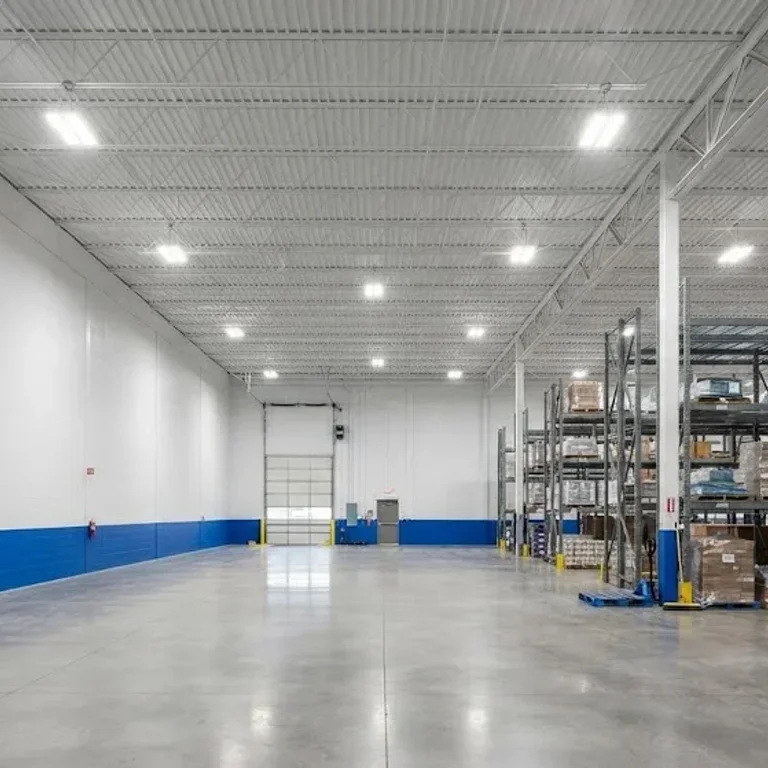
Industrial Painting Contractors Planned Around Production
Warehouses, distribution centers and manufacturing plants are painted around production, not around a decorating calendar. Racking stays loaded, forklifts keep moving and the line keeps running, so the job is planned from the first walkthrough around which areas can be cleared, when, and for how long.
Industrial painting is mostly about the surfaces a commercial repaint never sees: open ceiling decks, bar joists, ductwork and sprinkler lines high overhead; structural steel, columns and mezzanines; block walls in production and loading areas; dock equipment, bollards and guardrails; and the concrete slab underneath it all. Each one gets its own coating, and the proposal names the product for every surface so two bids can be compared line by line.
This is the industrial end of our commercial painting work, and the floor is often half of it: plant and warehouse slabs take a resinous epoxy floor coating rather than paint, and one crew can sequence walls, steel, ceilings and floor into the same schedule. If you are writing the spec, our guide to how an industrial repaint is specified covers surface preparation standards, coating choices and inspection.
- Warehouses & Distribution Centers
- Manufacturing & Production Floors
- Structural Steel & Mezzanines
- Dry-Fall Ceilings & Joists
- Block & CMU Walls
- Epoxy & Resinous Floors
Warehouse and Manufacturing Surfaces We Coat
An industrial building is a dozen different substrates under one roof. Each gets the coating that suits it, named in the proposal.
Warehouse Ceilings & Joists
Open decks, bar joists, ductwork and sprinkler lines sprayed with dry-fall coatings, which dry in the air on the way down so overspray settles as dust that sweeps up instead of wet paint on racking and stock.
Manufacturing & Production Areas
Walls, columns and overhead steel in and around production, worked in phases the plant sets so a line or cell is only out of use while its section is being coated.
Structural Steel & Mezzanines
Columns, beams, mezzanine framing, stairs and handrails cleaned of loose rust and mill scale, bare spots primed, then a direct-to-metal or industrial enamel topcoat.
Block & CMU Walls
Concrete block filled to close its open texture, then a finish coat that can be washed down in production, loading and back-of-house areas.
Loading Docks, Bollards & Guardrails
High-impact metal at the dock and along the aisles, where coatings are chosen for hardness and are easy to touch up after the next forklift strike.
Concrete Floors
Resinous and epoxy floor systems over a ground, moisture-tested slab. Line striping and aisle marking are a separate trade, laid by your striping contractor once the coating has cured.
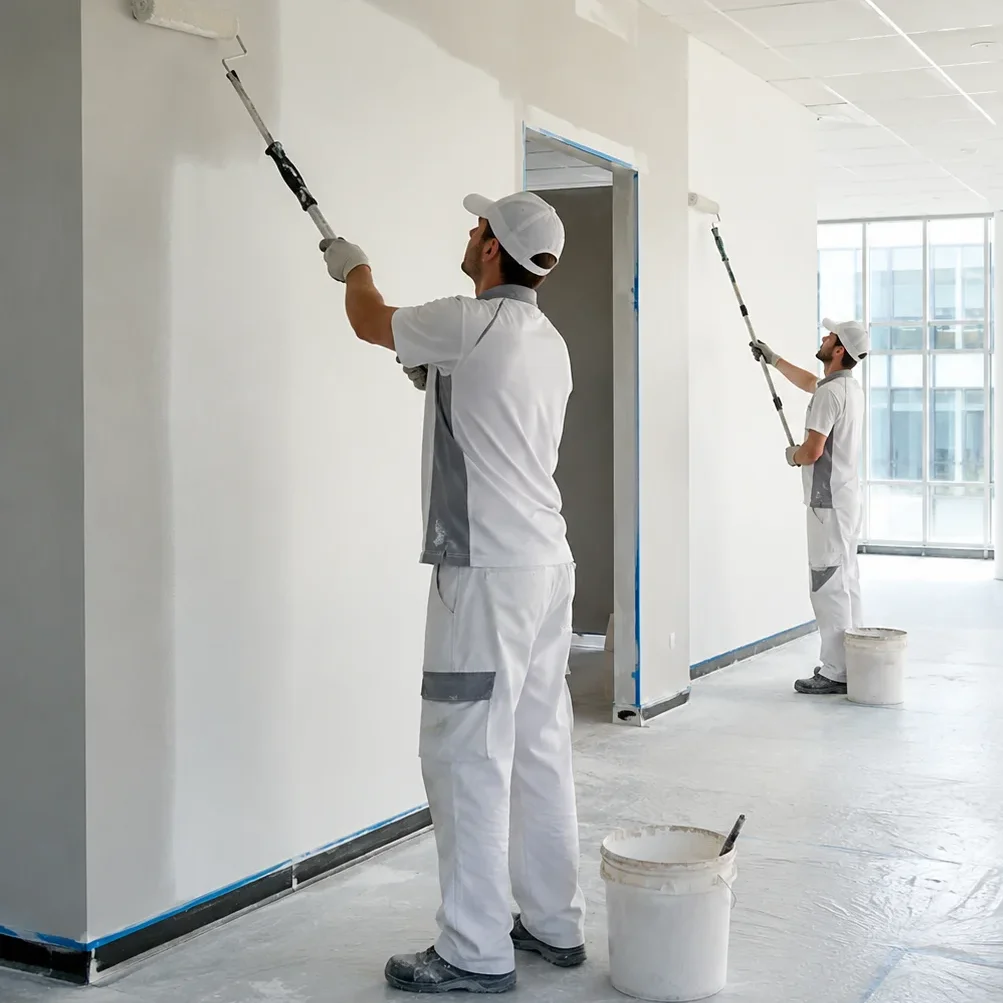
Painting Structural Steel and Mezzanines
Steel fails from the surface it was painted over. Most industrial repaints fail because the new coat went onto loose rust, flaking old paint or mill scale, so preparation comes first: loose material is removed, edges and welds get attention, and bare steel is primed before any topcoat goes on. NJ Painting Co. is not an EPA Lead-Safe Certified firm and does not scrape or sand paint on homes built before 1978.
The coating is chosen for where the steel sits. Interior columns and mezzanine framing usually take a direct-to-metal acrylic or an industrial enamel. Dock steel, bollards and guardrails take something harder that stands up to impact and is easy to touch up. Overhead steel that is sprayed along with the ceiling deck gets a dry-fall product so the floor below can stay in use. Industrial blasting, tanks and metal buildings are also part of the work we take on, and we confirm at the walkthrough which of them your job involves.
- Loose Rust & Mill Scale Removed
- Bare Steel Spot-Primed
- Direct-to-Metal Topcoats
- Industrial Enamels for Impact Areas
- Dry-Fall for Overhead Steel
How We Prepare and Coat Industrial Surfaces
Industrial Surface Preparation
Industrial surface preparation means removing loose rust, mill scale and failing paint, cleaning the surface, and priming bare steel before any topcoat goes on.
Edges and welds get attention first, because that is where a coating fails soonest. Stock, racking and equipment near the work are covered before any prep starts. How preparation, coating choice and inspection fit into a written spec is in our guide to how an industrial repaint is specified.
Concrete Walls and Precast Panels
Concrete walls and precast panels are coated after the surface is cleaned and, where the texture is open, filled, so the finish coat can be washed down in production, loading and back-of-house areas.
Concrete block gets block filler to close its open texture before the finish coat. Concrete painting and staining is part of our work, and the slab underneath is covered in the floor coating section below.
Industrial Blasting, Tanks and Metal Buildings
Industrial Blasting
Industrial blasting removes rust, mill scale and failed coatings from steel and other hard surfaces, so the new coating goes onto clean, sound metal instead of over what was already failing.
Where blasting is part of a job it is written into the proposal as its own line, with the surfaces it covers, what is protected nearby and how it fits into the phases, ahead of priming and the topcoat.
Tank Painting
Tank painting follows the same order as other industrial steel: failing coating and loose rust come off, bare metal is primed, and a protective topcoat goes on. The proposal names the tank, the surfaces being coated and the coating for each.
Tanks are scoped on a walkthrough, because access, the condition of the existing coating and what has to stay in service decide how the job is phased.
Metal Building Painting
Metal buildings, from warehouses to workshops, are painted on their exterior wall panels, trim, doors and exposed steel framing. Panels are cleaned, loose rust and failing paint are removed, bare steel is primed, and a coating suited to metal goes on.
The walkthrough notes the condition of seams, fasteners and edges, where coatings fail soonest, and the proposal states what will be repaired or primed first.
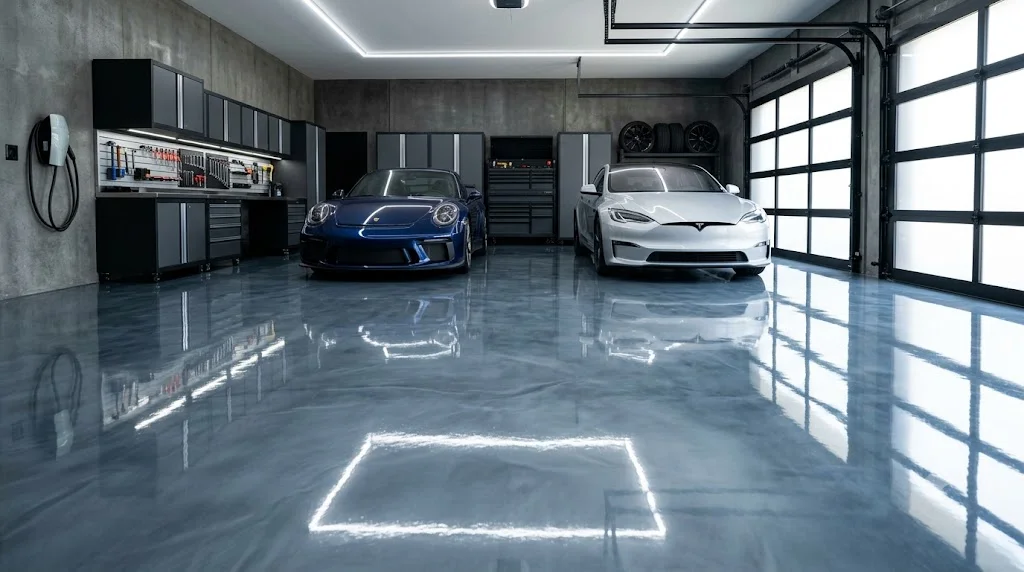
Warehouse and Plant Floor Coatings
Warehouse and plant slabs take an epoxy-based industrial floor coating rather than floor paint. The concrete is moisture tested and mechanically ground to an open profile, cracks and spalls are repaired, and then a multi-coat epoxy system goes down in a solid color, chosen for abrasion resistance where carts and pallet jacks run and for chemical resistance where there are spills. The systems, preparation and cure times are on our epoxy flooring page, and our guide to commercial epoxy flooring in NJ covers specifications and downtime in more detail.
We do not do line striping. Aisle lines, walkways and hazard zones are a different trade, inside the building or out in the lot. What we do is the surface underneath: a solid-color coating is the right base for those lines, and we coordinate the cure schedule with the striping contractor your safety manager uses so the lines go down on a fully cured floor.
Scheduled Around Your Operations
Most industrial painting happens while the building stays in use. These are the ways we fit the work around it, agreed in the proposal before anyone mobilizes.
Phased by Area
The building is divided into sections, by bay, aisle run, production cell or dock, and only one section is out of use at a time. You see the phase plan in the proposal before anyone mobilizes.
Built Around Production
Phases are fitted to the windows your operations manager gives us, including planned maintenance windows and shutdown periods, with overhead work planned for when the floor below can be cleared.
Inventory & Equipment Protected
Racking, stock and machinery near the work area are covered or moved by agreement, and dry-fall products are used overhead so the floor below is not left wet.
Walls, Steel & Floor on One Schedule
When the floor is part of the job, the coating is sequenced after the overhead and wall work, with cure times for foot traffic, equipment and vehicles agreed in writing.
Safety and Coordination on an Active Site
A painting crew in a working plant is one more employer on your floor. This is how the work is coordinated with your team.
Your Site Rules First
Before work starts we go through your site safety rules, sign-in, restricted areas and any permits your facility requires, and agree who on your side signs off on each phase.
Safety Data Sheets
OSHA’s Hazard Communication standard treats a site with outside contractors as a multi-employer workplace, so plan how safety data sheets for every coating are shared with your team and kept accessible in the work area. Ask any bidder for them before the job starts.
Traffic & Overhead Work
Work zones under ceiling and steel spraying are cordoned off, forklift routes around them are agreed with your floor supervisor, and egress routes stay clear.
Insurance Paperwork Up Front
Certificates of insurance go to your facility manager or general contractor before we mobilize, so the paperwork never holds up the first phase.
How an Industrial Painting Project Runs
The same five stages on a single warehouse bay and on a full plant. The difference is how many phases sit inside stage four.
Walkthrough
We walk the facility with your manager, note every surface and its condition, check heights and access, and ask which areas have to stay in use.
Written Proposal
The product for each surface, the phase plan, the access equipment, and the insurance paperwork your site needs, in writing.
Protection & Prep
Stock, racking and equipment are covered, surfaces are cleaned, loose rust and failing paint come off, and bare areas are primed.
Coating by Phase
Each section is coated in turn and handed back when its phase is done, with the next one cleared before work moves on.
Walk & Hand-Back
We walk every area with your manager, finish the punch list and leave the product schedule on file so later touch-ups match.

How We Estimate an Industrial Painting Job
An industrial painting estimate starts with a walkthrough, not a rate card, because the same floor area can be a very different job. Ceiling height and access equipment, the condition of the steel, how much stock and machinery has to be protected, and how the work has to be phased around production move the number more than square footage does.
The proposal names the product and number of coats for each surface and lays out the phases, so it can be compared line by line with any other bid. How commercial work is priced is in the commercial section of the cost guide and our guide to commercial painting cost in NJ.
We take on industrial and warehouse work across the counties we serve, including the warehouse corridor in Middlesex County, plus Monmouth County, Mercer County (including Lawrenceville), Somerset County, Ocean County, Burlington County, and the North Jersey counties of Union, Essex, Hudson, Bergen and Passaic, as well as the rest of our service areas. Send us the address, the rough size of the building and which areas have to stay in use, and we will set up a walkthrough.
Industrial & Warehouse Painting Questions
Have a question not listed here? Give us a call or send us a message.
Industrial painting is the coating of warehouses, plants and other production buildings: open ceilings and joists, structural steel, block and concrete walls, dock equipment and the floor. NJ Painting Co. does this work in phases around production, and names the coating for each surface in a written proposal.
Industrial painting deals with the surfaces an office repaint never sees, such as bar joists, structural steel, block walls and concrete slabs, and it is scheduled around production rather than a business day. Commercial painting covers offices, retail, medical, school and HOA buildings. Our commercial painting page covers those properties.
Loose rust, mill scale and failing paint are removed, edges and welds get attention, and bare steel is primed before any topcoat goes on. Skipping that step is why most industrial repaints fail: the new coat goes onto loose material and lifts with it.
Yes. Concrete walls and precast panels are cleaned and, where the texture is open, filled before a finish coat that can be washed down. Concrete block gets block filler first. The slab itself takes a separate resinous or epoxy floor system.
Yes. Industrial blasting, tanks and metal buildings are part of the work we take on. We confirm at the walkthrough which of them your job involves and name the coating for each surface in the written proposal.
Yes. Warehouse work covers dry-fall coatings on open ceilings, joists, ductwork and sprinkler lines; direct-to-metal coatings on columns, mezzanines, handrails and dock equipment; block wall coatings; and resinous or epoxy systems on the floor. The work is phased by area so the rest of the building keeps operating.
Usually, yes. The plant is divided into sections and only one is out of use at a time, with the phases fitted to the windows your operations manager gives us, including planned maintenance and shutdown periods. Overhead work is planned for when the floor below can be cleared, and dry-fall products keep overspray from landing wet on equipment.
Dry-fall coatings dry in the air as they fall, so overspray from a high ceiling settles as dust that sweeps up rather than as wet paint on racking and machinery. Our guide to how an industrial repaint is specified covers the coating choices.
Yes. Columns, beams, mezzanine framing, stairs, handrails, bollards and dock steel are cleaned of loose rust and mill scale, bare spots are primed, and a direct-to-metal or industrial enamel topcoat goes on. Industrial blasting, tanks and metal buildings are also part of the work we take on, and we confirm at the walkthrough which of them your job involves.
Yes. Commercial and industrial floor coating is part of the service. The slab is moisture tested and mechanically ground, cracks and spalls are repaired, and a multi-coat epoxy or resinous system goes down in a solid color. See our epoxy flooring page for the systems we install.
No. Line striping is a different trade and we do not take it on, inside the building or in the parking lot. We lay the floor coating, which is the right base for aisle, walkway and hazard lines, and coordinate the cure schedule with the striping contractor your safety manager uses so the lines go down on a fully cured floor.
We follow your site safety rules, sign-in and permit requirements, cordon off the work zone under any overhead spraying, agree forklift routes with your floor supervisor, and keep egress routes clear. Certificates of insurance go to your facility manager or general contractor before we mobilize. OSHA treats a site with outside contractors as a multi-employer workplace under its Hazard Communication standard, so agree up front how safety data sheets for each coating will be shared and kept accessible.
Per project, after a walkthrough. The main drivers are ceiling height and access equipment, the condition of the steel and other surfaces, the coating each one needs, how much stock and machinery has to be protected, and how the work is phased around production. You get a written proposal with the product named for each surface and a phase plan. Our Two-Year Workmanship Warranty covers industrial painting, like every other service.
We are based in Morganville and take on industrial and warehouse work across the counties we serve, including Middlesex, Monmouth, Mercer, Somerset, Ocean and Burlington, and Union, Essex, Hudson, Bergen and Passaic in North Jersey. Several buildings can be scoped together under one proposal.
Still have questions?
Can't find the answer you're looking for? Browse our answers to common NJ painting questions, give us a call or send a message.