Little Silver takes its name from a land grant: the brothers Joseph and Peter Parker settled here in 1667 on ground bounded by Parker's Creek to the south and Little Silver Creek to the north, and named it after their father's estate in Portsmouth, Rhode Island. The Parker Homestead still stands as a reminder that this was farmland and orchard country long before it was a commuter borough. Little Silver separated from Shrewsbury Township in 1923, and the farms and nurseries that defined it gave way to housing through the middle of the twentieth century. What that history leaves a painter with is a borough of roughly two and a half square miles containing three or four distinct generations of building at once, and a free estimate here starts with working out which one you have. A 1950s cape on a former nursery lot and an 1850s house a few streets away need different prep, different primers and different expectations, and quoting them the same way is how a painter ends up wrong on both.
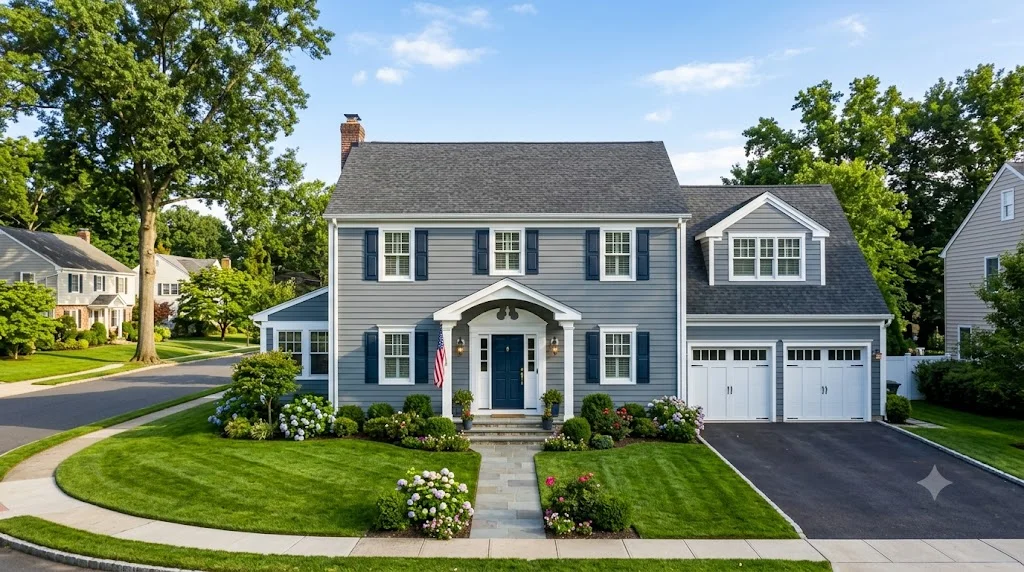
The everyday housing stock runs heavily to capes and ranches, with substantial colonials filling in the later subdivisions and a scattering of genuinely old houses among them — 28 Markham Place, for instance, is a Victorian built in 1853 by members of the White family. Those older houses carry deep trim profiles, wood windows and porch details that repay careful preparation, while the post-war capes are simpler exteriors where almost all the failure happens at the trim, soffits and fascia. On a house of that age the preparation is the job: scraping and feathering by hand, bare wood spot-primed the day it is opened up, and a site left clean at the end of each day rather than the end of the week. In practice that applies to most of the borough, because the great majority of Little Silver's houses went up long before the later subdivisions filled in, and it is worth knowing before you hire anyone who quotes a cheap exterior on a house of that age.
Then there is the water. Little Silver is hemmed in by creeks and sits just back from the Shrewsbury River, and that brackish damp is the quiet enemy of exterior paint here. It shows up as mildew blooming on north-facing walls that never get a full day of sun, as soft end grain at sill and trim joints, and as coatings that lift early on the elevations closest to the creeks. We wash the walls down and let them dry out before we prime rather than painting over a biological problem, we point out soft end grain instead of caulking around it, and we spec premium Benjamin Moore and Sherwin-Williams finishes with the mildew resistance that this microclimate actually demands. It also changes how we sequence a job: the shaded creek-side elevations want to be washed, dried and coated in the same stretch of settled weather rather than left open overnight, which is a scheduling decision more than a product one.
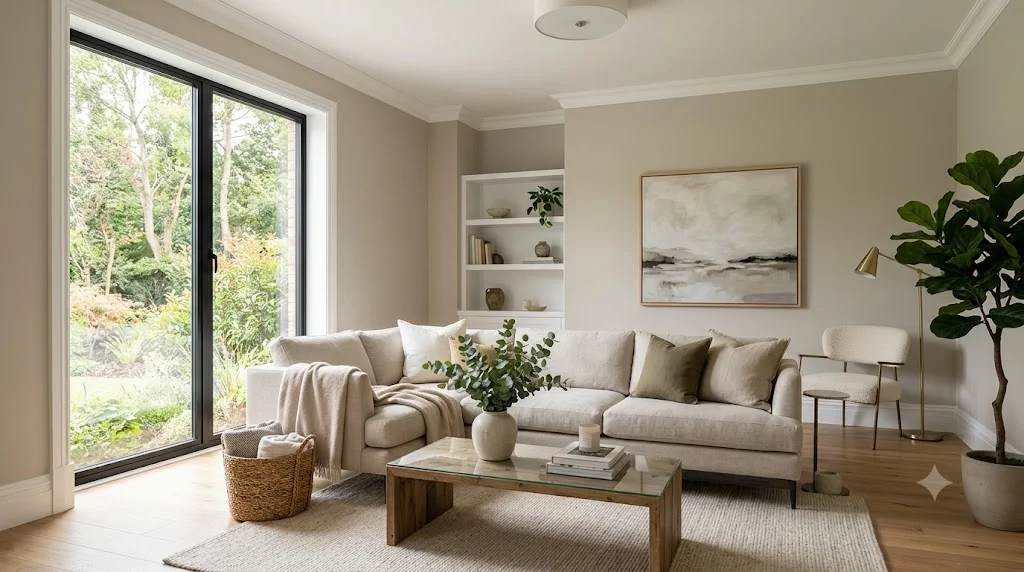
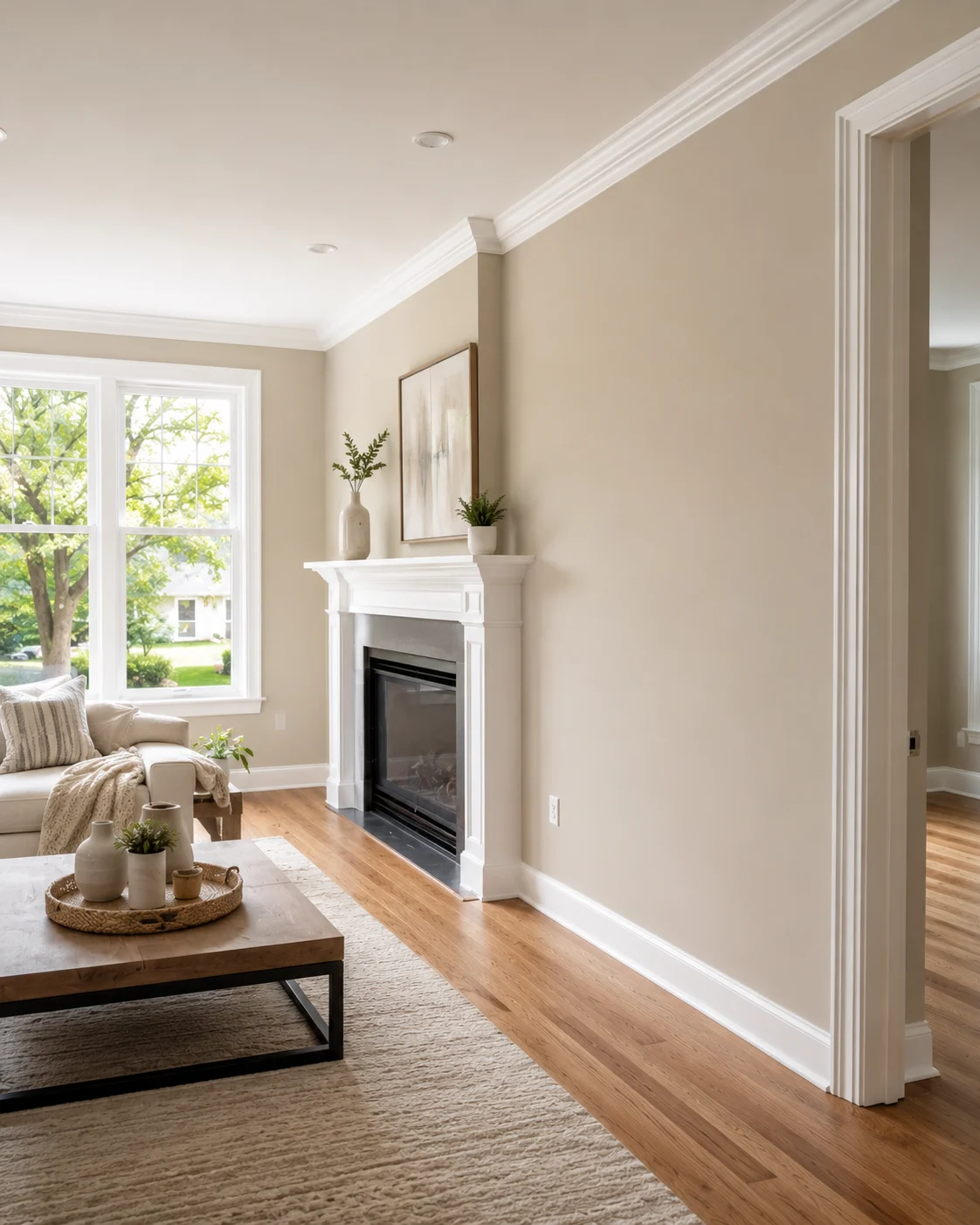
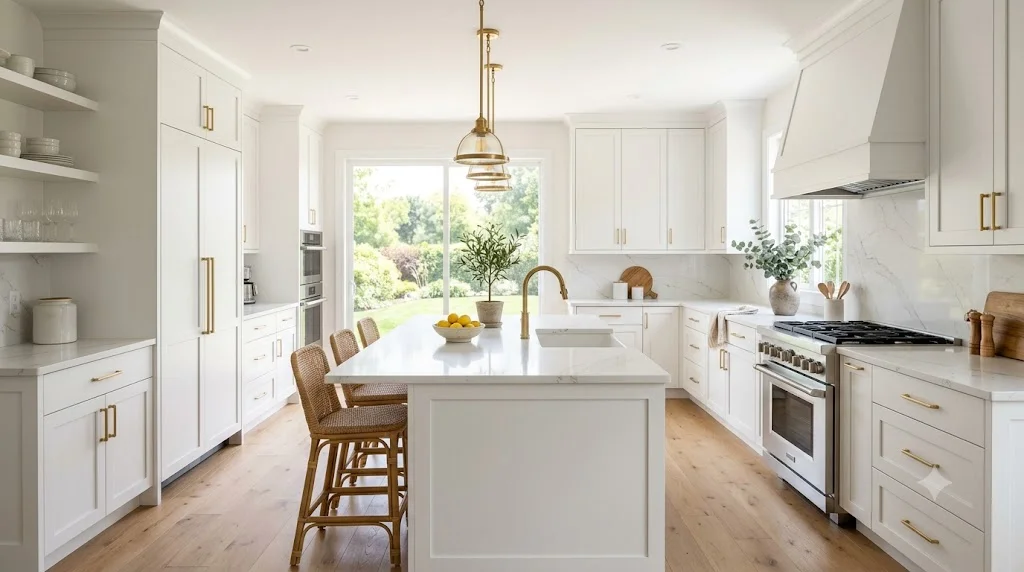
Inside, the work is what you would expect of a borough where families stay put: repainting rooms as children grow out of them, brightening kitchens with cabinet refinishing rather than a gut renovation, bringing the staircase, banister and interior doors back at the same time, and finally dealing with ceilings. We work around real household and commuter schedules, seal off work areas properly, and leave each room usable the same evening wherever we can. We also document the colors we mix for you and leave that record behind, so a touch-up in three years is a phone call rather than an archaeology project. NJ Painting Co. is family-owned and based in Morganville, a short drive up the county, licensed and fully insured, with more than twenty years behind us, free estimates in Little Silver including an in-home color consultation, and a two-year workmanship warranty on everything we do.
We also have dedicated pages on kitchen cabinet painting in Monmouth County, exterior painting in Monmouth County and interior painting in Monmouth County.