- 4.973 Google Reviews
- Licensed & Insured
- Family-Owned & Local · Morganville, NJ
- Satisfaction Guaranteed
“I can't say enough about Matthew, Mustafa, Fico et al. They were considerate, professional, and some of the greatest people I've had the pleasure of meeting. They treated my home like their own. They…”
Cabinet Painting & Refinishing in New Jersey
Get the dramatic look of new cabinets in just a few days at a fraction of the cost — degreased, sanded, and spray-finished for a smooth, factory-like result that lasts.
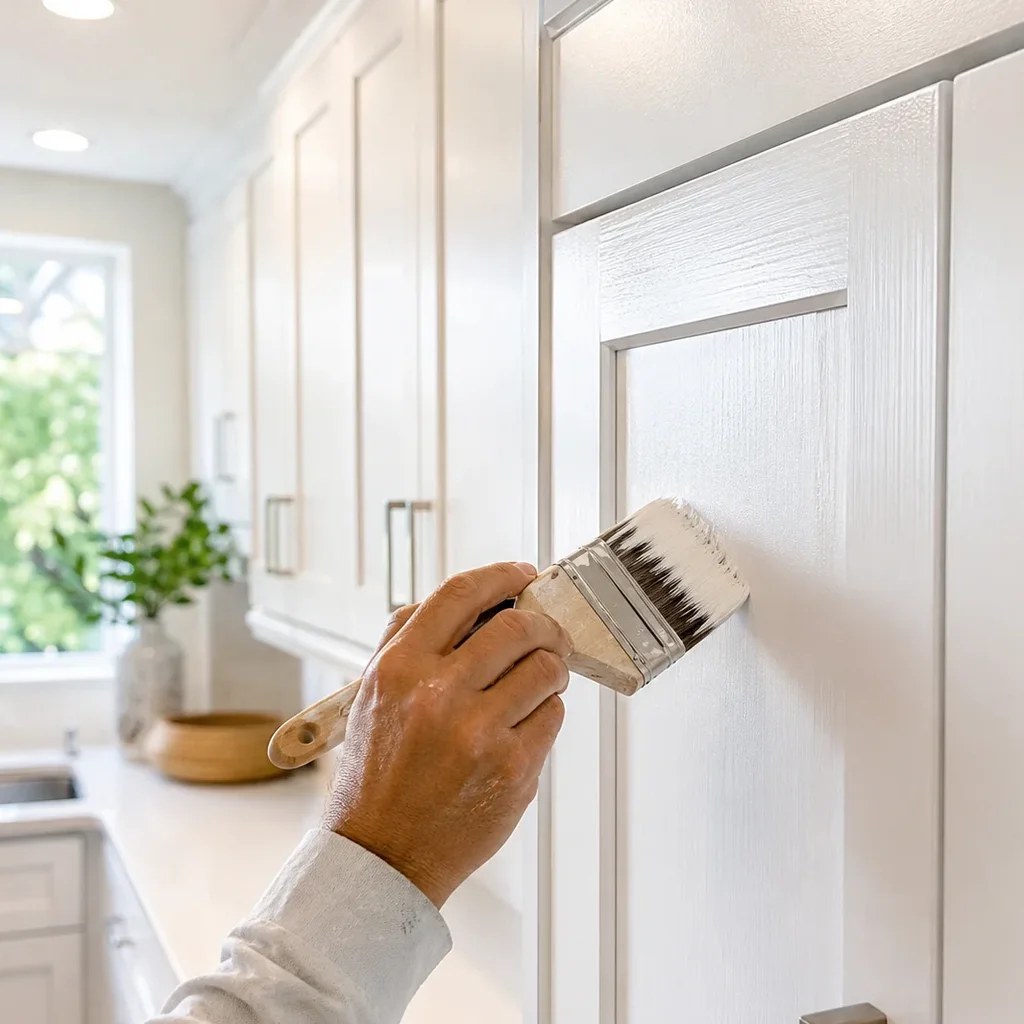
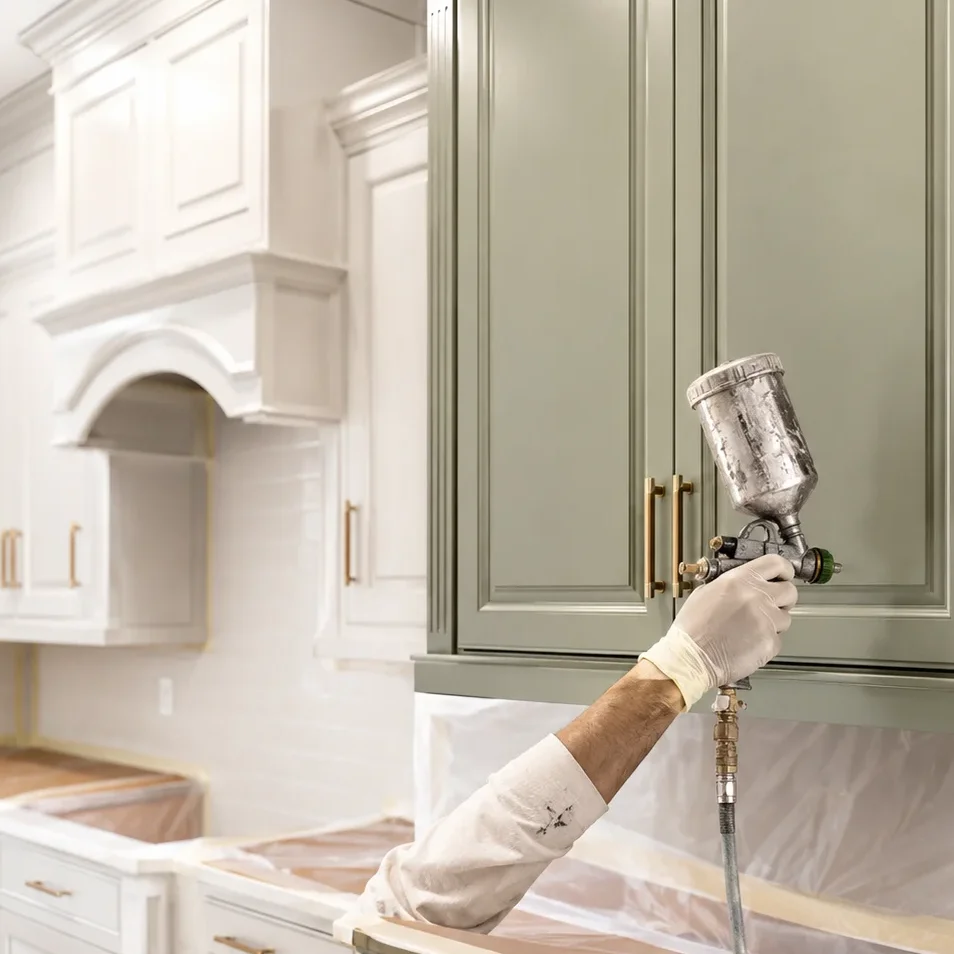
Cabinet refinishing is a shop process carried out in your house. Doors and drawer fronts come off and are numbered so every one goes back to the opening it was hung in; hinges, pulls and knobs are bagged by location. Years of cooking film get washed off with a degreaser, because nothing bonds to grease. The factory finish is then scuff-sanded so the primer has something to grip, dings and open joints are filled, and the frames, doors and drawer fronts are sprayed rather than brushed — that is what produces the even, factory-like surface a brush and roller cannot.
Most of the kitchens we see have solid boxes, a layout that still works and a finish that has simply aged out: orange oak, dated cherry, a white that has yellowed. That is exactly the kitchen cabinet painting is for. If yours is not one of them, we will say so at the estimate rather than sell you a paint job. Recent kitchens are in the gallery, a kitchen repaint pairs naturally with interior painting of the walls and trim around it, and free estimates include an in-home color consultation — book one here.
What Our Cabinet Painting Service Covers
Every quote is written per kitchen, door by door. This is what a standard cabinet painting job includes before you add anything to it.
Doors & Drawer Fronts
Removed, numbered to their openings, degreased, sanded, primed and sprayed on both faces and every edge, then laid flat to dry in a masked spray area.
Boxes, Face Frames & End Panels
The parts that stay on the wall are masked off from counters, appliances and floors and sprayed in place, so frames, end panels and island backs match the doors.
Islands, Pantries & Open Shelving
Islands, tall pantry units, open shelving and the crown or light rail on top are finished with the rest of the run. Inside the closed boxes is an option we quote separately.
Vanities, Built-Ins & Bars
Bathroom vanities, laundry and mudroom cabinets, built-in bookcases and bars go through the same degrease, sand, prime and spray sequence as a kitchen.
Repairs Before Finish
Dings, open joints and blown-out hinge screw holes are filled and fixed first. Paint will not hide a door that no longer closes square, so we fix that before we coat it.
Hardware & Rehang
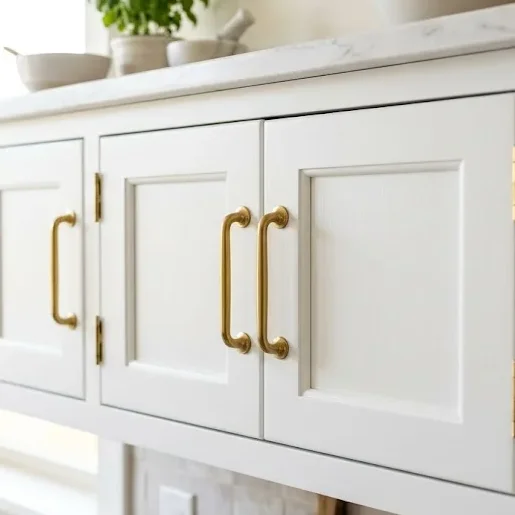
Your hardware goes back on, or new knobs and pulls are fitted, with old holes filled if the spacing changes. Hinges are adjusted on rehang so the gaps line up.
The NJ Painting Co. Difference
From the first brush stroke to final cleanup, we hold ourselves to the highest standard of craftsmanship on every cabinet project.
Thorough Prep & Degreasing
Cabinets accumulate grease and grime over years of use. We deep-clean and degrease every surface before a single drop of paint is applied — ensuring proper adhesion and a lasting finish.
Smooth Factory-Like Finish
We use professional spray equipment and fine-sanding techniques between coats to deliver a glass-smooth finish that rivals brand-new cabinetry from the showroom floor.
Any Color You Choose
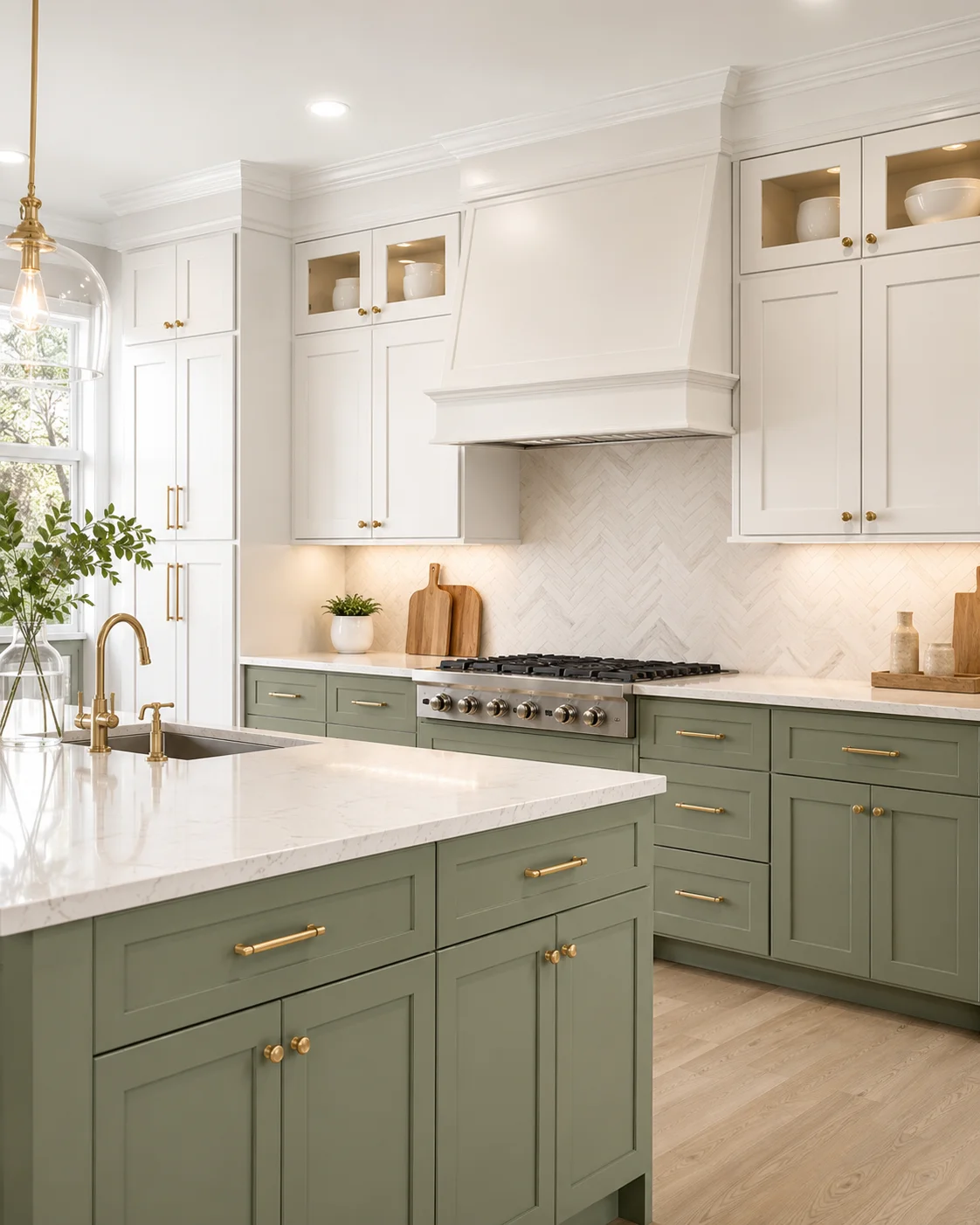
Whether you want a classic white, a bold navy, or a trendy sage green, we match any color from any brand. Our team provides color consultation to help you choose with confidence.
Fast Turnaround
A full kitchen cabinet painting project typically completes in just a few days — not weeks. Minimal disruption to your home and daily routine, with stunning results you can enjoy right away.
Cabinet Painting Transformations in New Jersey
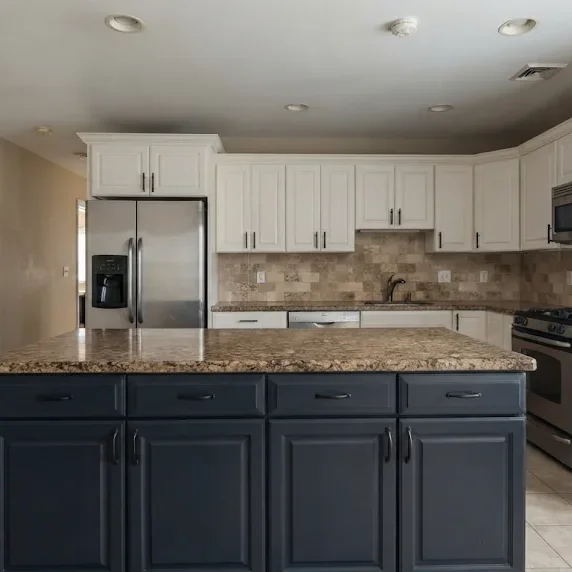
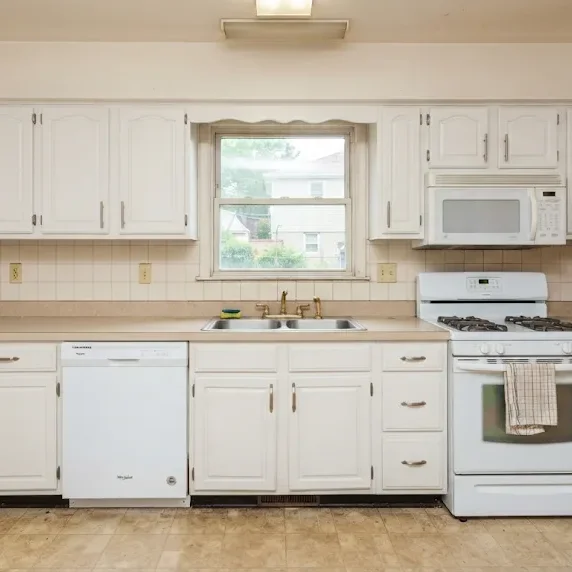
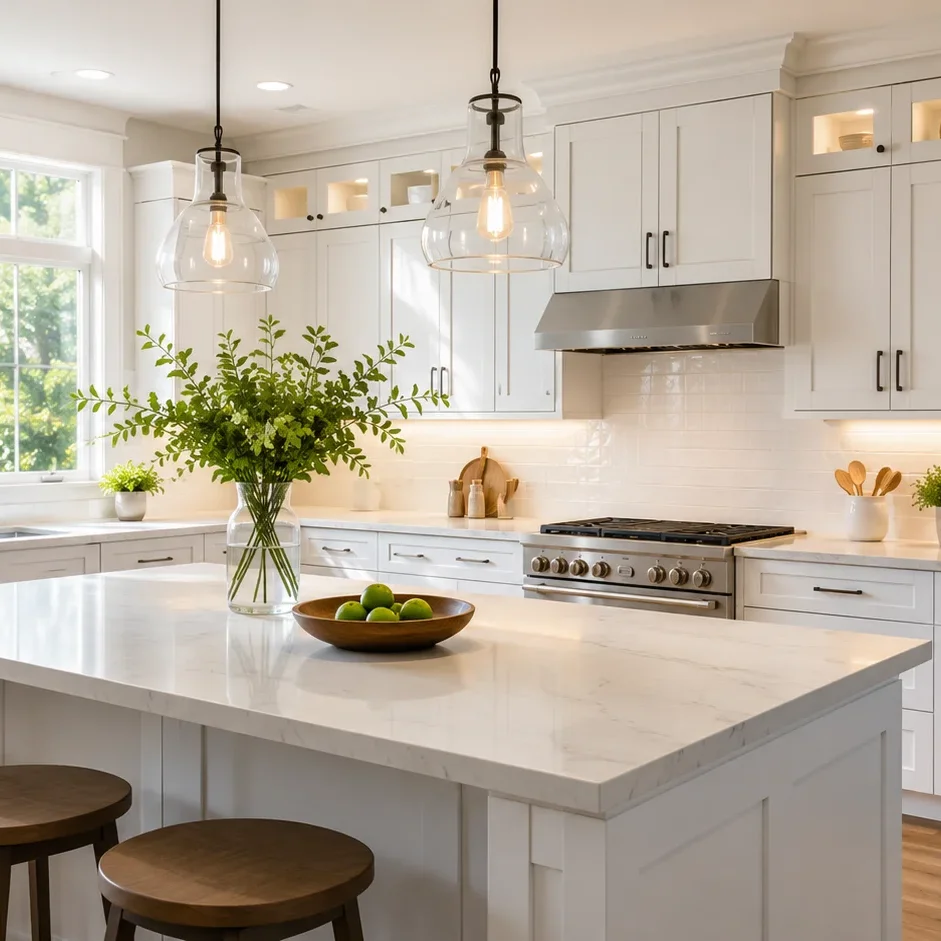
Drag across the image to reveal the before & after — this is the difference proper prep and premium materials make. Pick any project type below to see more of our results.
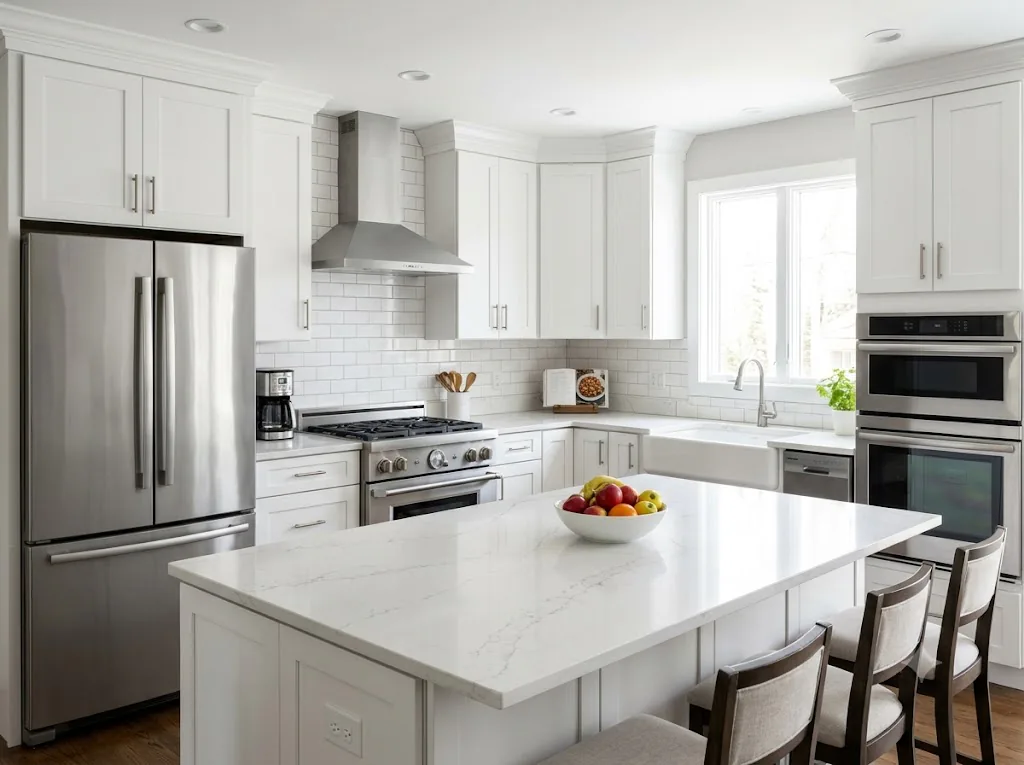 After
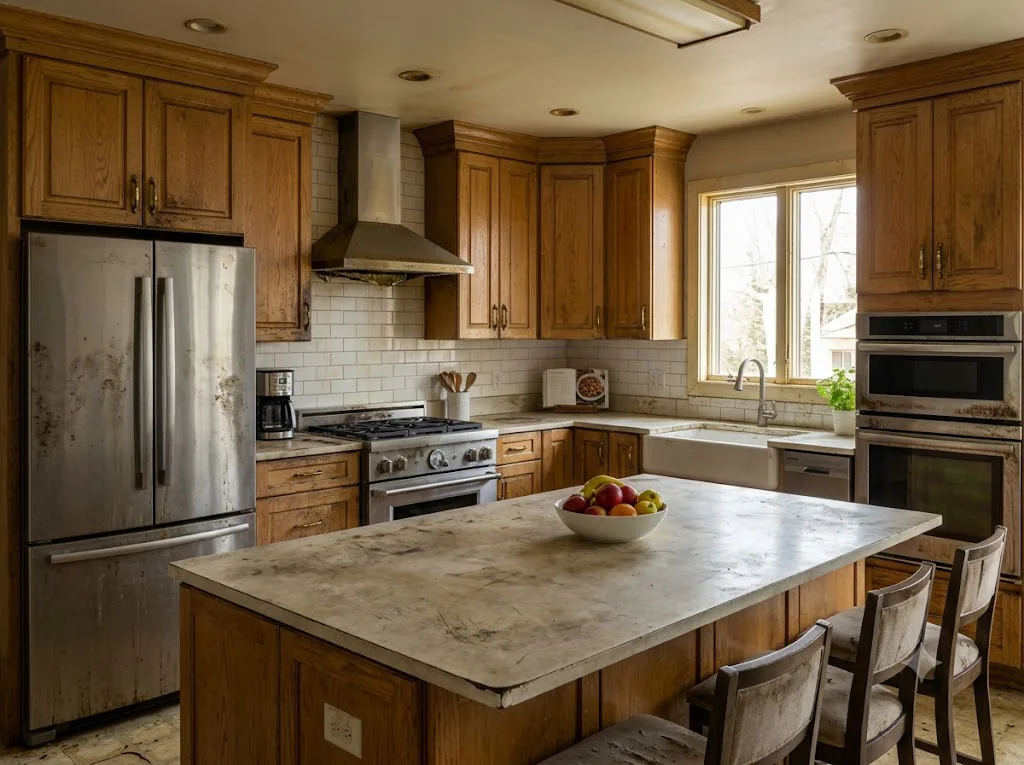 Before
Kitchen Cabinets transformation
Illustrative example
How We Refinish a Kitchen
The same sequence every time, whether it is a six-door bathroom vanity or a full kitchen with an island.
In-Home Consultation
We count doors and drawer fronts, check what the cabinets are actually made of, open a few boxes to check their condition, talk through sheen and hardware, and put color samples in your kitchen light.
Teardown & Labeling
Hardware comes off and is bagged by location, every door is numbered to its opening, and countertops, appliances, backsplash and floors are masked and covered.
Degrease & Sand
Every surface is washed with a degreaser and rinsed, then scuff-sanded to dull the old finish. Dings and open joints are filled, and oak is grain-filled where you want the pores gone.
Prime & Spray
A bonding or stain-blocking primer chosen for your cabinet material goes on first and is sanded smooth. The cabinet enamel is then sprayed in coats, with a light sanding between them.
Reassembly & Walkthrough
Doors are rehung, hinges adjusted so the reveals line up, hardware reinstalled, and we walk the kitchen with you before covering care and cure times.
Cabinet Painting vs Refinishing vs Staining vs Refacing
Four words that get used interchangeably and mean four different jobs, at four different prices.
Cabinet Painting
An opaque cabinet enamel sprayed over your existing doors and boxes after degreasing, sanding and priming. It hides the wood, changes the color completely and costs the least of the four. This is the core of what we do.
Refinishing
Often used to mean painting. Strictly, it means taking the old finish back further and building a new one, so the same boxes and doors get a full new coating system rather than a recoat.
Staining
Stain soaks into bare wood, so it cannot go over paint or a factory finish. Going darker or changing the wood tone means stripping first, which is slow and costs more than painting. Stain also cannot make oak white.
Refacing
New doors and drawer fronts, with the frames covered in veneer. It suits sound boxes with doors that are warped, peeling or a style you dislike. It costs several times what painting does, and it is a different trade from ours.
Painting is the right answer when the boxes are solid and the layout works, and the wrong one when the boxes are failing or you want a different door style. Our comparison of cabinet refinishing, painting and refacing in NJ sets out costs, timelines and lifespans side by side, and the cabinet painting cost guide explains what moves the price of a painted kitchen.
Spray-Finished Cabinets, Matched to What They Are Made Of
Spraying is what gives a painted cabinet the flat, even surface of a factory door. A brush leaves strokes in the film and a roller leaves a fine stipple; cabinet enamels are made to level out as they dry, but a sprayed coat starts much closer to flat. Brushes still have a place on the odd repair or a piece that cannot be masked, and our guide to spray versus brush cabinet painting sets out the trade-offs, the cabinet paint types, and how long each finish lasts.
The material underneath decides the prep. Maple, birch and MDF doors take an even sprayed finish with no filling. Red oak has deep open pores, so the grain shows through paint unless it is filled first with a grain filler and sanded flat. Some clients want that texture gone and others like it, and the price changes either way. Thermofoil and laminate doors can be painted, but only over a bonding primer made for slick surfaces, and only where the film is not lifting. On oak and other tannin-rich woods a stain-blocking primer keeps yellow bleed out of a white topcoat.
We finish with Benjamin Moore and Sherwin-Williams cabinet enamels, the waterborne alkyd and urethane-modified products made for doors and trim rather than wall paint, color-matched to anything you bring us, in the sheen you choose. Our paint sheen guide explains how satin and eggshell differ on surfaces that get handled every day. These enamels are dry to the touch in hours but keep hardening for weeks. Benjamin Moore, for example, says its waterborne alkyd can take up to 30 days to reach full hardness, so the first few weeks call for a gentle hand.
- Solid Wood & Plywood
- Maple & Birch
- MDF Doors
- Oak (Grain Filled or Not)
- Thermofoil (Intact)
- Laminate & Melamine
Wondering what cabinet painting costs?
See real price ranges and what drives the cost — free, no phone call required.
Kitchen Cabinet Painters Across Central NJ and the Shore
Based in Morganville, working across Central and North Jersey.
Our crews do cabinet work across Monmouth County, our home county, and down the shore through Ocean County, in year-round homes and shore houses alike. We also paint cabinets inland in Middlesex, Mercer, Somerset and Burlington counties.
Wherever you are, the visit is the same: we count doors and drawer fronts, check the cabinet material, look inside the boxes, and give you a written price. If your house was built before 1978, tell us at the estimate and read our guide to lead paint in older NJ homes, because sanding old cabinet finishes is exactly the kind of work the lead rules cover. The full list of towns is on our service areas page.
Kitchen Cabinet Painting Questions
Have questions about our cabinet painting process? Here are the answers to the questions we hear most often.
Cabinet painting is priced by the door and drawer front. Fixr's 2026 national figures are $70 to $125 per door and $30 to $110 per drawer front, with an average kitchen between $2,500 and $6,500. Central New Jersey usually lands in the upper part of that range. Where your kitchen falls depends on the door and drawer count, an island or tall pantry units, the cabinet material (oak that needs grain filling takes longer than maple or MDF), repairs, and new hardware. Painting costs well below refacing or new cabinets, and every estimate is free and priced per kitchen.
Most kitchen cabinet painting projects are completed within 3 to 5 business days, depending on the size of the kitchen and the number of cabinet doors. We work efficiently to minimize disruption to your home.
We spray them. Doors and drawer fronts come off, are numbered and are sprayed flat on both faces; the boxes and face frames are masked off from counters, appliances and floors and sprayed in place. Spraying gives an even, smooth finish without brush strokes or roller texture. A brush is still used for small touch-ups and the odd piece that cannot be masked.
Painting and refinishing both keep your existing boxes and doors and change the finish on them — refinishing usually implies stripping or sanding back further before the new coating goes on. Refacing keeps the boxes but replaces the doors and drawer fronts and veneers the visible frames, so it costs several times what painting does. Replacement means all new cabinetry, and normally a new countertop and backsplash with it. Painting is the right choice when the boxes are structurally sound and you are happy with the layout and door style; if the boxes are failing or you want a different door profile, refacing or replacement is the honest answer and we will say so.
Stain only works on bare wood, so it cannot be applied over paint or over the factory finish on most cabinets. Changing the stain color means stripping every door and frame back to raw wood first, which is slow, costs more than painting, and still cannot turn oak white or hide repairs the way paint does. If your cabinets are good wood and you want to keep the grain, we will talk through whether stripping and refinishing makes sense or whether paint is the better buy.
Mostly, yes. Doors and drawer fronts come off on day one and are finished away from the cooking area, so you lose the cabinet doors but keep the sink, the refrigerator and the counters. The frames are sprayed in place, which means the kitchen is off limits for those few hours and while the coats flash off. Plan on eating simply for a few days and on keeping the room ventilated. The finish is dry to handle long before it is fully hard — waterborne alkyd and urethane cabinet enamels typically need several hours to a day between coats and can take up to 30 days to reach full hardness — so we ask you to load the cabinets gently and avoid scrubbing them for the first few weeks.
Yes, but it is extra work and it is priced that way. Red oak has deep open pores that telegraph straight through paint, so hiding them means applying a grain filler across every door and frame, sanding it flat, and then priming — often more than one pass before the surface reads smooth. Plenty of homeowners skip it and like the result: painted oak with the grain still visible looks like painted wood rather than like a flat slab door. We show you both at the estimate so you can decide before the price is set.
They can, provided the surface is intact and the right primer is used. Thermofoil is a vinyl film heat-pressed over MDF and laminate is a bonded plastic sheet, so neither gives paint anything to soak into — the fix is a bonding primer formulated for slick surfaces after a thorough degrease and scuff. Where the film is already peeling, bubbling or lifting at the edges (common near a dishwasher or an oven), paint will not repair it and the door needs replacing instead. We check every door before quoting so there are no surprises.
Only if you want it. A standard cabinet painting job covers everything you see with the doors closed: door and drawer faces, edges, face frames, end panels and open shelving. Painting inside the boxes turns every shelf into another surface to prep, prime and spray, so it adds real time and is quoted as an option.
Yes. Bathroom vanities, laundry-room cabinets, built-in bookcases, mudroom lockers and bars all go through the same degrease, sand, prime and spray process as a kitchen. They are often added to a kitchen project so everything is finished in one visit and in matching colors.
Yes, we ask that you remove items from inside the cabinets prior to our arrival. We handle all hardware removal, door detachment, and protective covering of countertops and appliances ourselves.
With proper degreasing, the right primer and a cabinet-grade enamel, a painted cabinet finish commonly lasts 8 to 10 years before it looks tired, and it can be touched up along the way. Early failures are almost always a prep problem or wall paint used where a cabinet enamel belonged, not normal wear. The edges around the sink, the trash pull-out and the doors you open most show wear first.
Absolutely. We can match any color from Benjamin Moore, Sherwin-Williams, or any other brand. We also offer complimentary color consultation to help you select a shade that complements your kitchen or bathroom.
Yes. We are based in Morganville and paint and refinish kitchen cabinets across Monmouth, Ocean, Middlesex, Mercer, Somerset and Burlington counties, from shore towns such as Asbury Park, Point Pleasant, Brick and Toms River to inland towns such as Freehold, Marlboro and East Brunswick. The estimate is free wherever you are in that area.
Still have questions?
Can't find the answer you're looking for? Give us a call or send a message.