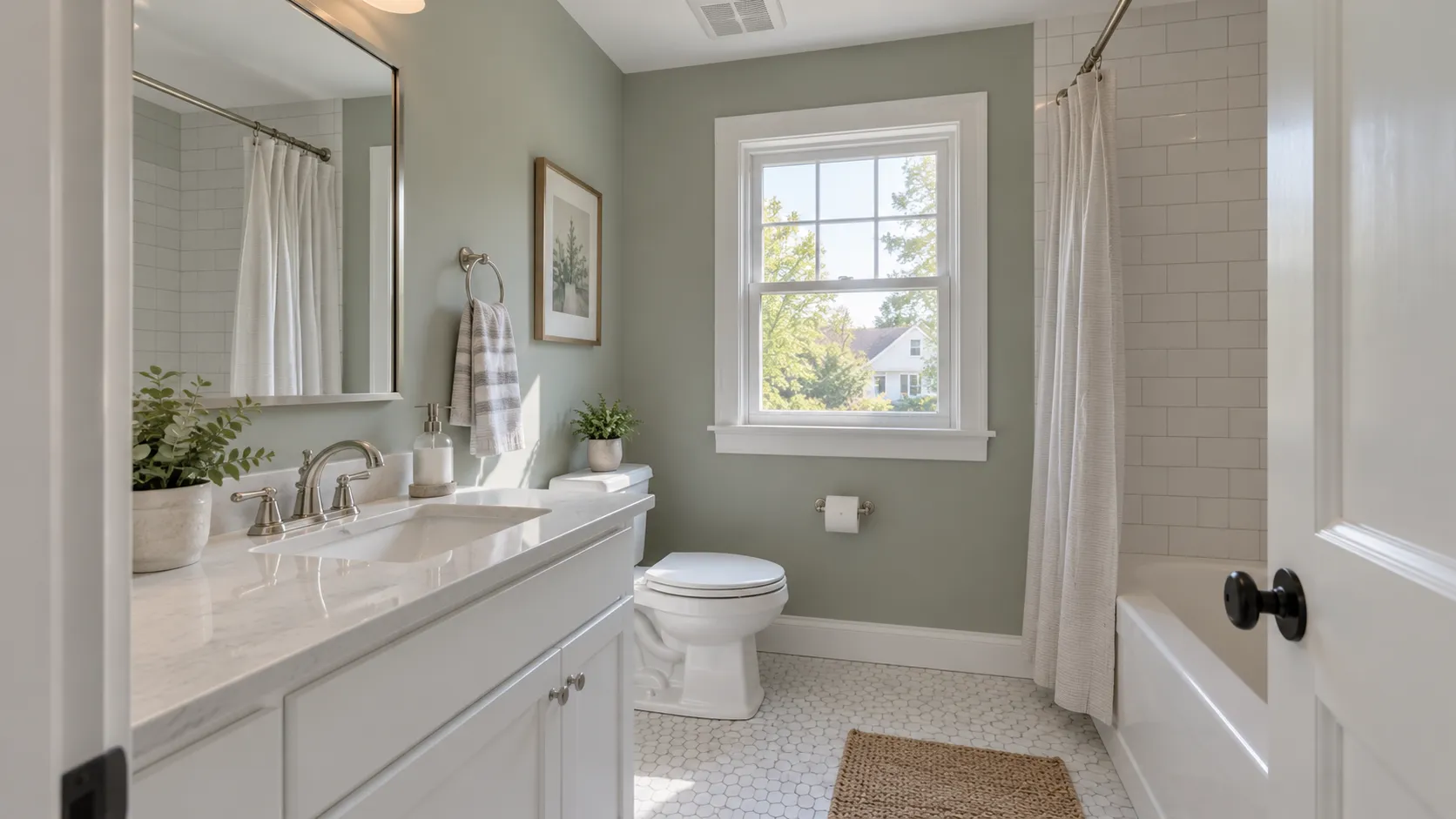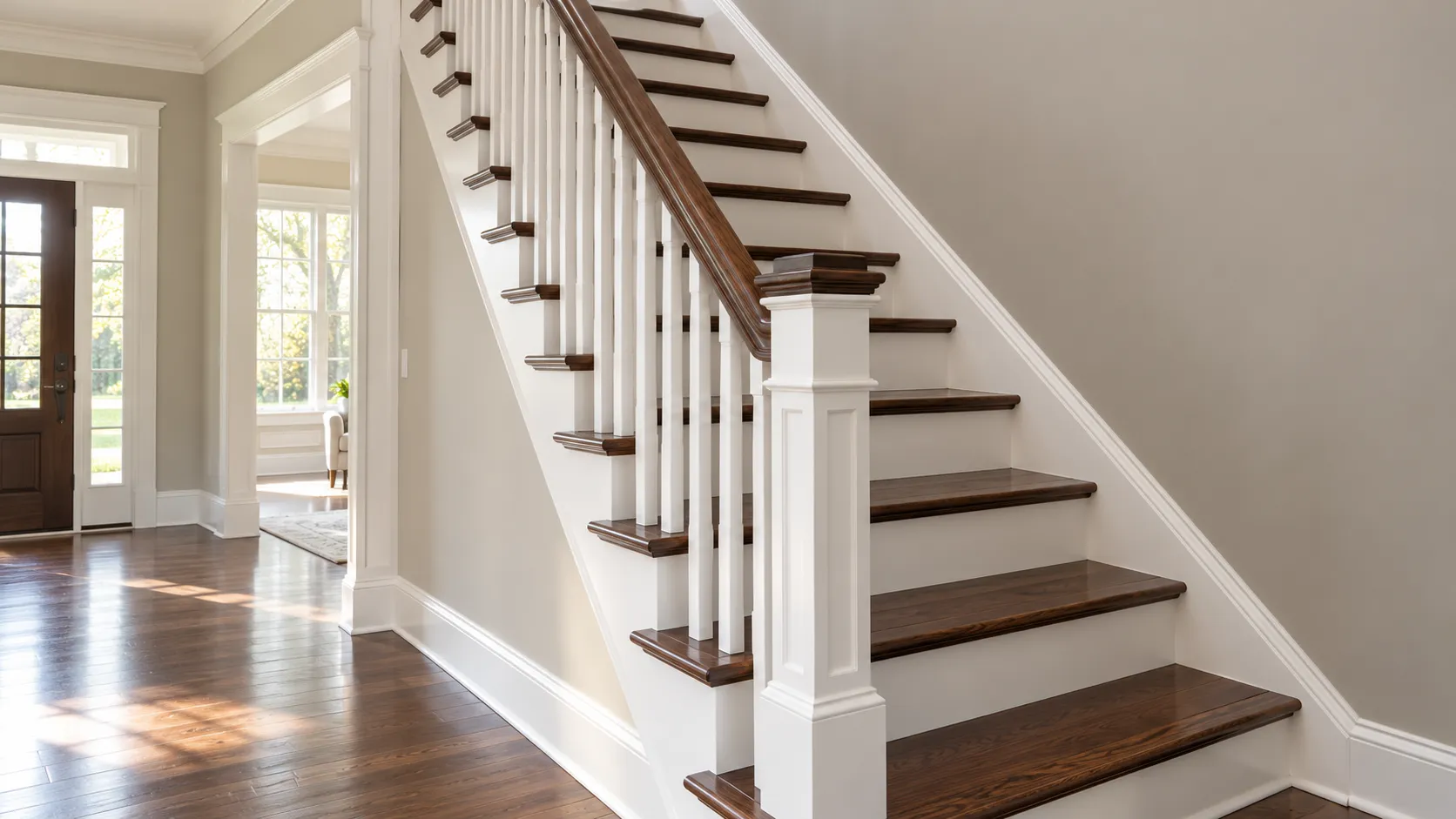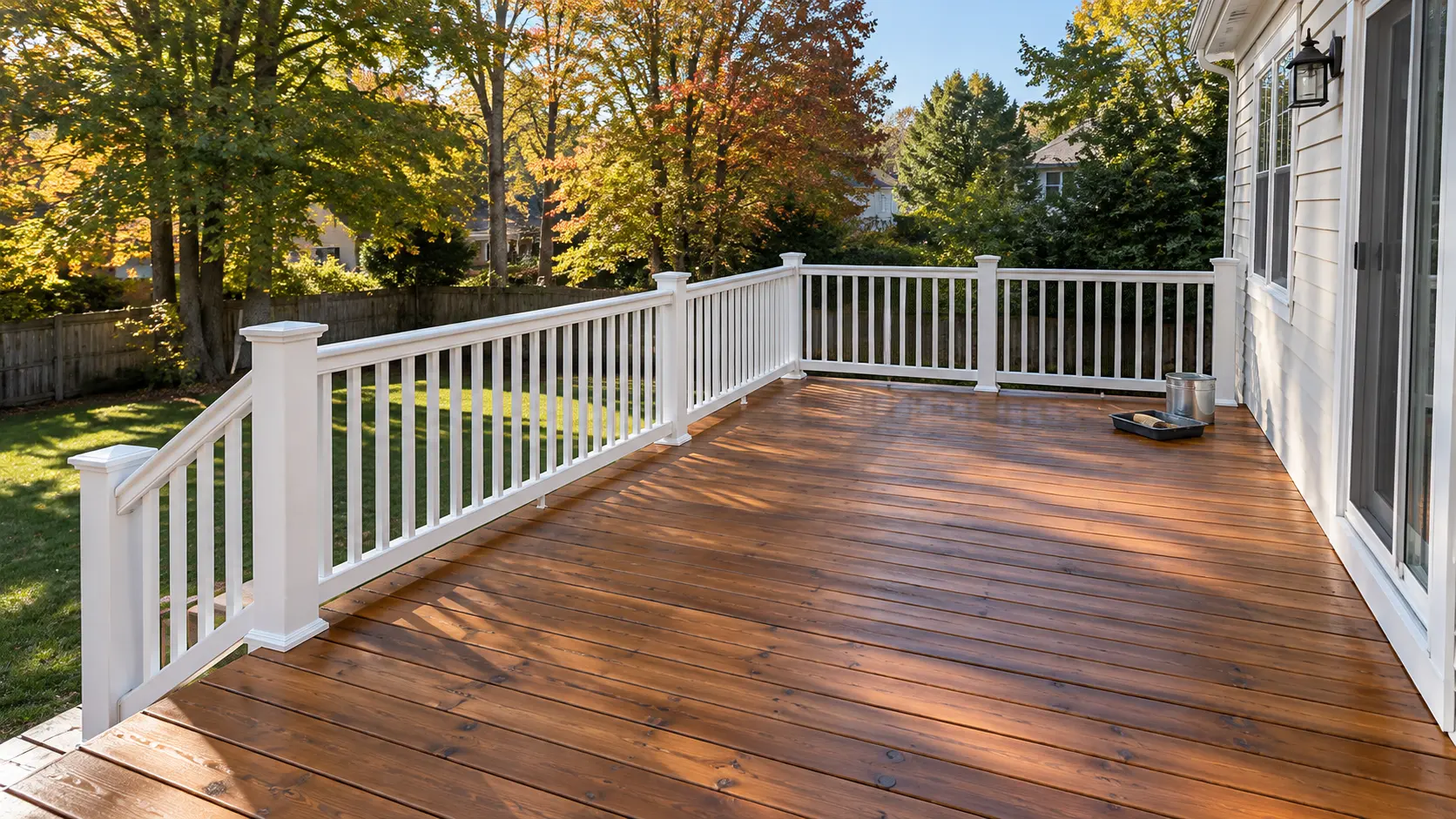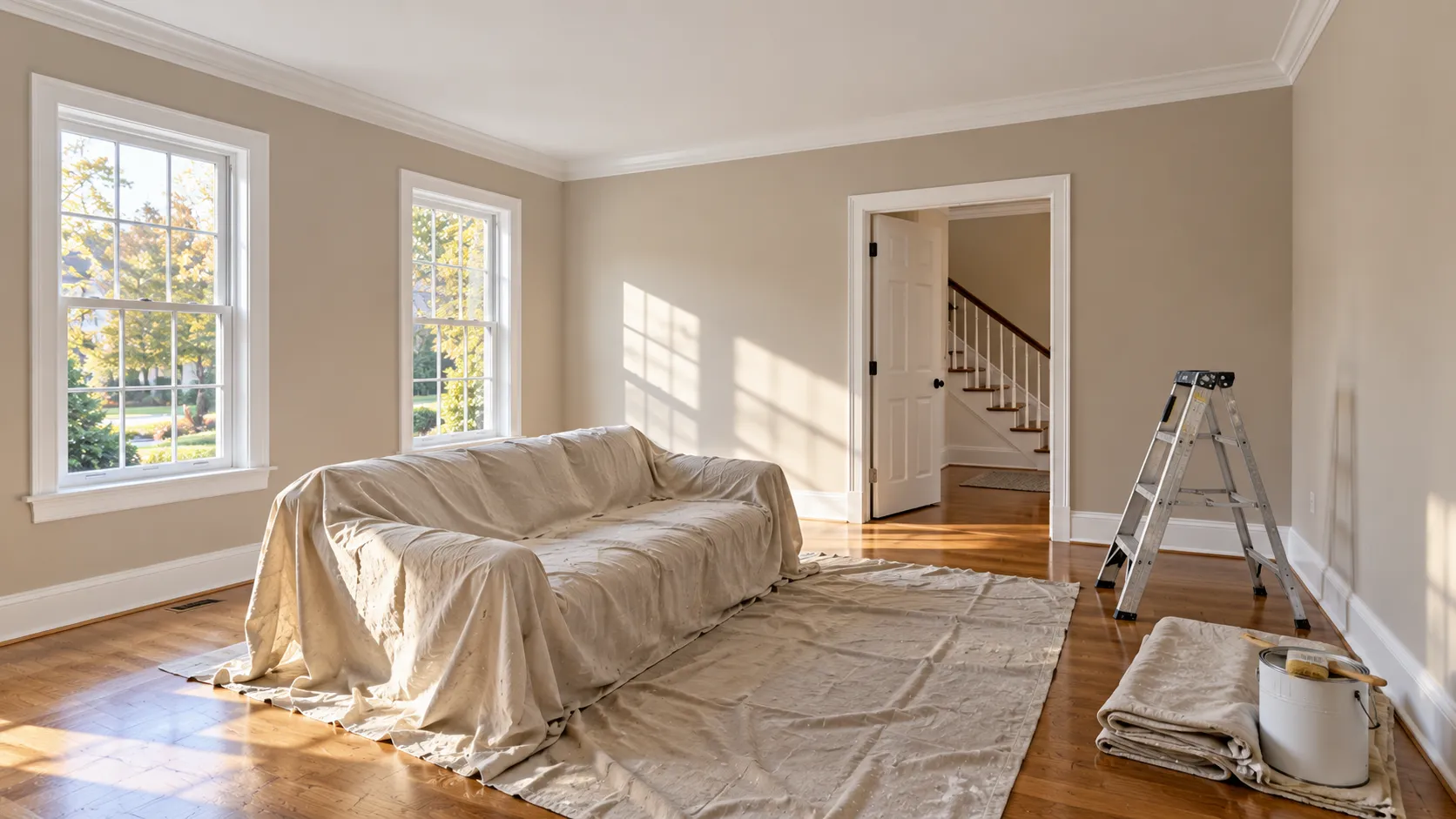
The difference between eggshell and satin paint is sheen: satin reflects more light, so it scrubs a little better but shows more wall flaws, while eggshell has a softer, lower glow that hides flaws and touches up more easily. Use eggshell in most living rooms, bedrooms and dining rooms, and satin in hallways, kids' rooms and busy family spaces. They are not the same finish, but they are neighbors on the sheen scale, and you can paint either one over the other on a clean, sound wall.
The catch is that "satin" and "eggshell" do not mean the same thing from one brand or product line to the next. One company's satin can measure as low as another's eggshell, which is why the numbers below matter more than the names on the can.
Key facts: eggshell vs satin
- Within one product line, satin is always the shinier of the two.
- On the Master Painters Institute scale, eggshell-like finishes (G3) measure 10 to 25 gloss units at 60° and satin-like finishes (G4) 20 to 35, so the two overlap.
- Brand names do not line up: Sherwin-Williams Emerald Satin is rated 10 to 20 units at 85°, about the same as Benjamin Moore Regal Select Eggshell at 15 to 22.
- Flatter finishes touch up more easily. Benjamin Moore: "The flatter the finish, the easier to touch up."
- Sheen rarely changes the paint price: Regal Select Eggshell and Semi-Gloss were both listed at $84.99 a gallon in September 2026.
- You can paint either over the other. Scuff-sand satin before going to eggshell; spot-prime patches before going to satin.
We paint homes across Monmouth, Middlesex, Ocean, Mercer, Somerset and Burlington counties, plus Union, Essex, Hudson, Bergen and Passaic in North Jersey with Benjamin Moore and Sherwin-Williams products, and sheen is the question we get right after color. This guide shows the actual gloss numbers from the manufacturers' data sheets, then walks through what we recommend room by room, what goes wrong with touch-ups, and when the choice matters less than people think.
Is Eggshell or Satin Better? The Short Answer
If you only read one section, read this one.
- Choose eggshell for living rooms, dining rooms, bedrooms, home offices and most hallways in adult households. It looks close to flat from straight on, wipes clean, and is more forgiving of patched drywall and older plaster.
- Choose satin for kids' rooms, mudrooms, busy hallways, family rooms where the dog leans on the wall, and bathrooms without a dedicated bath paint. It takes more scrubbing, but it shows every bump and roller lap in side light.
- Check the product, not just the word. A Sherwin-Williams Emerald satin can measure about as low as a Benjamin Moore Regal Select eggshell, while Benjamin Moore's own "Satin/Pearl" is noticeably shinier. The numbers are in the tables below.
Sherwin-Williams makes the same point in its guide "Shedding Light on Gloss and Sheen": pick the right product for the job first, then pick the sheen from what that product line offers.
What Is Paint Sheen, and How Is It Measured?
Sheen is how much light a dried paint film bounces back at you. It is not just a style choice: the same resin and pigment decisions that make paint shinier also change how smooth and tight the surface is, which affects cleaning, stain resistance and how much the wall's own flaws show through.
The paint industry measures it with a glossmeter. The test method is ASTM D523, the standard test method for specular gloss, which covers glossmeter geometries of 60°, 20° and 85°. Sherwin-Williams' gloss guide explains that readings run from 0 (no gloss) to 100 (mirror-like), with "gloss" measured at a 60° angle and "sheen" at 85°, and adds that the subtle differences in sheen are most notable in low-gloss paints, which is what the 85° reading is for. That is why data sheets for flat, matte and eggshell paints, and some satins, usually quote a number "@ 85°", while semi-gloss and glossier paints quote "@ 60°". A matte at 5 units @ 85° and a semi-gloss at 50 units @ 60° are not on the same scale, so compare like with like.
The Master Painters Institute (MPI), whose standards architects write into commercial specifications, sorts finishes into seven gloss levels based on ASTM D523. The MPI gloss level chart published by Rodda Paint gives the ranges:
| MPI level | Description | Gloss at 60° | Sheen at 85° |
|---|---|---|---|
| G1 | Traditional matte / flat | 5 max | 10 max |
| G2 | High-side-sheen flat, "velvet-like" | 10 max | 10 to 35 |
| G3 | Traditional "eggshell-like" | 10 to 25 | 10 to 35 |
| G4 | "Satin-like" | 20 to 35 | 35 min |
| G5 | Traditional semi-gloss | 35 to 70 | n/a |
| G6 | Traditional gloss | 70 to 85 | n/a |
| G7 | High gloss | more than 85 | n/a |
Notice the overlap between eggshell-like (G3) and satin-like (G4) at 20 to 25 units at 60°. On paper the two finishes blend into each other, and in real product lines they overlap even more. MPI sums up the trade-off in its "Why Gloss Matters" bulletin: low-gloss coatings are good at masking surface defects but may show poorer abrasion resistance, while high-gloss coatings are easier to clean but highlight surface flaws.
How Do Benjamin Moore and Sherwin-Williams Sheens Compare?
Here is the ladder from least to most shine: flat, matte, eggshell, satin (Benjamin Moore adds pearl here), semi-gloss, gloss and high gloss. Every brand draws the lines in a slightly different place. The table compares the middle of the ladder in two premium lines we use on New Jersey interiors, taken straight from each product's technical data sheet.
| Sheen | Benjamin Moore Regal Select | Sherwin-Williams Emerald Interior |
|---|---|---|
| Eggshell | 15 to 22 @ 85° | Not offered in this line |
| Satin | Sold as "Satin/Pearl": 20 to 30 @ 60° | 10 to 20 @ 85° |
| Semi-gloss | 50 to 60 @ 60° | 35 to 45 @ 60° |
Sources: Benjamin Moore Regal Select data sheets for Eggshell N549, Satin/Pearl N550 and Semi-Gloss N551; Sherwin-Williams product data sheets for Emerald Satin and Emerald Semi-Gloss. Both lines also come in flat and matte. Sherwin-Williams' gloss guide lists its Duration Home line at the same typical satin and semi-gloss readings as Emerald (about 20 units at 85° for satin and 40 units at 60° for semi-gloss), and shows neither line in an eggshell ("eg-shel") sheen.
Three things jump out of those numbers:
- Sherwin-Williams satin in these lines is a low satin. Emerald Satin (10 to 20 @ 85°) sits in the same band as Benjamin Moore Regal Select Eggshell (15 to 22 @ 85°), and Duration Home satin is listed at the same typical reading as Emerald. If you switch brands and keep the word "satin", you may get a flatter wall than you expected, or the reverse.
- Benjamin Moore's satin is really a pearl. Regal Select's "Satin/Pearl" is rated at 60°, 20 to 30 units, which falls inside MPI's satin-like range and is a visible step up from its eggshell.
- Semi-gloss varies widely. Regal Select Semi-Gloss (50 to 60 @ 60°) is shinier than Emerald Semi-Gloss (35 to 45 @ 60°). On trim, that difference shows.
Sherwin-Williams' own naming adds another wrinkle. Its gloss guide groups eg-shel, low sheen, low lustre and velvet under a "satin category" (low to medium reflectance) and puts pearl in its "semi-gloss category", alongside semi-gloss and medium lustre. Benjamin Moore, on its guide to choosing a paint finish, treats pearl as its own step between eggshell and satin. So if a friend says "we used pearl in the kitchen", ask which brand.
What's the Difference Between Eggshell and Satin Paint?
Within one product line, satin is the shinier of the two, and that single difference drives everything else: how it cleans, how much it shows the wall, and how well it touches up. Assuming you are comparing the eggshell and satin from the same premium line, here is how they behave on a real wall.
| Factor | Eggshell | Satin |
|---|---|---|
| Look | Soft, low glow; reads almost flat from straight on | Noticeable soft sheen, especially from an angle or at night under lamps |
| Cleaning and stains | Wipes clean; good for most rooms | Better stain resistance and durability than lower sheens |
| Hiding wall flaws | Better; patches and old plaster ripples are less obvious | Worse; raking light shows bumps, seams and roller texture |
| Touch-up | Easier to blend | Harder; spots can flash |
| Lap marks when rolling | Less prone | More prone, especially in dark colors |
| Typical rooms | Living, dining, bedrooms, offices | Kids' rooms, hallways, family rooms, mudrooms, baths |
The durability column is backed by both manufacturers. Benjamin Moore describes satin as offering "better stain resistance and durability than lower sheens" and eggshell as an "easy-to-clean, nearly shine-free finish" for living rooms, dining rooms and bedrooms. Benjamin Moore also warns that its pearl is "more susceptible to showing lap marks and other painting flaws", which matches what we see with satin-range finishes generally.
One honest caveat: modern premium paints have narrowed the washability gap. Sherwin-Williams states that Emerald and Duration Home provide exceptional washability, durability and stain resistance at all sheen levels, and Benjamin Moore's Regal Select data sheets describe stain release technology that lets common household stains come off with soap and water. In a good line, eggshell is not fragile. We still steer kids' rooms toward satin because crayon, sneakers and hockey sticks are a different league from a guest bedroom.
Are eggshell and satin the same?
No, but they are close enough that the line between them is blurry. MPI's gloss levels for eggshell-like and satin-like finishes overlap at 20 to 25 units at 60°, and across brands the order can even flip: Sherwin-Williams Emerald Satin is rated at about the same sheen as Benjamin Moore Regal Select Eggshell. Within a single product line, though, satin is always the shinier one, and on a large wall in side light most people can see the difference.
Satin or eggshell paint: which should you buy?
If you are stuck, decide by the room's job and the wall's condition. A room that gets scrubbed (kids, mudroom, the hallway from the garage) earns satin. A room that is mostly looked at, or a wall with patches and old plaster, is better in eggshell. When the walls are in rough shape and the room still gets heavy use, a premium scrubbable eggshell is the compromise we use most.
Which Paint Sheen Should You Use in Each Room?
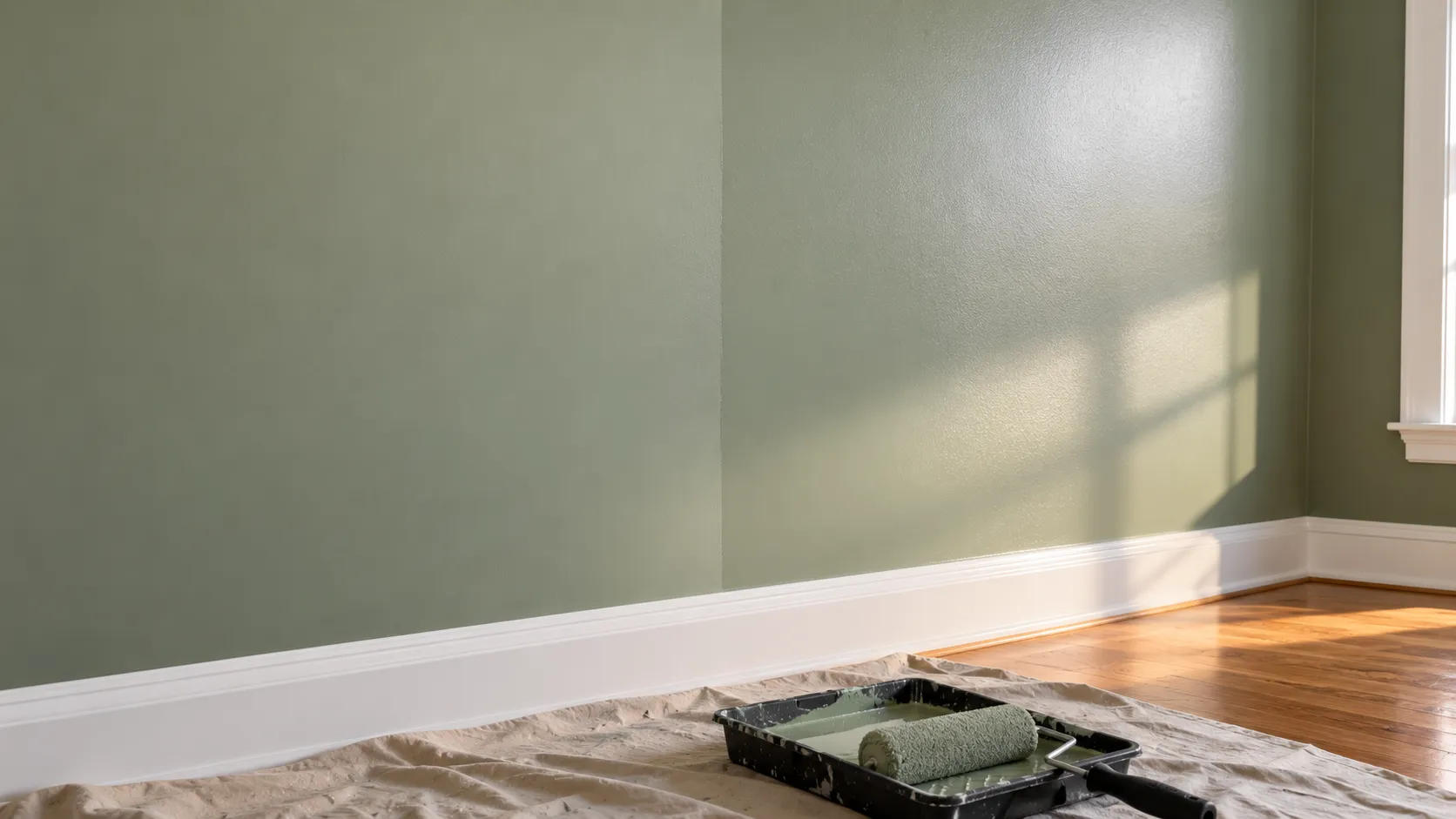
This is what we typically specify on New Jersey homes, with the manufacturers' own recommendations noted where they agree or disagree. It is a starting point; lighting and wall condition, covered in the next section, can move any room up or down a step.
| Room or surface | Our usual pick | Why |
|---|---|---|
| Living and dining rooms | Eggshell (matte if walls are rough) | Low traffic for walls; hides flaws; rich color |
| Adult bedrooms | Eggshell or matte | Rarely scrubbed; the softer look reads calm |
| Kids' rooms and playrooms | Satin | Most scrubbing of any room in the house |
| Hallways, stairways, mudrooms | Satin, or eggshell in a premium scrubbable line | Hands, bags and shoulders along the same strip of wall |
| Kitchen walls | Satin or eggshell in a stain-resistant line | Grease spatter and cleaning near the range and table |
| Bathrooms | A moisture-rated bath paint, or satin | Steam, condensation and mildew |
| Ceilings | Flat | Hides seams and rolling marks; overhead light is unforgiving |
| Trim, doors, windows | Semi-gloss (satin for a quieter look) | Hard, cleanable film on edges that get kicked and handled |
| Kitchen cabinets | Satin or semi-gloss in a trim or cabinet enamel | Needs to level smooth and stand up to daily wiping |
Living rooms, dining rooms and bedrooms
Both brands agree here. Benjamin Moore lists eggshell for living rooms, dining rooms and bedrooms, and matte for the same spaces. Sherwin-Williams' homeowner sheen guide recommends flat for adult bedrooms and formal living rooms and matte for living and dining rooms. If you love a deep, velvety color, matte gives the richest look; eggshell is the safer bet if the room sees any real use.
Kids' rooms, hallways and family rooms
Sherwin-Williams points satin and eggshell at hallways, children's bedrooms and family rooms because they are "easily washable and work well in areas that are prone to nicks and scuffs." In our experience the hallway from the garage or back door is where a finish earns its keep. If you want a low sheen there, pay for a premium scrubbable line rather than dropping to a builder-grade eggshell.
Kitchens and bathrooms
The traditional answer for moisture is semi-gloss, and Sherwin-Williams still lists semi-gloss for kitchens, bathrooms and utility areas. We rarely use semi-gloss on bathroom walls anymore, because it makes every drywall seam look like a speed bump. Better options exist: Benjamin Moore's Aura Bath & Spa is a matte bathroom paint made to resist humidity and provide a mildew-resistant coating, and Sherwin-Williams notes that Duration Home with Moisture Resistant Technology is made for moist environments like bathrooms. In a small New Jersey bathroom with a weak exhaust fan and a long summer of humid air, the product matters more than the sheen. Run the fan.
Ceilings
Flat, almost always. Benjamin Moore and Sherwin-Williams both list flat for ceilings. A ceiling is lit from the side by every window and light fixture, so any sheen shows roller lines and drywall tape. The exception is a bathroom ceiling over a shower, where we use the same moisture-rated product as the walls.
Trim, doors and cabinets
Trim and doors get semi-gloss by default, and Benjamin Moore lists semi-gloss for trim, doors, cabinets and wainscoting, calling it one of the best finishes for kitchen cabinets. Satin trim is a popular, softer look in newer homes and is perfectly durable in a good enamel. For cabinets we use enamels designed for the job, such as Benjamin Moore Advance, rather than wall paint. There is more on cabinets on our kitchen cabinet painting page, and on how the application method changes a cabinet finish in spray vs brush cabinet painting.
How Do Light and Wall Condition Change the Sheen Choice?
Sheen is really a decision about light. Sherwin-Williams' gloss guide says the choice should factor in lighting and the position of windows, and that you might not use a high-gloss finish in a room flooded with natural light. It also puts the rule plainly: paints with a lower gloss or sheen hide wall imperfections better than paints with a higher one.
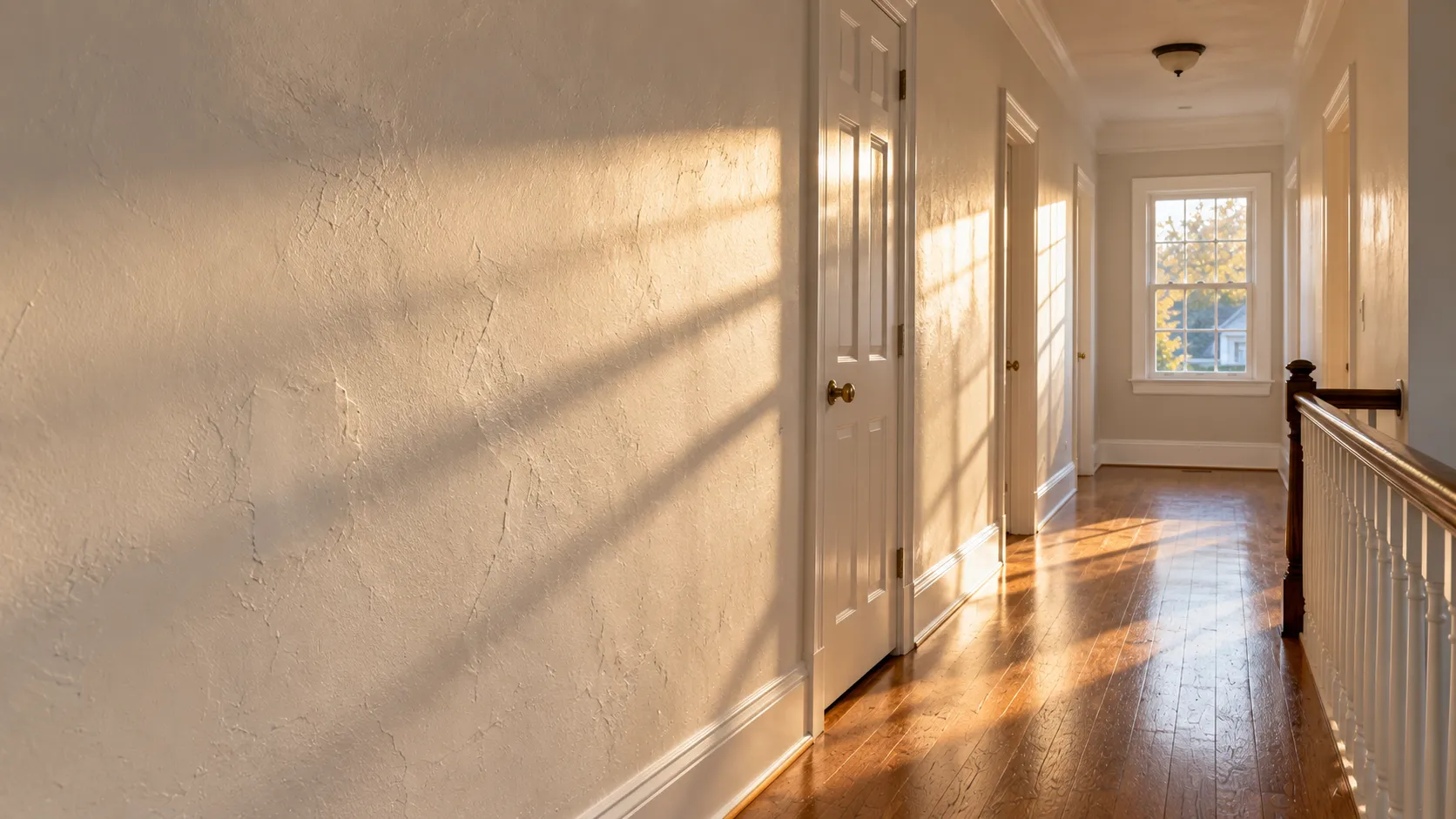
The light that matters most is raking light: sun or a lamp hitting the wall at a low angle. Stand at the end of a long hallway with a window at the far end, or look at the wall beside a sliding door in late afternoon. Raking light turns every nail pop, patch, taped seam and roller lap into a shadow, and the shinier the paint, the sharper those shadows get. A satin that looks fine on a 3-inch chip at the paint store can look very different across 14 feet of wall in that light.
Wall condition is the other half. Plenty of homes in older parts of Monmouth and Middlesex counties still have original plaster, often with decades of patches, cracks that were filled and filled again, and gentle waves from hand troweling. On those walls we usually recommend eggshell at most, or a matte, even in rooms that would otherwise get satin. The alternative is a much bigger prep bill to skim-coat the walls flat. Newer drywall in a well-finished house can take satin with no problem.
Our practical test: paint a large sample, at least two feet square, on the worst-lit wall in the room, and look at it at night with the lamps on and again in morning light. It costs a sample quart and saves repainting a room. Sheen is worth raising at a color consultation too (ours is free with every estimate).
Is Eggshell or Satin Easier to Touch Up?
Eggshell is easier to touch up than satin. Touch-ups are where sheen decisions come back to bite, usually a year after the job when someone patches a picture hook. Benjamin Moore's touch-up guide is blunt: "The flatter the finish, the easier to touch up; the glossier the finish, the more challenging." It also advises using the same brush or roller as the original job, because different applicators leave different textures.
The failure you will see is called flashing. Sherwin-Williams' flashing guide defines it as "an uneven appearance of a paint coating's gloss, sheen or luster" and lists causes that include porous surfaces, uneven film thickness and too thin a coat. Spackle is porous, which is why a touched-up nail hole in satin often shows up as a dull or shiny halo. Sherwin-Williams' fix is to spot-prime patched areas to level off the porosity, then apply an additional coat to even out the sheen. In satin, we usually repaint the wall corner to corner rather than chase spots.
Sherwin-Williams' Emerald data sheet adds two useful tips: touching up with the same batch and the same application method as the original helps, and when the original was sprayed, running the touch-up paint through the spray tip helps it match. Practical advice for homeowners:
- Keep a labeled quart of each wall and trim color, with the product line and sheen written on the lid.
- Touch up with the same tool type, feathering the edges and keeping the patch small.
- In satin or semi-gloss, plan on repainting a whole wall section rather than dabbing a spot.
Can You Mix Sheens in One Room?
Yes. Mixing sheens is normal and usually looks better than using one sheen everywhere. The classic combination in New Jersey homes is flat ceiling, eggshell walls and semi-gloss trim. That contrast gives the room a crisp edge where trim meets wall, and it puts the hardest finish on the surfaces that get kicked and wiped.
A few combinations to think through:
- Walls and trim in the same color, different sheens. A popular modern look, often with matte or eggshell walls and satin or semi-gloss trim. The sheen change alone defines the trim.
- Accent walls. Keep the same sheen as the other walls. An accent wall in a different sheen tends to look like a mistake in side light.
- Open floor plans. Choose one wall sheen for the connected space and change it only at a real break, like an inside corner or a door casing.
- Ceiling color on the walls. If walls and ceiling are the same color, keep the ceiling flat. A satin ceiling reflects the whole room back at you.
Can You Paint Eggshell Over Satin, or Satin Over Eggshell?
Yes, both ways. Sheen is a property of the top coat only, so once two full coats of the new paint are on, the old sheen no longer shows. What changes is the prep, because new paint grips a dull surface better than a shiny one.
| Going from | Prep | What to watch for |
|---|---|---|
| Satin to eggshell (eggshell over satin) | Wash, then a light scuff-sand with fine-grit paper to take the shine off; wipe off the dust | Thin spots let the old satin glint through in side light; two full coats |
| Eggshell to satin (satin over eggshell) | Wash, patch, and spot-prime every patch; sanding is light or none on a dull, clean eggshell | Satin shows dents, patches and roller laps the eggshell was hiding |
| Semi-gloss or gloss to either | Wash and sand until the surface is dull all over | Adhesion; this is where peeling starts if the gloss is not dulled |
The manufacturers' instructions back this up. Benjamin Moore's guide to preparing walls for painting says sanding is necessary on surfaces previously painted with a gloss or high-gloss paint, and recommends fine-grit sandpaper over water-based paint and a medium grit (100 to 150) over oil-based paint. It also says to wash walls first, with a grease-cutting detergent in kitchens. The Regal Select data sheets say simply that glossy areas should be dulled. Satin is not a gloss, but it is shiny enough that we always scuff it before going to a lower sheen; it costs a few minutes a wall and removes the guesswork.
Going up in sheen is the riskier direction for looks, not adhesion. A wall that looked fine in eggshell can look patchy in satin, because Sherwin-Williams' flashing guidance traces uneven sheen to porous patches and uneven film, and satin makes both easier to see. Spot-prime every patch before the first coat.
One check before any of this: if the old paint is oil-based, latex will not hold on it without the right primer, whatever the sheen. Our guide to why paint peels covers latex over oil and the other common adhesion failures.
What Sheen Should You Use Outside?
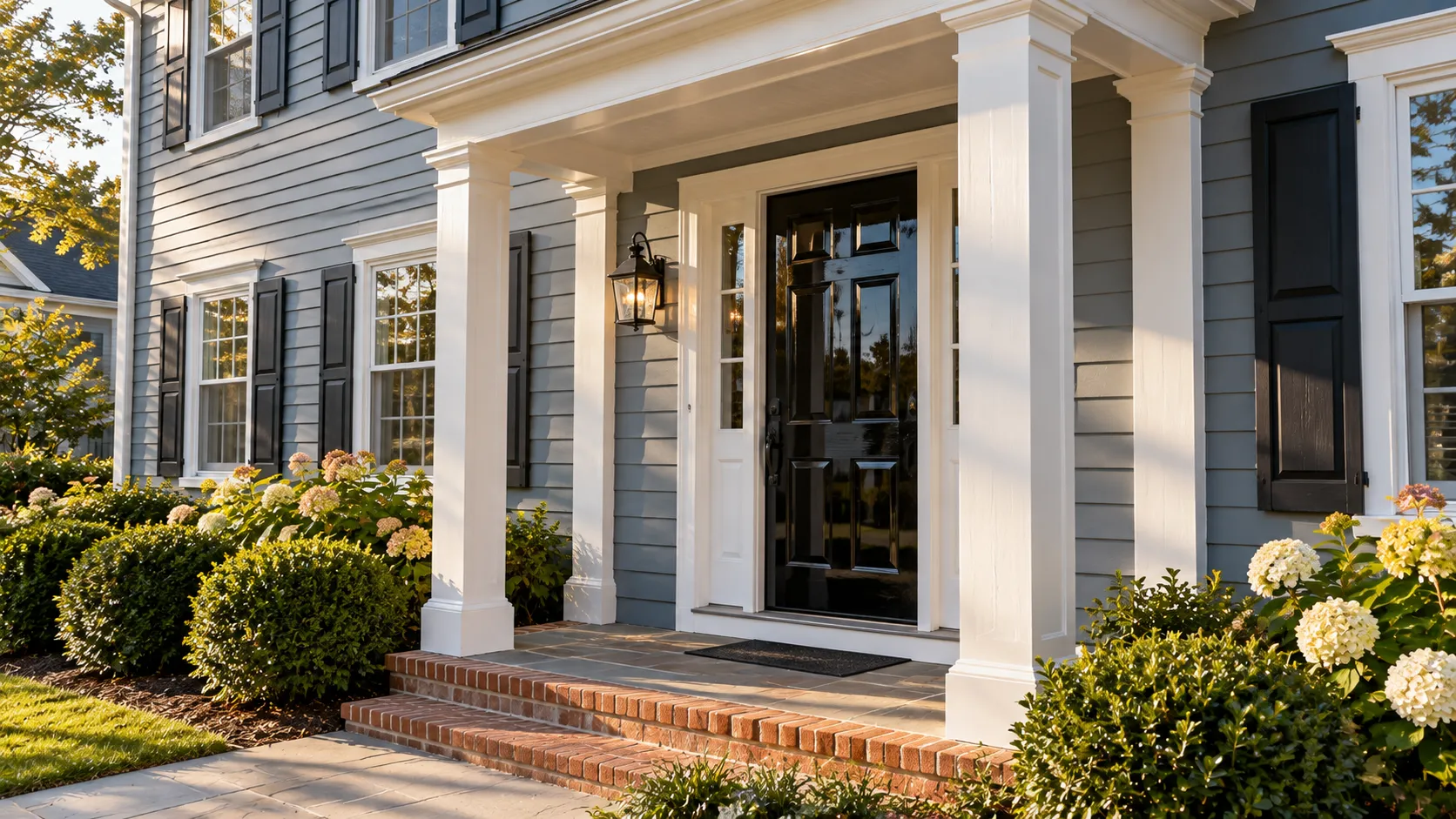
Outside, use a flat or low sheen on siding and satin or gloss on trim and doors. The same logic applies as indoors, with weather added. Sherwin-Williams' exterior color and coatings guide says a flat finish can soften the look of siding and hide blemishes, that trim including windows, shutters and fascia often benefits from satin, and that a lustrous gloss finish helps doors and decorative features stand out while making cleaning easier. Benjamin Moore also points satin at windows, shutters and trim.
What we see on the job in New Jersey: a low-sheen finish on wood clapboard and cedar shake hides the grain and old paint edges, while a satin on siding holds up to dirt a bit better and is easier to rinse. Near the shore in Ocean and Monmouth counties, trim and front doors take salt air, wind-driven rain and hard sun, so a satin or gloss enamel on those surfaces is easier to wash down in spring. Freeze-thaw winters are hard on any exterior film, and good prep and a quality product matter far more there than the sheen. Our exterior painting page covers how we prep New Jersey siding and trim.
What About Sanding Glossy Trim in a Pre-1978 NJ Home?
Switching sheens, or just repainting glossy trim, usually means sanding. Paint does not grip a hard, glossy surface well, and manufacturers say so: Benjamin Moore's Regal Select data sheet instructs that glossy areas should be dulled before painting. On old trim, that sanding is where the risk is.
Many homes in our area were built before 1978. The EPA's guidance for homeowners says homes built before 1978 are more likely to have lead-based paint and that activities like sanding and cutting can create hazardous lead dust and chips. Under the EPA's Renovation, Repair and Painting rule, anyone paid to disturb paint in pre-1978 housing generally has to be certified. The exemption for minor work covers six square feet or less of paint per room inside, or 20 square feet or less outside (window replacement is always covered), and unless the paint has been documented as not lead-based, the rule applies. A house full of original window casings, baseboards and doors is well past six square feet a room.
If you are sanding old glossy trim yourself, test it first. If you hire someone, ask how they handle lead-safe work before you sign.
Does Sheen Change the Price?
Usually not, within the same product line. On Benjamin Moore's site, Regal Select Eggshell and Semi-Gloss were both listed at $84.99 a gallon when we checked in September 2026. Store prices and contractor pricing vary, but the sheen itself is rarely what moves the paint bill. The product line is.
Where sheen does change cost is labor. Higher sheens show more, so a satin or semi-gloss wall needs better patching and sanding to look right, and old plaster in satin may need skim coating. Switching an entire house of trim from semi-gloss to a different product means more scuff-sanding and, in pre-1978 homes, lead-safe work practices. For what a full job costs, see our guide to how much it costs to paint a house in NJ or the cost guide.
Do You Need a Painter to Choose or Change a Sheen?
Usually not. Choosing a sheen is something most homeowners can do themselves, and repainting a bedroom in eggshell is a very reasonable DIY weekend. Buy a premium line, use a good roller cover, keep a wet edge, and paint a big sample first. Where it is worth calling a pro is a room with bad raking light and damaged walls, a whole house of glossy trim in a pre-1978 home, cabinets, or anywhere you want satin or semi-gloss to look flawless on a large, well-lit wall. Those are the jobs where the prep decides the result.
If you do hire, in New Jersey a home improvement contractor has to be registered with the Division of Consumer Affairs, and the state's consumer brief on hiring contractors says written contracts are required for projects over $500 and must include the contractor's registration number. Get the product line and sheen for each surface written into the contract, too.
Frequently Asked Questions
Is satin or eggshell better for walls?
For most living rooms, dining rooms and bedrooms, eggshell is better: it hides wall flaws and touches up more easily. Satin is better for kids' rooms, busy hallways and family rooms, where you will scrub the walls more often. In premium lines like Sherwin-Williams Emerald or Benjamin Moore Regal Select, every sheen the line offers is made to be washable.
Which is shinier, satin or eggshell?
Satin is shinier within the same product line. Across brands it can flip: Sherwin-Williams Emerald Satin is rated at 10 to 20 units at 85°, about the same as Benjamin Moore Regal Select Eggshell at 15 to 22 units at 85°. Compare the gloss numbers on the data sheets, not just the names.
What's the difference between eggshell and satin paint?
The difference is sheen: satin reflects more light than eggshell. That makes it a little easier to scrub and better at resisting stains, but it shows bumps, patches and roller marks more and is harder to touch up. Eggshell has a lower, softer glow that hides flaws and blends touch-ups more easily.
What sheen is best for a bathroom?
A moisture-rated bath paint is best, such as Benjamin Moore Aura Bath & Spa (matte) or Sherwin-Williams Duration Home with Moisture Resistant Technology. Without one, use satin or semi-gloss for better moisture resistance. Good ventilation matters as much as the sheen.
What sheen should trim and doors be?
Semi-gloss is the standard for trim and doors because it is hard and easy to clean. Satin gives a softer, more modern look and is still durable in a quality enamel. Gloss or high gloss is used on front doors and for a formal look, but it shows every flaw.
Is eggshell or matte better for walls?
Matte is better for rooms that are mostly looked at, such as bedrooms, dining rooms and rooms with older plaster walls, because it hides more flaws and gives a richer color. Eggshell is better in busier rooms because it is easier to wipe clean. With premium scrubbable matte paints, the gap has narrowed a lot.
Can you paint satin over eggshell?
Yes. A clean, sound eggshell wall can be repainted in satin. Wash it, patch and spot-prime any repairs, and apply two coats. Expect the satin to show wall flaws that the eggshell was hiding. In homes built before 1978, sanding old paint calls for lead-safe work practices.
Can you paint eggshell over satin?
Yes. Wash the wall and lightly scuff-sand the satin with fine-grit paper so the new paint grips, then apply two full coats of eggshell. Once the wall is fully covered, the old satin sheen does not show. Benjamin Moore advises dulling glossy areas before repainting.
Are satin and eggshell the same?
No. Within the same product line, satin is shinier, more scrubbable and less forgiving of wall flaws than eggshell. Across brands the names overlap, so one brand's satin can match another's eggshell. Compare the gloss numbers on the data sheets.
Does the sheen affect the price of paint?
Usually not within the same line. Benjamin Moore listed Regal Select Eggshell and Semi-Gloss at the same $84.99 per gallon in September 2026. Higher sheens can raise labor cost, though, because walls need more careful prep to look smooth.
Talk to Us About Sheens for Your Rooms
The right sheen depends on your light, your walls and how you live in each room, and it is much easier to decide with samples on the wall than with a chip in your hand. NJ Painting Co. is a family-owned, licensed and fully insured company at 36 Church Rd, Morganville, NJ 07751, and we have been painting New Jersey homes for more than 20 years with Benjamin Moore and Sherwin-Williams products. Every estimate is free and includes an in-home color consultation, and our work carries a two-year workmanship warranty.
Learn more about our interior painting services, see the towns we cover in Monmouth County and our other service areas, or call (732) 239-0932 and request a free estimate.
About the author
Written by the NJ Painting Co. team
NJ Painting Co. is a family-owned painting contractor based in Monmouth County, in business since 2004. We are licensed and fully insured, work with Benjamin Moore and Sherwin-Williams paints, and back our work with a 2-year workmanship warranty. We serve Monmouth, Middlesex, Ocean, Mercer, Somerset and Burlington counties, plus Union, Essex, Hudson, Bergen and Passaic in North Jersey.