Fully Licensed & Insured in New Jersey
Skip to content

Kitchen Cabinet Painting in Monmouth County

Kitchen cabinet painting in Monmouth County is, more often than not, a makeover for a kitchen that was built well and dated badly. The boxes are solid, the layout works and the drawers still run, but the doors are golden oak, a cherry stain that has gone orange, or a white that has turned to cream around the handles. NJ Painting Co. is a family-owned painting company at 36 Church Rd in Morganville, in our home county, and our cabinet painters have been refinishing kitchens across Monmouth since 2004, from Marlboro, Holmdel and Colts Neck to Red Bank, Rumson and the bayshore towns.

Cabinet painters for Monmouth County kitchens

Kitchen cabinet painting in Monmouth County is, more often than not, a makeover for a kitchen that was built well and dated badly. The boxes are solid, the layout works and the drawers still run, but the doors are golden oak, a cherry stain that has gone orange, or a white that has turned to cream around the handles. NJ Painting Co. is a family-owned painting company at 36 Church Rd in Morganville, in our home county, and our cabinet painters have been refinishing kitchens across Monmouth since 2004, from Marlboro, Holmdel and Colts Neck to Red Bank, Rumson and the bayshore towns.

Cabinet painting is a spray job, not a brush job. Doors and drawer fronts come off and are numbered, hardware is bagged by location, every surface is degreased and sanded, and the cabinets are primed and sprayed with Benjamin Moore or Sherwin-Williams cabinet enamel for a smooth, even finish a brush cannot match. Every Monmouth County estimate is free and done in your kitchen, and the scope comes back in writing. Call (732) 239-0932 to arrange one.

What a Monmouth County cabinet painting job includes

  • A free estimate in your kitchen: we count doors and drawer fronts, check what the cabinets are made of, and test any existing paint for adhesion.
  • Doors and drawer fronts removed and numbered to their openings, with hardware bagged by location.
  • Counters, appliances, backsplash and floors masked, with the sink and refrigerator left reachable.
  • Every surface degreased, rinsed and sanded; red oak grain filled and sanded flat if you want a smooth finish.
  • Old screw holes filled and re-drilled, and holes from old hardware filled before priming if the new pulls have a different spacing.
  • Previously painted cabinets tested and, where the old paint is lifting, taken back on those areas before priming.
  • A bonding or stain-blocking primer chosen for the cabinet material, sanded smooth.
  • Doors, drawer fronts, frames, end panels and islands sprayed in Benjamin Moore or Sherwin-Williams cabinet enamel, including two-tone kitchens.
  • Vanities, laundry cabinets and painted built-ins quoted in the same scope and sprayed to match.
  • Doors rehung and adjusted so the reveals line up, hardware reinstalled, and a walkthrough covering cure time and care.

The oak kitchens of the 1980s and 1990s

The Census Bureau's American Community Survey puts about 41,000 of Monmouth County's roughly 272,000 homes in the 1980s, more than any other single decade, and about 29,000 more in the 1990s. Together that is roughly a quarter of the county's housing, and much of it is in the inland townships we drive through every day: Marlboro, Morganville, Holmdel, Colts Neck, Freehold, Howell, Wall Township and Tinton Falls. Those houses were built in the years when a kitchen meant solid red oak or maple doors with a clear or honey finish, and a lot of those kitchens are still in place, now thirty or forty years on.

They are the best candidates for cabinet painting we see. The face frames and boxes are usually plywood or solid wood, the doors are raised-panel or flat-panel in hardwood, and the factory finish has worn through around the sink and the handles rather than failing everywhere. Red oak has an open grain that shows through paint as a texture, which some homeowners like and some want gone. If you want a smooth, modern surface, the grain is filled and sanded flat before priming, and that adds a step we price in the estimate rather than discover later.

In the larger houses in Holmdel and Colts Neck the kitchens were often upgraded during the 2000s to cherry or stained maple, sometimes with a glaze rubbed into the door profiles. Those finishes are hard and slick, and they are exactly the surfaces where a cabinet paint job succeeds or fails on preparation: the factory topcoat has to be degreased and sanded to a dull, even scratch, and a bonding primer used, or the enamel will chip at the door edges. Stained cherry also bleeds tannin through light colors, which a stain-blocking primer stops. We decide which primer each kitchen needs at the estimate, not on the first morning.

The other common request in these houses is a two-tone kitchen: perimeter cabinets in a white or light gray and the island in a darker color, or the reverse. That is straightforward to do in the same visit, because the island is sprayed as its own unit anyway. Our guide to kitchen cabinet paint colors walks through the whites, grays, blues and greens homeowners choose most often for both.
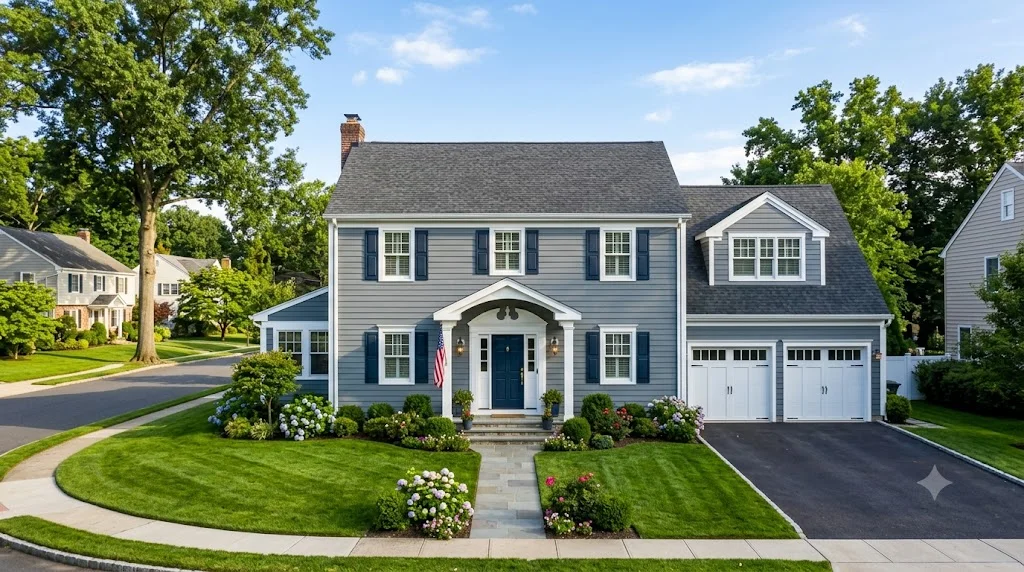
Older and custom kitchens in the river and shore towns

The kitchens in Red Bank, Fair Haven, Rumson, Little Silver, Oceanport, Deal and Avon-by-the-Sea are a different mix. Monmouth has about 38,700 homes built in 1939 or earlier, around one in seven, and many of them sit in those boroughs, so the kitchen may have been rebuilt once in the 1960s, again in the 1990s, and sometimes again since. Some are custom-built with inset doors and furniture-style details, some are older cabinets that have already been painted by hand, and some are a mix of original built-ins and later additions.

Previously painted cabinets are where the prep matters most. A brushed finish from a previous owner may have drips, brush marks and thick paint in the door profiles, and if it was latex over an oil or factory finish without the right primer it may be peeling at the edges. We test adhesion at the estimate. Where the old paint is sound, it is sanded smooth and primed; where it is lifting, it has to come off those areas before anything goes on top, and we tell you which doors need that so the quote reflects it.

Inset and custom doors need more care when they are sprayed and rehung, because the gap around an inset door is small and a thick coat can make it bind. We keep the film thin and even, and adjust each door after it is rehung so the reveals line up. What we do not do is modify the cabinets themselves. Changing door styles, adding crown or panels, or rebuilding boxes is cabinetmaker's or carpenter's work, and refacing with new doors and veneer is a separate trade.

Bayshore kitchens and smaller mid-century houses

On the bayshore, in Keyport, Hazlet, Aberdeen, Matawan, Middletown and New Monmouth, the housing runs earlier: Monmouth built about 70,000 homes in the 1950s and 1960s, a quarter of today's stock, and a lot of them are capes, ranches and split-levels along Raritan Bay and Sandy Hook Bay. Kitchens there are smaller, often a galley or an L, and many still have the original solid-wood boxes behind a later set of doors, or doors that have been painted once already.

Cabinet painting suits those kitchens because the door count is low and the cost of replacement is out of proportion to the size of the room. The questions are usually about what is underneath: older cabinets may have an oil-based finish, or several finishes, that needs a bonding primer, and hinges and screw holes worn by sixty years of use need attention before rehang. We fill and re-drill blown-out screw holes, and if you are changing to new knobs or pulls with a different spacing, the old holes are filled before the cabinets are primed.

Bathroom vanities, laundry-room cabinets and painted built-ins such as bookcases and pantry cupboards in these houses can go into the same scope as the kitchen, sprayed with the same enamel so they match.

Keeping a Monmouth household running while the cabinets are done

Most of the kitchens we paint in Monmouth County belong to families who are cooking in them every day, so the job is planned to keep the kitchen as usable as possible. Counters, appliances, backsplash and floors are masked, but the sink and refrigerator are kept reachable, and the spray area is ventilated. Doors and drawer fronts are sprayed and dried separately from the face frames, and the frames are done in place.

Cabinet enamel dries to the touch quickly but keeps hardening for weeks; Benjamin Moore says its waterborne alkyd can take up to thirty days to reach full hardness. Doors are rehung and the kitchen is back in use well before that, but for the first few weeks we ask you to clean gently, avoid hanging damp towels over doors, and put shelf liner under anything heavy that slides. Most families find that easier than they expect.

Timing is your call. Inland households often book the work for the summer, when the school schedule loosens, or for early fall, so the kitchen is finished well before the holidays. If there is a date the kitchen has to be finished by, a family gathering or a visit, tell us at the estimate and we will work back from it.

Related services

Reviews

What Our Customers Say

5.0· 76 Google Reviews

“What a great experience! I was moving into my new home and needed the painting done prior to the move. I called NJ Painting on a Thursday and they came out, provided a great price, and then completed the entire job in one day. Super responsive. Professional workmanship. Will absolutely use them and refer to others.”

MB

Matt Blumenstein

View on Google

“Job was done quickly and results were great. Workers were respectful and Matt was very communicative throughout the process. We will definitely be using them for future projects.”

ds

dyan shenn

View on Google

“Top notch team and process. Timely, neat & clean with satisfaction guaranteed. Highly recommend.”

RH

R.J. Hinners

View on Google

Frequently Asked Questions

Everything you need to know about estimates, scheduling, and getting your home or business professionally painted.

Usually it is the best value in the house. Oak kitchens from that period were generally built with solid doors and sturdy boxes, and the part that has aged is the finish, not the construction. Painting keeps what is worth keeping and changes what you see. The one choice to make is about the grain: oak's open grain shows through paint as a texture, and if you want a smooth surface we fill and sand it flat before priming, which is a separate line in the estimate.

Often, yes, but the peeling paint has to be dealt with first. A brushed latex finish laid over a factory or oil finish without the right primer tends to peel at edges and around handles. We test each door at the estimate. Where the old paint is still bonded, we sand it smooth and prime over it; where it is lifting, those areas are taken back before priming. The doors that need more work are named in the scope so the price is clear before we start.

It can, and the question starts with the age of the house rather than the cabinets. Federal rules require an EPA-certified firm for paid work that disturbs paint in a pre-1978 home, and sanding painted doors and frames disturbs it. About a quarter of Monmouth homes date from the 1950s and 1960s, by Census figures, so this comes up more in bayshore capes than in 1990s oak kitchens inland. We are not EPA Lead-Safe Certified, so we say at the estimate when part of a job needs a certified contractor.

No. We paint and refinish the cabinets you have. Refacing, which means new doors and drawer fronts with veneer applied to the frames, is a different trade, and so is changing the door style or modifying the boxes. If your kitchen needs that, we will say so at the estimate rather than paint something that will not give you the result you want. Our guide to cabinet refinishing, painting and refacing sets out how the three compare.

Still have questions?

Can't find the answer you're looking for? Browse our answers to common NJ painting questions, give us a call or send a message.

Ready for a flawless finish?

Every project starts with a free on-site estimate and a professional color consultation — across Monmouth County and beyond.

Call (732) 239-0932
  • Detailed written proposal
  • Transparent, itemized pricing
  • No obligation
  • Reply within one business day