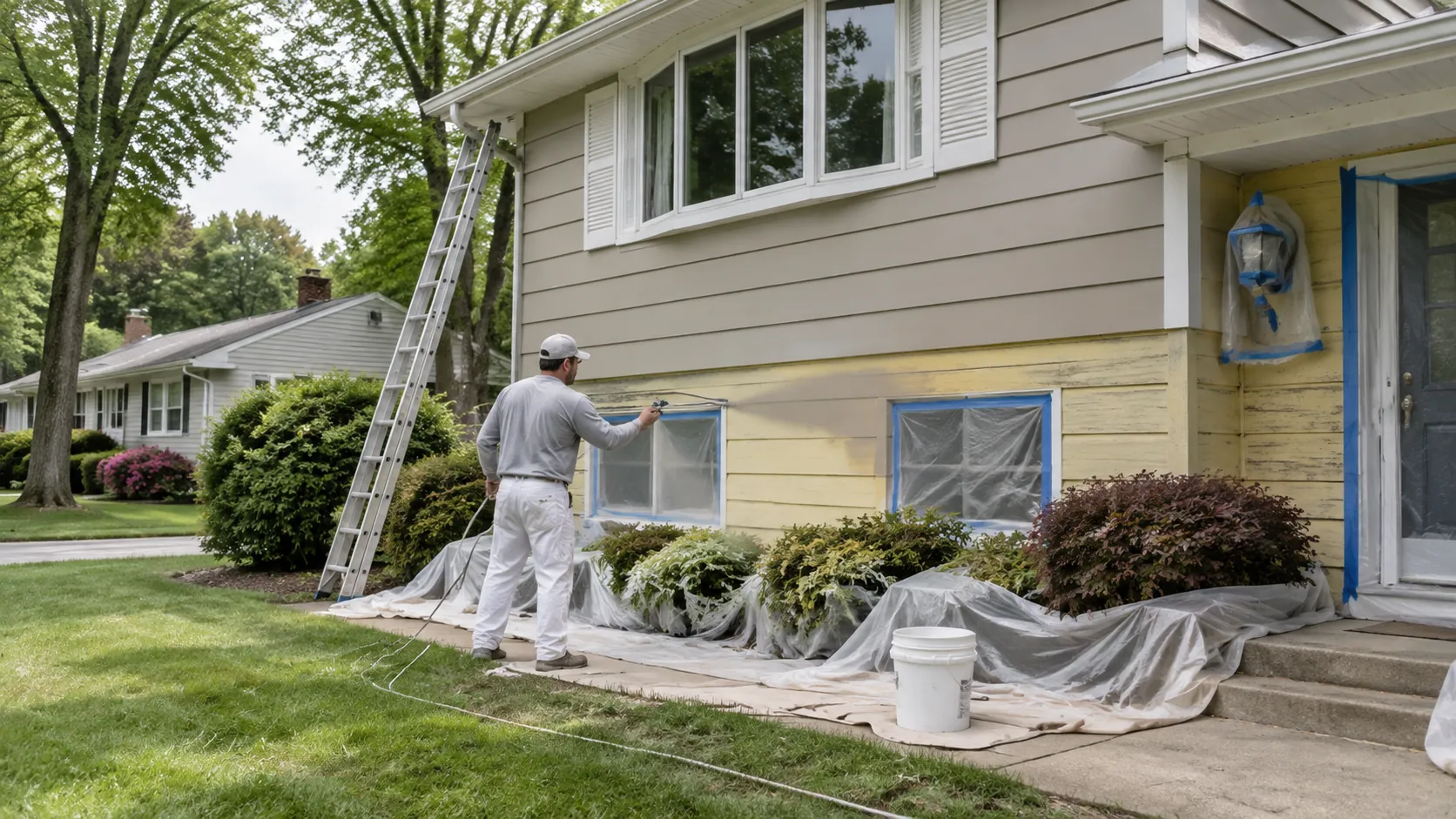
Yes, you can paint vinyl siding, and you can paint aluminum siding. Both hold paint well for years when the surface is sound, thoroughly cleaned of chalk and mildew, and coated with a 100% acrylic exterior paint. On vinyl, the one hard rule is color: stay at or lighter than the original shade unless you use a paint line formulated for darker colors on vinyl, or the panels can warp in the sun.
Painted siding fails in predictable ways. Almost every failure we are called to fix traces back to chalk that was never washed off, a dark color on vinyl that could not handle it, or siding that should have been replaced instead.
We are a family-owned painting company in Morganville, painting exteriors across Central Jersey for more than twenty years. A lot of that work is faded vinyl on newer colonials and the baked-enamel aluminum on post-war capes, ranches and split-levels. This guide is what we tell homeowners on those estimates.
The Quick Answer for Each Material
Vinyl siding can be painted if it is flat, solid and not cracked or warped. Both major paint makers publish guidance for it. Sherwin-Williams' vinyl siding guide says vinyl siding in sound condition does not need to be primed before its Emerald exterior paint, and it warns that going darker than the original shade risks warping. Benjamin Moore's professional guide says that in most cases a primer is not necessary because its exterior products used with its Colors for Vinyl palette are self-priming on properly prepared vinyl.
Aluminum siding is, if anything, easier to paint well. The factory finish is a baked enamel that eventually oxidizes into a chalky powder. Wash that chalk off completely, spot-prime any bare metal, and a quality acrylic topcoat bonds to it very well. This Old House's aluminum siding guide recommends an acrylic primer made for metal surfaces and says acrylic paint is the best choice for the finish coats. Unlike vinyl, aluminum does not soften in the sun, so you can go darker.
Vinyl vs. Aluminum Siding: What Changes When You Paint
The two look similar from the curb and behave very differently under a brush.
| Factor | Vinyl siding | Aluminum siding |
|---|---|---|
| Prep | Wash off dirt, chalk and mildew; rinse well; let dry fully | Heavy chalk removal is the main job; wash until a rag comes away clean |
| Primer | Usually none on sound vinyl; always prime pitted or porous vinyl | Spot-prime bare or scratched metal with a primer rated for aluminum; bonding primer over stubborn residual chalk |
| Paint | 100% acrylic exterior latex, from a line approved for vinyl | 100% acrylic exterior latex |
| Color limits | Same shade or lighter, unless the color is from a vinyl-safe palette | Essentially none; dark colors are fine |
| Typical repaint cycle | About 5 to 10 years, per This Old House | About 5 to 10 years, per This Old House |
| Typical issues | Warping from dark colors, loose or cracked panels, mildew on north walls | Chalking, dents, bare spots, loose trim coil at corners and soffits |
The repaint-cycle figures come from This Old House: its vinyl siding cost guide says painted vinyl typically lasts 5 to 10 years depending on climate and paint quality, and its aluminum guide says a fresh coat every 5 to 10 years keeps the house looking newly painted. On the shore side of Monmouth and Ocean counties, where salt air and wind-driven rain work the south and east walls hard, plan for the shorter end of that range on those elevations.
Before You Paint: Four Tests We Run on Every Siding Job
These four checks take about fifteen minutes and decide whether the job is a paint job at all.
1. The chalk test
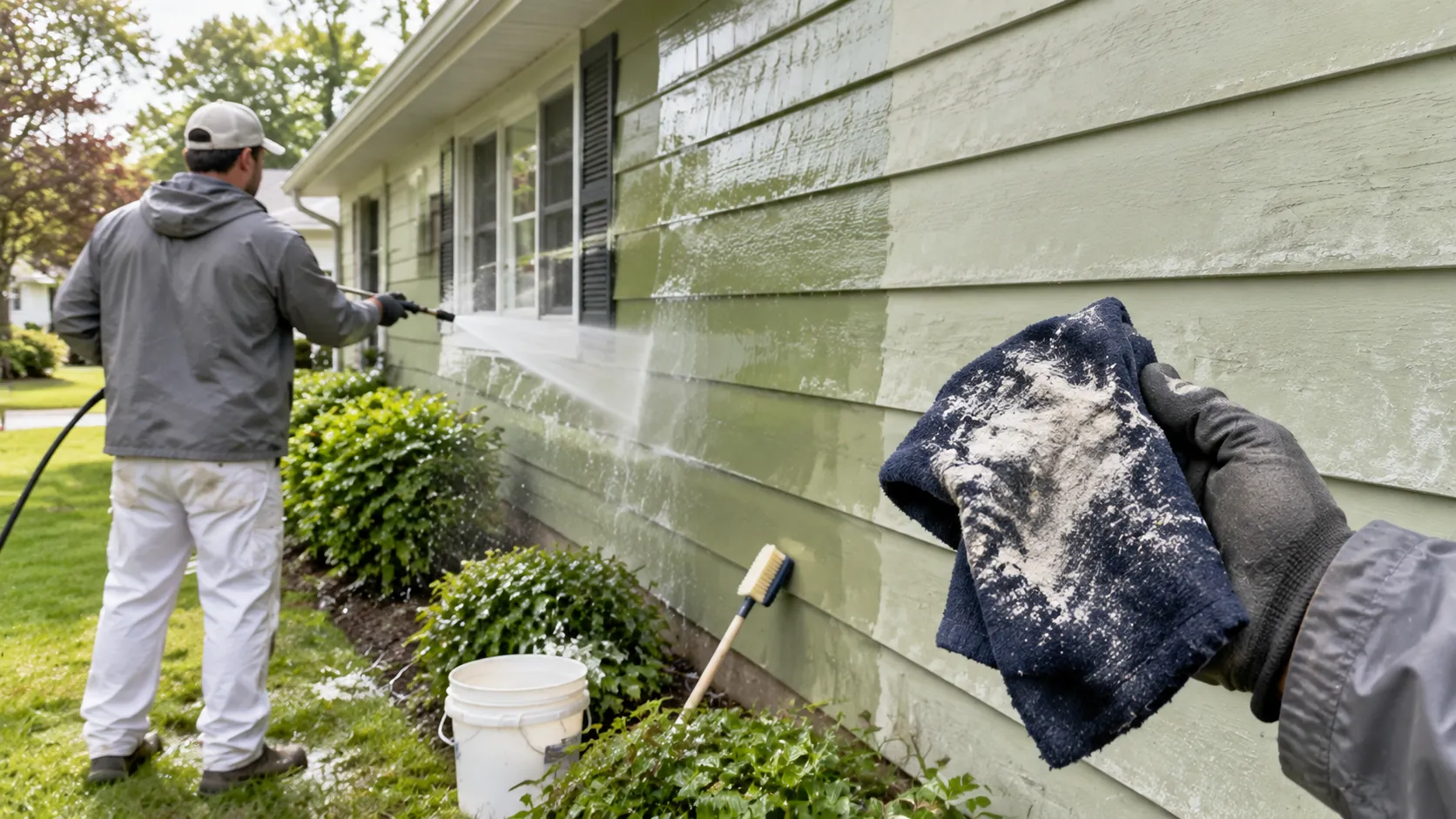
Rub a damp dark rag, or the palm of your hand, firmly across the siding on the sunniest wall. If it comes away white or colored with powder, the surface is chalking. That powder is degraded binder and pigment, and paint that goes over it sticks to the chalk, not to the siding. This Old House recommends the same test with a dark cloth. On aluminum siding from the 1950s through the 1970s, heavy chalk is close to universal, and it is not a problem as long as it is washed off.
2. The flatness check
Sight down each wall from the corner. Vinyl that has already rippled, bowed or pulled loose from its nail hem will not flatten out under paint. Look especially at walls facing a neighbor's windows: the Polymeric Exterior Products Association (formerly the Vinyl Siding Institute) documents that sunlight concentrated by reflective low-E windows has distorted both light and dark vinyl siding. If you already have a melted stripe, painting will not fix it, and the cause needs to be blocked first.
3. The damage walk
Cracked vinyl, old satellite-dish holes and dents in aluminum show more after painting, not less, because a fresh uniform sheen draws the eye to every flaw. We mark each one on the estimate.
4. The adhesion test (previously painted siding)
If the siding has been painted before, we press a strip of painter's tape firmly onto a cleaned spot, then rip it off fast. Flakes of old paint on the tape mean the existing coating is losing its grip, and the new coat will only be as good as the layer under it. Those areas get scraped back to a sound edge before anything else happens.
Warranties: What to Check Before You Paint Vinyl
You will read online that painting vinyl always voids the warranty. In reality it depends on the manufacturer and the specific warranty language, which is why Sherwin-Williams tells homeowners to check with their siding manufacturer whether painting will void any remaining coverage. Find your paperwork, or the manufacturer's name on the back of a spare panel, and read the exclusions before you commit.
How We Paint Vinyl and Aluminum Siding, Step by Step
The sequence is the same for both materials, with differences at the primer stage. This is the process our crews follow on an exterior painting job.
- Wash. Siding gets a detergent wash and a low-pressure rinse. For vinyl, Sherwin-Williams' surface preparation FAQ calls for power washing or warm soapy water to remove dirt and chalk, and Benjamin Moore recommends hand scrubbing or power washing. For chalky aluminum, This Old House suggests a mix of 1 cup chlorine bleach, 1 cup TSP and 1 gallon of water, and rinsing from the bottom up while spraying at a downward angle. That downward angle matters: blast upward into the laps and you push water behind the siding onto the sheathing.
- Re-test for chalk. After the wall dries, we run a dark rag over it again. If it still picks up powder, it gets washed again. This is the step most often skipped, and it is the reason most painted aluminum peels.
- Let it dry completely. Both paint makers say the surface must be completely dry before painting. Water trapped in the laps of vinyl or behind aluminum needs a warm, breezy day to leave.
- Repair what paint can cover. Small dents in aluminum get an exterior-rated filler, sanded and spot-primed, and open joints in trim coil at corners and window heads get re-sealed. Cracked, loose or missing panels are siding work, not painting, so we mark them at the estimate for a siding installer to deal with before we start.
- Prime where needed. On vinyl, prime only pitted or porous areas, which Benjamin Moore says must always be primed; it names its Fresh Start High Hiding All Purpose Primer for this step. On aluminum, spot-prime any bare metal where the factory finish has worn through, using a primer rated for aluminum. Where a wall still feels slightly chalky after repeated washing, a bonding primer over the whole wall locks the residue down.
- Caulk. Seal gaps at window and door casings and trim with an exterior acrylic or siliconized acrylic caulk. We do not caulk the horizontal laps of vinyl or the J-channel; vinyl has to be free to move, and siding needs to drain.
- Two finish coats. We spray and back-roll or brush, working with the lap so the bottom edge of each course is fully coated. Sherwin-Williams calls for two coats on new, bare vinyl; on previously painted siding one coat can be enough if the color is not changing, but on a color change we plan two.
Choosing a Color Without Warping Your Vinyl
This is the part of painting vinyl that has no equivalent on aluminum, and it is the one that causes the worst failures.
Vinyl siding is a plastic, and its factory color was chosen with its heat tolerance in mind. A darker paint absorbs more solar heat than the original color did. Sherwin-Williams says plainly that using a color darker than the siding's original shade risks warping and other defects. Its VinylSafe color collection explains the history: homeowners used to be limited to the same color or lighter, and VinylSafe now offers 100 colors, including a limited selection of darker shades formulated to resist warping or buckling when applied to a sound, stable vinyl substrate. Those colors are available in several of its exterior lines, including Emerald, Duration, Resilience, Latitude and SuperPaint. Benjamin Moore's answer is its Colors for Vinyl palette of more than 75 colors for use with select Benjamin Moore exterior paints.
A few practical rules we follow on vinyl:
- Know your LRV. Every paint color has a light reflectance value, a number from 0 (black) to 100 (pure white) printed on the chip or listed on the maker's site. The higher the number, the less heat the color absorbs. If a color's LRV is lower than your current siding, you are going darker, and it has to come from a vinyl-safe palette.
- Do not trust a color match on a computer screen. We hold physical samples against the siding on the south and west walls, in afternoon light.
- Treat the sunniest walls as the test. A south-facing wall with no shade, or one facing a neighbor's low-E windows, sees the most heat. If a color is marginal there, it is the wrong color.
- Trim and shutters are different. Aluminum trim coil, wood trim and doors can go darker without the same risk. A lot of the "dark house" look people want can come from deep shutters, a dark front door and contrasting trim over lighter vinyl.
On aluminum siding, none of this applies. Aluminum does not soften at sunlight temperatures, so a charcoal or deep navy over a 1960s pastel is fine. For palettes that suit New Jersey colonials, capes and ranches, see our roundup of popular exterior house colors in NJ. For help picking a palette, our free estimates include an in-home color consultation.
Painting Aluminum Siding on Older New Jersey Homes
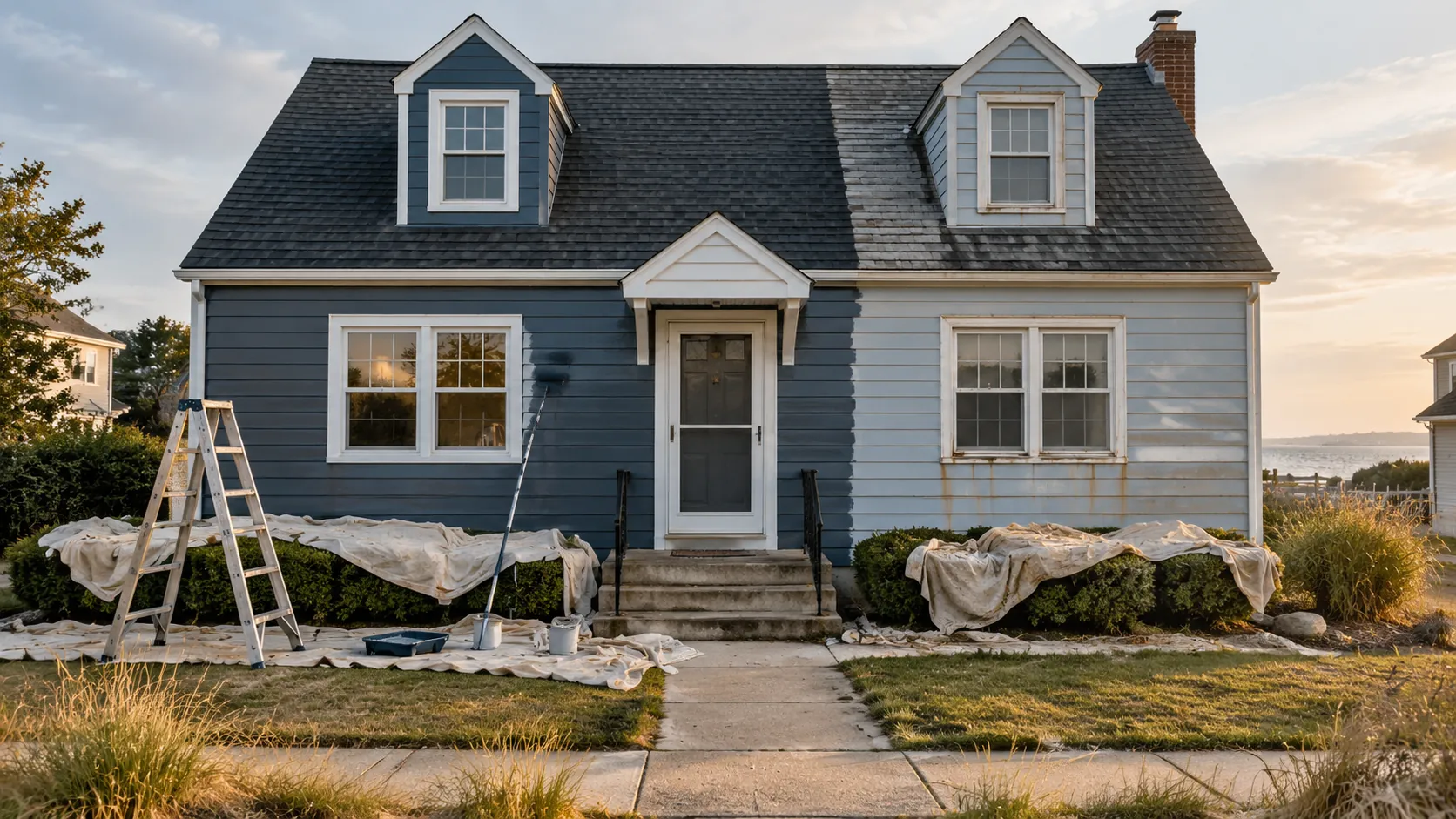
Aluminum siding went onto an enormous number of houses in the post-war decades. Plenty of the ranches, capes and split-levels in towns like Middletown, Hazlet, Freehold and Toms River still wear it, often in a faded original color. On those houses, painting is usually a better value than stripping and re-siding, and there are a few things specific to aluminum we watch for.
Oxidation is the whole game
The old baked enamel on aluminum chalks heavily. On the aluminum-sided homes we paint, the wash stage often takes longer than the first coat of paint. We do not rush it, because this is the difference between a job that lasts and one that sheets off in strips a few winters later.
Bare metal needs primer
Where the factory finish has worn through, usually on the sunniest walls, at corners and on the bottom course where mowers and weed trimmers hit, the aluminum is exposed. Paint does not bond reliably to bare aluminum without a primer rated for it. Those spots get cleaned, scuffed and spot-primed before the finish coats.
Dents and damaged panels
Small dents can be filled with an exterior-rated filler, sanded and spot-primed. Deeply creased or torn panels are better replaced by a siding installer, though finding a matching profile for older aluminum siding can take some looking. On a whole-house repaint, a few swapped panels disappear under the new color.
Salt air on the shore
On houses near the water in eastern Monmouth and Ocean counties, salt residue settles on the siding and is part of why the wash matters so much. A thorough rinse, and a second rinse on the ocean-facing walls, keeps salt from being trapped under the new paint.
Lead Paint and Pre-1978 Homes
Many aluminum-sided homes in New Jersey were built before 1978, and that year matters. The EPA's guidance for homeowners says homes built before 1978 are more likely to have lead-based paint, that renovation projects which create even a small amount of lead dust are enough to poison a child, and that it recommends hiring a contractor certified and trained in lead-safe work practices.
On an aluminum-sided house, the concern is usually not the siding itself but what is around and under it: painted wood window sills, door casings, porch posts, soffits that were never covered, and the original wood clapboard that is often still on the wall behind the aluminum. Scraping or sanding any of those surfaces is the kind of work the rule covers. Under the EPA's Renovation, Repair and Painting program, anyone paid to disturb paint in pre-1978 housing generally has to be certified, with a minor-maintenance exception for exterior work that disturbs 20 square feet or less.
NJ Painting Co. is not an EPA Lead-Safe Certified firm. If your house predates 1978, ask any painter you are considering how they handle lead-safe work before you sign, and if you are doing the work yourself, This Old House recommends testing with a lead test kit first. Our guide to lead paint in older New Jersey homes explains the rule and the questions to ask.
When Not to Paint: Replace the Siding Instead
Paint is a finish, not a repair. We tell homeowners to put the money toward new siding, not paint, when:
- Vinyl is warped, buckled or rippled across whole walls. Paint will make it look fresher and just as wavy.
- Panels are brittle and cracking in cold weather. Old vinyl can become brittle, and every New Jersey winter's freeze-thaw cycles will keep breaking it.
- Siding is loose or falling off, or the problem is behind it. Soft sheathing, water stains inside, or mold behind the panels means the wall needs to be opened up, and painting would only hide the evidence.
- Aluminum is badly dented or torn on most elevations. A handful of dents is a repair. A house that has been hit by years of hail or ball games is a re-siding job.
- You want a dark color that is not available as a vinyl-safe shade. If only a deep color will make you happy and no vinyl-safe equivalent works, new siding in that color is the honest answer.
What It Costs to Paint Siding in 2026
Published national cost guides give a useful starting point. We have attributed each figure to its source and the date of its data; none of these are our own quotes.
| Project | National range | Source and date |
|---|---|---|
| Paint vinyl siding, per sq ft (pro) | $1 - $3, averaging about $2 | This Old House, updated June 2026 |
| Paint vinyl siding, 1,500 - 2,500 sq ft home | $2,500 - $5,000 | This Old House, updated June 2026 |
| Paint vinyl siding, 2,500 - 3,500 sq ft home | $4,000 - $7,500 | This Old House, updated June 2026 |
| DIY paint and supplies, 1,500 - 2,500 sq ft home | $500 - $1,500 | This Old House, updated June 2026 |
| Replace siding instead, per sq ft | $3 - $12 | This Old House, updated June 2026 |
| Paint aluminum siding, per sq ft | $1 - $5, most pay $2 - $4 | Fixr, updated August 2024 |
| Paint aluminum siding, whole house | $4,000 - $6,300 typical, about $5,700 average for roughly 1,500 sq ft | Fixr, updated August 2024 |
This Old House's vinyl figures come from its cost to paint vinyl siding guide, which also says painting costs, on average, about half as much as full siding replacement, and that vinyl-safe paint runs $30 to $80 a gallon and covers roughly 350 to 400 square feet per gallon. The aluminum figures come from Fixr's aluminum siding painting cost guide; its data is older, so treat it as a floor rather than a 2026 price.
Why New Jersey quotes land higher
Expect Central Jersey quotes to sit at or above the upper half of those national ranges. Painter wages in New Jersey run about 20 percent above the national median, and overall price levels in the state are well above the national index; we lay out the government data behind both in our guide to how much it costs to paint a house in NJ. On siding specifically, three things push a number up:
- Chalk and mildew removal. A heavily oxidized aluminum house can need two full wash passes and a drying day in between.
- Height and access. Two-story walls, walkout basements and steep lots mean more ladder and staging time.
- Trim, shutters and doors. A siding-only price is rarely what people actually want. Trim, soffits, fascia, shutters and the front door are usually added.
For more pricing detail by service, see our painting cost guide. The only accurate number for your house comes after someone walks it, and our estimates are free.
When to Schedule a Siding Repaint in New Jersey
Weather decides whether paint on siding cures properly. Benjamin Moore's vinyl guide says not to apply its paint when air and surface temperatures are below 40°F, and to avoid painting in direct sunlight, since the surface should not be hot to the touch. In practice that means we follow the shade around the house: east walls in the afternoon, west walls in the morning.
Late-season jobs carry a specific risk called surfactant leaching. Sherwin-Williams explains that moisture and cool temperatures slow curing and let water-soluble ingredients float to the surface, leaving tan, brown or clear streaks that can feel soapy or sticky. On a cool October evening in New Jersey, heavy dew on fresh paint is a common trigger. It usually rinses off with water, but the better fix is scheduling: we stop early enough in the day for the paint to set before dew falls. Our guide to painting in cold weather in NJ covers the fall cut-off in more detail.
Frequently Asked Questions
Can you paint vinyl siding on a house?
Yes. Vinyl siding that is flat, solid and not cracked can be painted with a 100% acrylic exterior paint from a line approved for vinyl. The surface must be washed free of dirt, chalk and mildew and completely dry. Choose a color the same as or lighter than the original, or a darker color from a vinyl-safe palette such as Sherwin-Williams VinylSafe or Benjamin Moore Colors for Vinyl.
What is the best paint for vinyl siding?
A premium 100% acrylic exterior latex from a line the manufacturer approves for vinyl. Sherwin-Williams offers its VinylSafe colors in lines including Emerald, Duration, Resilience, Latitude and SuperPaint, and Benjamin Moore offers its Colors for Vinyl palette in select exterior lines. We use both brands and choose based on the house, the color and the exposure.
Can you paint aluminum siding?
Yes, and it usually paints very well. The key steps are washing off all chalky oxidation, spot-priming any bare metal with a primer rated for aluminum, and applying two coats of 100% acrylic exterior paint. Aluminum does not warp from heat, so dark colors are an option.
Should you paint aluminum siding or replace it?
If the panels are mostly straight and securely attached, painting is usually the better value; This Old House puts siding painting at about half the cost of replacement on average. Replace instead if the siding is badly dented across most walls, loose, or hiding water damage behind it.
Do you need to prime vinyl siding before painting?
Usually not. Sherwin-Williams says sound vinyl siding does not need primer before its Emerald exterior paint, and Benjamin Moore says its exterior paints used with its Colors for Vinyl palette are self-priming on properly prepared vinyl. Pitted or porous vinyl is the exception, and Benjamin Moore says it must always be primed.
How much paint does it take to paint vinyl siding?
This Old House puts vinyl-safe paint coverage at roughly 350 to 400 square feet of siding per gallon, at $30 to $80 a gallon. Divide your wall area by that coverage and double it for two coats on a color change; textured or chalky siding lands at the low end of the coverage range.
Will painting my vinyl siding void the warranty?
It depends on your siding manufacturer's warranty terms, and that is what Sherwin-Williams tells homeowners to check. Read the exclusions in your warranty or call the manufacturer before painting.
How long does paint last on vinyl or aluminum siding?
This Old House estimates 5 to 10 years for painted vinyl, depending on climate and paint quality, and recommends a fresh coat every 5 to 10 years on aluminum. In our experience, prep quality and sun exposure matter as much as the paint: sunny south walls and shore houses wear first.
Get Your Siding Looked At
With faded vinyl or chalky 1960s aluminum alike, the first question is always whether the siding should be painted at all, and that is a fifteen-minute conversation in your driveway. NJ Painting Co. is a family-owned, licensed and fully insured painting contractor at 36 Church Rd, Morganville, NJ 07751, and we have been painting homes across Central Jersey for more than twenty years. We use Benjamin Moore and Sherwin-Williams products, put a two-year workmanship warranty in writing, and our free estimates include an in-home color consultation.
We work throughout Monmouth County, Ocean County, Middlesex County and the rest of our service areas; see our local pages for exterior painting in Monmouth County and Ocean County, and our guide to how often to repaint. Browse finished exteriors in our project gallery, then call us at (732) 239-0932 or request your free estimate online.
About the author
Written by the NJ Painting Co. team
NJ Painting Co. is a family-owned painting contractor based in Monmouth County, in business since 2004. We are licensed and fully insured, work with Benjamin Moore and Sherwin-Williams paints, and back our work with a 2-year workmanship warranty. We serve Monmouth, Middlesex, Ocean, Mercer, Somerset and Burlington counties, plus Union, Essex, Hudson, Bergen and Passaic in North Jersey.