Yes, you can paint a steel garage door, a front door and vinyl shutters. A steel garage door takes a 100% acrylic latex exterior paint, never oil or alkyd; dark colors can make an insulated door bow or void its warranty; and vinyl shutters should not go darker than the original color unless the color comes from a vinyl-safe palette.
The rules for doors and shutters are stricter than for siding, and they change the look of a house from the street more than their size suggests. We are a family-owned painting company in Morganville and we paint garage doors, entry doors, door trim and shutters as part of our exterior work across Monmouth, Middlesex, Ocean, Mercer, Somerset and Burlington counties and in Union, Essex, Hudson, Bergen and Passaic. Doors and shutters are small jobs that go wrong in very specific ways, so this guide sticks closely to what the manufacturers say. Every instruction quoted below was read from the maker's own document on 20 October 2026. Your own door's manual wins over anything here, so find it before you buy paint.
The Short Answer
- Steel garage doors: wash, do not sand except where there is bare metal or rust, prime bare spots, and use a high-quality 100% acrylic latex exterior paint. Clopay's instructions say oil-based and alkyd-modified paints "will void the warranty of your door."
- Dark garage doors: check the paint color's LRV. On some insulated doors, black and very dark colors are not allowed at all, and dark colors can cause "thermal bowing."
- Front doors: wood, steel and fiberglass doors all paint well with a good exterior enamel, but they need cleaning, the right primer and patience. A fresh door that is closed too soon sticks to its weatherstripping.
- Vinyl shutters: paint them no darker than the original color, or use a vinyl-safe color system. Benjamin Moore sets the line at an LRV of 55.
- Weather: most of this work needs the door or shutter at 50°F or more, and the paint data sheet's minimum, whichever is higher.
- Pre-1978 houses: old wood doors and shutters often carry lead paint. Sanding them is regulated, and NJ Painting Co. is not an EPA Lead-Safe Certified firm.
Can You Paint a Garage Door?
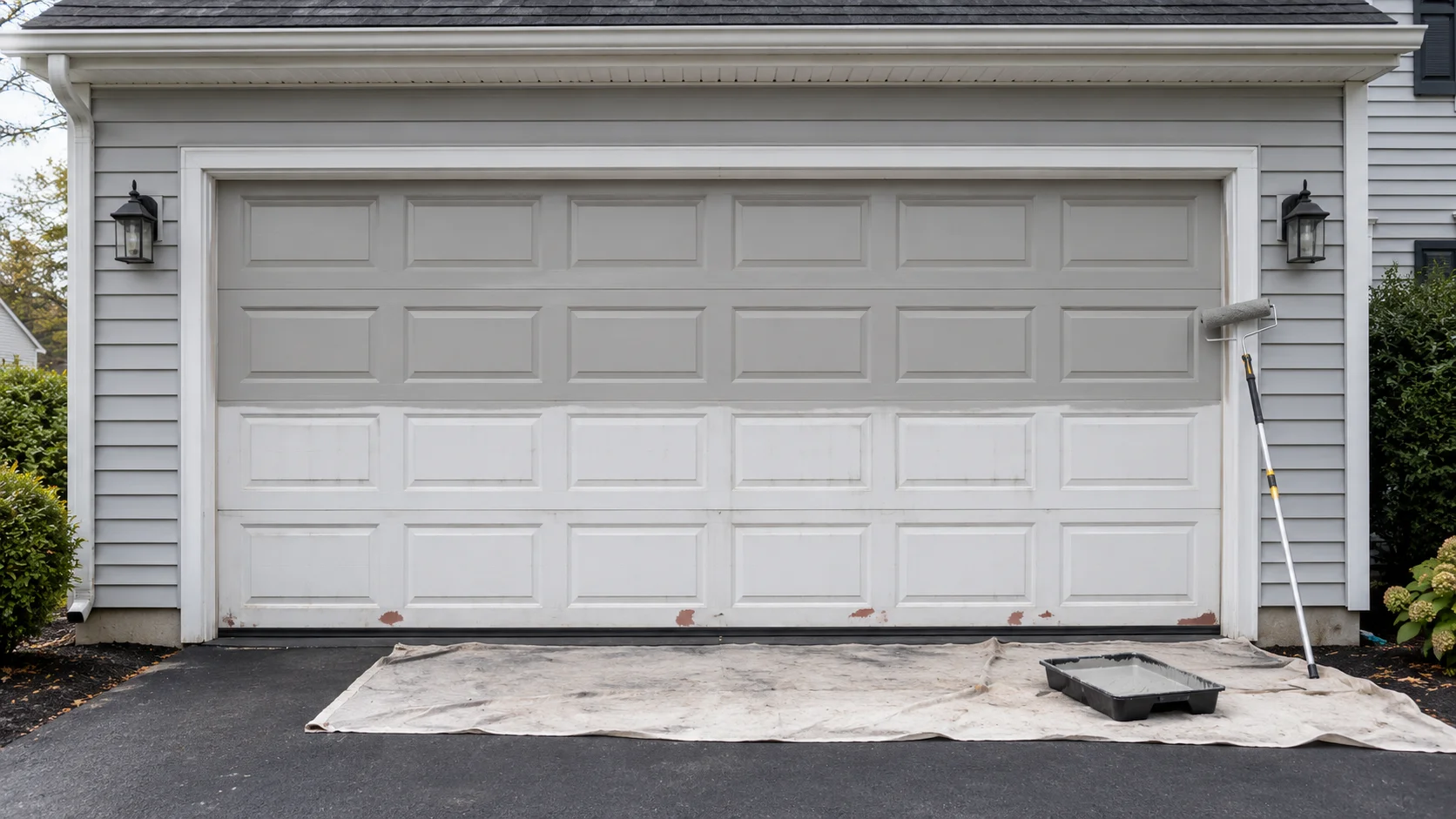
Yes. Most garage doors on New Jersey houses are steel, factory-finished in white or almond, and they paint well if you follow the maker's instructions. Those instructions are unusually specific, and ignoring them is how people end up with a door that peels in sheets or a warranty that no longer applies.
What the manufacturer says about steel garage doors
Clopay, one of the largest residential garage door makers, publishes painting instructions for its doors, effective 11 May 2020. The core of them:
- Paint: "Your garage door can be painted with high quality 100% acrylic latex (flat, satin or semi-gloss) exterior grade paint."
- Not oil: "Do not use any type of oil-based paint or alkyd modified paint. These paints will void the warranty of your door."
- Primer: "A bonding primer is strongly recommended as a first coat to improve adhesion of the top coat of latex paint."
- Do not sand the whole door: "Sanding could remove rust-inhibiting compounds from the steel portion of the door," so sanding "should be done only to damaged areas where bare metal has been exposed."
- Clean first: a solution of trisodium phosphate or a biodegradable cleaner, "1/3 cup of powder to 1-1/2 to 2 gallons of water," then rinse. Any wax has to come off first.
- Test a patch: paint a small area, let it dry, then press masking tape on it and peel it off. "Check to see that paint adheres to door and not to tape." If it fails: "DO NOT PROCEED!"
- Warranty: "Failure to follow these instructions will void warranty of your door."
An older Clopay owner's manual adds two practical details. Bare metal that has rusted should be sanded clean and coated with "a high quality, rust inhibiting, zinc enriched primer," and the joints between the sections should be left alone: "Do not paint the joints of the sections as difficulty in operation may result that will not be covered by the limited warranty."
Other makers say different things, so treat Clopay's sheet as an example rather than a rule for your door. Find your door's brand and model (it is usually on a label on an inside edge of a section) and download its own instructions before choosing paint.
Can you paint a garage door black?
Sometimes, and on some doors not at all. A dark door absorbs much more of the sun, and an insulated steel door is a sandwich of steel skins and foam, so the outer skin expands more than the inner one and the door bows. Clopay's instructions say "doors painted dark colors may be pre-disposed to thermal bowing," that "when insulated doors are finished with a dark color, this condition may occur causing warping, rubbing, or other issues," and that "this is not considered a product defect." Its blog post on black garage doors adds that "painting your garage door black without consulting manufacturer specifications could void your warranty."
For its Coachman carriage-house line, Clopay sets hard limits by LRV (light reflectance value, from 0 for black to 100 for white): colors with an LRV of 13 to 38 require "tested and approved solar reflective paint," and "black and very dark colors (when the Light Reflective Value (LRV) is 12 or less) are NOT permitted." For its other doors, solar reflective paint is recommended rather than required.
That rules out a lot of popular colors on those doors. Tricorn Black SW 6258 has an LRV of 2.8 and Iron Ore SW 7069 an LRV of 5.6, both on Sherwin-Williams' own color pages. Both are far below 12. If you want a dark garage door, the safest route is often a factory-finished dark door, which is the route Clopay's own blog points to: its factory black finishes use "a specialized thermal-reflective paint process." A south- or west-facing door on an open New Jersey lot takes the full afternoon sun, and that is where bowing is most likely.
Wood, fiberglass and composite garage doors
A wood garage door is painted like any exterior wood: clean, scrape and sand loose paint, prime bare wood and the end grain at the bottom of each panel, then two coats. The bottom edge and the lowest panel take the most water and fail first. A fiberglass or composite door has its own finishing instructions, often with an approved product list, and those are what we follow. On any garage door we leave the weatherstripping, the bottom seal, the tracks, springs and openers alone. They are not painted, and we do not repair garage door hardware.
Painting a Front Door
A front door is the one surface on the outside of a house that people touch, lean on and look at from two feet away, so the finish matters more than anywhere else. The material decides the prep.
Wood doors
Wood entry doors are the most forgiving and the most demanding at once. Old paint has to be sound, glossy paint has to be dulled so the new coat grips, and any bare wood needs a primer. Water gets in at the bottom edge and the joints between panels and rails, so a door that is peeling at the bottom often has a water problem, not a paint problem. In a pre-1978 house, assume the old paint on a wood door may contain lead until a test says otherwise (see the lead section below).
Steel doors
Steel entry doors are painted much like a steel garage door: clean, no heavy sanding of the factory primer, spot-prime any bare or rusted metal with a metal primer, then the finish. Dents are part of the door; filler can hide small ones, but a steel door that is badly dented or rusting through at the bottom is a replacement, not a paint job.
Fiberglass doors
Fiberglass doors are the ones people worry about, and they paint well with the right preparation. Therma-Tru's finishing information says to "prime all wood-grained doors and lite frames before painting," and that on a new door "all edges of the door must be painted or stained within two weeks of installation." A brand-new fiberglass door that has stood unpainted for a season is a common find, and it is worth fixing quickly.
The paint and the sheen
Front doors want a hard, washable enamel. Sherwin-Williams describes its Emerald Urethane Trim Enamel as an "Interior/exterior waterbased urethane modified alkyd" that "can be used for interior and exterior projects alike" and is "great for windows, doors and trim." Benjamin Moore's Aura Exterior data sheet says it is "self-priming on most properly prepared substrates, including wood, fiber cement board, hardboard, nonferrous metals" and lists a separate metal primer for steel and iron. Those are the kinds of products we use; the exact one depends on the door and the color.
For the sheen, satin or gloss. Gloss looks the most finished and is easiest to wipe, and it also shows every brush mark and dent, so it suits a smooth door in good shape. Our paint sheen guide covers the trade-off.
Why a freshly painted door sticks, and what to do about it
A door painted in the morning feels dry by lunch and is still soft underneath. Close it on its weatherstripping that evening and the paint glues itself to the seal and tears when you open it the next day. In our experience the fix is time and warmth: leave the door open or propped as long as you reasonably can on the day it is painted, paint early on a warm, dry day, and do not lock it tight against the stop for the first night if you can avoid it. Data sheet recoat times assume 77°F and 50% humidity; a cool, damp New Jersey October afternoon stretches every one of them.
Dark front doors behind a full-glass storm door on a sunny wall get very hot, because the glass traps heat in the gap. If you have that arrangement and want a dark color, check what the entry door's maker says about storm doors before choosing it.
Painting Shutters
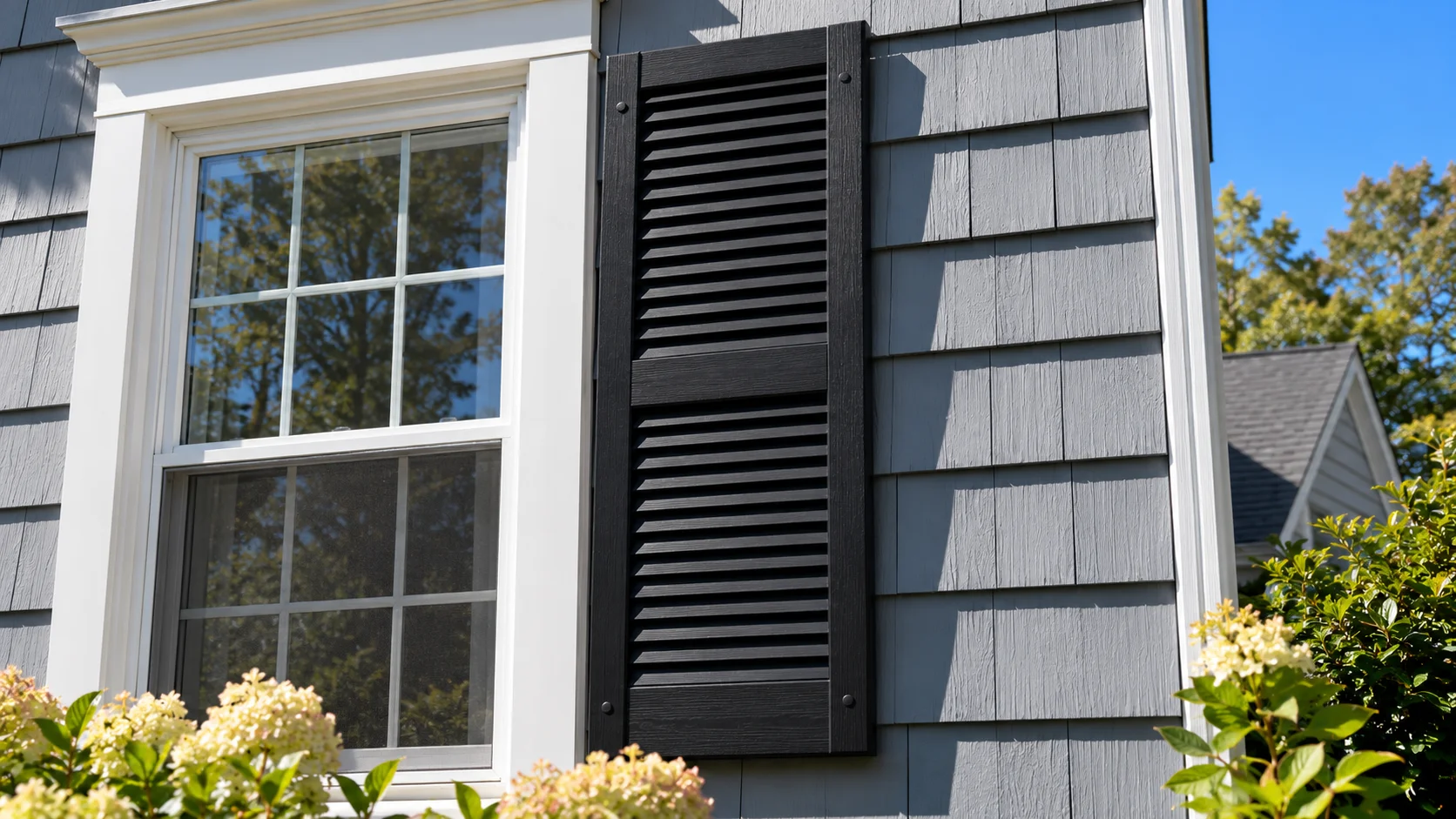
Most shutters on New Jersey houses built since the 1980s are vinyl, screwed or pinned straight into the siding. Older houses and historic districts have wood shutters, and some newer houses have composite or aluminum. They are all paintable. They do not all follow the same rules.
Vinyl shutters: the dark color rule
Vinyl softens and warps when it gets hot, and dark paint makes it hot. Sherwin-Williams' guide to painting vinyl puts it plainly: "painting vinyl with any color darker than the original shade can cause warping and other defects." Benjamin Moore's Aura Exterior data sheet sets a number: "Do not paint vinyl with any color darker than the original color or having a Light Reflective Value (LRV) of less than 55 unless it is in the Benjamin Moore approved Colors for Vinyl palette," because "otherwise, the color will absorb more heat, possibly causing the siding to warp."
That matters because the colors people want on shutters (black, navy, deep green) are almost all far below 55. The way to get them on vinyl is a color system built for it. Sherwin-Williams' VinylSafe palette is formulated to "resist warping or buckling" and includes "a variety of delightfully dark colors not normally available in vinyl-safe options." Benjamin Moore has its own approved vinyl palette. Use the color from the palette as it is, rather than having a store match a different dark color, because the matched color has not been tested on vinyl.
The same rules apply to vinyl siding, which we cover in can you paint vinyl or aluminum siding.
PVC and composite shutters and door trim
Cellular PVC trim and shutters follow a similar rule. AZEK's painting guidance says lighter colors "must have a light reflective value (LRV) of above 55" in an exterior 100% acrylic latex, darker colors require "exterior 100% acrylic latex with solar reflective pigments," and warns: "Do not adjust or customize colors at local paint stores, home centers, big box stores, or other paint providers." The wrong paint "may cause the product to overheat, leading to undesirable product defects such as warping, oil canning, or buckling."
Wood and aluminum shutters
Wood shutters are painted like any exterior wood, and louvered ones are slow, fiddly work that is easiest with the shutters off the house. Aluminum shutters need cleaning and a primer suited to non-ferrous metal before the finish coat.
On the house or off?
Vinyl shutters can usually be painted in place with the siding around them masked, which avoids breaking the old fasteners. Taking them down gives a cleaner result on the edges and lets the siding behind them be painted, but brittle old vinyl and its pins often break on the way off. We decide shutter by shutter at the estimate and tell you which way we plan to go.
Choosing the Colors
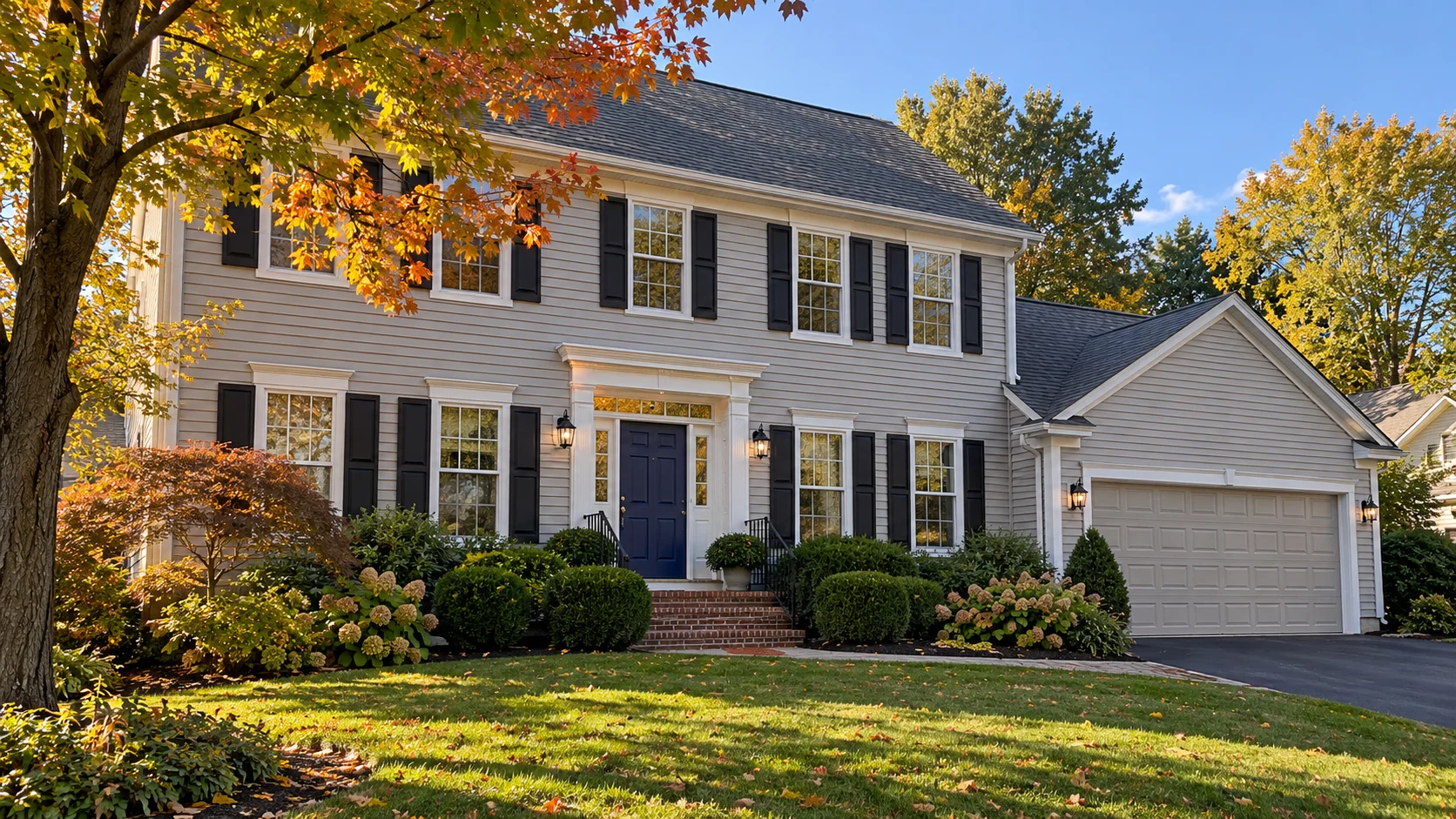
Doors and shutters are where a house can carry a stronger color, because they are small and easy to repaint. Black, charcoal, navy and deep green are the usual choices for front doors and shutters, and our guide to popular exterior house colors lists the named colors and their LRVs. A few working rules:
- Front door: almost any color works on a wood or fiberglass door. On a steel door on a sunny wall, very dark colors get hot to the touch; that is a comfort issue more than a failure.
- Garage door: match it to the body or trim of the house rather than the front door, unless the house is designed around a statement garage. A dark garage door is a large dark rectangle in the elevation, and it carries the LRV limits above.
- Shutters: check what the shutter is made of before choosing. A dark color on vinyl needs a vinyl-safe palette.
- Before you buy: check your HOA or historic district rules. Many HOAs approve door and shutter colors, and our HOA and condo painting guide covers how that approval usually works.
New Jersey Weather and Doors
The temperature limits are on every can. Benjamin Moore's Aura Exterior is rated down to 35°F; many enamels and primers are 50°F, and the Forest Products Laboratory's Wood Handbook notes that "most latex paints do not coalesce properly if the temperature drops below 10 °C (50 °F)." Use whichever minimum is higher for every product on the door. A steel door in shade on a November morning can be colder than the air.
The season runs longer near the water. Rutgers' Office of the New Jersey State Climatologist puts the average freeze-free season at 217 days along the seacoast, 179 in the central and southern interior and 163 in the northern highlands. On shore houses in Monmouth and Ocean counties, salt and sand on doors and shutters are a reason to wash them before painting and to rinse them down each spring after. Our guide to painting in cold weather covers late-season work in more detail.
Older Doors, Old Paint and the Lead Rule
Doors and shutters on a pre-1978 house are some of the places old paint is most likely to be disturbed, because a door rubs on its frame and has to be sanded to take new paint. The EPA's Renovation, Repair and Painting Program requires "that anyone paid to perform work that disturbs painted surfaces in homes, childcare facilities and preschools built before 1978 be certified." The exemption for minor exterior work at 40 CFR 745.83 is "20 square feet or less of painted surface for exterior activities." A single 16-by-7-foot garage door has 112 square feet of face, so sanding one is well past that line.
NJ Painting Co. is not an EPA Lead-Safe Certified firm. On a pre-1978 house where the old paint on a door or shutter would have to be sanded or scraped, ask any contractor who bids it for their RRP certification and certificate number. We will either scope the work so the existing paint is not disturbed, or tell you it needs a certified firm. A steel garage door or vinyl shutters installed long after 1978 are far less likely to carry lead paint than the original wood, but the rule is written around the age of the house, so ask any bidder how they are treating it. Our guide to lead paint in older homes has the details.
What We Do and What We Do Not
We paint garage doors (both sides), front and side entry doors, the trim and casing around them, and shutters of every material. We wash and prepare them, prime bare spots, and paint them in the right product for the material.
We do not replace doors or shutters, repair garage door springs, tracks or openers, or replace weatherstripping. We do not repair rotted door frames, sills or thresholds; that is carpentry, and if we find soft wood at the estimate we will point it out so a carpenter can fix it before we paint. We do not paint window trim or window sills, and we do not re-caulk windows or doors. If those need attention, we will tell you.
How We Paint a Door or a Set of Shutters
- Identify the material and the maker. Steel, wood, fiberglass, vinyl, PVC or aluminum, and the manufacturer's painting instructions where we can find them.
- Check the color. Its LRV against the door or shutter maker's limit, before anything is mixed.
- Clean. A degreasing wash and a rinse. Doors collect hand oils; garage doors collect road film.
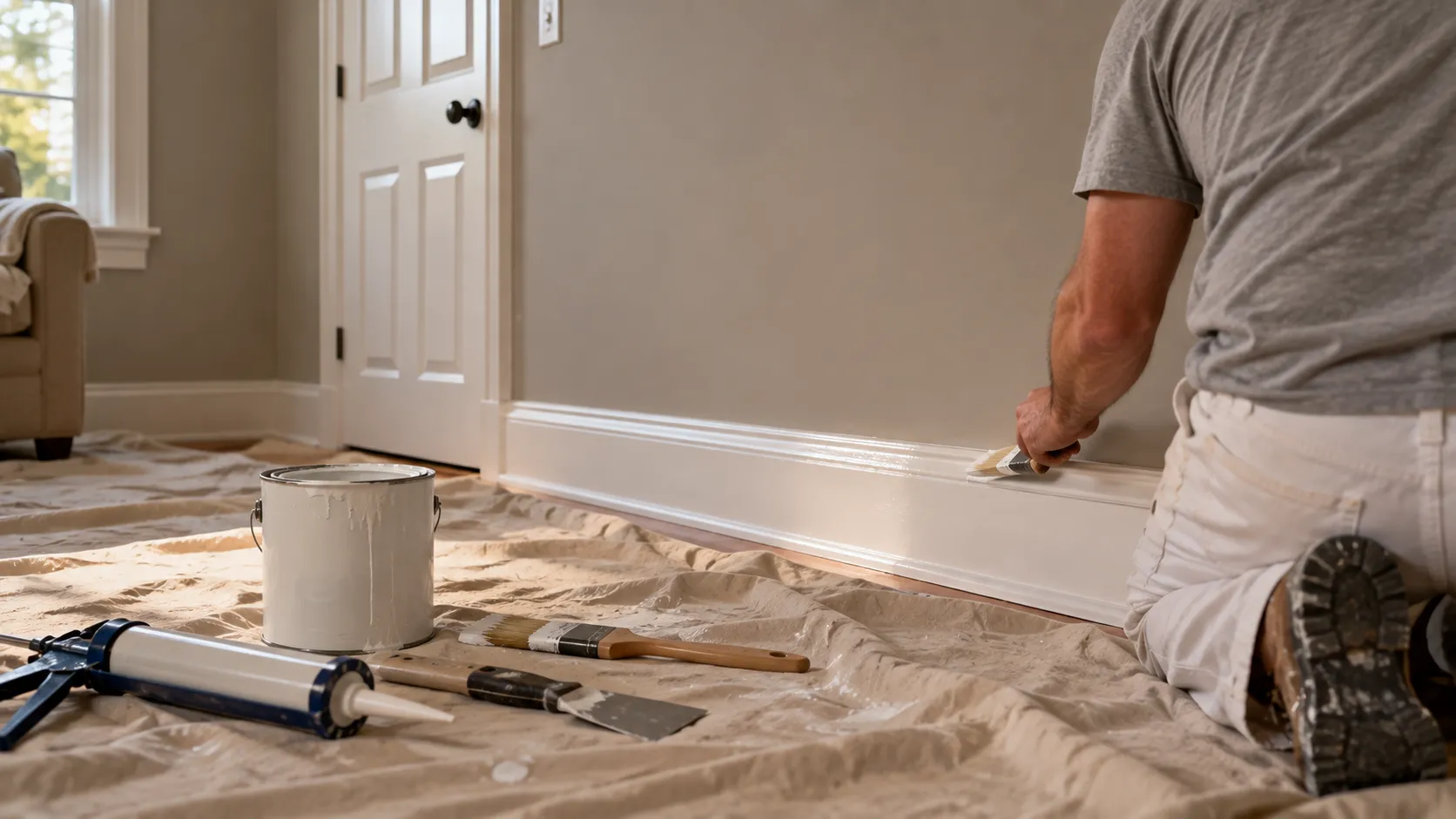
- Prepare. Scuff glossy surfaces where the maker allows it, sand loose paint on wood, spot-prime bare metal and wood.
- Test. On a factory-finished door or vinyl, a test patch and a tape pull before the whole surface.
- Two finish coats, with hardware removed or masked, glass masked, and the door left open as long as possible to dry.
Talk to Us About Your Doors and Shutters
NJ Painting Co. is a family-owned, fully insured painting company at 36 Church Rd, Morganville, NJ 07751, painting New Jersey homes for more than 20 years with Benjamin Moore and Sherwin-Williams products. Garage doors, entry doors and shutters are part of our exterior painting service, on their own or alongside the whole house. We work across Monmouth (see exterior painting in Monmouth County), Ocean (see exterior painting in Ocean County), Middlesex, Mercer, Somerset and Burlington counties and in Union, Essex, Hudson, Bergen and Passaic. The full list is on our service areas page.
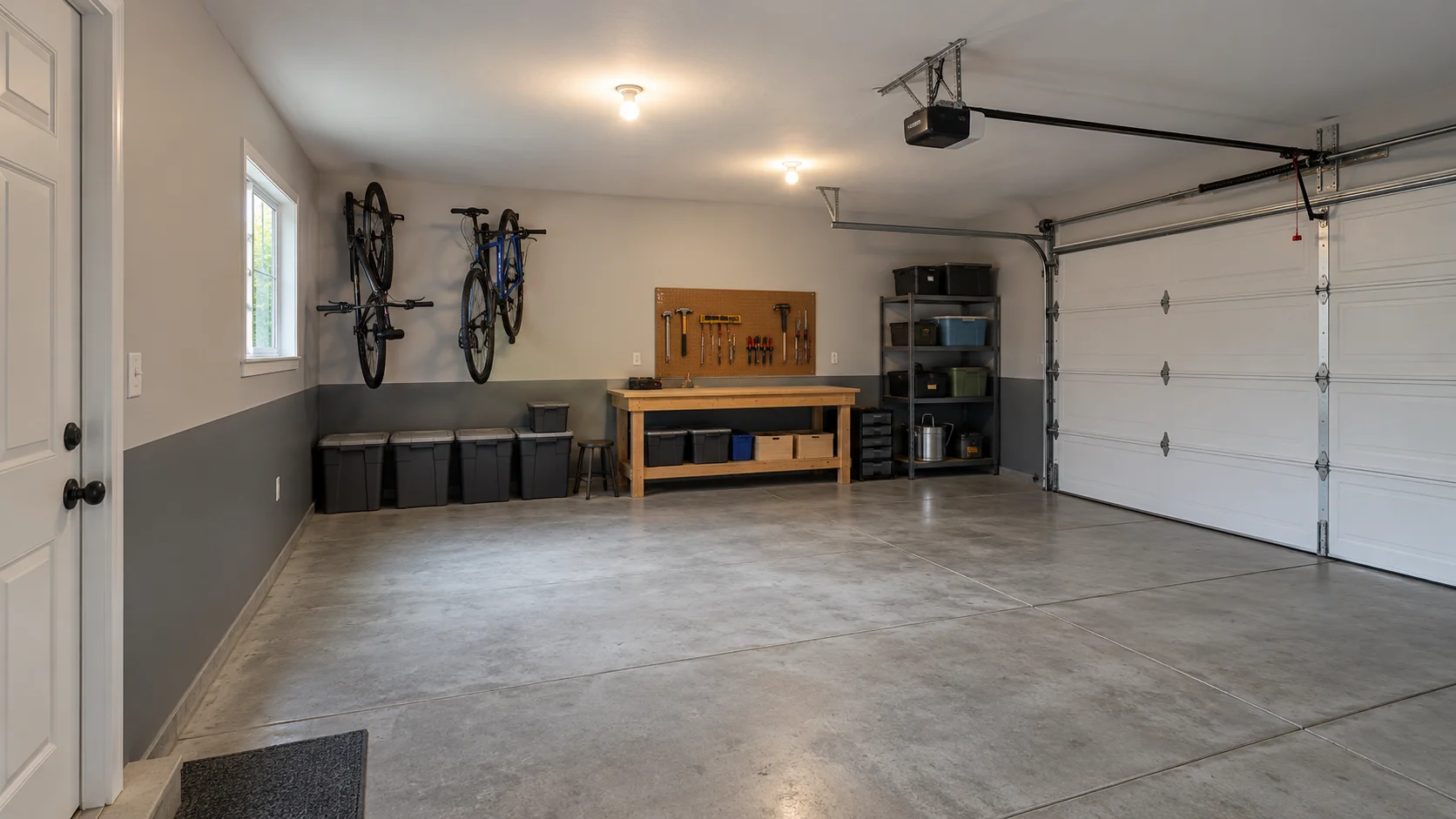
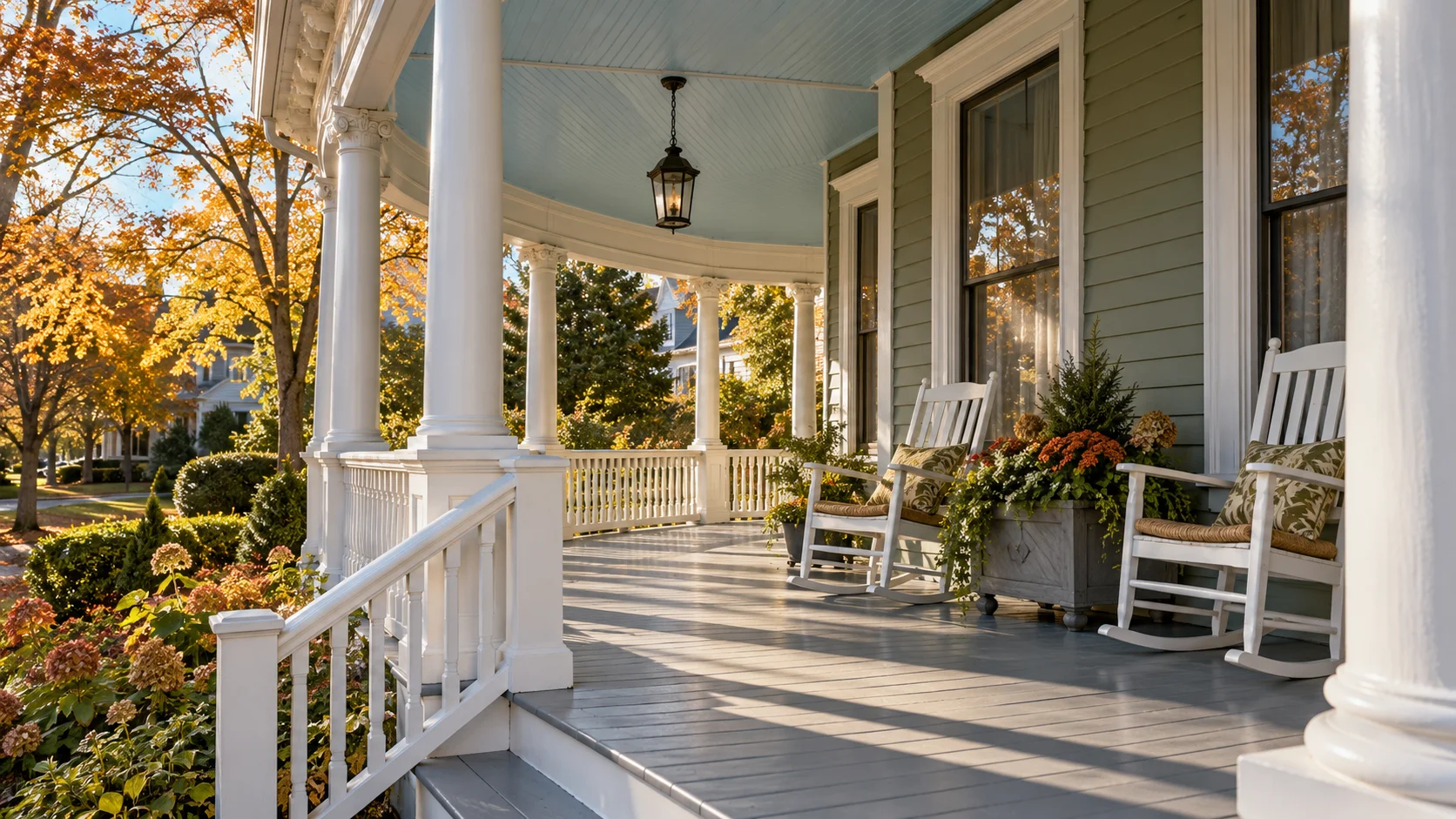
If you are painting the inside of the garage as well, our guide to the best paint for garage walls covers walls and ceilings, and our epoxy flooring service covers the floor. If the porch is due at the same time, our guide to painting a porch, railings and columns covers the floor, rails and columns. Estimates are free. Call (732) 239-0932 or request a free estimate.
Frequently Asked Questions
Can you paint a garage door?
Yes. Steel, wood, fiberglass and composite garage doors can all be painted. Steel doors take a 100% acrylic latex exterior paint after cleaning, with bare metal spot-primed. Check your door maker's instructions first: Clopay's say oil-based and alkyd-modified paints void its warranty.
What kind of paint do you use on a steel garage door?
A high-quality 100% acrylic latex exterior paint in flat, satin or semi-gloss, over a bonding primer, with a rust-inhibiting primer on any bare or rusted metal. Do not use oil-based or alkyd-modified paint, and do not sand the whole door, because sanding removes the factory's rust-inhibiting coating.
Can I paint my garage door black?
It depends on the door. On some insulated doors, very dark colors are not allowed: Clopay does not permit colors with an LRV of 12 or less on its Coachman line and requires solar reflective paint for LRV 13 to 38. Dark colors can make insulated doors bow in the sun, which makers do not treat as a defect. A factory-finished dark door is often the safer choice.
Does painting a garage door void the warranty?
Painting it the way the manufacturer specifies usually does not. Using a paint type or color the instructions exclude can. Clopay says failure to follow its painting instructions "will void warranty of your door," and its blog warns that painting a door black without checking the specifications could void the warranty.
Can you paint vinyl shutters?
Yes. Clean them, use a 100% acrylic paint, and keep to a color no darker than the original unless it comes from a vinyl-safe palette such as Sherwin-Williams VinylSafe or Benjamin Moore's approved vinyl colors. Benjamin Moore sets the line at an LRV of 55; darker colors absorb heat and can warp the vinyl.
Can you paint a fiberglass front door?
Yes. Clean it well, prime it if it is a wood-grained door, and finish with an exterior enamel. Therma-Tru says new doors should have all edges painted or stained within two weeks of installation.
What sheen should a front door be?
Satin or gloss. Gloss is the most traditional and the easiest to wipe clean, but it shows brush marks and dents, so a door in less-than-perfect shape often looks better in satin.
How long before I can close a freshly painted door?
Longer than it feels. The paint is dry to the touch within hours but soft underneath, and closing the door tight on its weatherstripping that evening can glue the two together. Paint early on a warm, dry day and leave the door open as long as is practical.
Can you paint doors and shutters in the fall in New Jersey?
Yes, while the door, the shutters and the air stay above the paint's minimum, which is 50°F for many products and as low as 35°F for some. A shaded steel door on a cold morning can be colder than the air, so we watch surface temperature, not just the forecast.
Do you paint garage doors, front doors and shutters on their own?
Yes. NJ Painting Co. paints steel, wood, fiberglass and composite garage doors (both sides), front and side entry doors with their trim, and shutters of every material, either on their own or with the rest of the exterior. We do not replace doors or shutters, repair garage door springs, tracks or openers, or repair rotted frames and sills; if we find soft wood at the estimate, we point it out so a carpenter can fix it first.
About the author
Written by the NJ Painting Co. team
NJ Painting Co. is a family-owned painting contractor based in Monmouth County, in business since 2004. We are licensed and fully insured, work with Benjamin Moore and Sherwin-Williams paints, and back our work with a 2-year workmanship warranty. We serve Monmouth, Middlesex, Ocean, Mercer, Somerset and Burlington counties, plus Union, Essex, Hudson, Bergen and Passaic in North Jersey.