Commercial painting in New Jersey typically costs $1 to $4 per square foot of floor area for interiors and $3 to $6 per square foot for building exteriors. Warehouses sit at the low end and medical suites at the top. Off-hours schedules, where a contractor offers them, add 15 to 35 percent.
The building type, the scope and the work schedule decide where a job lands. Our own cost guide puts warehouses at $1 to $2, offices at $2 to $3.50, retail at $2.50 to $4, restaurants at $3 to $5, medical space at $3.50 to $6, and building exteriors at $3 to $6 per square foot. The rest of this guide explains where a particular building lands in those ranges, and how to tell whether two commercial painting bids are pricing the same job.
We are a family-owned, licensed and fully insured painting company in Morganville, and we have painted offices, storefronts, HOA buildings and warehouses across Monmouth, Middlesex, Ocean, Mercer, Somerset and Burlington counties, plus Union, Essex, Hudson, Bergen and Passaic in North Jersey, for more than 20 years. The prices below are the planning ranges we publish ourselves. Outside figures on wages, regional prices, prevailing wage law and coatings are linked to the agency or manufacturer that publishes them.
The Short Answer: Commercial Painting Prices in NJ
- Per square foot: most commercial interiors run $1 to $4 per square foot of floor area, depending on the building type and how much of it is painted.
- By scope: walls only about $1.50 to $2.50, walls and ceilings $2 to $3.50, and a full interior including trim and doors $2.50 to $4 per square foot.
- Off-hours work: where a bidder offers it, evenings typically add 15 to 20 percent, overnight 25 to 35 percent, and weekend-only schedules 20 to 30 percent.
- Public work: New Jersey prevailing wage rates apply to publicly funded projects above set thresholds, and are priced against the current rate for the county and trade.
- The real comparison: a cheaper bid that closes your business for a week can cost more than a phased bid that keeps you open.
Commercial Painting Cost Per Square Foot by Building Type
These are the ranges from the commercial section of our NJ painting cost guide, priced by the building's floor area. That is the number most owners and property managers know, and it is how we talk about budgets at the first walkthrough. It covers walls, ceilings and trim together, so the per-foot figure is higher than a rate quoted per square foot of painted wall.
| Building type | Price per sq ft | Why it sits there |
|---|---|---|
| Warehouse and industrial | $1.00 - $2.00 | Large open areas, fewer cut lines, mostly sprayed |
| Office | $2.00 - $3.50 | Walls, doors and frames, phased suite by suite |
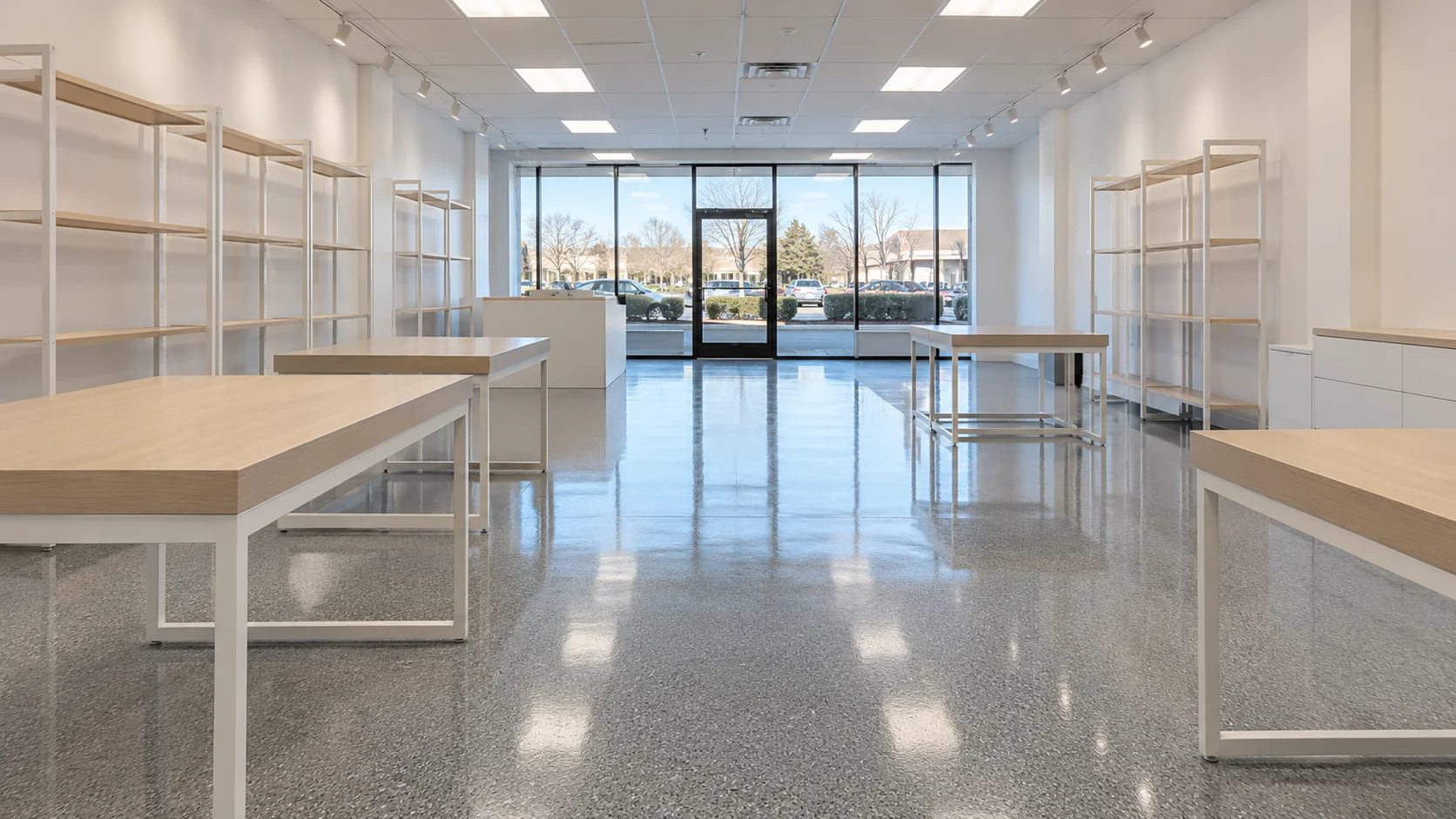
| Retail | $2.50 - $4.00 | Fixtures and stock to protect, phased around the sales floor |
| Hotel and hospitality | $2.50 - $4.50 | Occupied rooms and corridors, phased floor by floor |
| Restaurant | $3.00 - $5.00 | Grease, scrubbable coatings, closed-day schedules |
| Medical and healthcare | $3.50 - $6.00 | Low-odor products, small suites, patient schedules |
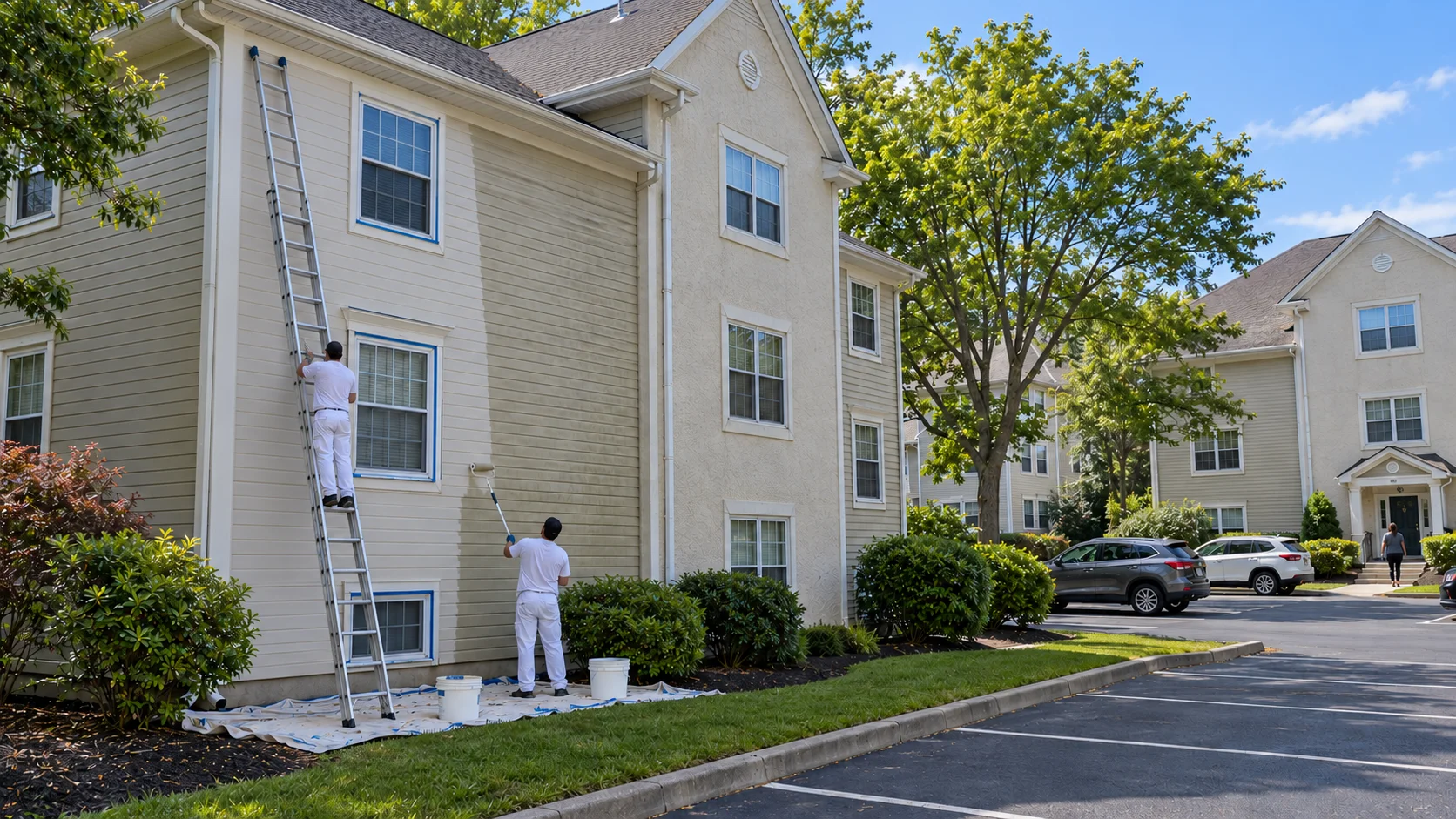
| Building exterior | $3.00 - $6.00 | Washing, repairs, access equipment, weather |
Within an interior, the scope moves the number as much as the building type does. Our cost guide puts walls only at about $1.50 to $2.50 per square foot, walls and ceilings at $2 to $3.50, and a full interior with trim and doors at $2.50 to $4. Two bids on the same office can differ by a third simply because one includes ceilings and door frames and the other does not.
As an independent check, Homewyse's wall painting calculator puts the national average cost to paint a wall at "$1.30 - $2.81 per square foot" for September 2026. That is per square foot of wall, not floor, for basic prep and two rolled coats in favorable conditions, and it excludes sales tax and any general contractor markup, which Homewyse puts at 13 to 22 percent. Treat it as a sense check on plain wall work, not a commercial quote. Housecall Pro's 2026 painting price guide, which is written for contractors setting their own prices, lands in a similar place: $1.50 to $5 or more per square foot for commercial work, and $5,000 to $15,000 for a small office repaint.
Why Commercial Painting Costs More in New Jersey
Painting is a labor job. The paint is a real cost, but most of any commercial painting bill is hours on site, so whatever raises labor costs raises the price per square foot.
- Wages. O*NET's New Jersey wage page for construction and maintenance painters, which reports Bureau of Labor Statistics 2025 data, puts the median painter wage at $28.49 an hour in New Jersey against $23.75 nationally. That is about 20 percent higher before overtime, night differentials or benefits.
- Prices in general. The Bureau of Economic Analysis 2024 regional price parities put New Jersey at 108.8, behind only California (110.7) and Hawaii (110.0) among the states. Insurance, vehicles, rent on a shop and everything else a contractor pays for sits in that number.
- Sales tax on the labor. The New Jersey Division of Taxation's sales and use tax FAQ says that "generally, the maintaining, servicing, or repairing of real property is taxable unless the service results in an exempt capital improvement," and treats repainting a building as servicing it. The state rate is 6.625 percent. The same FAQ treats the initial painting of a new structure as an exempt capital improvement, documented with Form ST-8. Check whether each bid includes tax before you compare totals.
What Drives a Commercial Painting Quote Up or Down
Working around your business
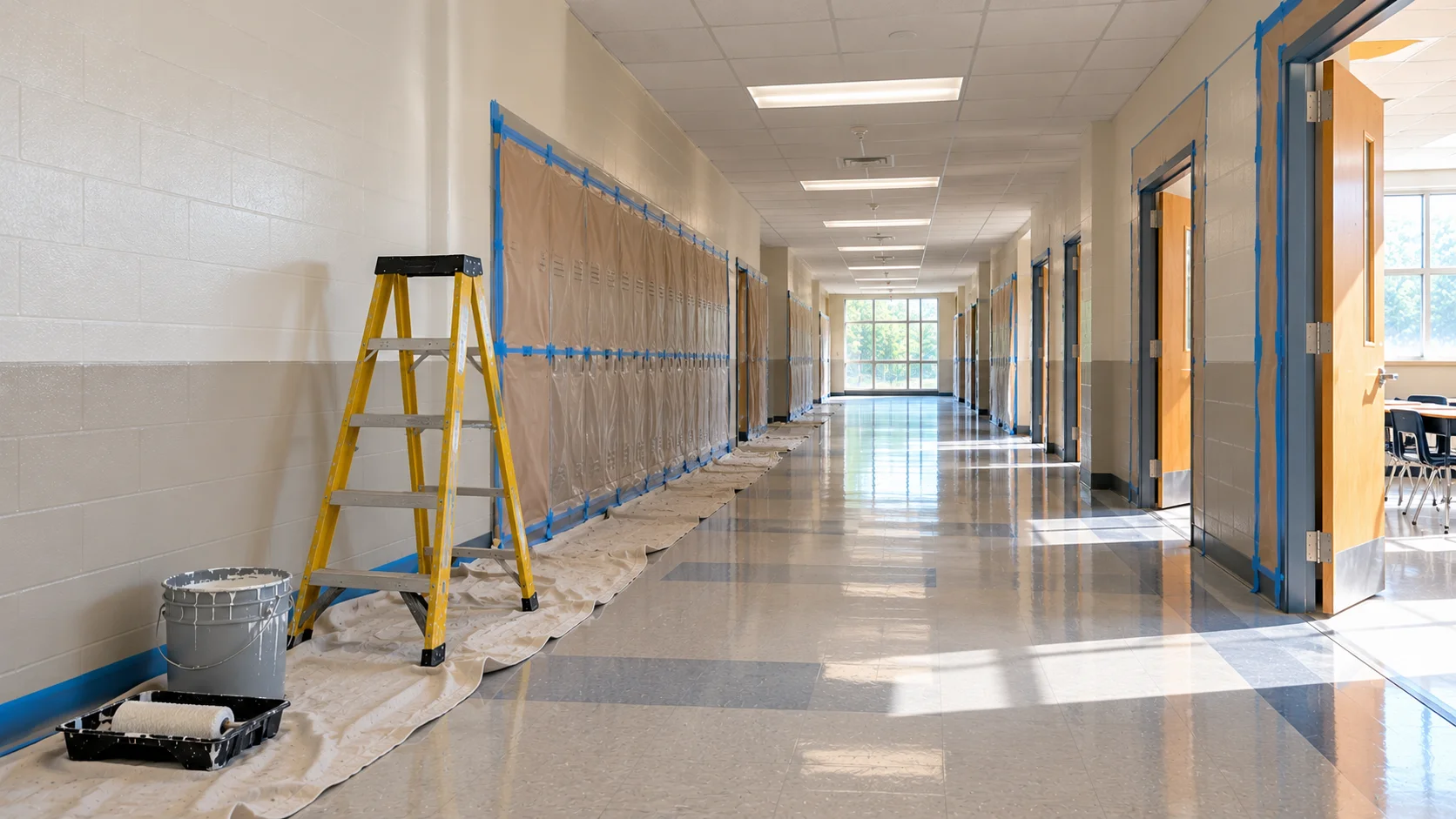
This is the largest single variable in commercial work. A building that can be closed and handed over for a week is the cheapest one to paint. A medical office that sees patients all week, a store that cannot lose a Saturday, or an HOA whose residents still need their stairwells has to be painted around its people. Our planning guides to medical and dental office painting, restaurant and retail painting, school painting and HOA and condo painting cover how that works in each type of building.
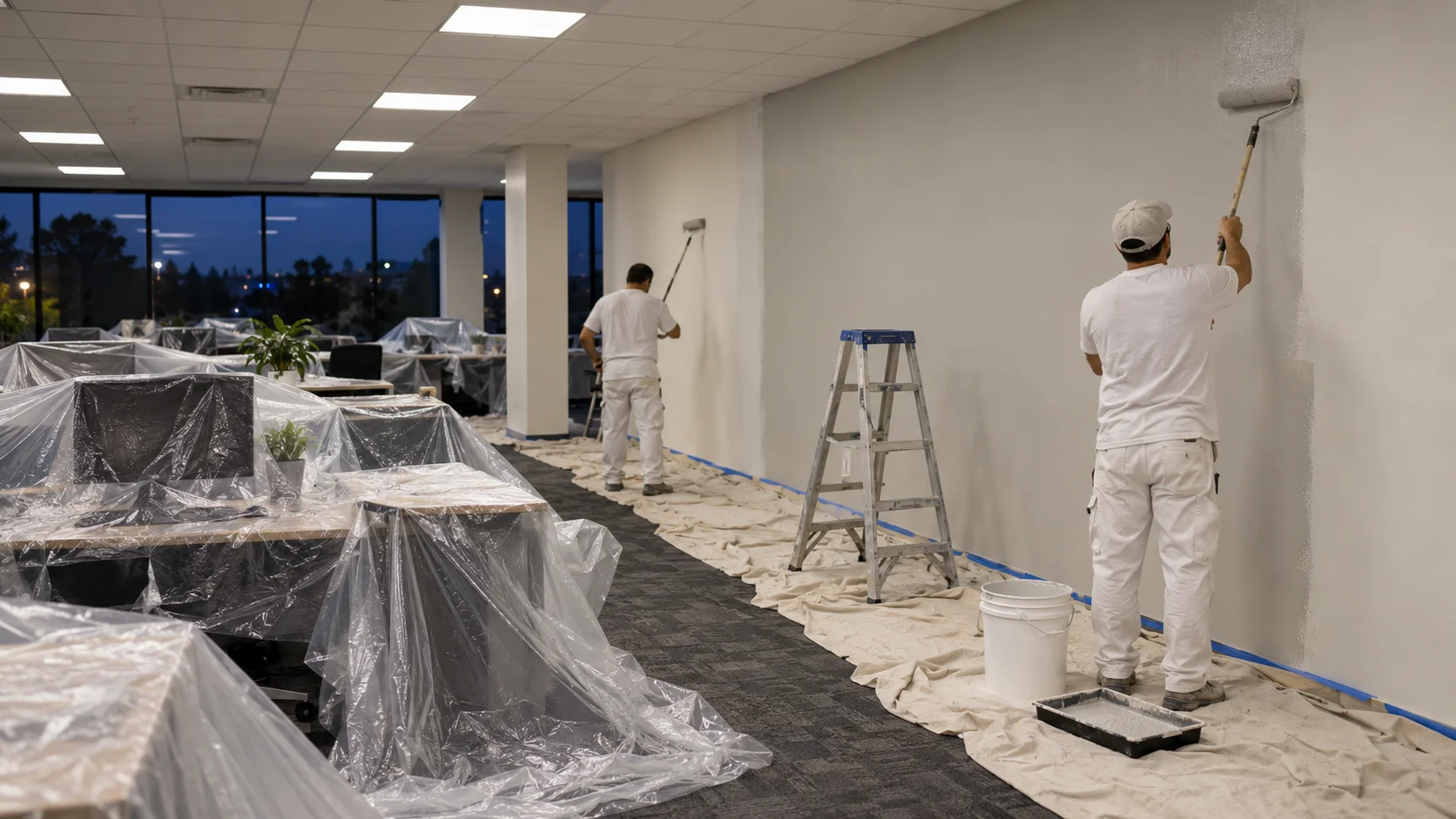
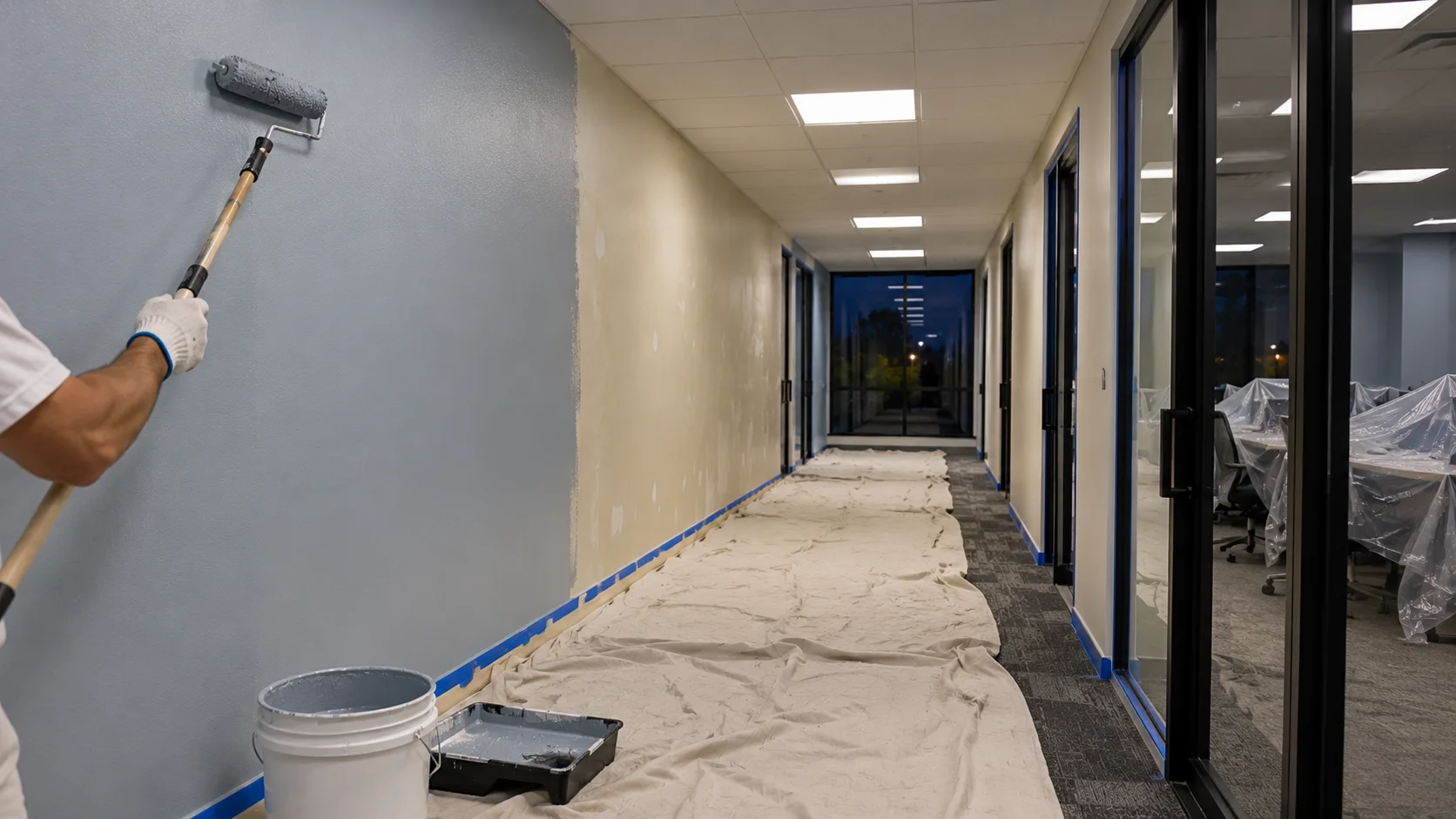
We handle that by phasing: the building stays open and only one area is out of service at a time, in an order agreed at the walkthrough. Some contractors offer off-hours schedules instead, and those cost more. Typical premiums are 15 to 20 percent for evening work from six to midnight, 25 to 35 percent for overnight work from midnight to six, and 20 to 30 percent for weekend-only work. Part of that is the labor rate itself. The rest is productivity: night crews spend part of every shift setting up and putting the space back, so the same scope takes more hours. If a bidder offers off-hours work, ask for it as a separate line so you can see what it adds.
Your downtime is a cost too
The premium for off-hours work is easy to see on a bid. The cost of closing is not, because it never appears on a painting estimate. Our cost guide works through an example: an 8,000 square foot retail repaint at about $22,000 on day rates, against roughly $30,800 for an overnight schedule from a contractor who offers one, about $8,800 more. A bid that is cheaper because it closes the sales floor for a week is only cheaper if a week of lost trade costs you less than that; phasing the work so the store stays open is usually the way between the two. Run that number for your own space before comparing prices.
Surfaces and their condition
A commercial building is a dozen substrates under one roof, and each has its own prep and coating. Drywall in an office needs patching where twenty years of tenants have anchored shelves and monitors. Concrete block needs block filler before it will take a smooth finish. Structural steel needs loose rust and mill scale removed and bare spots primed. Our cost guide puts prep at 10 to 25 percent of a typical commercial project, and it is the part of the job that decides how long the paint lasts.
Ceiling height and access
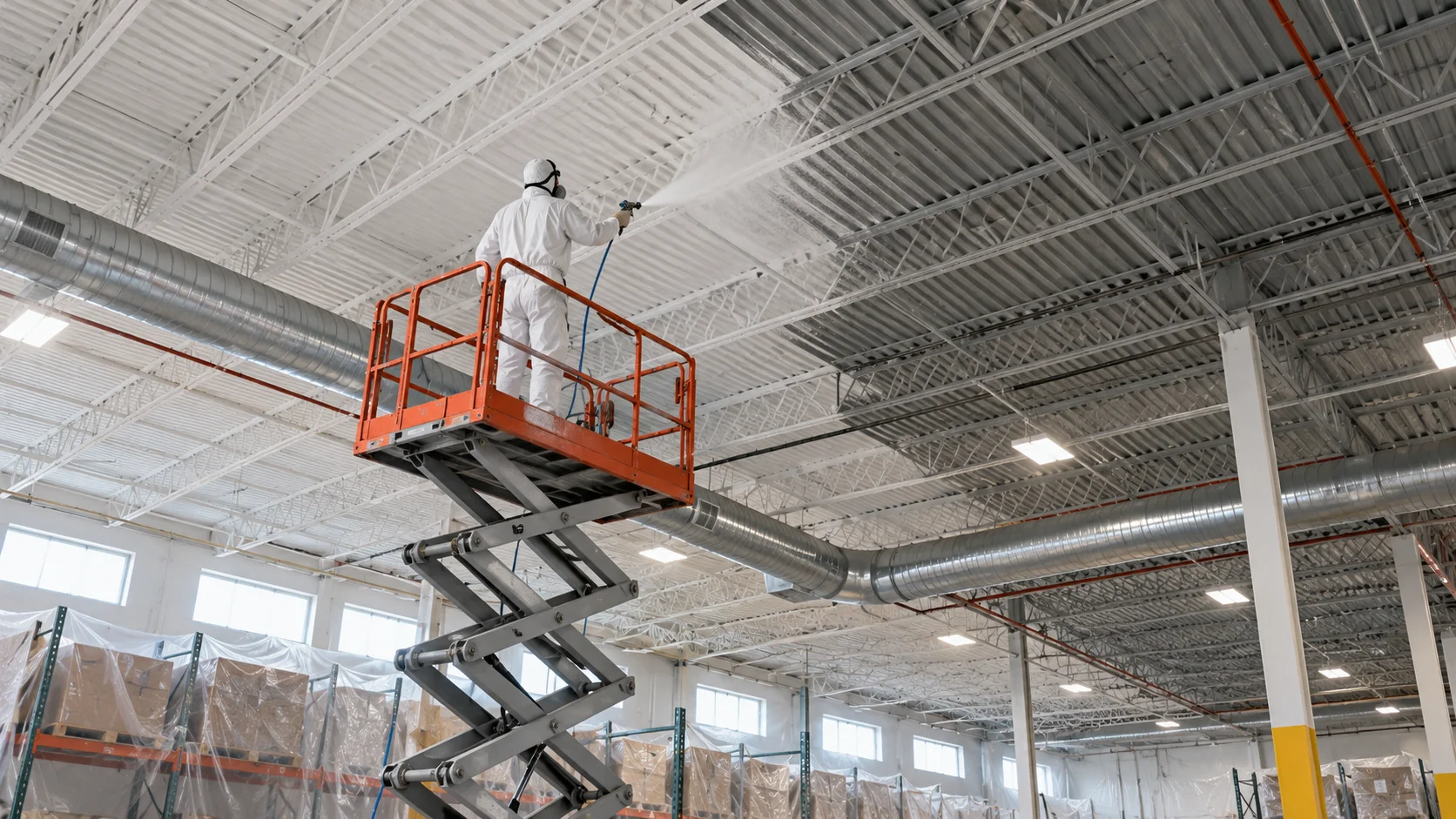
Anything above about 15 feet needs a scissor lift or scaffold, which our cost guide says typically adds $500 to $2,000 or more to a project. Warehouses, showrooms, atriums and gyms are lift work from the first square foot. Open warehouse ceilings, joists, ductwork and sprinkler lines are usually sprayed with a dry-fall coating. Sherwin-Williams describes its Pro Industrial Waterborne Acrylic Dryfall as designed for airless spray on interior ceilings and walls not subject to wear, and says that "with proper height/clearance, overspray is dry before it settles on floors, machinery or equipment," so it can be swept or vacuumed up. That is what makes overhead spraying practical in a building with racking and stock below, though everything underneath still has to be covered or moved. Our industrial painting page covers warehouse and plant work, and our guide to industrial and warehouse painting specifications explains how that kind of repaint is specified.
The coating specification
Commercial coatings are chosen for the surface and how it is used, not just for color. Our cost guide puts commercial-grade coatings at 20 to 40 percent above residential products, with quality commercial paint at $40 to $60 a gallon covering roughly 300 square feet a coat. A corridor wall that gets wiped down every night needs a washable finish, a hollow metal door frame needs a hard enamel or direct-to-metal coating, and a restaurant kitchen or clinic corridor may call for a scrubbable high-performance coating. Our paint sheen guide covers sheen on high-traffic walls. We use Benjamin Moore and Sherwin-Williams products, and our comparison of the two brands covers their main product lines.
Schedule compression
A hard deadline set by a lease start, an opening or an inspection can be met, but our cost guide puts a rushed timeline at roughly 10 to 25 percent more. Calling early is the cheapest way to hit a fixed date.
Older buildings and lead
If the building was built before 1978 and includes a childcare center or preschool, federal lead rules apply. The EPA's Renovation, Repair and Painting program requires "anyone paid to perform work that disturbs painted surfaces in homes, childcare facilities and preschools built before 1978" to be certified. Certified containment and cleanup add time and cost to a bid. NJ Painting Co. is not an EPA Lead-Safe Certified firm, so if the rule applies to your building, ask each bidder for their firm certification and how they will handle it. Our guide to lead paint in older NJ homes explains what those work practices involve.
Commercial Painting Cost Examples
The table below multiplies our cost guide's per-square-foot ranges by some typical New Jersey commercial spaces, then shows what a typical 15 to 20 percent evening premium would add where a bidder offers evening work. It is arithmetic, not a quote, and it assumes average conditions: sound surfaces, standard ceiling heights and a normal color change.
| Space | Floor area | Rate | Day schedule | If a bidder adds an evening premium (15 - 20%) |
|---|---|---|---|---|
| Small office suite | 2,500 sq ft | $2.00 - $3.50 | $5,000 - $8,750 | $5,750 - $10,500 |
| Medical suite | 3,000 sq ft | $3.50 - $6.00 | $10,500 - $18,000 | $12,075 - $21,600 |
| Retail store | 5,000 sq ft | $2.50 - $4.00 | $12,500 - $20,000 | $14,375 - $24,000 |
| Warehouse interior | 20,000 sq ft | $1.00 - $2.00 | $20,000 - $40,000 | Usually scheduled around shifts instead |
The low end of each row describes sound walls and a simple scope; the high end describes more surfaces, more prep and tighter schedules. Lifts and prevailing wage are on top of these figures.
Prevailing Wage and Public Work in New Jersey
Schools, municipal buildings, county facilities and other publicly funded work follow different rules from a private office repaint, and the price reflects them. New Jersey's Prevailing Wage Act applies to construction, alteration and repair work "paid for in whole or in part out of the funds of a public body," and the Commissioner of Labor sets the prevailing wage "in the locality in which the public work is to be performed for each craft or trade." The same law requires contractors to register before bidding: "no contractor shall bid on any contract for public work" unless registered with the Department of Labor and Workforce Development.
Thresholds decide whether a job is covered. The Department of Labor announced in 2024 that the municipal threshold rose from $16,263 to $19,375 on July 1, 2024, and that "all other public agencies, including at the county level, municipal boards of education, and utility authorities, remain under a prevailing wage threshold of $2,000." The municipal figure adjusts every five years.
For a building owner the practical points are simple. A public project above the threshold will cost more than the same scope in a private building, because the wage rate is set by the state. Any bid for that work should be priced against the current wage determination for the trade and county rather than a blended number. And you should ask every bidder for their public works registration before you award.
Floors: Epoxy and Resinous Coatings
Many commercial painting projects include the floor: a warehouse slab, a showroom, a back-of-house corridor or a garage. Floor coatings are priced separately from walls, and the system matters more than the color. Our cost guide's epoxy section puts professionally installed epoxy at $3 to $12 per square foot nationally and $6 to $12 in Central New Jersey, with high-build 100 percent solids systems at $5 to $8 for garages and warehouses and urethane mortar at $8 to $15 for commercial kitchens and food plants. Moisture testing and mechanical grinding come first and are what decide whether the floor lasts. Our guide to commercial epoxy flooring in NJ covers the systems in detail, and our epoxy flooring page shows how we install them.
How to Compare Commercial Painting Bids
Two commercial painting quotes for "repaint the office" can describe very different jobs. Before comparing totals, check that each bid answers the same questions:
- Which surfaces. Walls, ceilings, doors, frames, trim, railings, exposed structure. A bid that does not list them has not agreed to paint them.
- Which product, sheen and number of coats for each surface. "Two coats of commercial paint" is not a specification.
- What prep is included. Patching, block filler, rust treatment, degreasing, caulking.
- The schedule. Phases, shift times, the crew size per shift and the finish date.
- Access equipment. Lifts and scaffold included in the price, or billed later.
- Protection and cleanup. What is covered, what is moved, and who moves it.
- Insurance. A certificate of insurance naming the parties your lease, board or GC requires, issued before work starts.
- Exclusions. Anything left out, such as permits, after-hours security, elevator time or general contractor markup.
- Close-out. A punch list walk, a color and product schedule left on file for touch-ups, and the workmanship warranty in writing.
Once the scopes match, the price difference usually explains itself. Where it does not, the lower bid has usually cut prep, coats or shift hours.
Ways to Keep Commercial Painting Costs Down
- Decide colors and finishes before the bid. A finish schedule lets every bidder price the same thing, and changes after mobilization cost more than changes on paper.
- Clear what you can. Anything your own staff move is one less thing the crew moves and resets every shift.
- Hand over whole zones where you can. A wing or a suite handed over for full days is cheaper than several short windows in the same space, because setup and reset happen once.
- Group the work. Several suites, floors or sites scoped together share mobilization, equipment and paperwork. One proposal for a portfolio usually beats separate bids for each address.
Get a Commercial Painting Estimate
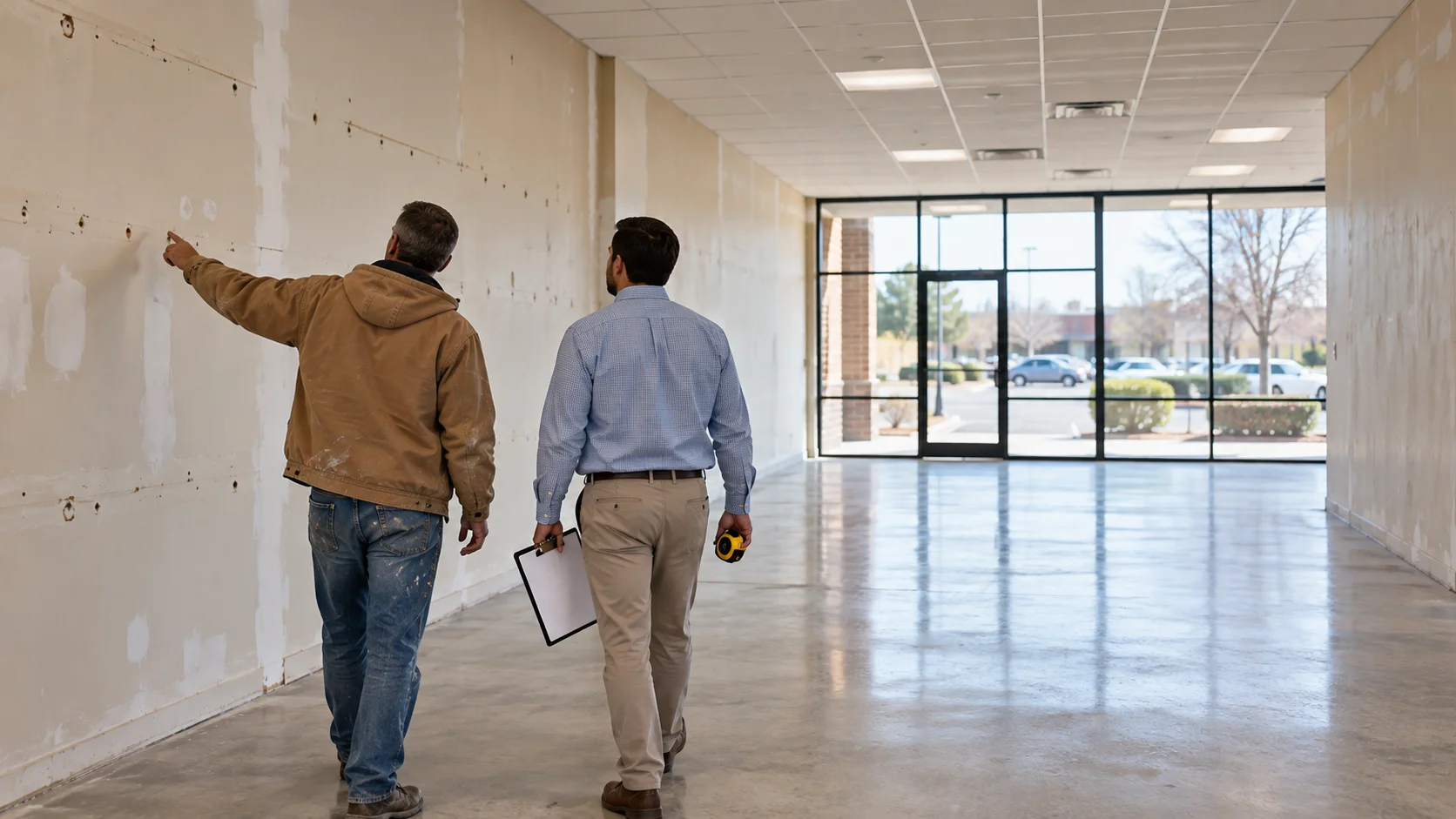
The only accurate number for your building comes from walking it. NJ Painting Co. is a family-owned, licensed and fully insured painting company at 36 Church Rd, Morganville, NJ 07751, painting in New Jersey for more than 20 years with Benjamin Moore and Sherwin-Williams products. We issue certificates of insurance before we mobilize, write the coating for every surface into the proposal, set the schedule with you at the walkthrough, and give you one point of contact from walkthrough to punch list. We paint offices and storefronts, schools, medical and healthcare space, restaurants and hospitality, HOA and condo buildings, and industrial spaces that need protective coatings. Our workmanship carries a two-year warranty.
See how we work on our commercial painting page, check the full ranges in the cost guide, and confirm coverage in Monmouth County, Middlesex County, Ocean County, Mercer County, Somerset County or Burlington County, and in North Jersey Union, Essex, Hudson, Bergen and Passaic counties. Managing a community association? Our guide to HOA and condo painting in NJ covers specifications, phasing and the board RFP process, and our guide to new construction painting covers sequencing on new buildings. Call (732) 239-0932 or request a free walkthrough and written proposal with your square footage and operating hours.
Frequently Asked Questions
How much does commercial painting cost per square foot in NJ?
Most commercial interiors run $1 to $4 per square foot of floor area. Our cost guide puts warehouses at $1 to $2, offices at $2 to $3.50, retail at $2.50 to $4, restaurants at $3 to $5, medical space at $3.50 to $6 and building exteriors at $3 to $6 per square foot. Off-hours scheduling, height and prep move a building within or above those ranges.
How much more does after-hours commercial painting cost?
Where a contractor offers it, evening work typically costs 15 to 20 percent more, overnight work 25 to 35 percent more and weekend-only work 20 to 30 percent more than a day schedule. Our own commercial work is phased so the building stays open instead. Whichever way a bid handles it, compare the cost with what closing your business for the same period would cost.
How much does it cost to paint an office?
Our cost guide puts office painting at $2 to $3.50 per square foot of floor area, so a 2,500 square foot suite works out at roughly $5,000 to $8,750 on a day schedule. Walls only costs less; walls, ceilings, doors and frames together sit toward the top of the range.
How much does it cost to paint a warehouse?
Our cost guide puts warehouse and industrial interiors at $1 to $2 per square foot of floor area. High ceilings add lifts, typically $500 to $2,000 or more per project, and open ceilings are usually sprayed with a dry-fall coating. Floor coatings are priced separately, and aisle or safety striping is a separate trade that we do not offer.
How much does it cost to paint a retail store or restaurant?
Our cost guide puts retail space at $2.50 to $4 per square foot of floor area and restaurants at $3 to $5, so a 5,000 square foot store works out at roughly $12,500 to $20,000 on a day schedule. Restaurants sit higher because kitchens need degreasing and scrubbable coatings, and both are usually phased zone by zone so the business stays open.
How much does it cost to paint the outside of a commercial building?
Our cost guide puts building exteriors at $3 to $6 per square foot. Washing, repairs, lifts or scaffold and the weather window move a building within that range; exterior coatings also need the air and surface temperatures their data sheets call for, which limits the season in New Jersey.
Is sales tax charged on commercial painting in New Jersey?
Usually, on a repaint. The New Jersey Division of Taxation treats maintaining, servicing or repairing real property as generally taxable at 6.625 percent, and lists repainting a building as servicing it. The initial painting of a new structure is an exempt capital improvement when the owner gives the contractor Form ST-8. Confirm with your accountant for your own project.
Does prevailing wage apply to commercial painting in New Jersey?
Only on public work. New Jersey's Prevailing Wage Act covers work paid for in whole or in part by a public body above set thresholds: $19,375 for municipal contracts since July 1, 2024, and $2,000 for other public agencies such as counties and boards of education. Contractors must also be registered with the Department of Labor to bid on public work. A privately funded office or store repaint is not public work under the Act.
Why do commercial painting quotes vary so much?
Usually because they are not pricing the same job. Check that every bid lists the same surfaces, the product and number of coats for each, the prep, the shift schedule, lifts and access equipment, and the exclusions. Once the scopes match, most of the gap closes.
About the author
Written by the NJ Painting Co. team
NJ Painting Co. is a family-owned painting contractor based in Monmouth County, in business since 2004. We are licensed and fully insured, work with Benjamin Moore and Sherwin-Williams paints, and back our work with a 2-year workmanship warranty. We serve Monmouth, Middlesex, Ocean, Mercer, Somerset and Burlington counties, plus Union, Essex, Hudson, Bergen and Passaic in North Jersey.