How often should you paint your house? In New Jersey, our rule of thumb is every 7 to 10 years for painted wood siding on an inland house, every 5 to 7 years on the sunniest walls and on shore homes, about every 10 to 15 years for field-painted fiber cement, and every 3 to 5 years for window sills, the sunniest trim and a sun-facing front door. Inside, busy rooms such as kitchens, hallways and kids' rooms usually need paint every 2 to 5 years, and quiet rooms such as bedrooms every 5 to 10. Those are ranges, not deadlines: the condition of the paint, not the calendar, tells you when it is time.
We are a family-owned painting company in Morganville and have painted homes across Monmouth, Middlesex, Ocean, Mercer, Somerset and Burlington counties, plus Union, Essex, Hudson, Bergen and Passaic in North Jersey, for more than 20 years, using Benjamin Moore and Sherwin-Williams products. This guide sets out what the research and the manufacturers say, where our rules of thumb come from, how the shore and the sun change the schedule, and how to tell whether your house needs paint or just a good wash. It is current as of September 2026.
How Long Does Exterior Paint Last? What the Research Says
The most thorough public source is the U.S. Forest Service's Forest Products Laboratory. Chapter 16 of its Wood Handbook, "Finishing Wood" (2021), says "a three-coat finish system (0.10 to 0.13 mm thick) should last 20 years," meaning a primer and two topcoats. Its summary table puts paint on siding anywhere from 6 to 20 years depending on the wood: 10 to 15 years on smooth vertical-grain cedar, 6 to 10 on smooth flat-grain pine, fir or spruce, and 15 to 20 on saw-textured cedar. Those are estimates "for average location in the contiguous USA," and "expected life depends on climate and exposure."
Two footnotes matter in practice. The figures assume the full three-coat system: "Applying only a two-coat paint system (primer and one top-coat) will decrease the service life to about half the values shown in the table." And "dark colors may fade within a few years," so a house can look tired well before the paint has actually failed.
The National Park Service is more conservative. Its Preservation Brief 10 on exterior paint problems describes paint on historic wood as "never expected to be more than a temporary physical shield—requiring re-application every 5-8 years." The brief dates from 1982, before today's acrylics, but it is a fair picture of older houses with many layers of paint and exposed trim.
Our experience in central New Jersey sits between the two. A well-prepared house with a premium acrylic, two full topcoats, working gutters and sound caulk commonly goes 8 to 10 years inland; one painted over poor prep, with one coat, or in bad weather often needs work in 4 or 5.
What a "lifetime" paint warranty really means
Sherwin-Williams lists a "Lifetime Limited Warranty" for Emerald Exterior and Duration Exterior, and the Benjamin Moore Aura Exterior data sheet prints a limited lifetime warranty. Benjamin Moore's terms say it lasts "for so long as you reside in your home," is "non-transferable," provides "an equivalent or comparable product at no charge" if the paint fails, and "does not include the cost of labor for application of paint." We did not find Sherwin-Williams' full terms on the pages we checked, so ask the store. Either way, a paint warranty replaces paint; it does not mean the house will never need painting, and labor is most of the cost of a repaint.
How Often to Paint the Exterior of a House, by Siding and Surface
The table lines up what published sources say for each common New Jersey exterior surface next to the interval we use when advising customers. The right-hand column is our rule of thumb, not a published standard. Assume the shorter end for south- and west-facing walls, homes near the ocean, and anything painted with a single topcoat.
| Surface | What published sources say | Our NJ rule of thumb | What usually fails first |
|---|---|---|---|
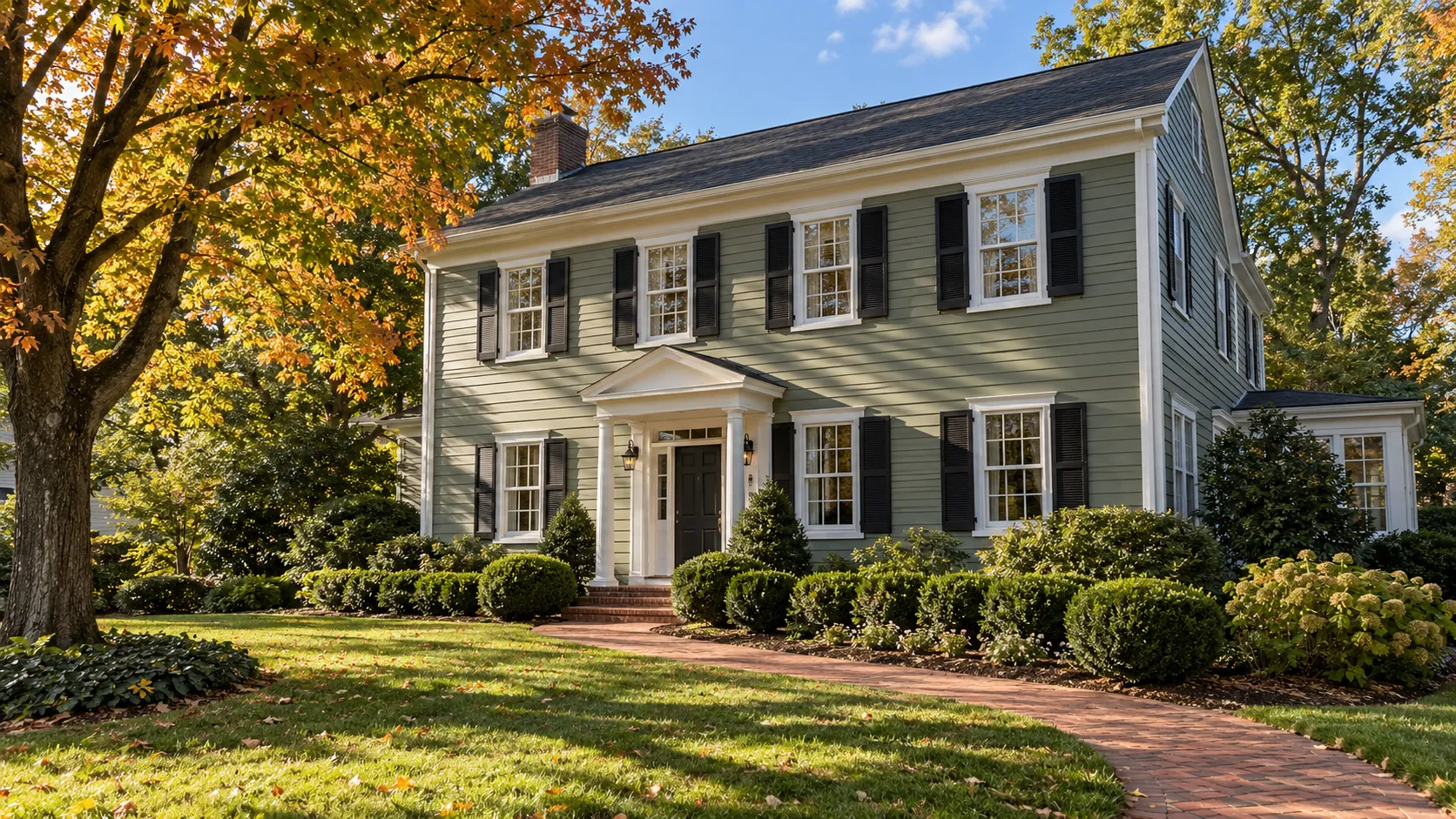
| Painted wood clapboard | 6–15 years depending on species and grain (Forest Products Laboratory); 5–8 years for historic woodwork (National Park Service) | 7–10 years inland; 5–7 at the shore or on sunny walls | South and west walls, sills, bottom courses |
| Cedar shingles and shakes | Paint 6–10 years, solid-color stain 6–8, semi-transparent stain 4–8 on sawn sidewall shingles (FPL) | Paint or solid stain 5–8 years; semi-transparent stain 3–5 | Weather side, areas that stay wet |
| Fiber cement, field-painted | James Hardie calls for an acrylic topcoat on primed siding; its factory ColorPlus finish carries a 15-year limited warranty | 10–15 years; ColorPlus when it fades or you want a new color | Cut ends, butt joints and caulked seams |
| Stucco | Every 5–10 years (Fixr) | 7–10 years with acrylic; elastomeric coatings often longer | Hairline cracks, splash zone near grade |
| Painted brick | Painting creates "a recurring exterior maintenance task" (Brick Industry Association); unpainted brick needs no paint | Roughly 7–10 years with acrylic masonry paint | Peeling where moisture moves through the wall |
| Painted vinyl siding | 7–10 years in moderate climates, 5–7 in harsh conditions (This Old House) | 5–10 years; unpainted vinyl does not need paint just because it is old | Chalky or mildewed walls, warping from dark colors |
| Aluminum siding | A fresh coat every 5–10 years (This Old House) | 6–10 years | Chalking, bare metal at dents and scratches |
| Trim, fascia and window sills | Horizontal surfaces such as sills "will require repainting more often" (National Park Service) | 3–5 years for sills and the sunniest trim | Sills, rakes, garage door jambs |
| Front and garage doors | No published interval found | 3–5 years facing south or west without a porch roof; 6–10 if sheltered | Bottom rails, sun-facing panels |
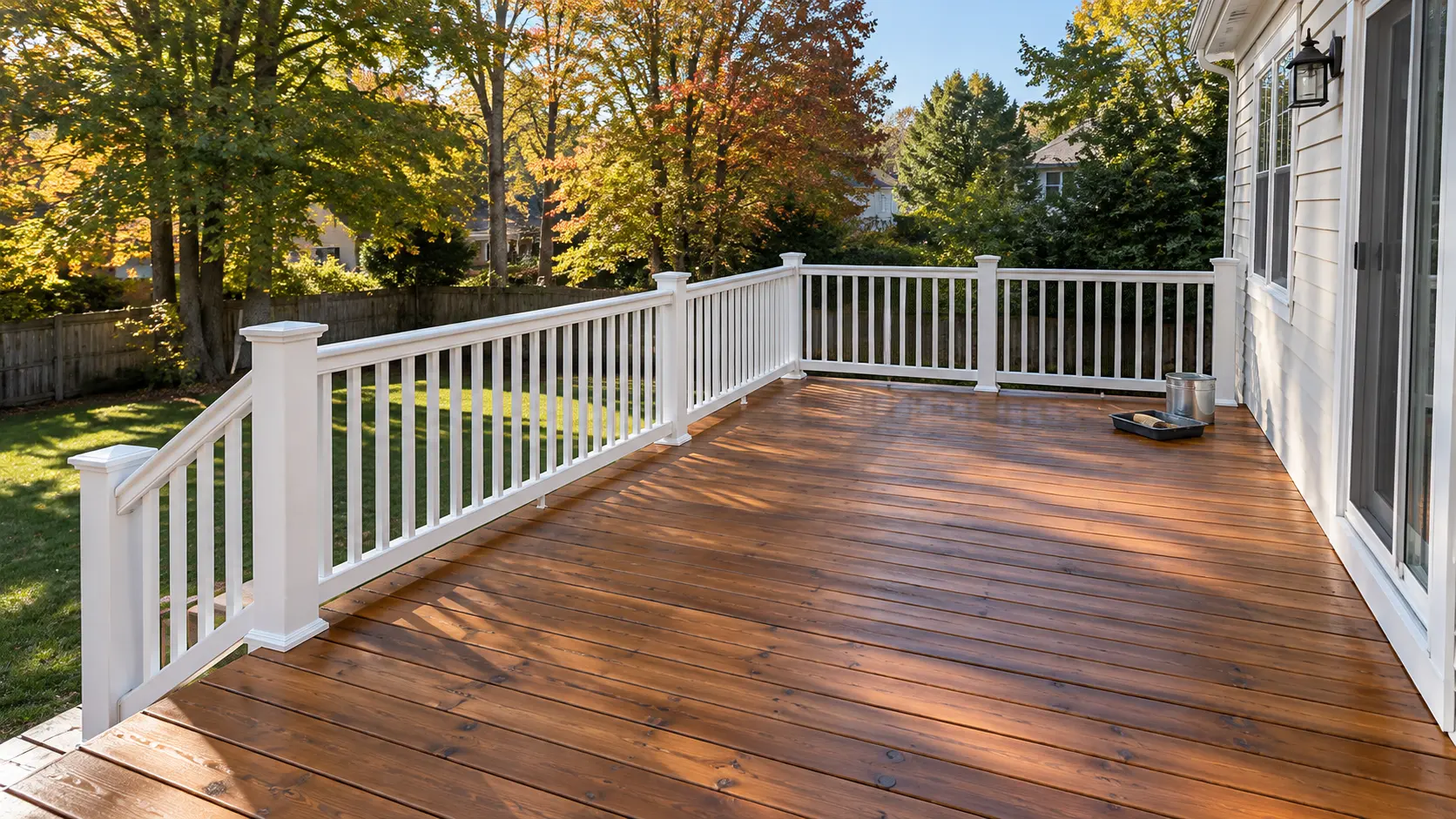
| Deck and fence stain | Semi-transparent stain on decking 2–3 years new, 3–6 years weathered (FPL) | Decks 2–3 years; fences 3–5 | Deck boards and rail tops |
Fiber cement
James Hardie's homeowner FAQ says "Hardie® siding is paintable," that pre-primed siding "should be painted with an acrylic top coat," and that ColorPlus factory finishes "come with a 15-year limited warranty that covers paint and labor, protecting against peeling, cracking, and chipping." The company's ColorPlus article calls that warranty "prorated." If you have newly installed primed boards, do not leave them bare: James Hardie's HardieTrim installation instructions say "factory primed products by James Hardie must be painted within 180 days of installation."
Vinyl, aluminum, stucco and brick
Vinyl is sold so that it does not need paint. The Polymeric Exterior Products Association, the vinyl siding industry's trade group, says on its low-maintenance siding page that "polymeric products will never need painting or caulking" and "can be cleaned with mild soap and water from a garden hose." Once painted, though, it joins a repaint cycle. Our guide to painting vinyl and aluminum siding covers prep and vinyl-safe colors, and our stucco and brick guides go deeper on those surfaces.
Brick deserves a warning. The Brick Industry Association's Technical Note 6 (March 2025) says acrylic paint on brick "creates a recurring exterior maintenance task, requiring multiple reapplications over the life of the brickwork," and that paint "can be very difficult to remove from brick masonry without causing damage." Once brick is painted, it stays on the repaint cycle.
Shore vs Inland: How New Jersey Exposure Changes the Schedule
Rutgers' Office of the New Jersey State Climatologist describes five distinct climate regions in the state, and a house in Freehold does not weather like one in Point Pleasant. The Forest Products Laboratory says ultraviolet damage is "exacerbated by moisture, temperature change, freeze–thaw cycles, abrasion by windblown particles, and growth of microorganisms," all of which vary across the state and around a single house.
Sun side vs shade side
This is the biggest single factor. The Wood Handbook says: "Paint erodes at different rates, so different sides of a structure do not need to be painted on the same schedule. Paint on the shaded side often lasts twice as long as that on a fully exposed, sunny side." On a typical colonial the south and west walls fade, chalk and crack first, while the north side looks nearly new apart from some mildew. Painting just the sunny walls and the trim, and leaving the rest for the next cycle, is often the best value.
Shore homes
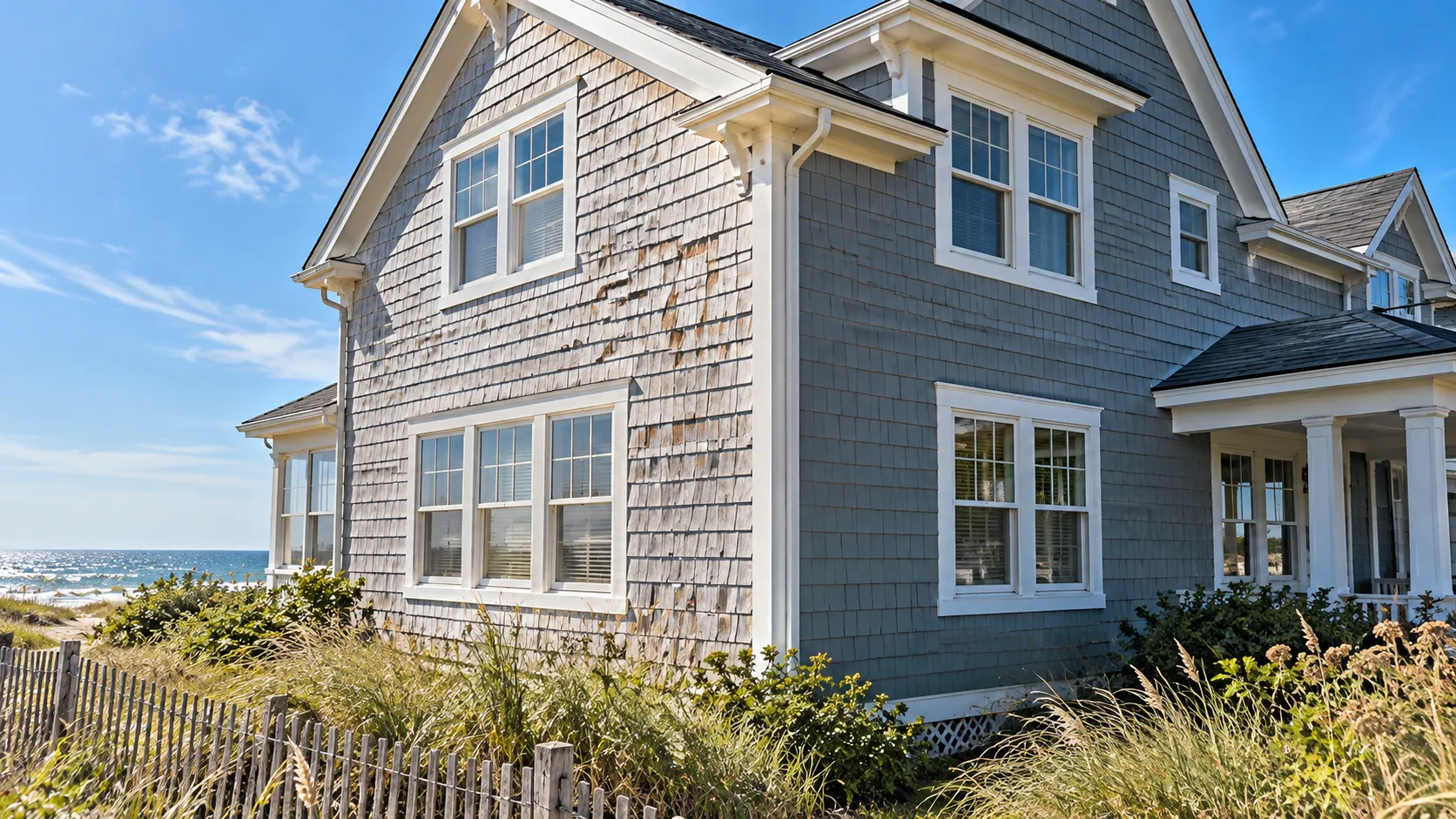
Along the Monmouth and Ocean county shore, homes get more wind, blowing sand and moisture and, in our experience, a film of salt on every surface facing the water. Rutgers notes that "sea breezes often penetrate 5-10 miles inland, but under more favorable conditions, can affect locations 25-40 miles inland," so this is not limited to beachfront streets. We plan on the shorter end of every range for homes near the water and wash off salt film and dirt before painting, because paint bonds poorly over that film. Railings, porch floors and ocean-facing trim wear fastest. Our county pages for exterior painting in Monmouth County and exterior painting in Ocean County cover how we plan shore and inland jobs.
Trees, shade and mildew
Deep shade has the opposite effect: paint erodes slowly, but walls stay damp and grow mildew. Sherwin-Williams' exterior troubleshooting FAQ says that "under some conditions, mildew eventually will reappear on any type of paint." Pruning trees back so sun reaches the wall helps, as the National Park Service suggests. Mildew alone is a cleaning job, not a reason to repaint.
What Shortens or Extends Paint Life
The Forest Products Laboratory names the usual culprits: "The most common causes of premature failure of film-forming finish (paint and solid-color stains) are water, weathering of wood prior to painting, inadequate surface preparation, and insufficient film thickness." That matches what we see on repaints.
- Prep on the last job. Paint over dirt, chalk or mildew bonds poorly, and paint over sun-weathered bare wood is worse. In one Forest Products Laboratory test on cedar, boards left in the sun 16 weeks before painting "peeled and needed refinishing within 3 years," boards exposed one week started peeling after 13 years, and unexposed boards "were in good condition after 20 years."
- Two topcoats, not one. A primer plus one topcoat cuts expected life roughly in half, so a single-coat bid is often a shorter repaint cycle in disguise.
- Water behind the paint. Clogged gutters, sprinklers hitting the siding and open caulk joints let water into the wood, and the paint blisters or peels from behind. In our experience, caulk usually gives out before the paint does, and resealing it on time is the cheapest way to stretch a paint job.
- Color. Dark colors show fading sooner, and the Wood Handbook notes that darker finishes "result in more solar heating, and so result in more warping and checking of wood than light color finishes."
- Paint quality and weather on painting day. Premium 100% acrylics hold color and flex with the wood better in our experience, and paint applied in cold, damp or dewy conditions may never cure properly.
Signs It's Time to Repaint
Walk around the house on a clear day, starting with the south and west walls. Any of these puts a full or partial repaint on your list:
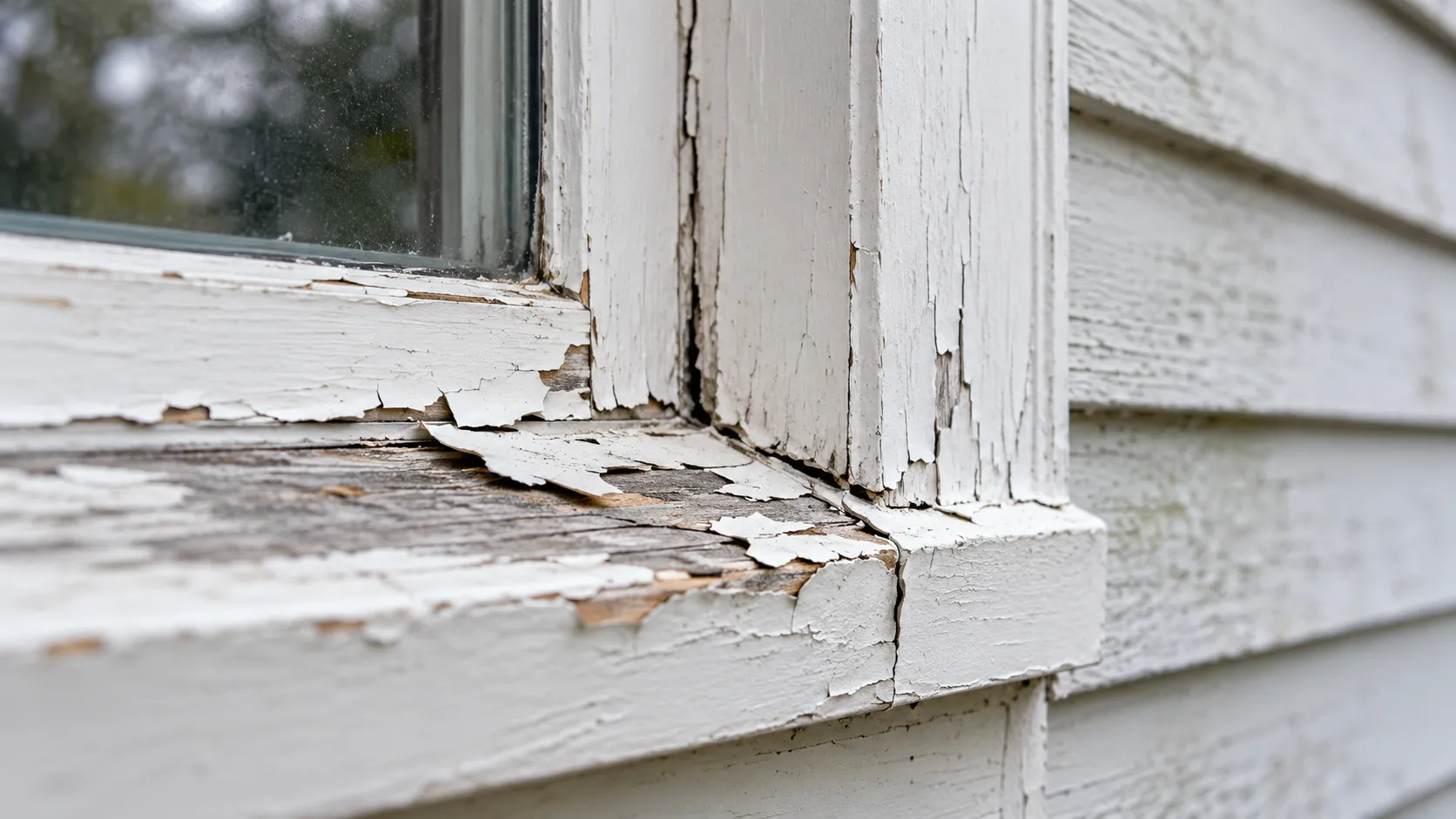
- Peeling or flaking paint, especially down to bare wood.
- Cracking or alligatoring, where the film breaks into lines or a scaly pattern.
- Primer or an old color showing through. The Wood Handbook's cue is "when the topcoats begin to wear thin, exposing the primer."
- Heavy chalking. Rub the wall with a dark cloth. The National Park Service calls moderate chalking "the ideal way for a paint to 'age,'" but a thick powder, or chalk streaking onto brick or the foundation, means the film is wearing thin.
- Badly faded color on the sunny sides.
- Open, cracked or missing caulk at windows, doors and trim joints.
- Bare or graying wood on sills, rails and bottom trim.
- Soft or rotted wood. Probe suspicious sills with a screwdriver; soft wood needs carpentry before paint.
- Blisters that keep coming back, which usually point to moisture from behind.
When Not to Repaint Yet: Wash, Touch Up or Paint One Side
Repainting too often is a real problem. The Wood Handbook says: "Do not paint too often. If paint is sound, but discolored with mildew, wash it. It does not need repainting. Too many coats of latex paint can eventually lead to adhesion failure of the primer." The National Park Service agrees that if paint "shows no evidence of paint deterioration such as chalking, blistering, peeling, or cracking, then there is no physical reason to repaint," and warns that once paint builds up to about 1/16 inch, "approximately 16-30 layers," one or more extra coats "may be enough to trigger cracking and peeling."
Before booking a full repaint, consider the cheaper options:
- Wash the house. Sherwin-Williams suggests cleaning a spot "with a mixture of three parts water and one part household bleach. If it comes clean, it's probably mildew." Keep the pressure gentle: the Wood Handbook counts "aggressive power washing," like sandblasting, among the abrasion that leaves wood with a rough, weathered surface.
- Recaulk and touch up the trim, using a labeled can of each exterior color.
- Paint only the worn sides and the trim.
- Skip protected areas. The handbook says "repainting protected areas every other time the structure is painted usually gives adequate performance."
For homes built before 1978, the EPA says "anyone paid to perform work that disturbs paint in housing and child-occupied facilities built before 1978 must be certified in lead-safe work practices" under its Renovation, Repair and Painting program. EPA treats jobs disturbing "20 square feet or less" of exterior painted surface, or less than 6 square feet per room inside, as minor repair and maintenance, with exceptions such as window replacement. We are not an EPA Lead-Safe Certified firm, so if your house is pre-1978 and the paint is failing, read our guide to lead paint in older NJ homes before you book anyone.
If the paint is peeling well before its time, the cause is usually moisture or the last job's prep, not age; our guide to why paint peels explains how to tell. When a wash is all the house needs, see what that costs in our power washing cost guide, and when it really is time to repaint, our breakdown of how much it costs to paint a house in NJ shows how condition moves the price.
How Often to Paint Interior Rooms
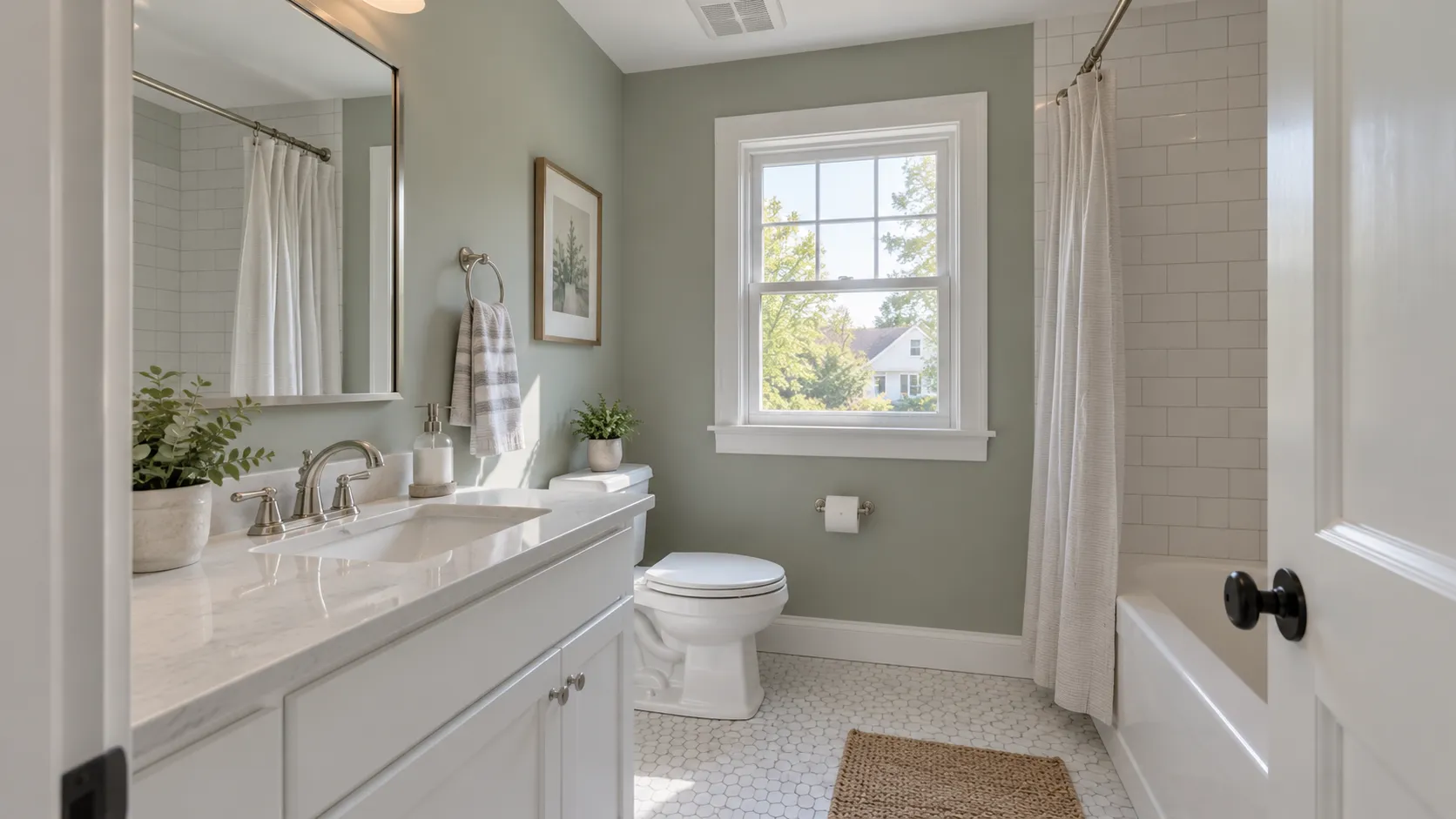
Indoors there is no weather, so the question is wear and looks; the Wood Handbook notes that for interior wood, "appearance and a cleanable surface are generally most important." We did not find a manufacturer or research body that publishes room-by-room intervals, so this table is plainly our rule of thumb from the houses we paint.
| Room or surface | Typical interval | Why |
|---|---|---|
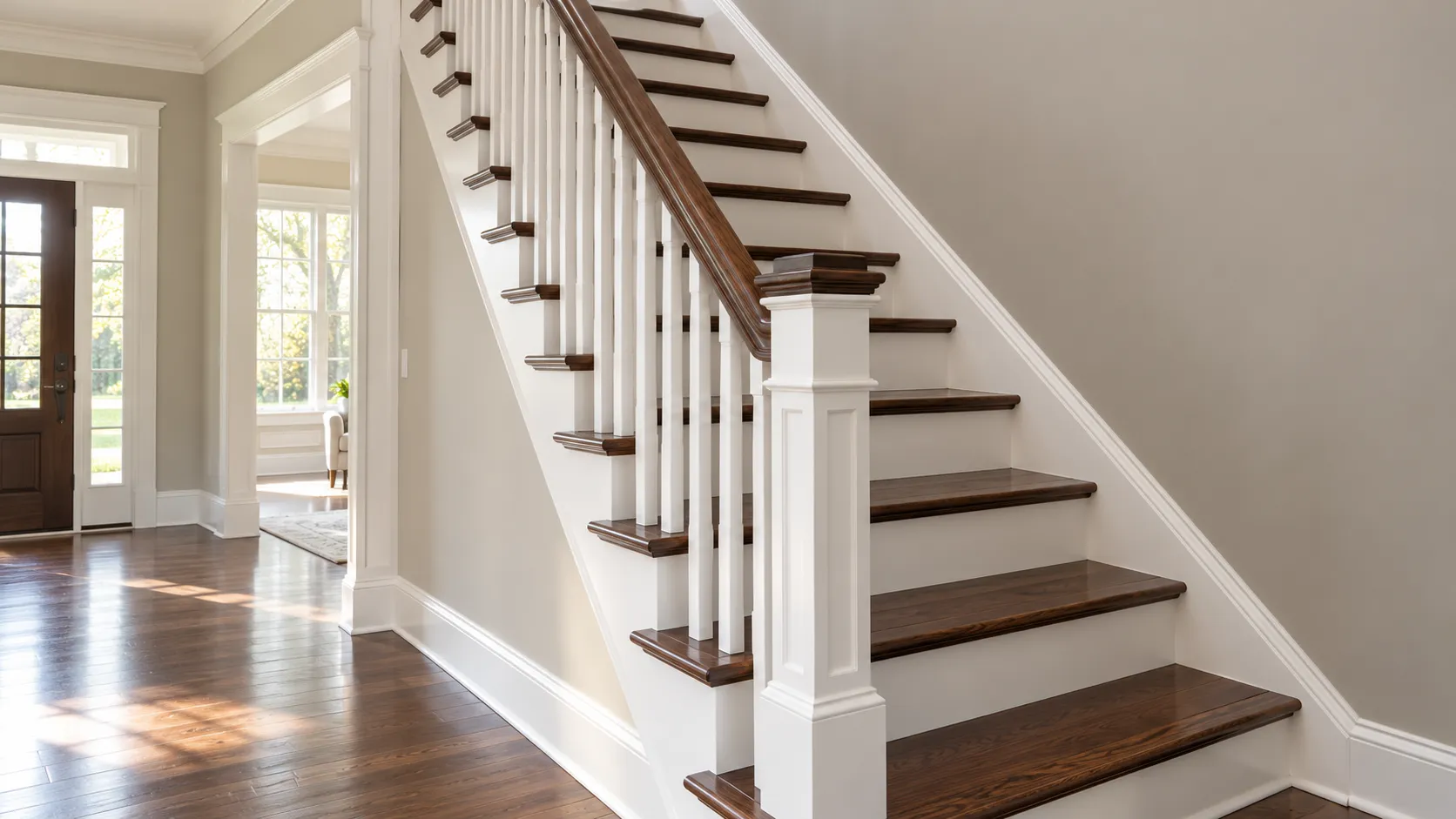
| Hallways, stairways, mudrooms and entries | 2–4 years | Hands, bags, strollers and pets scuff the walls |
| Kids' rooms and playrooms | 2–4 years | Wear, plus color changes as children grow |
| Kitchens | 3–5 years | Cooking grease, splashes and frequent wiping |
| Bathrooms | 3–5 years | Humidity and mildew, especially without a good exhaust fan |
| Living and family rooms | 5–7 years | Moderate traffic; sun fading near large windows |
| Adult bedrooms, dining rooms, offices | 5–10 years | Low traffic; often repainted for style, not wear |
| Ceilings | 10+ years, or when stained | Little wear; water stains need a stain-blocking primer |
| Baseboards, casings and interior doors | 5–8 years, with touch-ups between | Vacuum and shoe scuffs, hands near knobs |
The finish matters most indoors. Flat paint hides flaws but does not scrub well, so in busy rooms we lean toward eggshell, satin or a scrubbable matte, and toward satin or semi-gloss enamel on trim and doors, so you can wash a scuff instead of repainting. Touch-ups blend best with leftover paint from the same can; when a wall has more touch-ups than original paint, repaint it corner to corner. Trim usually wears before walls, and a trim-only repaint can freshen a house for a fraction of the cost. See our interior painting service for details.
Best Time of Year to Paint a House Exterior in New Jersey
In our experience the best time is late spring through early fall, with late May, June and September usually the most comfortable: warm days, nights well above freezing, and less of the midsummer heat that dries paint too fast on sunny walls. Interiors can be painted any time, and winter is a good time to book exterior work for spring.
Temperature and dew set the limits. The Wood Handbook advises latex paint when "the temperature is at least 10 °C (50 °F) and expected to remain above this temperature for 24 h," while noting some paints go on colder; Benjamin Moore's Aura Exterior data sheet lists a 35°F minimum. It also warns to "avoid painting late in the afternoon if heavy dew is expected during the night." The season runs longer at the shore: Rutgers puts average freeze-free days at 217 along the seacoast, 179 in the central and southern interior and 163 in the northern highlands. For what changes when a job slips into November, see our guide to painting in cold weather, and for planning the work itself, how long it takes to paint a house.
Not Sure If Your House Is Due?
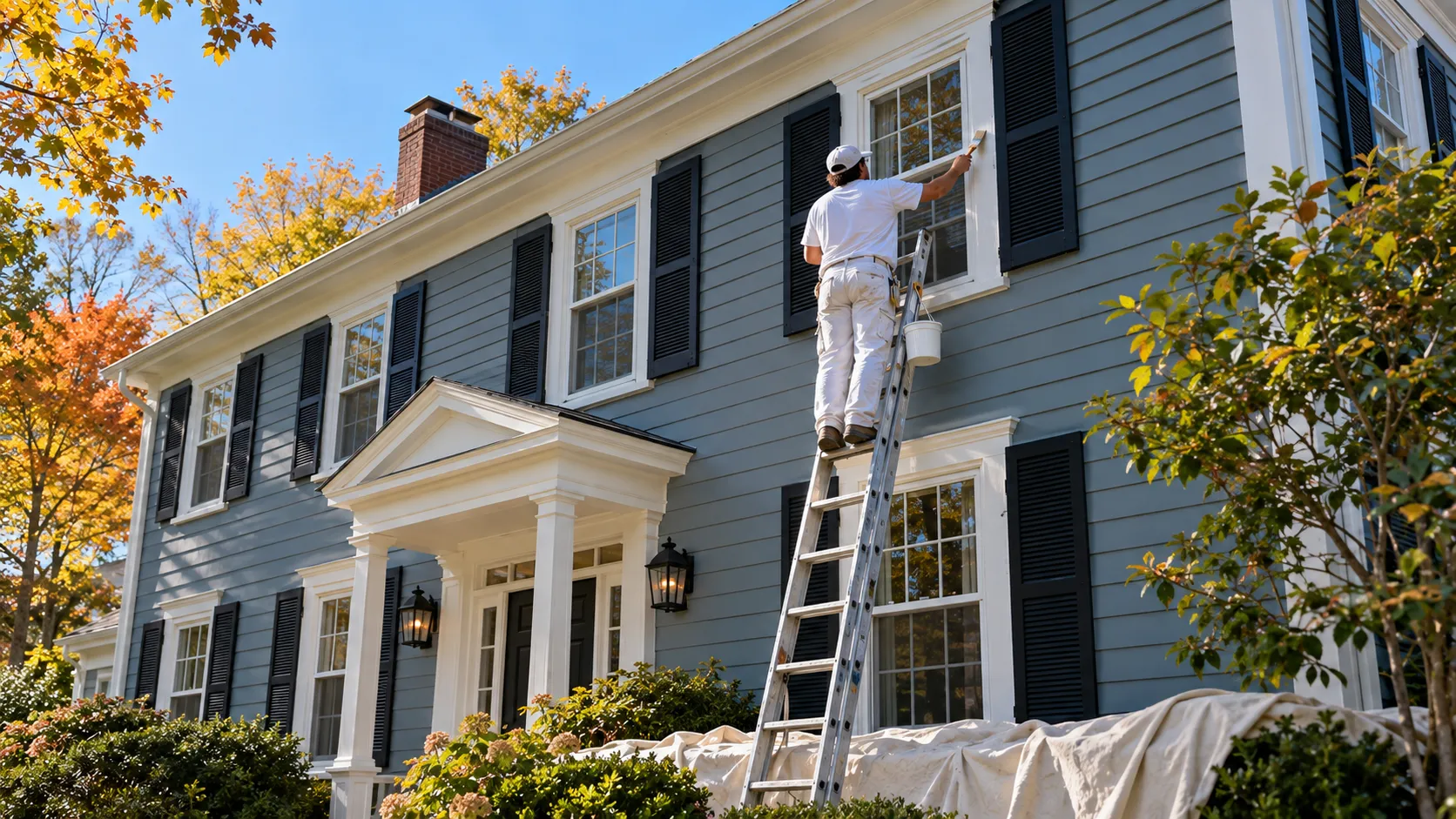
NJ Painting Co. is a family-owned, fully insured painting company at 36 Church Rd, Morganville, NJ 07751, painting New Jersey homes for more than 20 years with Benjamin Moore and Sherwin-Williams products. On every exterior painting estimate we check paint, caulk and wood condition and tell you honestly whether you need a full repaint, a partial one, or just a wash and some caulk. Estimates are free and include an in-home color consultation, and our work carries a two-year workmanship warranty. Call (732) 239-0932 or request a free estimate.
Frequently Asked Questions
How often should you paint your house in New Jersey?
Our rule of thumb for painted wood siding is every 7 to 10 years inland and 5 to 7 years at the shore or on very sunny walls. Field-painted fiber cement often lasts 10 to 15 years, while window sills, the sunniest trim and sun-facing doors usually need paint every 3 to 5 years. Let the condition of the paint decide: peeling, cracking, heavy chalk, bare wood or failed caulk mean it is time.
How long does exterior paint last?
The U.S. Forest Products Laboratory estimates 6 to 20 years for paint on wood siding depending on the wood, and says a primer plus two topcoats should last about 20 years in good conditions, with a single topcoat cutting that roughly in half. The National Park Service suggests 5 to 8 years for historic woodwork. On New Jersey houses, 7 to 10 years is typical for a well-prepared job, less on sunny walls and near the ocean.
How often should you paint the exterior of a house with vinyl or fiber cement siding?
Unpainted vinyl never needs paint, only cleaning. Once vinyl is painted, This Old House estimates 7 to 10 years in moderate climates and 5 to 7 in harsh ones. James Hardie's factory ColorPlus finish carries a 15-year prorated limited warranty against peeling, cracking and chipping, and in our experience field-painted fiber cement goes 10 to 15 years.
What is the best time of year to paint a house exterior in NJ?
Late spring through early fall, with late May, June and September often the most comfortable months. Most latex paint needs at least 50°F for 24 hours unless its data sheet allows lower, and work should stop early enough for the paint to set before evening dew. The season runs longer at the shore than inland.
How often should you paint interior walls?
Every 2 to 4 years for hallways, mudrooms and kids' rooms, 3 to 5 years for kitchens and bathrooms, and 5 to 10 years for bedrooms, dining rooms and offices. Ceilings often go 10 years or more. A washable eggshell or satin finish in busy rooms stretches those intervals.
Does a lifetime paint warranty mean I will never have to repaint?
No. Lifetime limited paint warranties generally replace the paint if it fails; Benjamin Moore's Aura Exterior warranty, for example, is non-transferable and excludes the cost of labor. Paint still fades, chalks and wears, and labor is most of the cost of a repaint.
About the author
Written by the NJ Painting Co. team
NJ Painting Co. is a family-owned painting contractor based in Monmouth County, in business since 2004. We are licensed and fully insured, work with Benjamin Moore and Sherwin-Williams paints, and back our work with a 2-year workmanship warranty. We serve Monmouth, Middlesex, Ocean, Mercer, Somerset and Burlington counties, plus Union, Essex, Hudson, Bergen and Passaic in North Jersey.