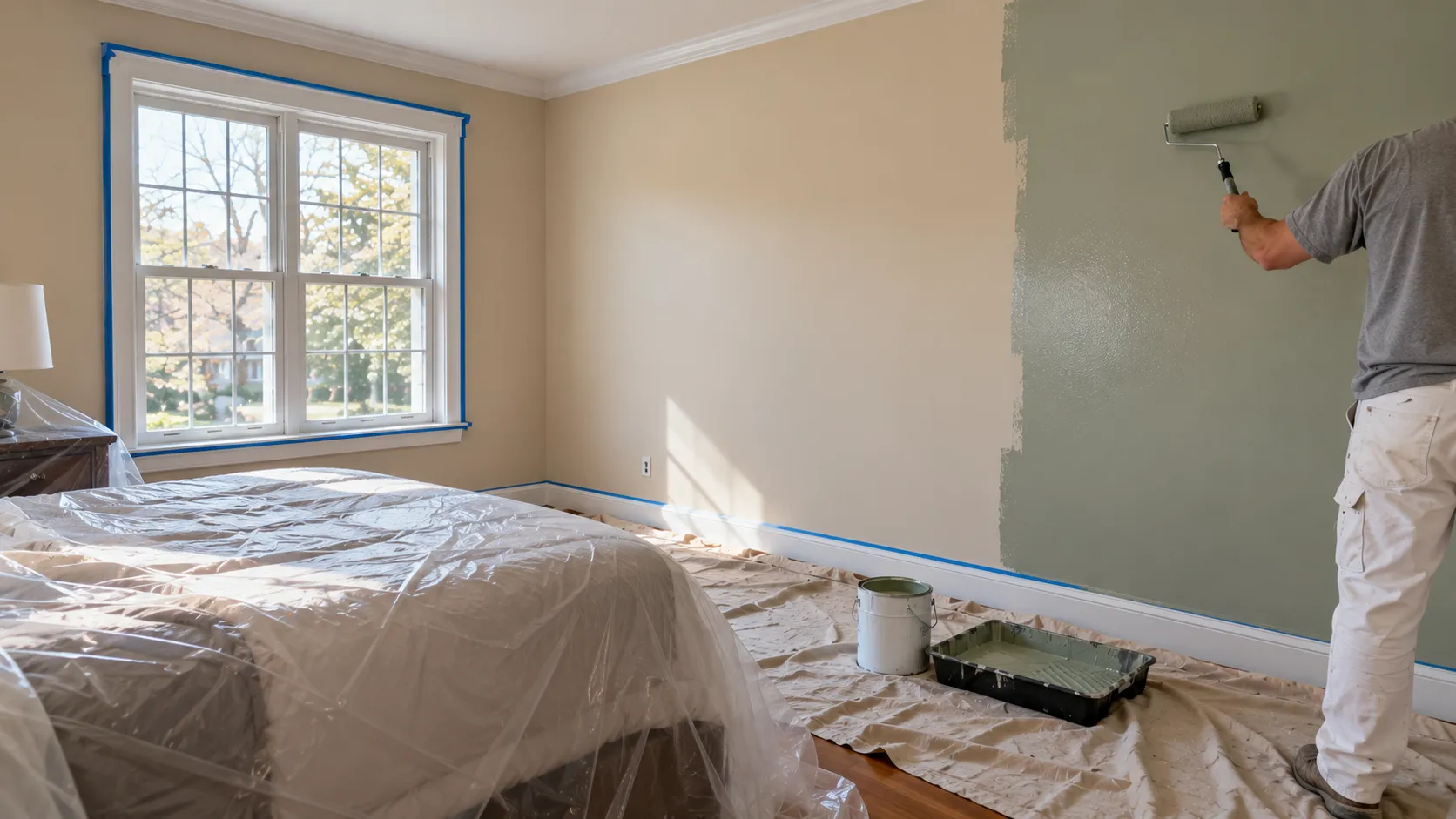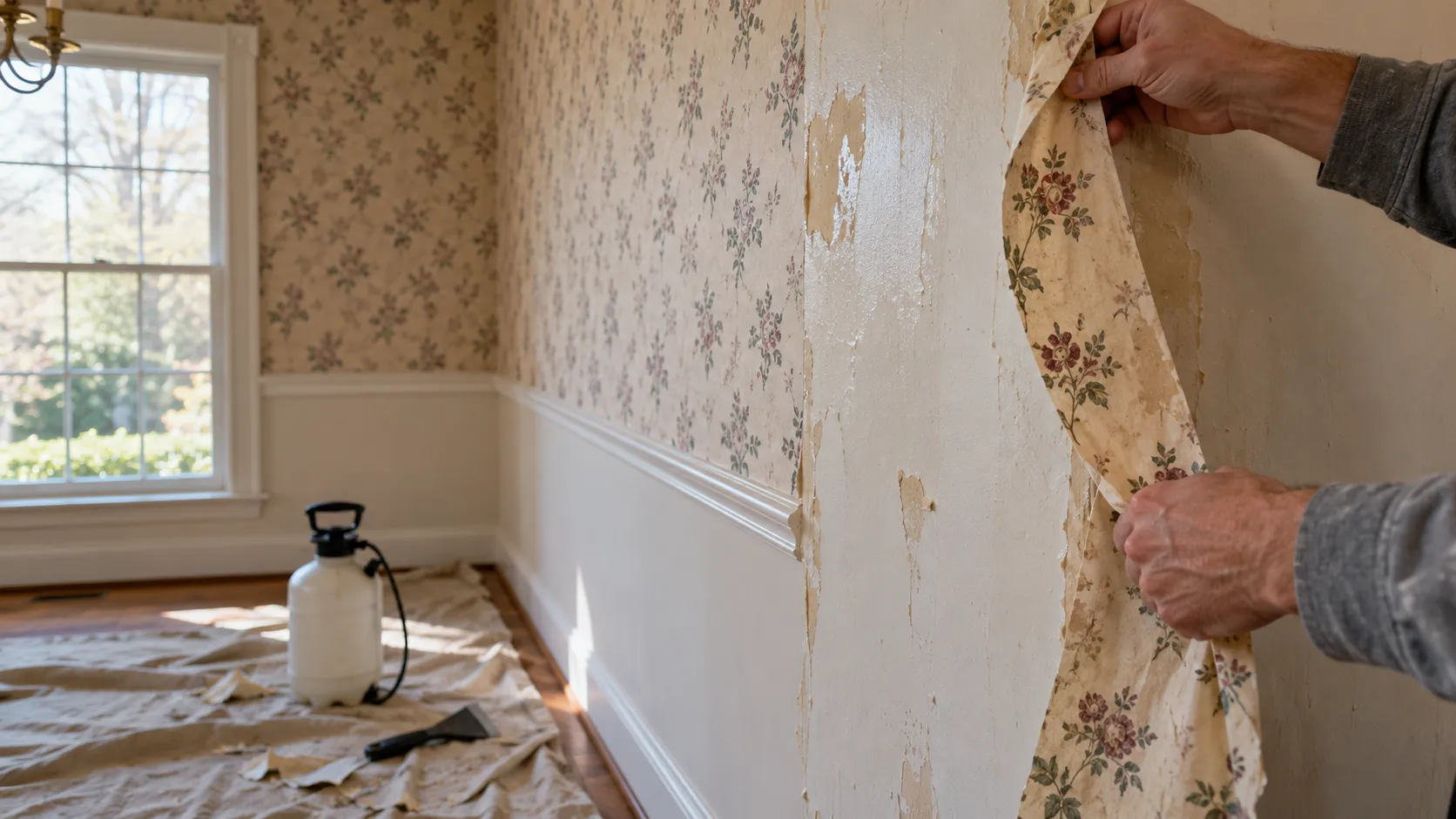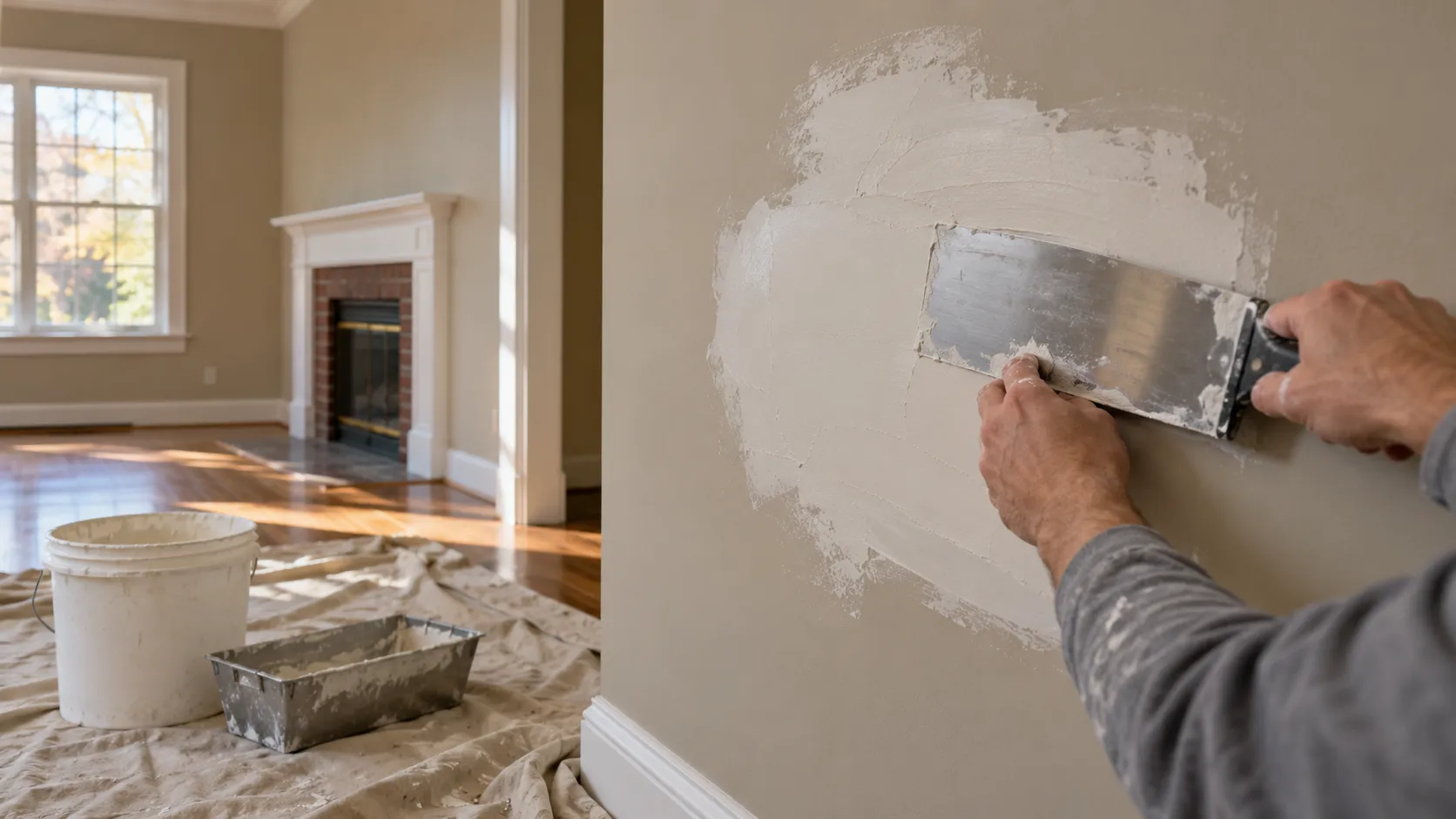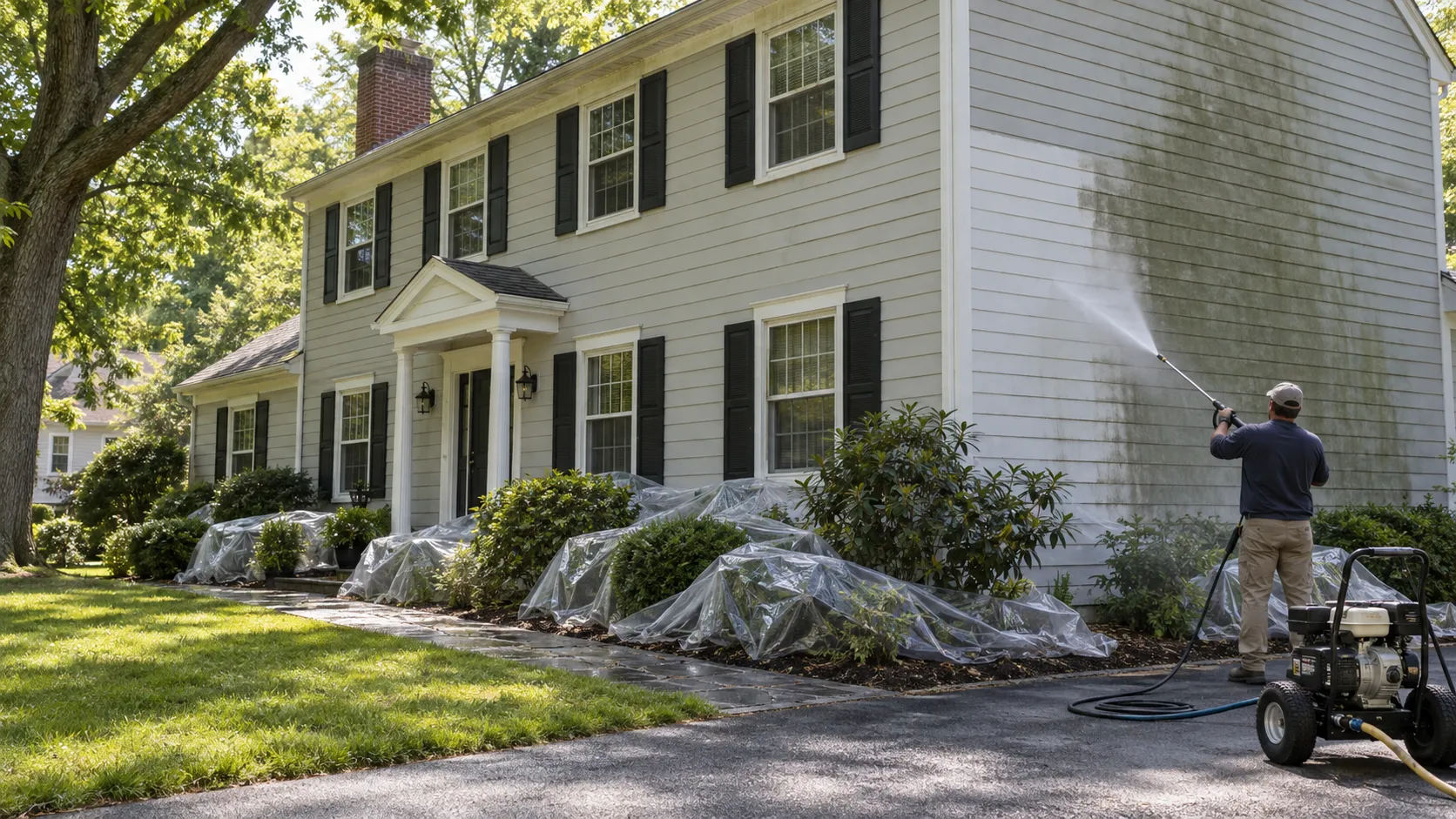
How much does it cost to pressure wash a house? National cost data puts a professional house wash at about $500 to $900, with an average near $700, or roughly $0.30 to $0.80 per square foot. A driveway runs about $180 to $240 and a deck about $100 to $200. When power washing is done as the first step of an exterior paint job, which is how we do it, our own cost guide puts it at $240 to $400 on a typical New Jersey home. The rest of this guide explains where those power washing cost figures come from and what moves them.
We are a family-owned painting company in Morganville and have painted homes across Monmouth, Middlesex, Ocean, Mercer, Somerset and Burlington counties for more than 20 years, using Benjamin Moore and Sherwin-Williams products. We are painters, not a cleaning company, so this is a painting contractor's view of washing: what it costs, what pressure washing can and cannot do for a tired exterior, how to do it without damaging siding, and why every exterior paint job we do starts with it. National prices below are attributed to the cost sites that publish them, and the technical points are linked to siding manufacturers, the USDA Forest Products Laboratory, the paint makers, the CDC and the EPA.
The Short Answer: Power Washing and Pressure Washing Prices
- Whole house: Fixr reports a national average of $700 and an average range of $500 to $900, with a 2,000 square foot house at $600 to $1,600.
- Per square foot: $0.30 to $0.80 according to Fixr; Homewyse's September 2026 calculator puts basic pressure washing at $0.43 to $0.53.
- Driveway: $180 to $240 for a 600 square foot driveway (Fixr).
- Deck: $100 to $200 depending on size and material (Fixr).
- Soft washing: $0.25 to $0.35 per square foot (Fixr), using low pressure and a cleaning solution in place of force.
- As part of exterior painting: our NJ painting cost guide prices power washing at $240 to $400 on a typical home, and it is included in every exterior painting project we do.
- What washing cannot do: it removes dirt, mildew, chalk and salt. It does not restore faded paint, fix peeling, or put color back into oxidized siding.
- Older homes: if the house was built before 1978, do not blast old paint until you know whether it contains lead.
How Much Does It Cost to Power Wash a House?
Two published sources give a consistent picture. Fixr's pressure washing cost guide (last updated January 2025) lists a national average cost of $700 with an average range of $500 to $900, and says "the average cost of pressure washing ranges from $0.30 to $0.80 per sq.ft." Homewyse's pressure washing calculator gives a narrower national estimate of "$0.43 - $0.53 per square foot" for September 2026, and its power wash house calculator gives "$0.46 - $0.56 per square foot" for the same month. Homewyse notes that its figures cover labor, setup, site protection and cleanup, and do not include sales tax, permits or a general contractor's markup.
Contractors also price by time. Fixr says professional services charge $50 to $150 per hour and that most jobs average between two and four hours, which is why small jobs tend to come with a minimum charge instead of a strict per-foot price.
Pressure washing house cost by size and job type
| Job | Typical price | Source |
|---|---|---|
| House, 1,000 sq ft | $300 to $800 | Fixr |
| House, 1,500 sq ft | $450 to $1,200 | Fixr |
| House, 2,000 sq ft | $600 to $1,600 | Fixr |
| House, 2,500 sq ft | $750 to $2,000 | Fixr |
| House, national average | $700 (average range $500 to $900) | Fixr |
| Pressure washing cost per square foot | $0.30 to $0.80 | Fixr |
| Pressure washing cost per square foot | $0.43 to $0.53 | Homewyse |
| Power wash a house, per square foot | $0.46 to $0.56 | Homewyse |
| Soft wash house cost per square foot | $0.25 to $0.35 | Fixr |
| Driveway, 600 sq ft | $180 to $240 ($0.30 to $0.40 per sq ft) | Fixr |
| Deck | $100 to $200 | Fixr |
| Hourly rate | $50 to $150 per hour, two to four hours for most jobs | Fixr |
| Power washing as part of an exterior paint job, typical NJ home | $240 to $400 | Our cost guide |
Those are national figures apart from the last row. In our experience, quotes in central New Jersey tend to land in the upper part of national ranges because labor costs more here, but we will not put a number on a standalone wash that we cannot source. The one New Jersey figure we publish is the $240 to $400 in our cost guide, and that is the washing line inside an exterior painting project, where the crew and equipment are already on site.
House washing cost by siding material
Fixr also breaks house washing cost down by what the walls are made of: $0.30 to $0.40 per square foot for vinyl, $0.30 to $0.50 for wood, $0.31 to $0.37 for brick and masonry, and $0.33 to $0.45 for stucco. The spread is small. Material matters less to the price than it does to the method, which we cover below.
Cost to pressure wash a driveway
Fixr's driveway page puts the cost to pressure wash a driveway at $180 to $240, with an average of $225 for a 600 square foot driveway, or $0.30 to $0.40 per square foot. By material it lists concrete at $180 to $200, asphalt at $185 to $220, and brick at $190 to $220 for that size. Adding the sidewalk costs about $50 to $75 more. Concrete is the one surface around a house that can take real pressure, which is why driveways are the most common do-it-yourself washing job.
Deck power washing cost
Fixr lists deck power washing cost at $100 to $200 depending on size and material. A deck is rarely washed for its own sake; it is washed because stain is about to go on, and the washing is usually built into the staining price. Our deck staining cost guide covers the full job. Wood is also the surface most easily damaged by a pressure washer, so the cheapest deck wash is not always the best one.
What Drives Power Washing Prices Up or Down
- Size. More wall, more time. Per-foot pricing falls on larger homes and small jobs hit a minimum charge.
- Height. Fixr lists the number of stories as a cost factor because upper floors add safety equipment. A two-story colonial takes longer than a ranch of the same floor area, and a walk-out basement makes the back of the house three stories.
- How dirty it is. Heavy mildew, green algae on a north wall or years of chalk need detergent, dwell time and sometimes a second pass.
- The surface. Vinyl, painted wood, cedar, stucco, brick and fiber cement each need a different pressure and technique. Gentle methods take longer.
- Access. Shrubs against the wall, decks, steep grades and tight side yards slow the work.
- Method. Soft washing, pressure washing and hot-water power washing are priced differently.
- What is bundled. A house wash alone, a house plus driveway and deck, or washing as the first day of a paint job are three different prices.
- Lead-safe work on older homes. Washing painted surfaces on a pre-1978 house can bring containment requirements with it.
Power Washing vs Pressure Washing vs Soft Washing
Most homeowners, and most painters including us, use "power washing" and "pressure washing" to mean the same thing: cleaning with a pressurized stream of water. The cleaning trade draws a line between them. Fixr describes pressure washing as using "unheated water under pressure," says power washing "uses heated water to clean," and notes that heated power washing is "usually not recommended for siding." Hot water is for grease and heavy grime on hard surfaces such as concrete.
Soft washing vs pressure washing is the comparison that matters for siding. Fixr defines soft washing as cleaning at "less than 500 PSI," suited to delicate materials. The cleaning is done by a detergent or mildew-killing solution that is applied, left to work, and rinsed off at low pressure. In our experience mildew comes back sooner when it is only blasted off and not treated with a cleaner.
| Method | How it cleans | Price per sq ft | Best suited to |
|---|---|---|---|
| Soft washing | Cleaning solution, then a rinse at less than 500 psi | $0.25 to $0.35 | Vinyl, painted wood, cedar, stucco, EIFS, fiber cement |
| Pressure washing | Unheated water under pressure, with or without detergent | $0.30 to $0.80 | Concrete, pavers, sound masonry; siding only at reduced pressure with a wide fan tip |
| Power washing (heated) | Heated water under pressure | $0.35 to $0.70 | Greasy or heavily soiled concrete; usually not siding |
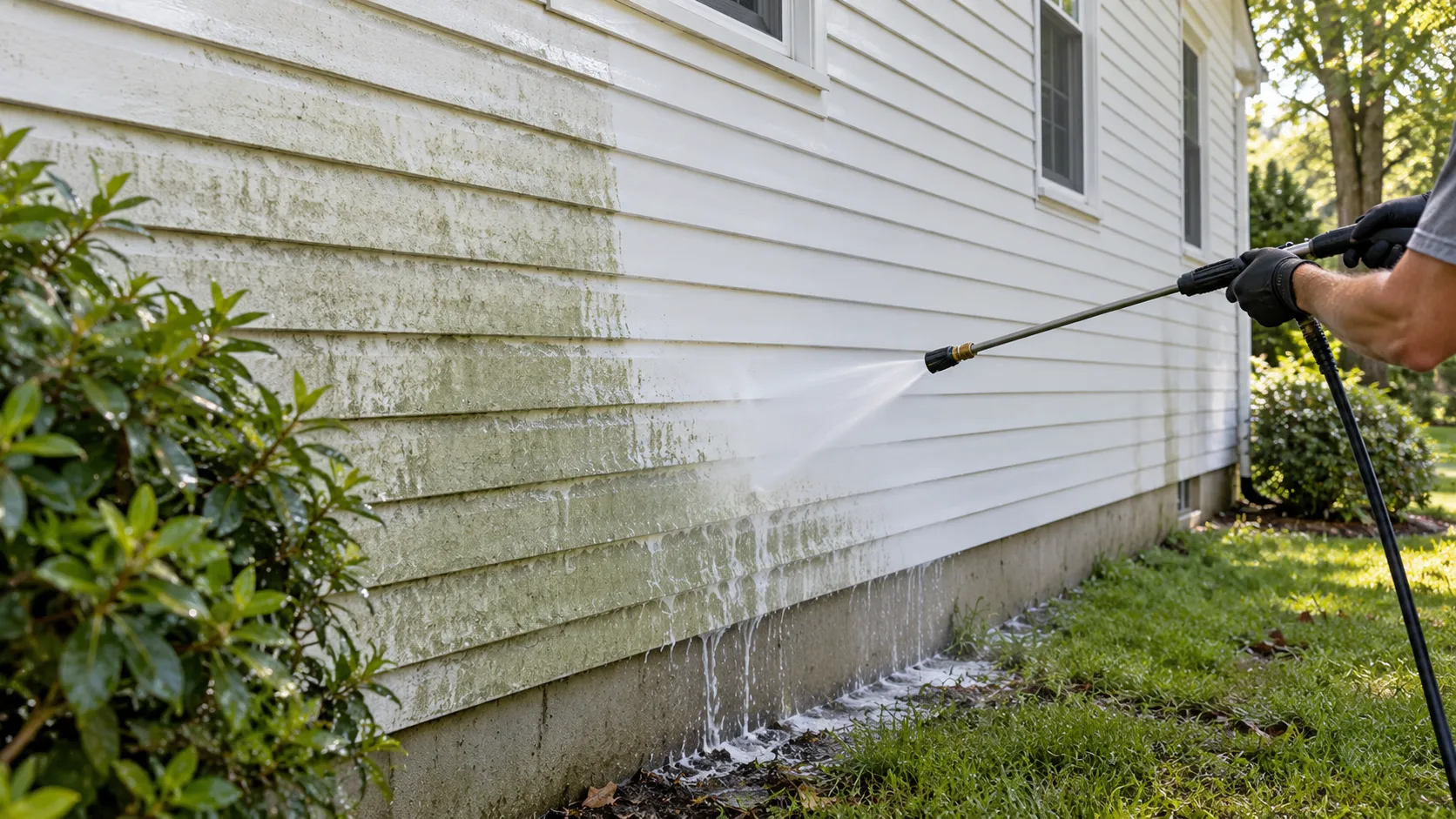
When we say power washing is included in our exterior painting, we mean a detergent wash and a low-pressure rinse matched to the siding. That is closer to what the cleaning trade calls a soft wash than to blasting. We use the washer to clean. Loose paint is removed afterward with scrapers and sanders.
What Is Safe on Each Type of Siding
Can you pressure wash vinyl siding?
Usually yes, gently, but check who made your siding. The Polymeric Exterior Products Association, the vinyl siding trade group, says in its cleaning and maintenance guidance that "some siding manufacturers do not recommend power washing, while others have limits on the pressure (PSI) and cleaners that can be used," and tells homeowners to "always read the manufacturer's instructions for both the siding and the power washer before you begin." CertainTeed is one of the makers that says no: its vinyl siding cleaning guide states, "We do not recommend power washing vinyl or polymer siding as it can cause moisture intrusion, damage, and/or discoloration."
If you do use a washer on vinyl, the trade group's instruction on aim is the important one: "Hold the power washer straight at eye level. Do not aim the stream upward, as this can force water behind the siding panels." Vinyl siding is hung loosely and is open at the bottom of each lap, so a stream aimed up from the ground goes straight behind it onto the sheathing.
How to clean vinyl siding without a pressure washer
You do not need a machine. The trade group says "a soft cloth or a long-handled brush with soft bristles is ideal," and that for mildew on larger areas "a solution of 30% vinegar and 70% water is effective." CertainTeed's method is to "apply the soapy mixture by hand and thoroughly rinse the siding with clean water from the garden hose." For mildew it gives a stronger mix of one-third cup of detergent, two-thirds cup of a trisodium cleaner, one quart of 5% sodium hypochlorite bleach and three quarts of water, and warns that "greater concentrations may cause damage to vinyl siding." The trade group lists undiluted chlorine bleach, cleaners with organic solvents, liquid grease remover, nail polish remover and furniture polish as products that can damage the surface.
Washing will not bring back color. Vinyl and aluminum that have faded or chalked in the sun look cleaner after a wash, but the color underneath is still faded. At that point the choices are living with it, painting or replacing; our guide on painting vinyl or aluminum siding explains when painting makes sense.
Wood clapboard, cedar shingles and decks
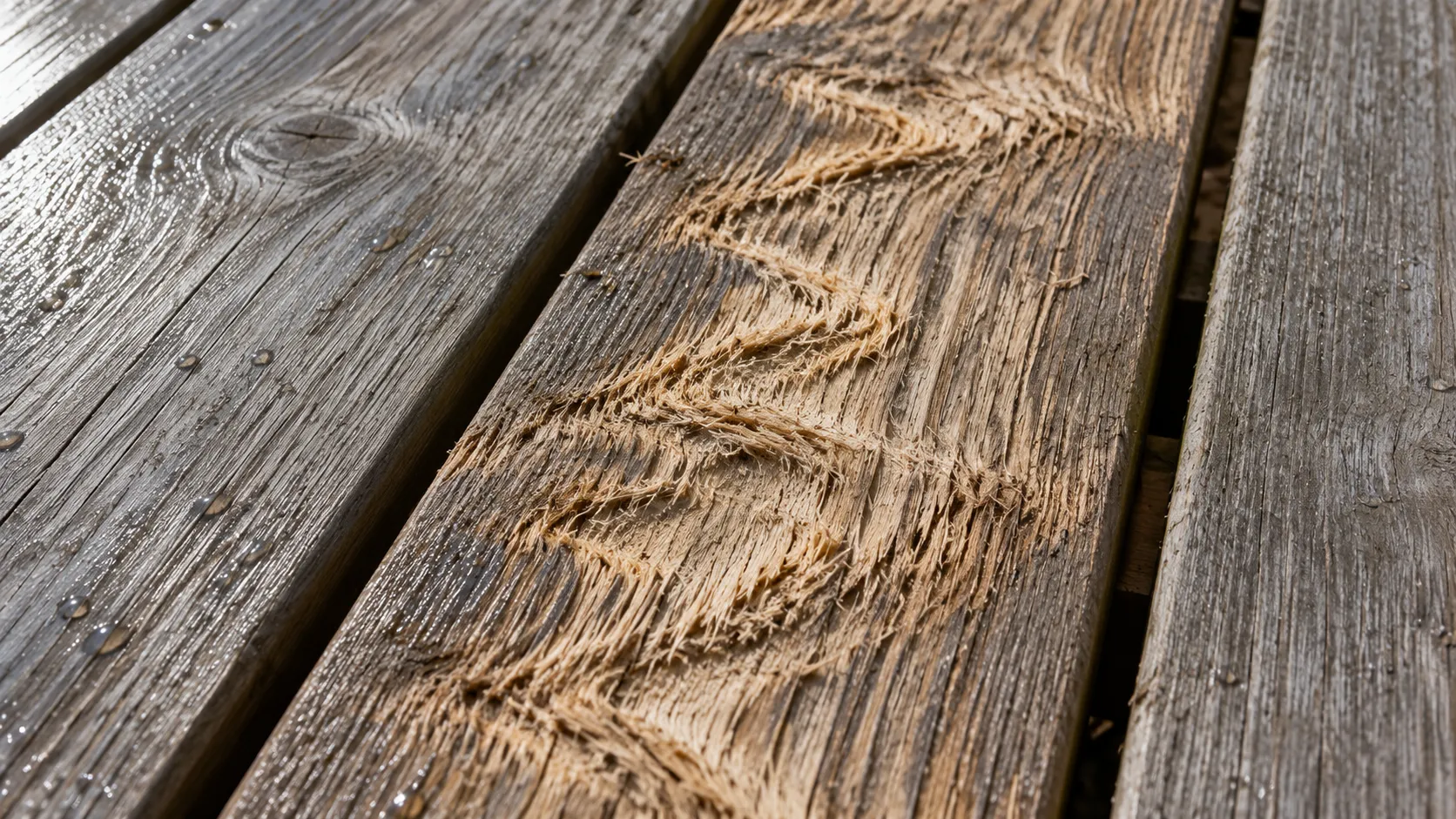
Wood is where pressure does the most harm. The USDA Forest Products Laboratory's sheet on finishes for wood decks warns that "aggressive scrubbing with a caustic cleaner or power washing can remove wood from the surface, particularly on softer wood such as western redcedar." Too much pressure, or a nozzle held too close, cuts the soft grain out from between the hard grain and leaves a fuzzy, ridged surface that has to be sanded before it will take paint or stain evenly.
The same lab's field sheet "Why House Paint Fails" accepts power washing as a way to clean wood siding, and adds two cautions we follow on every job: "be careful not to point the wand up as this can force water behind the siding," and "taping a stick on the wand will force you to maintain a safe distance and prevent otherwise easily caused damage." On cedar we run low pressure and let the cleaner do the work.
Fiber cement
James Hardie's cleaning bulletin for its siding (Technical Bulletin 20) is specific: "Low pressure water spray, a soft bristle (nonmetal) brush is most suitable for cleaning fiber cement products. If using a pressure washer, care must be taken to ensure that the water stream does not damage the surface of the siding. Using wide fan tips that are kept a minimum of 6 feet from the wall and at pressures under 1500 psi will minimize the chance of damaging the siding." It also notes that damage from improper cleaning "may not be covered by the James Hardie warranty." For most dirt, the bulletin calls for nothing more than a soft cloth or brush and a garden hose.
Stucco and EIFS
Stucco needs a pressure matched to its type, and synthetic stucco (EIFS) needs the least. Dryvit's EIFS maintenance guide says to "use a low-pressure washer (under 500 psi) with a fan spray tip, keeping the nozzle at least 12 in. (30.48 cm) from the surface." Our guide to painting stucco in NJ explains how to tell the two apart and how long washed stucco needs to dry.
Brick and masonry
Brick looks indestructible and is not. The National Park Service's Preservation Brief 1, written for historic masonry, recommends "starting with a very low pressure (100 psi or below), even using a garden hose," and going up only as needed, "generally no higher than 300-400 psi." It warns that water at too high a pressure "is very abrasive and can easily etch marble and other soft stones, as well as some types of brick." Old, soft brick and worn mortar joints are the concern; a newer brick wall in good repair is more forgiving. See our guide to painting a brick house for more on cleaning brick before coating it.
Pressure Washing Before Painting: Why Every Exterior Job Starts With It
Paint sticks to whatever is on the surface. If that is dirt, mildew, chalk or salt, the paint bonds to that layer and comes off with it. Benjamin Moore's data sheet for Regal Select Exterior says "surfaces must be clean and free of grease, wax, and mildew" and to "remove excessive chalk and loose or scaling paint." It singles out the places rain never reaches: "un-weathered areas such as eaves, ceilings, and overhangs should be washed with a detergent solution and/or rinsed with a strong stream of water from a garden hose to remove contaminants that can interfere with proper adhesion."
Sherwin-Williams' Residential Guide Specification says the same in its surface preparation notes: "The surface must be dry and in sound condition. Remove oil, dust, dirt, loose rust, peeling paint or other contamination to ensure good adhesion." Its exterior surface preparation FAQ tells painters to "power wash the vinyl siding or use warm soapy water to remove dirt and chalk," and says of chalky aluminum that "any surface that has a chalky feel should be cleaned to remove the chalk before painting."
That is why our cost guide calls power washing "not optional" on an exterior job, and why it is included in every exterior painting project we do. Paint over an unwashed porch ceiling or soffit is one of the common reasons a top coat lets go of the coat beneath it, which we cover in why paint peels.
Mildew has to be killed, not just rinsed
Sherwin-Williams' specification gives the method: "Remove mildew before painting by washing with a solution of 1 part liquid household bleach and 3 parts of warm water. Apply the solution and scrub the mildewed area. Allow the solution to remain on the surface for 10 minutes. Rinse thoroughly with clean water and allow the surface to dry 48 hours before painting." It adds the safety points: wear goggles, waterproof gloves and protective clothing, test any cleaner on a small inconspicuous area first because bleach "may damage or discolor existing paint films," and "do not add detergents or ammonia to the bleach/water solution." The Forest Products Laboratory gives the reason for the ammonia warning: "Ammonia reacts with bleach to form a toxic gas."
Not sure whether a dark patch is dirt or mildew? Sherwin-Williams' exterior troubleshooting FAQ suggests cleaning a spot "with a mixture of three parts water and one part household bleach. If it comes clean, it's probably mildew." The same page is frank that mildew cannot be permanently prevented: "under some conditions, mildew eventually will reappear on any type of paint."
How long to let the house dry before painting
Washing puts water into the wall, and paint over damp wood fails. The Sherwin-Williams specification above calls for 48 hours of drying after a mildew wash. The Forest Products Laboratory puts it in terms of weather: "If only the surface of the wood is wet, then only one sunny day is usually needed for drying prior to painting. If the wood is saturated, several sunny or windy days are necessary." For decks cleaned before finishing it says to "allow at least 2 warm, windy days to dry." Masonry is slower still; the Park Service notes that "a masonry wall may take over a week to dry after cleaning."
In practice we wash at the start of the job and use the drying days for work that does not need a dry wall, such as covering plantings, setting up ladders and staging, and sorting out carpentry repairs. In our experience shaded north walls, the bottoms of trim boards and bare wood take the longest to dry, so those are the places we check before primer goes on. Sherwin-Williams' specification also rules out the tempting shortcut: "No exterior painting should be done immediately after a rain, during foggy weather, when rain is predicted, or when the temperature is below 50°F, unless products are designed specifically for these conditions."
What washing will and will not do for a tired exterior
A wash is sometimes all a house needs. If the paint is sound and the walls are just green, gray or dusty, washing can take years off the look of the house for a small fraction of the cost of repainting. On estimates we often tell homeowners exactly that, and our guide to how often to paint a house in NJ explains how to tell the difference.
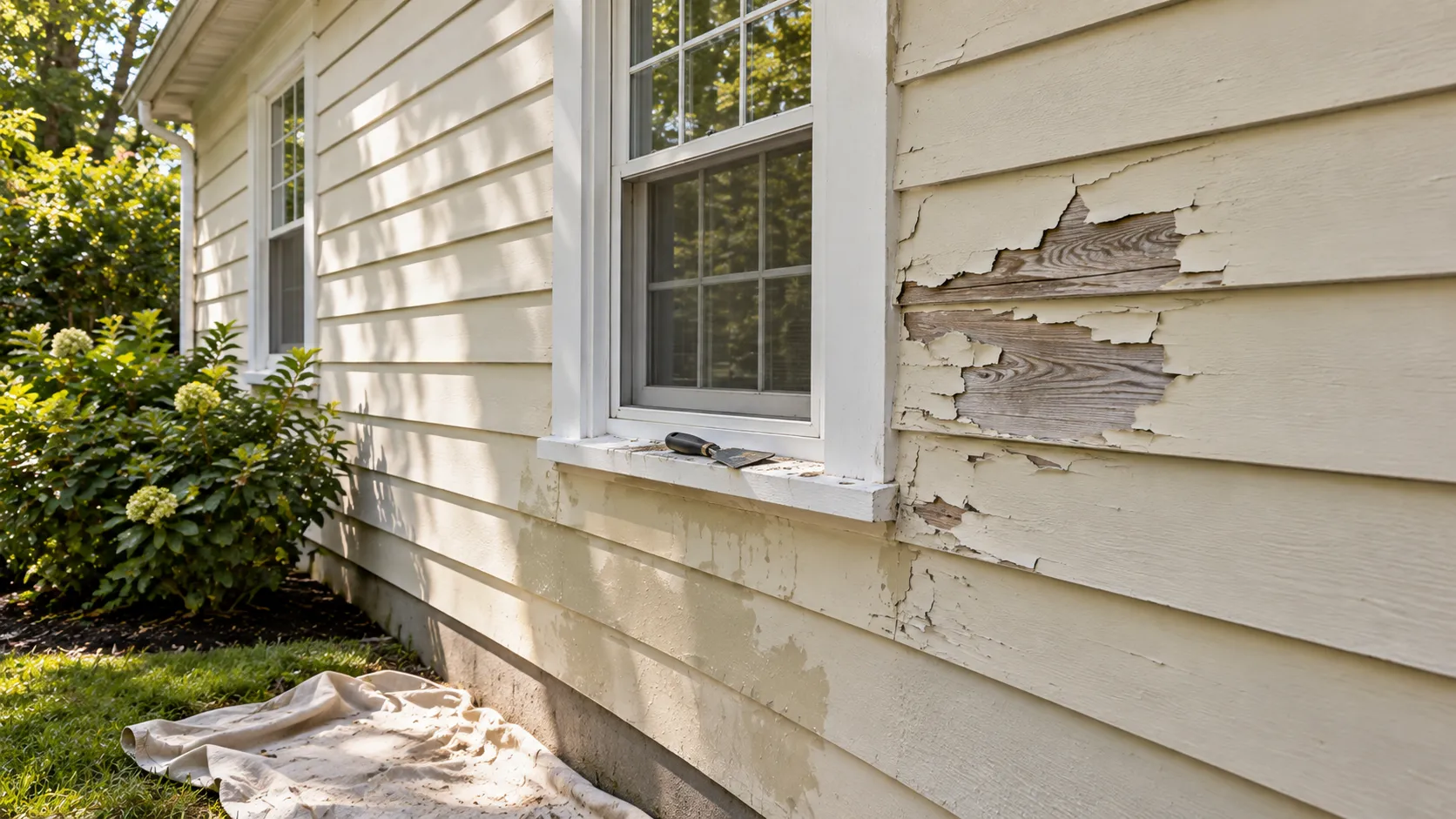
Washing has limits. It will not stop peeling, fill open caulk joints, fix rot, or restore faded color. In our experience a wash often makes failing paint look worse for a while, because loose paint that was hanging on comes off and bare patches show. That is not damage from the wash; the paint had already let go. If washing leaves you with bare wood, the wood needs primer and paint soon, not next year. If you are weighing a repaint, our article on what it costs to paint a house in NJ lays out the numbers, and our guide to popular exterior house colors in NJ is a starting point for color.
How Often Should You Power Wash Your House?
The published guidance points to about once a year. CertainTeed says "we recommend cleaning your siding once a year to avoid build up and keep it looking its best," and Fixr reports that "professionals generally recommend pressure washing your house about once a year." James Hardie's bulletin takes an as-needed approach, noting that how much maintenance is required "will depend on the geographical location, the exposure of the building" and the product.
In our experience many central New Jersey homes do well with a gentle wash every year or two, and not every wall needs it on the same schedule. The shaded north side and walls under trees turn green first, while a sunny south wall may only be dusty. Mildew drives most of it. James Hardie's bulletin explains that "moisture is the most important single factor in the growth of mildew," and that it "is usually found in damp, dark areas or during prolonged humid conditions." New Jersey supplies those conditions: Rutgers' Office of the New Jersey State Climatologist notes in its climate overview that "high humidity and moderate temperatures prevail when winds flow from the south or east," and that average annual precipitation ranges "from about 40 inches along the southeast coast to 51 inches in north-central parts of the state."
Shore homes have one more reason. Rutgers says "sea breezes often penetrate 5-10 miles inland," and in our experience homes near the water in Monmouth County and Ocean County carry a film of salt on the sides facing the ocean. A hose rinse of those walls between washes helps, and before painting the salt has to come off completely.
Best Time to Power Wash a House in New Jersey
The best time to power wash a house here is a mild, dry stretch from mid-spring through early fall. Spring washing clears winter grime and the green growth that built up over the damp months. Late summer and early fall work well too, especially ahead of a fall paint job.
Avoid washing when a freeze is possible. The Park Service's masonry brief says water cleaning "should never be done in cold weather or if there is any likelihood of frost or freezing because water within the masonry can freeze, causing spalling and cracking." Rutgers puts the average freeze-free season at 179 days in the central and southern interior of the state and 217 days along the seacoast, which gives shore towns a somewhat longer washing and painting season than inland towns in Middlesex County. If the wash is the first step of a paint job, the timing follows the painting weather: you need the dry days after the wash as much as the wash day itself.
DIY Pressure Washing vs Hiring It Out
Renting a machine is cheap. Fixr puts rentals at $50 to $100 per day, against a professional rate of $50 to $150 per hour. A ground-level driveway, patio or walkway is a reasonable do-it-yourself job. Siding, second stories and anything painted are where the risk goes up.
The first risk is to you. The CDC's pressure washer safety page warns that "the strong spray from a pressure washer can cause serious wounds that might first appear minor," that "the fast, strong spray can throw objects that strike and injure others," and that "electric shock can occur if the pressure washer is not used properly." Its rules are short: "Never point a pressure washer at yourself or others," never let children operate one, and "never use a gasoline powered washer in an enclosed space or less than 20 feet from any window, door, or vent." We would add our own: do not run a pressure washer from a ladder. The kick of the wand when the trigger is pulled is enough to throw off your balance.
The second risk is to the house. In our experience the damage we see most from do-it-yourself washing is wand marks and raised grain on cedar and decks, water driven up behind siding and around windows, and screens and old caulk blown out by a narrow tip held too close. All of it comes from too much pressure, too little distance, or aiming up.
The third is where the water goes. The EPA's stormwater program explains that runoff "picks up pollutants like trash, chemicals, oils, and dirt/sediment that can harm our rivers, streams, lakes, and coastal waters." Wash water full of detergent or bleach is better soaked into the lawn than sent down the driveway to a storm drain, and plants along the foundation should be rinsed or covered before and after any bleach wash.
If you hire a washing company, ask what pressure and tip they use on your type of siding, what cleaner they apply and how they protect plants, whether they are insured, and how they handle a pre-1978 house. Our business is painting; washing is part of our exterior prep. If you want to know whether your house needs a wash, a repaint or nothing yet, ask us and we will tell you what we see.
Homes Built Before 1978: Lead Paint and Pressure Washing
If your house was built before 1978, the old paint may contain lead, and a pressure washer is a fast way to spread it. Sherwin-Williams' specification states that "buildings constructed after 1978 are less likely to contain lead based paints" and that removing old paint "by sanding, scraping or other means may generate dust or fumes that contain lead." A high-pressure stream on failing paint strips chips off the wall and carries them across the lawn, the garden beds and the neighbor's driveway.
The EPA addresses this directly. Its answer to the question of how lead-safe rules apply to pressure washing says that pressure washing "is not a prohibited practice" under the Renovation, Repair and Painting Rule, but "is subject to the same containment requirements as other permissible work practices," and that "the firm must isolate the work area so that no dust or debris (including in the waste water) leaves the work area while the renovation is being performed." The EPA's Renovation, Repair and Painting program requires that "anyone paid to perform work that disturbs painted surfaces in homes, childcare facilities and preschools built before 1978 be certified."
In plain terms: a gentle wash of sound, intact paint is one thing, and blasting loose paint off an old house is another. On older homes we wash at low pressure to remove dirt and mildew, not paint, and loose paint is removed afterward using lead-safe methods. If you own an older home, read our guide to lead paint in older NJ homes before you or anyone else points a washer at it.
Get an Honest Answer on Wash or Paint
If you are pricing a wash because the house looks tired, we will tell you whether washing is enough or whether the paint underneath is at the end of its life. NJ Painting Co. is a family-owned, licensed and fully insured painting company at 36 Church Rd, Morganville, NJ 07751, working on New Jersey homes for more than 20 years with Benjamin Moore and Sherwin-Williams products. Power washing is included in every exterior painting project, every estimate is free and includes an in-home color consultation, and our work carries a two-year workmanship warranty. See our exterior painting service and the cost guide, check coverage in Monmouth County, Middlesex County and Ocean County, read about our commercial painting if the building is a business, or call (732) 239-0932 and request a free estimate.
Frequently Asked Questions
How much does it cost to pressure wash a house?
Fixr reports a national average of $700 and an average range of $500 to $900, or $0.30 to $0.80 per square foot, with a 2,000 square foot house at $600 to $1,600. Homewyse's September 2026 estimate is $0.43 to $0.53 per square foot. As the first step of an exterior paint job, our cost guide prices power washing at $240 to $400 on a typical New Jersey home.
What is the pressure washing cost per square foot?
Fixr puts pressure washing at $0.30 to $0.80 per square foot, soft washing at $0.25 to $0.35 and heated power washing at $0.35 to $0.70. Homewyse's September 2026 calculators give $0.43 to $0.53 for basic pressure washing and $0.46 to $0.56 to power wash a house. Small jobs usually carry a minimum charge.
How much does it cost to pressure wash a driveway?
Fixr lists $180 to $240 for a 600 square foot driveway, an average of $225, or $0.30 to $0.40 per square foot. Adding the sidewalk runs about $50 to $75 more.
What is the difference between soft washing and pressure washing?
Pressure washing cleans with force. Soft washing cleans with a detergent or mildew-killing solution and rinses at less than 500 psi. Soft washing is the safer choice for vinyl, painted wood, cedar, stucco and fiber cement; higher pressure belongs on concrete and sound masonry.
Can you pressure wash vinyl siding?
Often yes at low pressure, but some manufacturers advise against it. CertainTeed does not recommend power washing its vinyl siding, and the vinyl siding trade group says to read the siding maker's instructions first. Never aim the stream upward, because it forces water behind the panels. A soft brush, soapy water and a garden hose clean vinyl safely.
How often should you power wash your house?
About once a year is the common recommendation from CertainTeed and Fixr. In our experience many New Jersey homes need it every year or two, with shaded north walls and homes near the shore needing attention sooner.
What is the best time to power wash a house in New Jersey?
Mid-spring through early fall, in a mild, dry stretch. Avoid washing when frost is possible, because water inside masonry can freeze and crack it. If you are washing before painting, pick a week with dry days after the wash.
How long after pressure washing can you paint?
Sherwin-Williams' specification calls for 48 hours of drying after a mildew wash. The Forest Products Laboratory says surface-wet wood usually needs one sunny day and saturated wood several sunny or windy days. Masonry can take a week or more.
Is it safe to pressure wash a house built before 1978?
Not until you know whether the paint contains lead. The EPA says pressure washing is not prohibited under its lead-safe renovation rule, but paid work must be done by a certified firm with containment so that no debris or waste water leaves the work area. Do not blast peeling paint off an older house yourself.
About the author
Written by the NJ Painting Co. team
NJ Painting Co. is a family-owned painting contractor based in Monmouth County, in business since 2004. We are licensed and fully insured, work with Benjamin Moore and Sherwin-Williams paints, and back our work with a 2-year workmanship warranty. We serve Monmouth, Middlesex, Ocean, Mercer, Somerset and Burlington counties.