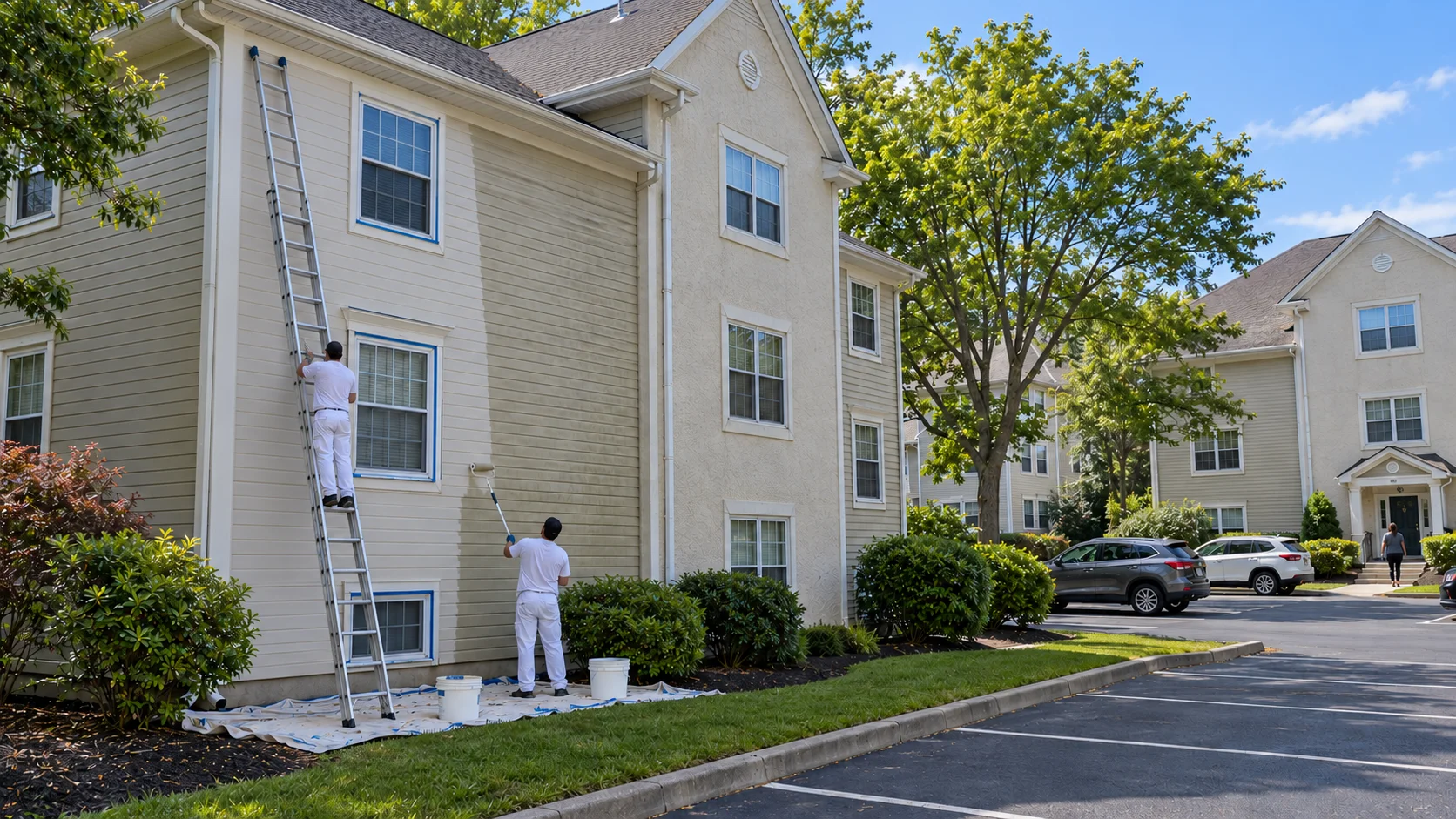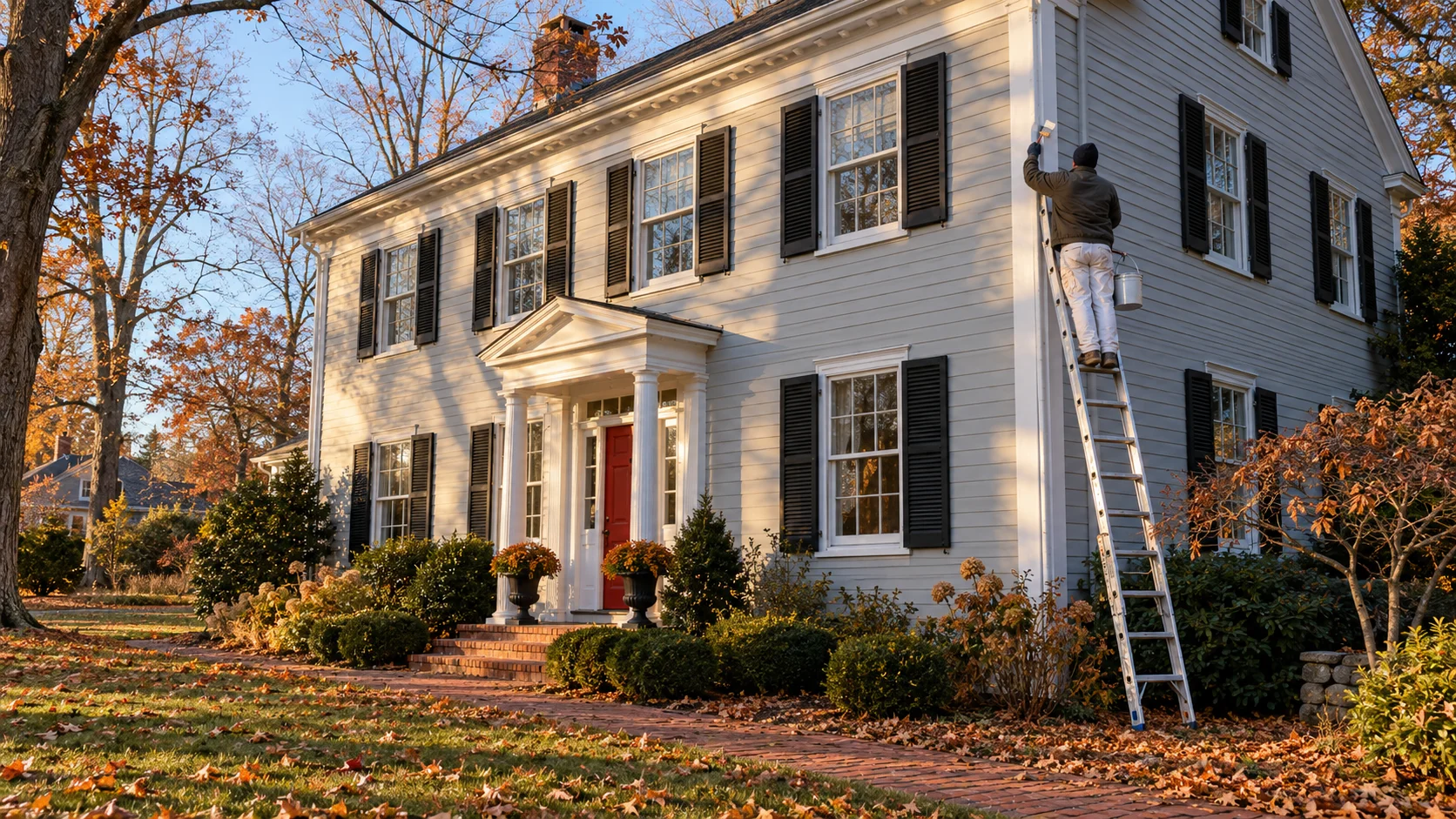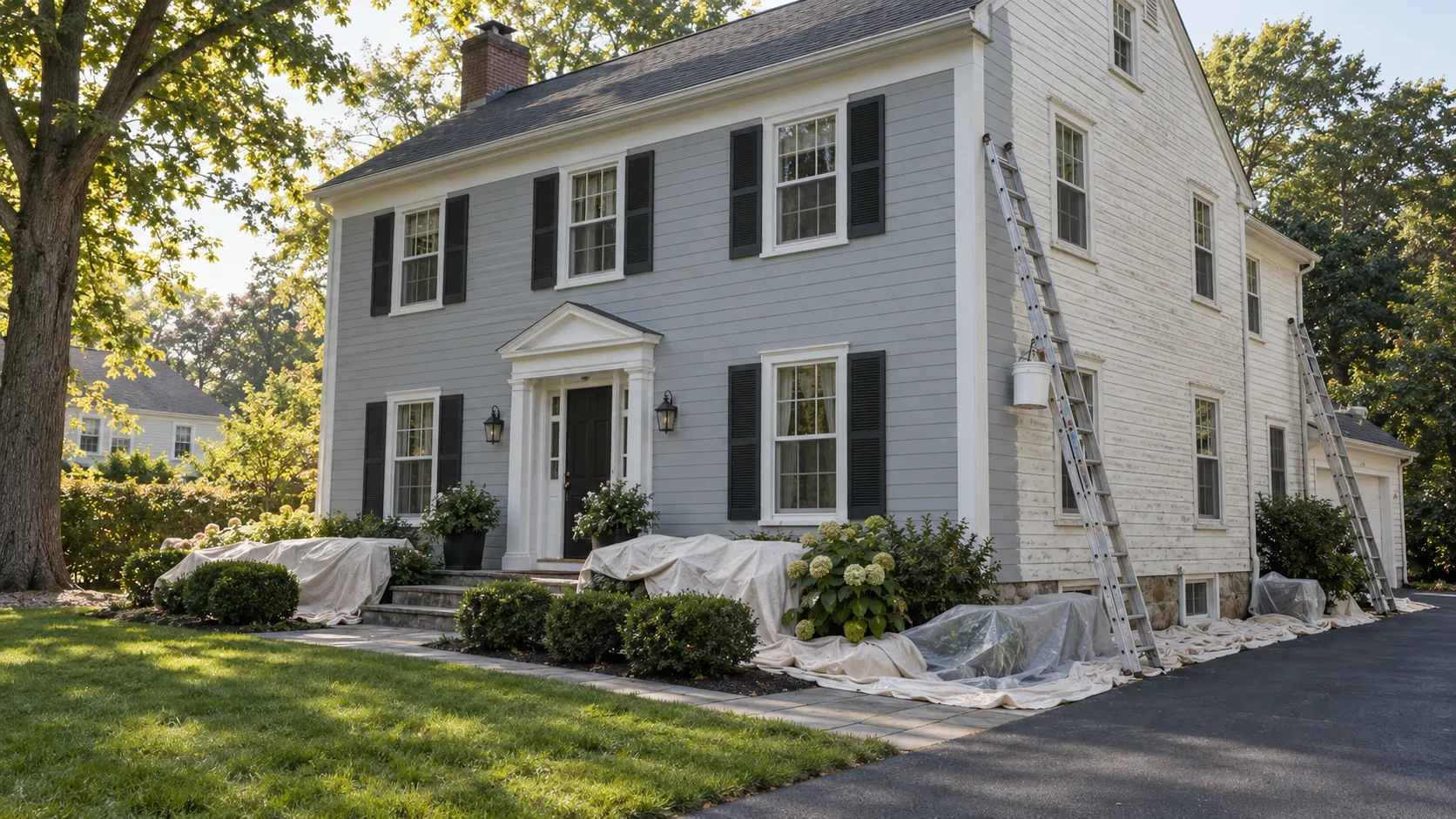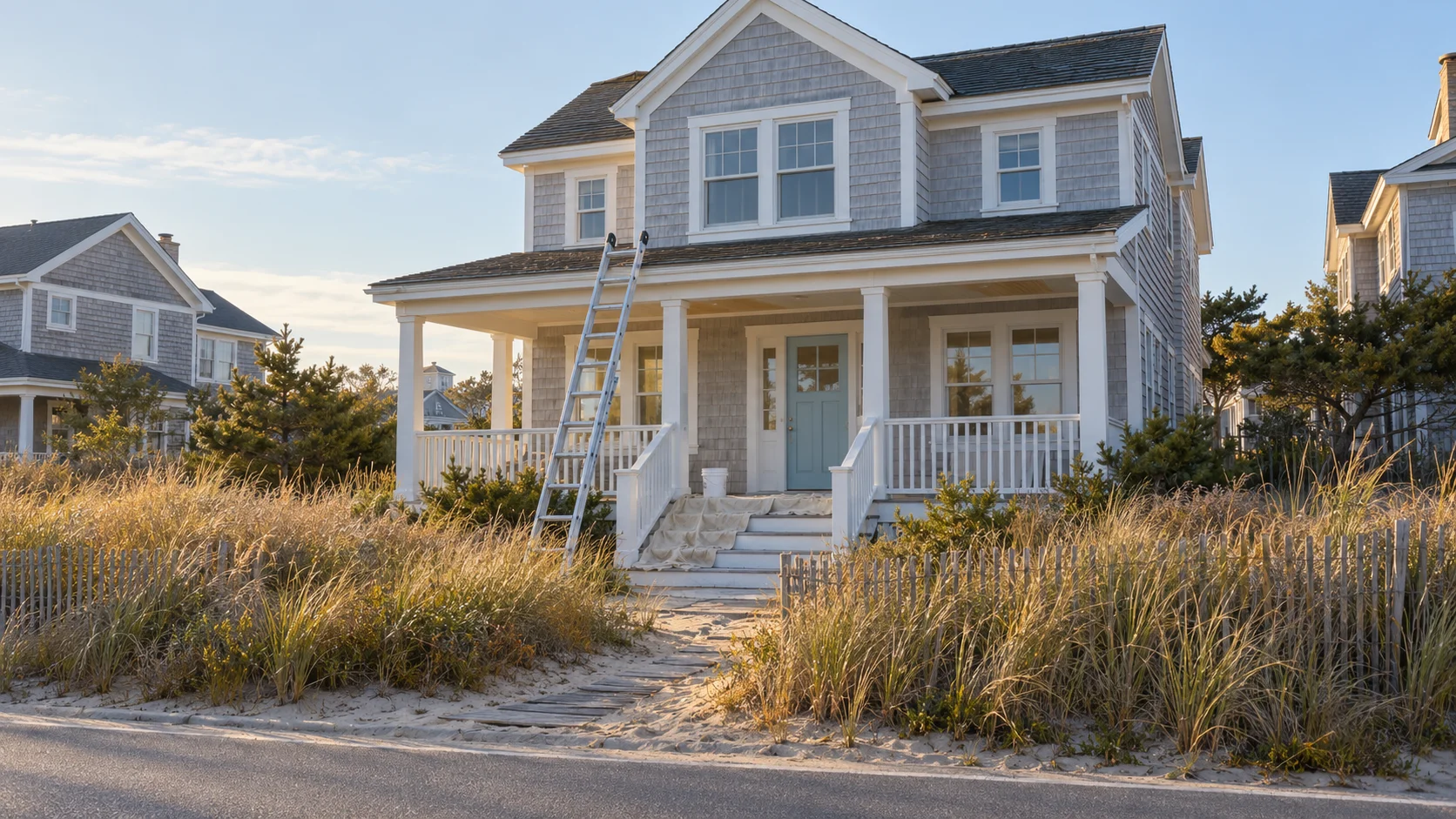
Paint a Jersey Shore rental between Labor Day and the first spring booking: the exterior in September and October while the weather holds, the interior through the winter in a heated, empty house, and everything finished at least two weeks before the first renters arrive, so the paint can cure and your town can inspect.
Use washable, scuff-resistant finishes on the walls renters actually touch, keep one written color and sheen schedule for the house, and check your town's rental inspection dates and the federal lead rule for pre-1978 houses before you set the painting date.
This guide is for owners and property managers of shore rental houses in Monmouth and Ocean counties, from Long Branch, Asbury Park and Avon-by-the-Sea down through Point Pleasant, Brick, Toms River and the Barnegat Bay towns. We are a family-owned painting company in Morganville and we paint shore rentals between seasons as part of our interior painting and exterior painting work. What follows is the planning side: the calendar, the scope, the finishes, the shore conditions and the paperwork. There are no prices here; for money, see our NJ painting cost guide.
The Short Answer
- Exterior: book it for September and October, right after the last summer guests leave. Shore towns hold their warmth into autumn longer than inland New Jersey does, and the paint needs dry days above its minimum temperature to cure properly.
- Interior: winter is the natural window. The house is empty, nobody is booked, and the heat can be kept on so the walls and air stay inside the paint's application range.
- Finish everything early. Washable interior paints typically need about two weeks before they can be scrubbed, and your town may need to inspect the house before the first renters move in. Work backwards from the first booking, not forwards from the day you call.
- Specify for renters, not for you. A scuff-resistant eggshell or satin on hall, stair and bedroom walls, enamel on trim and doors, and one color schedule for the whole house so touch-ups match.
- Check the rules before the date. Many shore towns inspect rentals before occupancy, and the federal lead rule covers paid work that disturbs paint in a house built before 1978, whether or not the state's rental lead inspection applies to a seasonal rental.
When to Paint a Shore Rental: The Calendar Between Seasons
A shore rental has one fixed point in its year: the first booking of the summer. Everything about painting it is scheduling backwards from that date, through whatever your town requires before renters move in, through the time new paint needs before it can take a summer of use, to a start date. Owners who call in May are usually choosing between rushing the job and losing a booking. Owners who call in August, while they can still see what the summer did to the house, get the calendar they want.
September and October: exterior work first
The exterior is the part of the job that depends on weather, so it goes first, as soon as the house is empty after the season. Paint has minimum application temperatures, and they apply to the surface, not just the air. Benjamin Moore's data sheet for Aura Waterborne Exterior Low Lustre Finish 634 says "Do not apply when air and surface temperatures are below 40 °F (4.4 °C)" and warns that "High humidity and cool temperatures will result in longer dry, recoat and service times." A clear forecast is not the whole picture at the shore: morning dew on a north or ocean-facing wall can hold the surface wet well into the day, and a coat applied too late in the afternoon has to survive the evening damp before it dries.
The coast is on your side in autumn. The Office of the New Jersey State Climatologist at Rutgers records the "Average number of freeze free days in the northern highlands is 163, 179 in the central and southern interior, and 217 along the seacoast," and notes that in the Coastal Zone, because of the ocean's high heat capacity, "seasonal temperature fluctuations tend to be more gradual and less prone to extremes." In practice, a shore house usually has more good painting weather left in October than a house in the inland towns. Use it. Our guide to painting in cold weather in NJ covers the temperature and dew point rules in detail.
November through March: interiors in a heated, empty house
Interior painting is not weather-bound in the same way, but it is temperature-bound. Benjamin Moore's data sheet for Scuff-X Interior Eggshell Finish N485 says "Do not paint when air or surface temperature is below 50 °F (10 °C)." Many shore houses are winterized, with the heat set low or the water off, and an exterior wall in a cold house can sit below that line even when the thermostat says otherwise. If the house is normally shut down for winter, plan with your property manager to bring the heat up a day or two ahead and keep it there through the painting and drying, and tell us at the estimate whether the water will be on, because cleanup and some prep depend on it.
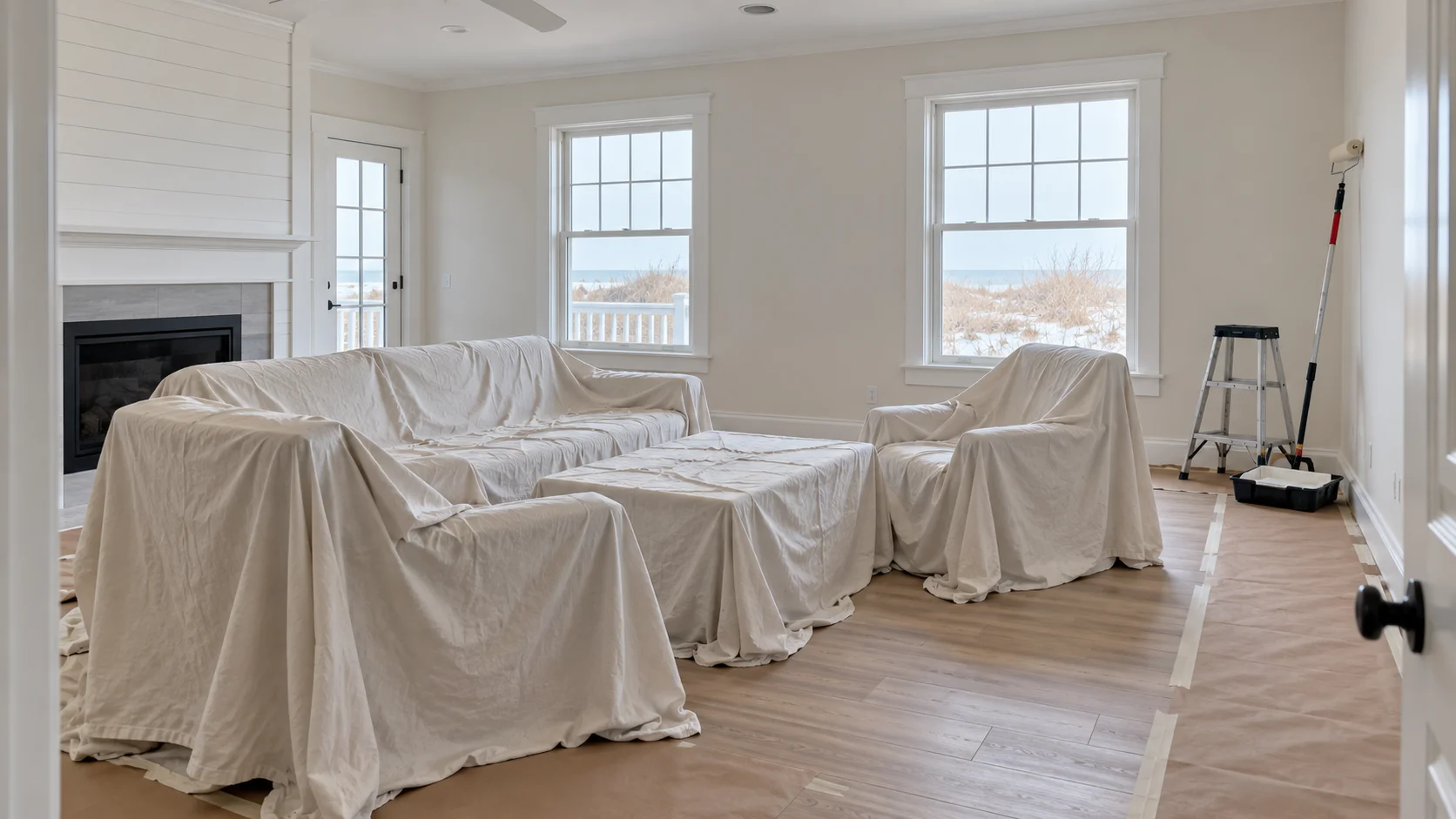
The upside of a winter interior is that nothing competes with it. No guests, no cleaning crew between check-out and check-in, no owner's week to work around. Rooms can be emptied, furniture grouped in the middle of the room and covered, and the whole house painted straight through rather than one room at a time. See our guide to how long it takes to paint a house for how an empty house changes the timeline.
April and May: the deadline you set too late
Spring is for touch-ups, the punch list and anything the winter turned up, not for starting the main job. Two things push the real deadline earlier than the first booking. The first is cure time: the same Scuff-X data sheet says "Painted surfaces can be washed after two weeks," and the Aura exterior sheet says the same of its finish. Renters will scrub at a mark on a wall within days of arriving. Paint that has not had its two weeks is paint that comes off on the cloth. The second is your town. Where a rental inspection is required before occupancy, the house has to be finished, cleaned and presentable before the inspector comes, not the night before the guests do.
What a Turnover Repaint Usually Covers
A shore rental takes a different kind of wear from a family home. It is not one household's slow wear over ten years. It is a season's worth of strangers with suitcases, beach chairs, boogie boards, coolers and wet towels, all coming in through the same door and up the same stairs. Walk the house at the end of the season with a notepad and the pattern is usually the same.
- The entry, halls and stairs. Suitcase wheels and beach gear take the paint off at knee and hip height along every route from the front door to the bedrooms. Stair walls and the outside corners at landings are the worst.
- Bedroom walls behind the beds and beside the doors. Headboards rub, doors swing into walls without stops, and luggage gets parked against the same wall every week.
- Trim, doors and door frames. Baseboards in the halls, the edges of doors and the jambs of the busiest rooms chip first. These are enamel surfaces and they want an enamel touch-up or a recoat, not wall paint.
- Bathrooms and the outdoor shower area. Steam and wet towels mark ceilings and the walls around towel bars. A ceiling stain is worth tracing to its cause before it is painted over; our guide to why paint peels explains why painting over a moisture problem buys the same failure twice.
- Nail holes, anchors and dings. Pictures get moved, a towel hook gets pulled out of the wall, a chair back goes through a corner. Real patching matters more than the paint; our guide to drywall repair covers what each kind of damage takes.
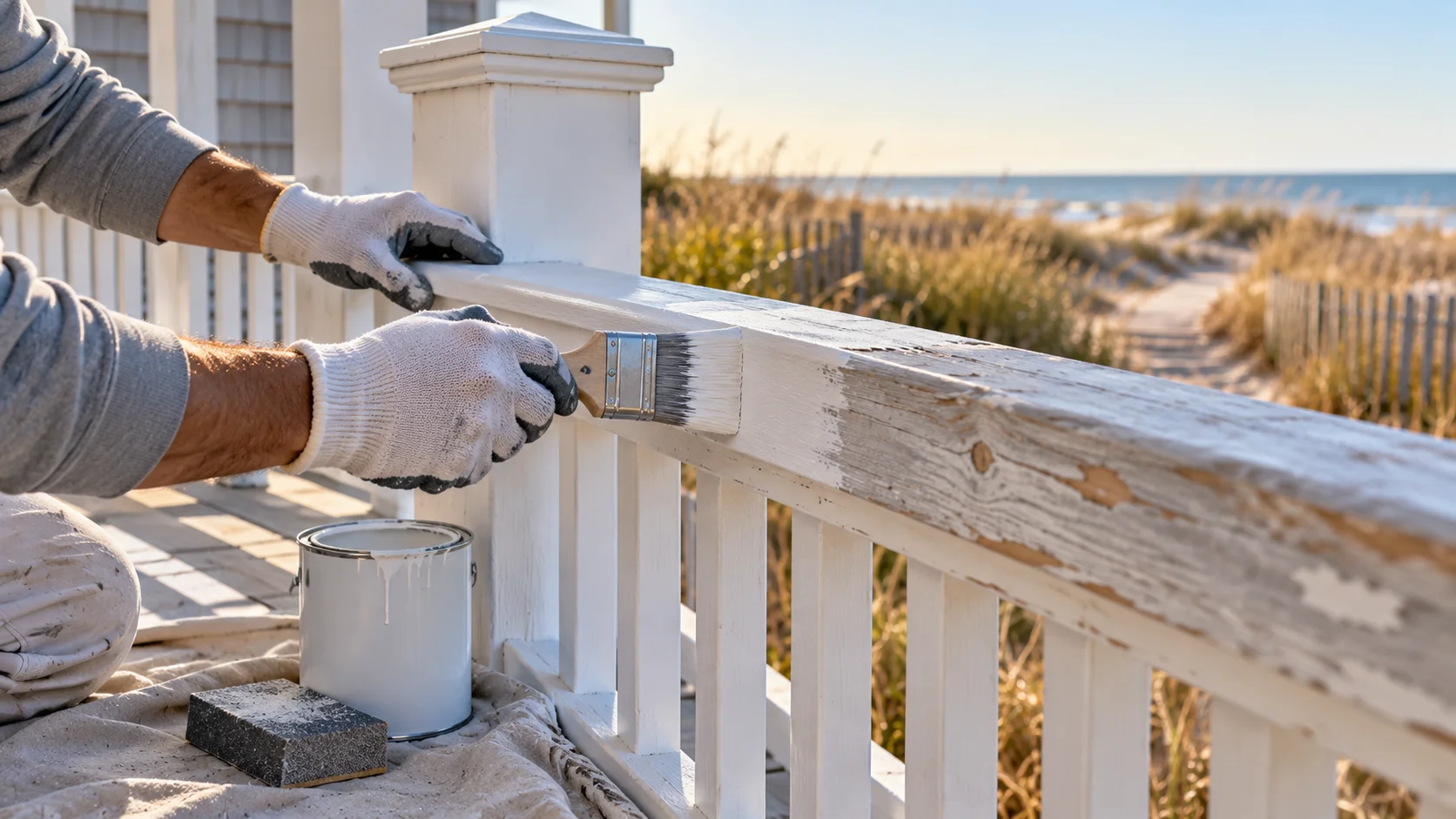
- Outside: the front door, porch, railings and deck. These take sun, salt, sand and wet feet all summer. Porch and railing painting, front doors and shutters are all part of our exterior work, and deck staining is its own job, covered in our guide to deck staining in NJ.
Not every surface needs repainting every year. Many owners settle into a rhythm: the high-wear halls, stairs and trim every off-season or two, bedrooms on a longer cycle, and a full exterior when the house actually needs it, which our guide to how often to paint a house in NJ helps you judge. Tell us at the estimate what you want this winter and what you are planning for next, and we will scope it that way. Some owners bundle several smaller items into one off-season visit; ask us about the job minimum when you get in touch.
Finishes That Stand Up to a Summer of Renters
The single most useful decision for a rental is the finish, not the color. Flat paint hides wall imperfections beautifully and marks the first time someone wipes it. For a rental, the walls people touch want a paint that is made to be cleaned.
Washable, scuff-resistant walls
Benjamin Moore describes Scuff-X Interior Eggshell as "specifically engineered to deliver outstanding performance and protection for the toughest high-traffic areas in busy commercial spaces," lists its features as including a "patented scuff-resistance formula," "Washable" and "Great touch-up," and names hotel lobbies, hallways and stairwells among its intended uses. That is the right category of product for a rental hallway, even though a shore house is not a commercial building in any other sense. Sherwin-Williams makes comparable washable lines, and we use both brands; our comparison of Benjamin Moore and Sherwin-Williams covers the main lines. Whichever brand, the important thing is that every bid names the product line, not just "two coats of paint."
Sheen by surface
A common rental schedule is eggshell or satin on walls in halls, stairs, bedrooms and living areas, a moisture-tolerant satin or semi-gloss in bathrooms, flat on ceilings, and semi-gloss enamel on trim and doors. Higher sheens clean more easily but show every patch and roller mark, so the better the prep, the higher you can go. Our paint sheen guide explains the trade-offs and why one manufacturer's eggshell is not another's.
One color schedule for the house
Rentals drift. Over a few seasons, different people touch up different walls with whatever is in the closet, and the house ends up with four slightly different whites. The fix is simple: one written schedule that lists every room's wall, ceiling and trim color, product and sheen, a labelled can of each kept in the house or with the property manager, and a rule that touch-ups come from those cans only. A neutral, repeatable palette also makes the cleaner's mid-season touch-up a quick job rather than a visible patch. Ask your painter to put that schedule in writing at the end of the job.
What color should a rental be?
Choose a light neutral you can buy again in five years, rather than the color you would pick for your own home. A rental color has to survive the cleaner's touch-ups and a change of paint store, so it needs a published code, and it should sit somewhere in the middle of the light range. Agreeable Gray SW 7029 (LRV 60) and White Dove OC-17 (LRV 83) are two widely sold examples with published codes, not the only right answers. Keep bold colors to a front door or one room you are prepared to repaint. We have no data showing that any color books better, so treat this as maintenance advice.
Salt Air, Sun and Sand: Exterior Work at the Shore
We are a Monmouth County company, and the exterior of a house within sight of the ocean or the bay wears differently from one ten miles inland. What follows is our experience on the job, not a laboratory finding.
- The ocean-facing side goes first. Elevations facing the water and the prevailing wind take the most sun and the most salt and sand, and their trim, doors and railings usually need attention well before the sheltered side does.
- A salt film has to come off before paint goes on. Shore houses carry a fine film of salt and grime that paint does not stick to well. Washing is part of the job, not an extra. Our guide to power washing covers soft washing and which surfaces should not be blasted.
- Metal rusts faster. Railings, hinges, fasteners and light fixtures near the water show rust early. Rust has to be removed and spot-primed with a rust-inhibiting primer before the topcoat; painting over it only hides it for a season.
- Mildew and the north side. Shade plus sea moisture means mildew, and mildew has to be cleaned off and killed before painting. Benjamin Moore lists Aura Exterior as one that "Provides a mildew resistant film" and as "Resistant to fading, cracking, peeling, chalking, blistering, dirt pick-up," which is the kind of claim worth looking for on any data sheet you are offered.
The Rutgers climate office also notes that "Sea breezes play a major role in the coastal climate," often reaching "5-10 miles inland," and that they "are most common in spring and summer." That is one more reason to paint in the autumn, when the house is empty and the onshore spring breezes have not yet set in. For stucco and masonry, elastomeric and weatherproof coatings are part of what we offer, and our guide to painting stucco in NJ covers how they differ from ordinary paint. For vinyl-sided rentals, the vinyl-safe color limit matters; see our guide to painting vinyl and aluminum siding. For county-specific exterior detail, see our pages on exterior painting in Monmouth County and exterior painting in Ocean County.
Rental Inspections, Certificates of Occupancy and Lead Rules
Paint is not the only thing that has to be ready before the first renters arrive. Two sets of rules can affect when the painting has to be finished and how it has to be done. Check both with your town and your own advisers; what follows is a summary of what we read, not legal advice.
Municipal rental inspections
Many shore towns require an inspection or a rental certificate of occupancy before a rental is occupied, and the rules differ from town to town. Two examples from Monmouth County. The Borough of Spring Lake's rental rules and procedures say "A Certificate of Occupancy (CO) is required for all rentals regardless if they are a summer, winter or annual rental. A CO is required for each new Tenant," that "A CO inspection is required prior to any tenant moving into any property," and that the code enforcer "needs 48 hours notice of any CO inspection requests." The Borough of Oceanport's code enforcement page says "All rental residential dwellings must be inspected upon every tenant change." Other towns have their own rules, fees and lead times, so call your own construction or code office early. For painting, the point is simple: the house has to be finished and presentable before the inspector arrives.
New Jersey's rental lead inspection law
New Jersey requires lead-based paint inspections of many rental dwellings. The Department of Community Affairs' lead-safe certification page says "All single-family, two-family, and multiple rental dwellings must be inspected," with later inspections every three years or when the occupant changes, whichever comes first, and that "Lead-safe certificates are valid for two years from the date of issuance." It lists exemptions, including "Dwellings that were constructed during or after 1978" and "Single-family and two-family seasonal rental dwellings which are rented for less than six-months duration each year" to tenants "that do not have consecutive lease renewals." So many summer-only shore rentals fall outside the state's inspection requirement, but not all of them: a house rented for the winter as well as the summer, or one with repeat lease renewals, may not fit the exemption. Spring Lake's procedures, for example, require a lead-safe certificate for rentals "in homes built prior to 1978 and have a rental term of 180 days or greater." Ask your town how it applies to your house.
The federal lead rule is about the work, not the lease
The state exemption for seasonal rentals is an exemption from the state's inspection law. It is not an exemption from the federal Renovation, Repair and Painting rule, which is about who disturbs the paint. Under 40 CFR 745.82, that rule "applies to all renovations performed for compensation in target housing and child-occupied facilities," and 40 CFR 745.103 defines target housing as "any housing constructed prior to 1978," with narrow exceptions for housing for the elderly or persons with disabilities and 0-bedroom dwellings. A pre-1978 shore rental is target housing. Under 40 CFR 745.89, "Firms that perform renovations for compensation" must be certified by the EPA. The rule carves out small jobs: 40 CFR 745.83 treats as minor repair and maintenance work that disturbs "6 square feet or less of painted surface per room for interior activities" or "20 square feet or less of painted surface for exterior activities," but a real turnover repaint with scraping and sanding is rarely that small.
So, plainly: NJ Painting Co. is not an EPA Lead-Safe Certified firm. If your rental was built before 1978 and the work will disturb old paint beyond those small thresholds, raise it at the walkthrough and ask every bidder how they are handling it and for their firm certification. If the house was built in 1978 or later, this rule does not apply. Our guide to lead paint in older New Jersey homes explains what the rule requires and what testing involves.
Running the Job in an Empty House
Most rental owners are not at the house while it is painted, and many live hours away. That changes how the job runs more than it changes the painting.
- Access. Agree on keys or a lockbox code, alarm codes, who else has access (cleaners, a handyman, a property manager), and whether the water and heat will be on.
- A written scope by room. Every room listed with what gets painted, the product, the sheen and the color, so nothing depends on a phone call from the house. The same list becomes the color schedule you keep.
- Furniture and contents. Rentals are furnished. Agree what we move, what stays covered in the middle of the room, and what the owner or cleaner removes first, such as linens, kitchen items on open shelves and anything fragile on the walls.
- Photos instead of visits. Photos at the start, of anything found along the way (a soft sill, a stain that keeps coming back, a crack that looks structural), and at the finish. Problems we find but do not fix, such as rot, are pointed out so you can bring in the right trade.
- A walk at the end. Either with you, your property manager or by video, room by room against the scope, before the house goes back to the cleaners.
If you own or manage several rental houses, scope them together and put them on one off-season calendar, exteriors in the autumn and interiors through the winter, with the same products and colors where it makes sense. For a condominium or townhome rental inside an association, check first which surfaces belong to you and which to the association; our guide to HOA and condo painting in NJ explains who usually owns what. Owners with a mix of rentals and commercial property can see how we schedule larger work on our commercial painting page.
Talk to Us About Your Rental
NJ Painting Co. is a family-owned, fully insured painting company at 36 Church Rd, Morganville, NJ 07751, painting in New Jersey for more than 20 years with Benjamin Moore and Sherwin-Williams products. We cover the shore rental towns of Monmouth County and Ocean County, along with the rest of our service area. The best time to call is late summer, while you can still see what the season did to the house. Call (732) 239-0932 or send us the address, the year the house was built, your first booking date next season and photos of the worst rooms, and we will come out, walk the house and give you a written scope and a schedule that finishes before your renters arrive.
Frequently Asked Questions
When is the best time to paint a Jersey Shore rental house?
Between Labor Day and the spring. Do the exterior in September and October, while the shore still has warm, dry days, and the interior through the winter while the house is empty and heated. Aim to finish two to three weeks before your first booking, so the paint has time to cure and your town has time to inspect the house if it requires that.
How far ahead should I book a painter for a shore rental?
Book in late summer for an autumn exterior, and by early autumn for a winter interior. Spring is the busiest time to ask and the worst time to start, because the cure time and any rental inspection both have to fit before the first renters arrive. The earlier you book, the more choice you have about dates.
What paint finish is best for a rental property?
A washable, scuff-resistant eggshell or satin on walls in halls, stairs, bedrooms and living areas, a moisture-tolerant satin or semi-gloss in bathrooms, flat on ceilings, and semi-gloss enamel on trim and doors. Products made for high-traffic commercial spaces, such as Benjamin Moore's Scuff-X, are designed to be cleaned and touched up, which is what a rental needs. Avoid flat paint on walls that people touch.
How long after painting can renters move in?
Renters can usually walk into a freshly painted room once it is dry and aired out, often the next day, but the paint is not fully hard yet. Benjamin Moore's data sheets for Scuff-X Interior and Aura Exterior both say painted surfaces can be washed after two weeks. Plan for about two weeks between the last coat and the first booking, so the first scrub of a mark does not take the paint with it.
Do I need a lead inspection to rent my shore house in New Jersey?
It depends on the house and how you rent it. New Jersey's rental lead law exempts houses built in 1978 or later, and single- and two-family seasonal rentals rented for less than six months each year to tenants without consecutive lease renewals. Some towns apply their own rules on top, such as Spring Lake, which requires a lead-safe certificate for pre-1978 rentals with a term of 180 days or more. Check with your town. Separately, the federal lead rule still applies to paid painting work that disturbs old paint in any pre-1978 house.
Can you paint a rental property without a lead certificate?
These are two separate rules, so answer each one. New Jersey's lead-safe certificate is about renting the dwelling: it applies to many rentals built before 1978, with an exemption for short seasonal rentals, and some towns add their own requirement. The federal rule is about the paint work: anyone paid to disturb more than a small area of paint in a pre-1978 house must be a certified firm, whatever your rental paperwork says. We are not certified, so we say at the estimate when part of a job needs a certified contractor. Check the rental side with your town.
Are you EPA Lead-Safe Certified?
No. NJ Painting Co. is not an EPA Lead-Safe Certified firm. Federal rules require a certified firm for paid work that disturbs more than a small area of paint in a house built before 1978. If your rental is that old and the work will disturb old paint, raise it at the walkthrough and ask each bidder how they will handle it.
Does salt air mean a shore house needs repainting more often?
In our experience, the sides of a house facing the ocean or the bay, and their trim, doors and railings, usually need attention sooner than the sheltered sides and sooner than a similar house inland. Washing off the salt film before painting, treating rust properly and using a durable exterior paint all help. How often depends on the substrate, exposure and the previous paint job.
Can you paint a rental while I am not there?
Yes. Most shore rental owners are away while the work is done. Agree up front on access, the scope room by room, what gets moved, how the heat and water will be handled, how you will get progress photos, and who walks the finished house with the crew, you or your property manager, in person or by video.
Can the whole house be painted in one off-season?
Usually, yes, if you book early. Exterior first in the autumn, interior over the winter, and touch-ups in the spring. Many owners split the work across two off-seasons instead, doing the high-wear halls, stairs and trim every year and bedrooms or the full exterior when they need it.
About the author
Written by the NJ Painting Co. team
NJ Painting Co. is a family-owned painting contractor based in Monmouth County, in business since 2004. We are licensed and fully insured, work with Benjamin Moore and Sherwin-Williams paints, and back our work with a 2-year workmanship warranty. We serve Monmouth, Middlesex, Ocean, Mercer, Somerset and Burlington counties, plus Union, Essex, Hudson, Bergen and Passaic in North Jersey.