If your New Jersey home was built before 1978, assume it may have lead paint until a certified inspector or a lead-safe certified renovator shows otherwise. Intact lead paint is usually not a hazard, and painting over lead paint is often fine when the old paint is sound and the prep is done lead-safe. Peeling, chipping or friction-worn lead paint is a hazard that needs lead-safe repair or, for a permanent fix, abatement by a certified contractor. National lead paint removal cost figures run from about $8 to $17 per square foot, with whole-house projects commonly $10,000 to $30,000; encapsulation is far cheaper.
We are a family-owned painting company in Morganville and have painted homes across Monmouth, Middlesex, Ocean, Mercer, Somerset and Burlington counties, plus Union, Essex, Hudson, Bergen and Passaic in North Jersey, for more than 20 years. A large share of the houses we walk through were built long before 1978: shore bungalows, capes, farmhouses and post-war colonials with original window trim and porch rails. To be clear up front: we are not an EPA Lead-Safe Certified firm, so work that disturbs paint in a pre-1978 home is not a service we list, and nothing below is a pitch for it. This guide is what we tell those homeowners before pointing them at a certified firm, with every rule, health statement and cost figure linked to the EPA, CDC, HUD, the State of New Jersey or the cost publisher, and dated as of September 2026. It is written for homeowners, not as medical or legal advice; if you are worried about a child's exposure, talk to your pediatrician.
The Short Answer: Lead Paint in a Pre-1978 Home
- Assume it may be there if the house was built before 1978. The federal government banned consumer uses of lead-containing paint that year, and the older the house, the more likely it has lead paint.
- Find out for sure with a lead-based paint inspection (usually with a portable XRF analyzer) or a risk assessment by a certified professional. Home test kits are useful screening tools, but EPA only recognizes results from certified inspectors, risk assessors and renovators.
- Painting over lead paint is OK when the old paint is intact, not on a friction or impact surface, and any scraping or sanding is done lead-safe. It is not a permanent fix, and it is not OK over peeling or chalking paint without proper prep.
- Anyone paid to disturb paint in a pre-1978 home must be an EPA Lead-Safe Certified firm, follow lead-safe work practices, and hand you the Renovate Right pamphlet before work starts.
- Abatement is a different trade. In New Jersey, companies that perform lead abatement must be certified by the Department of Community Affairs (DCA).
- Budget roughly $225 to $425 for a lead inspection, $1 to $4 per square foot for encapsulation and $8 to $17 per square foot for removal, per Fixr's national figures. A lead-safe repaint is priced as painting, with extra setup and cleanup time, and is quoted by a Lead-Safe Certified firm.
Why Lead Paint Still Matters in Older New Jersey Homes
The EPA's Learn About Lead page says "the most common cause of lead exposure is dust from lead-based paint used before 1978 in older homes." Lead paint rarely hurts anyone while it is sealed under newer coats and left alone. The problem is dust and chips: from paint that is failing, from surfaces that rub, and from renovation work that scrapes, sands or heats old paint.
New Jersey has more of that old housing than most states. America's Health Rankings, working from the Census Bureau's 2024 American Community Survey, puts the share of New Jersey housing with potential elevated lead risk due to its age at 22.5 percent, against 16.1 percent nationally, ranking the state 42nd of 50 on that measure.
Children are most at risk
The CDC's childhood lead poisoning prevention page states that "no safe blood lead level (BLL) in children has been identified" and that "even low levels of lead in blood are associated with developmental delays, difficulty learning, and behavioral issues." It adds that "the effects of lead poisoning can be permanent and disabling." The EPA explains why young children are hit hardest: "their growing bodies absorb more lead than adults, and their brains and nervous systems are more sensitive to the effects of lead."
The New Jersey Department of Health's Childhood Lead program puts it plainly: "Homes built before 1978 may have lead paint that breaks down into dangerous dust and chips," and "children under 6 are most at risk."
Adults and pregnancy
Lead is not only a children's issue. The EPA says "lead is harmful to all adults" and "if a pregnant woman is exposed to lead, it can impact her developing fetus." The federal pamphlet Protect Your Family From Lead in Your Home (EPA, CPSC and HUD, January 2026) lists adult risks including high blood pressure, fertility problems, and "miscarriage during pregnancy." That same pamphlet notes that lead stored in the body "can be transferred during pregnancy to a fetus or after birth to an infant through breast milk."
Get children tested, not just the house
You cannot see lead in a child. New Jersey's testing guidance says "all children should be tested at both 12 and 24 months of age," along with any child aged 25 to 72 months "who has never previously been tested." It adds that your child's health care provider may test in the office or give you a prescription for a lab, and that "if your child does not have health insurance, free testing is available from your local health department." If you are about to renovate an older home with young children in it, that conversation with your pediatrician belongs on the to-do list next to choosing a contractor.
How to Know If Your Home Has Lead Paint
Start with the year the house was built
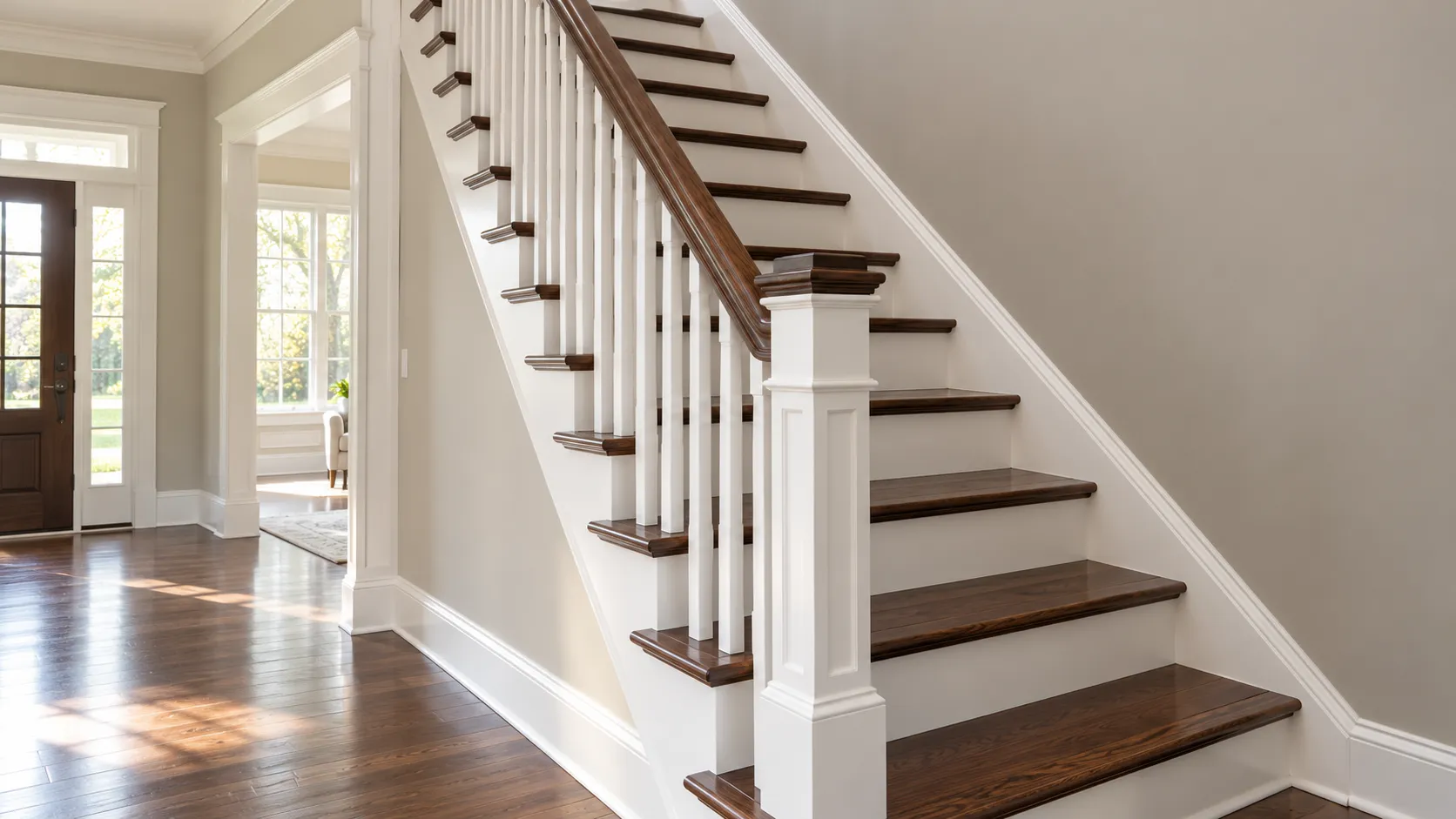
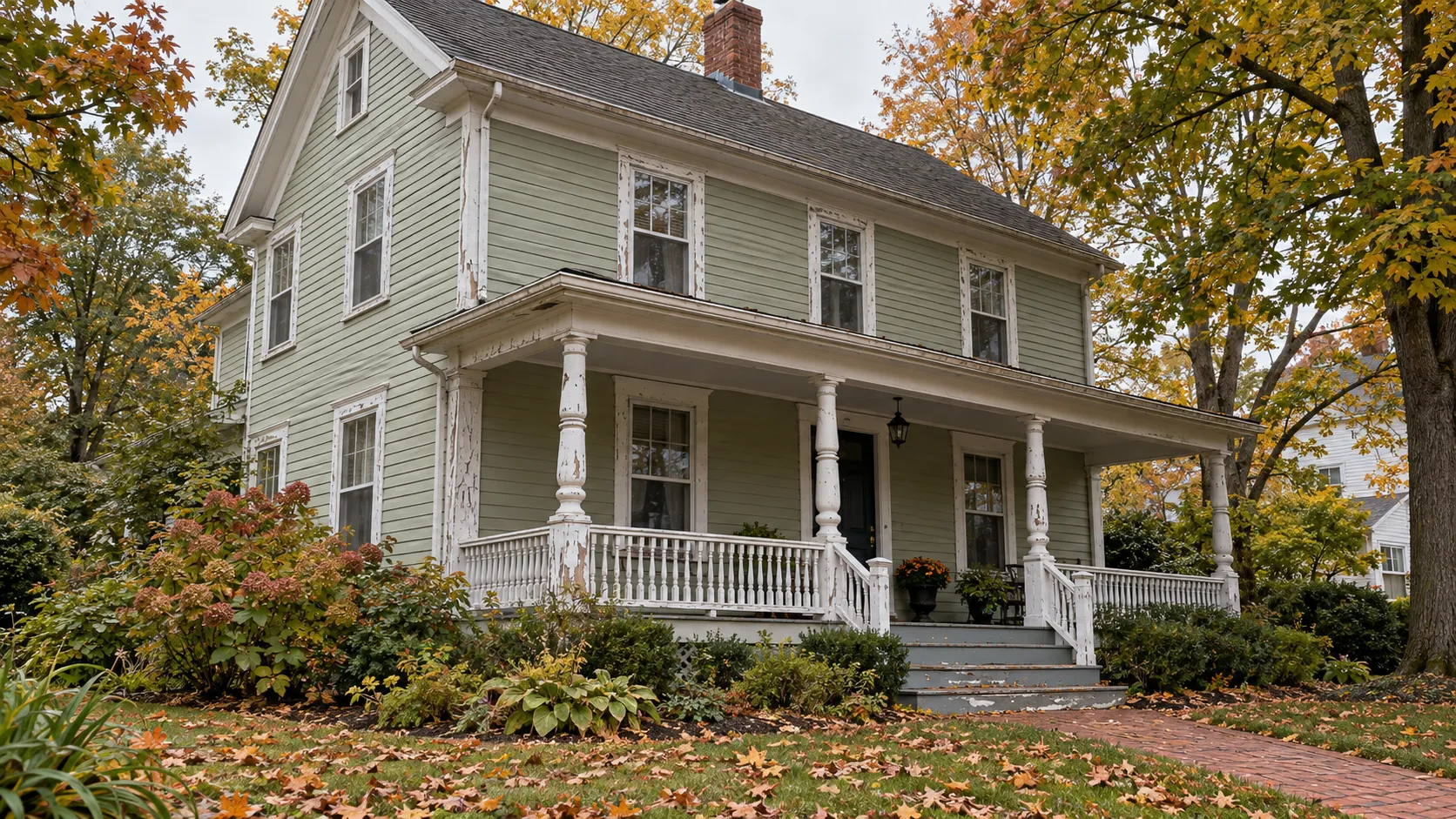
The EPA's first step is simple: "Find out what year your home was built. Homes built before 1978 may have lead-based paint." The Protect Your Family pamphlet adds that "in general, the older your home or childcare facility, the more likely it has lead-based paint." In our experience in central New Jersey, the original window sashes and sills, door frames, porch floors and rails, and exterior trim on older houses are where old paint layers are thickest and most worn, and they are exactly the surfaces the pamphlet flags: windows and sills, doors and door frames, and "stairs, railings, banisters and porches."
An addition or a gut renovation does not make the whole house new. A 1990s kitchen can sit next to a 1920s staircase, and 1950s wood siding can still be under aluminum or vinyl added later. (If you are thinking of repainting that metal or vinyl siding, see our guide on painting vinyl or aluminum siding.)
Inspection vs risk assessment
The EPA separates two professional services on its abatement, inspection and risk assessment page:
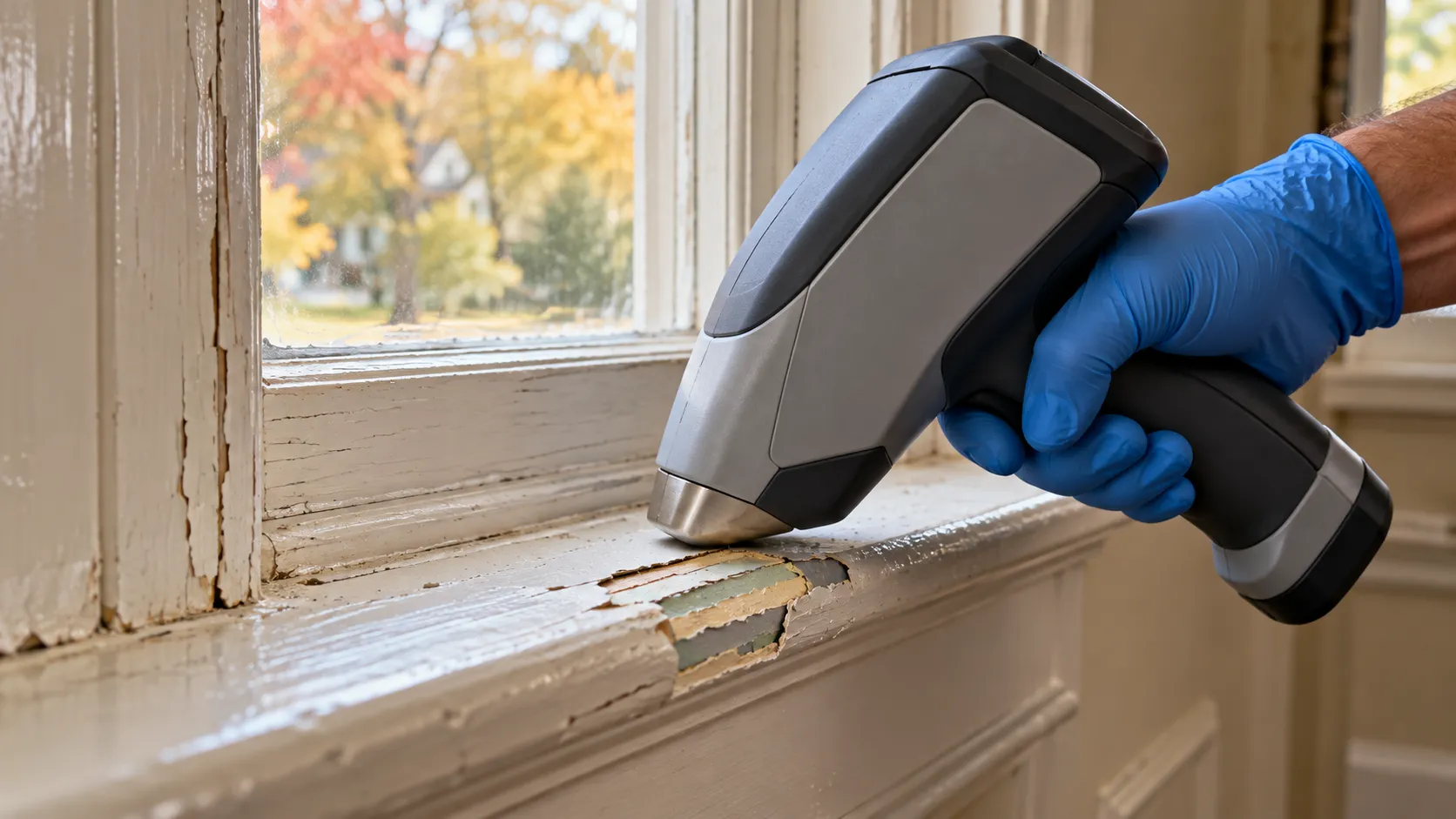
- A lead-based paint inspection "tells you if a building has lead-based paint and where the lead-based paint is located." The federal pamphlet says a certified inspector does this with "a portable x-ray fluorescence (XRF) machine" and lab tests of paint samples. It is the right tool before a large renovation or a purchase decision.
- A risk assessment "tells you if a building has any lead hazards from paint, dust or soil, and what actions to take to address any hazards." The assessor samples deteriorated paint, dust and bare soil.
- A combination of the two answers both questions: where the lead paint is, and whether it is causing a hazard now.
For reference, the pamphlet notes that the federal government currently defines lead-based paint as paint with lead "greater than or equal to 1.0 milligram per square centimeter (mg/cm²), or more than 0.5% by weight." An XRF reading is reported against that line.
Home test kits
Swab kits are sold at hardware stores, and some are recognized by the EPA. Its lead test kits page says "EPA recognizes three lead test kits for use in complying with the RRP Rule. They are the LeadCheck™, D-Lead®, and the State of Massachusetts lead test kits." The recognition is specifically about ruling lead out: a recognized kit, "when used by a trained professional, can reliably determine that regulated lead-based paint is not present by virtue of a negative result." The EPA also says that while the kits "may be available to the public, EPA only recognizes tests conducted by certified inspectors, risk assessors and RRP-certified renovators."
Our advice: a homeowner's positive swab is a good reason to call a professional. A homeowner's negative swab is not proof, especially on a surface with many layers of paint.
Or presume it is there
Before renovation, repair or painting work, the federal pamphlet says Lead-Safe Certified renovators may test paint chips through an EPA-recognized lab, use recognized test kits, or "presume that lead-based paint is present and use lead-safe work practices." On a pre-1978 repaint, presuming lead and working lead-safe is often the practical choice.
Painting Over Lead Paint: When It's OK and When It Isn't
This is the question we hear most. The honest answer is that painting over lead paint is common, legal and often sensible, as long as you understand what it does and does not do.
When it's OK
The EPA's sources of lead page says "if the lead-based paint is in good shape, it is usually not a problem." The federal pamphlet says lead-based paint "is usually not a hazard if it is in good (intact) condition and if it is not on an impact or friction surface like a window." A living room wall or a ceiling with sound old paint underneath is a typical candidate for a new coat, provided any prep that disturbs the old paint follows lead-safe rules when a contractor does it.
HUD calls this kind of work paint stabilization. Its lead regulations at 24 CFR 35.110 define it as "repairing any physical defect in the substrate of a painted surface that is causing paint deterioration, removing loose paint and other material from the surface to be treated, and applying a new protective coating or paint." That describes a careful repaint: fix the cause, remove what is loose, then coat.
When it isn't
- Over peeling, chipping or chalking paint. The pamphlet says deteriorated lead-based paint, "peeling, chipping, chalking, cracking or damaged paint," is "a hazard and needs immediate attention." New paint over loose paint fails with it. Loose paint has to come off first, lead-safe.
- On friction and impact surfaces. Window sashes that rub in their tracks, doors that bind, and stair treads grind paint into dust with every use. The EPA singles out "surfaces subject to constant friction like doors or window sills." A new coat on those surfaces wears through; they usually need repair, replacement or a longer-term fix.
- Where children chew. Sills and rails that a toddler can reach are a hazard even under fresh paint.
- When you need a permanent solution. The EPA says "just painting over the paint hazards with regular paint will not permanently address lead-based paint hazards."
What about encapsulant paints?
Encapsulants are thick, specially formulated coatings made to seal lead paint. HUD defines encapsulation as "the application of a covering or coating that acts as a barrier between the lead-based paint and the environment." Under HUD's rules, a treatment only counts as abatement if it is permanent, and HUD says "permanent means an expected design life of at least 20 years." Encapsulants go on only over sound, well-bonded paint, and they need the manufacturer's adhesion testing and application rules followed exactly. In our view they are a tool for a lead professional's plan, not a substitute for one.
Removal vs Abatement vs Interim Controls vs Encapsulation
These words get used loosely. The legal definitions come from HUD's regulations at 24 CFR 35.110 and the EPA.
| Approach | What it means | Permanent? | Who does it |
|---|---|---|---|
| Interim controls (includes paint stabilization) | HUD: "a set of measures designed to reduce temporarily human exposure or likely exposure to lead-based paint hazards" | No; needs ongoing monitoring and upkeep | Lead-safe certified renovation firms, or trained owners on their own homes |
| Encapsulation | A coating that "acts as a barrier between the lead-based paint and the environment" | Only when designed to last at least 20 years | Certified abatement contractors when done as abatement |
| Enclosure | "Rigid, durable construction materials that are mechanically fastened to the substrate," such as new drywall or cladding over lead paint | Can be, if designed to last at least 20 years; the lead stays in place behind it | Certified abatement contractors when done as abatement |
| Removal or replacement (abatement) | Stripping lead paint, or replacing painted components such as windows and doors. HUD defines abatement as measures "designed to permanently eliminate lead-based paint or lead-based paint hazards" | Yes | In New Jersey, DCA-certified lead abatement contractors |
The EPA notes that "lead abatement activities and RRP projects may sometimes look similar, but they are two separate programs that require different certifications and are regulated differently by EPA." A lead-safe repaint reduces risk during and after painting; it is not abatement, and no painter should describe it as abatement.
Lead Paint Removal Cost and Lead Paint Abatement Cost
We do not perform abatement, so we do not publish our own abatement prices. The most detailed national breakdown we could verify is Fixr's lead paint removal cost guide (updated January 31, 2025). Fixr says "lead paint removal costs range from $10,000 to $30,000, with a national average of $15,000," describing the average homeowner "spending around $15,000 to remove lead paint in a 2,000 sq.ft. house."
| Service | Fixr national range |
|---|---|
| Lead-based paint inspection | $225 to $425 |
| Lead risk assessment | $450 to $1,500 |
| Encapsulation | $1 to $4 per sq ft |
| Enclosure | $6 to $12 per sq ft |
| Removal | $8 to $17 per sq ft |
| Component replacement | $1,000 to $15,000 per project |
| Disposal of lead waste | About $3 to $5 per sq ft |
Treat those as planning numbers, not a New Jersey quote. Abatement jobs can also add clearance testing, temporary relocation and repairs that a per-square-foot figure does not show. Get written quotes from DCA-certified abatement contractors for the specific surfaces in your inspection report.
What lead-safe painting adds to a paint job
A lead-safe repaint is still priced as painting, so the ordinary per-square-foot and per-room ranges in our NJ painting cost guide are the right starting point for reading the quote you are given, even though the quote itself will come from a Lead-Safe Certified firm rather than from us. What changes is time: plastic containment, HEPA vacuuming, wet cleaning and the cleaning check at the end all add hours, mostly in setup and cleanup. Expect a pre-1978 house with scraping involved to carry more hours than the same house built in 1990, and expect a bidder who ignores that to be ignoring the rule as well. Our breakdown of what it costs to paint a house in NJ explains which parts of a quote are prep.
Help with the cost in New Jersey
The DCA runs the Lead Remediation and Abatement Program (LRAP), which the state says supports "the removal of lead-based hazards from low- to moderate-income households." Eligibility covers households "with incomes at or below 80% of the area median income" living in one- to ten-family homes built before 1978. The program is funded by a $180 million federal grant, and in October 2026 the DCA page still linked to an online application through its DCAid portal. It also warns that "at least 20% of submitted applications are REJECTED" because the building was not built before 1978, so confirm the construction date from your deed or title, or with your landlord, before you apply.
The EPA Lead-Safe Rule (RRP) in Plain English
The EPA's Renovation, Repair and Painting (RRP) program requires that "anyone paid to perform work that disturbs painted surfaces in homes, childcare facilities and preschools built before 1978 be certified and their employees be trained." The rule is in the federal regulations at 40 CFR Part 745, Subpart E. New Jersey is not one of the states EPA has authorized to run its own program, so here the rule is administered by EPA itself and the certificate to ask for is an EPA one. The EPA also notes that the rule "does not apply to homeowners doing RRP projects in their own pre-1978 homes," but it does apply if you rent out all or part of the home, run a childcare center in it, or buy, renovate and sell homes for profit. As of October 2026, these are the parts that matter most to a homeowner hiring a painter.
Firm certification and trained renovators
The federal pamphlet says a contractor working on a pre-1978 home must "be a Lead-Safe Certified firm approved by EPA or an EPA-authorized state or Tribal program" and use "Lead-Safe Certified renovators who follow specific lead-safe work practices." Ask any painter for their EPA Lead-Safe Certified firm certificate and the name of the certified renovator who will be on your job. If you want to check, the EPA explains how to verify a firm's certification, including its searchable database and the National Lead Information Center at 1-800-424-LEAD (5323).
The Renovate Right pamphlet
Before work starts you should receive The Lead-Safe Certified Guide to Renovate Right. Under 40 CFR 745.84, the firm must provide it "no more than 60 days before beginning renovation activities" and get your written acknowledgment that you received it, or a certificate of mailing at least seven days before the work.
The small-job exemption: 6 and 20 square feet
The rule does not apply to minor repair and maintenance. The definition in 40 CFR 745.83 covers work that disrupts "6 square feet or less of painted surface per room for interior activities or 20 square feet or less of painted surface for exterior activities," but only where no prohibited practices are used and "the work does not involve window replacement or demolition of painted surface areas." The EPA's interpretation adds that "jobs, other than emergency renovations, performed in the same room within the same 30 days must be considered the same job," so a big job cannot be split into small ones. Any real repaint with scraping goes past those limits almost immediately.
Surfaces determined to be lead-free
The other way a job falls outside the rule is a lead-free determination. The EPA says the rule applies to a renovation in a pre-1978 home "unless it has been determined that the components affected by the renovation are free of paint ... that contain lead," and that "only a certified renovator, inspector or risk assessor can make this determination." That includes newer parts of an older house, such as kitchen cabinets or windows installed after 1978: they are covered until one of those professionals has made the determination in writing. The installation date alone is not enough.
Banned and restricted methods
Under 40 CFR 745.85:
- "Open-flame burning or torching of painted surfaces is prohibited."
- Power sanding, grinding, planing, needle guns and abrasive blasting are prohibited on painted surfaces "unless such machines have shrouds or containment systems and are equipped with a HEPA vacuum attachment to collect dust and debris at the point of generation."
- "Operating a heat gun on painted surfaces is permitted only at temperatures below 1,100 degrees Fahrenheit."
Containment and cleaning verification
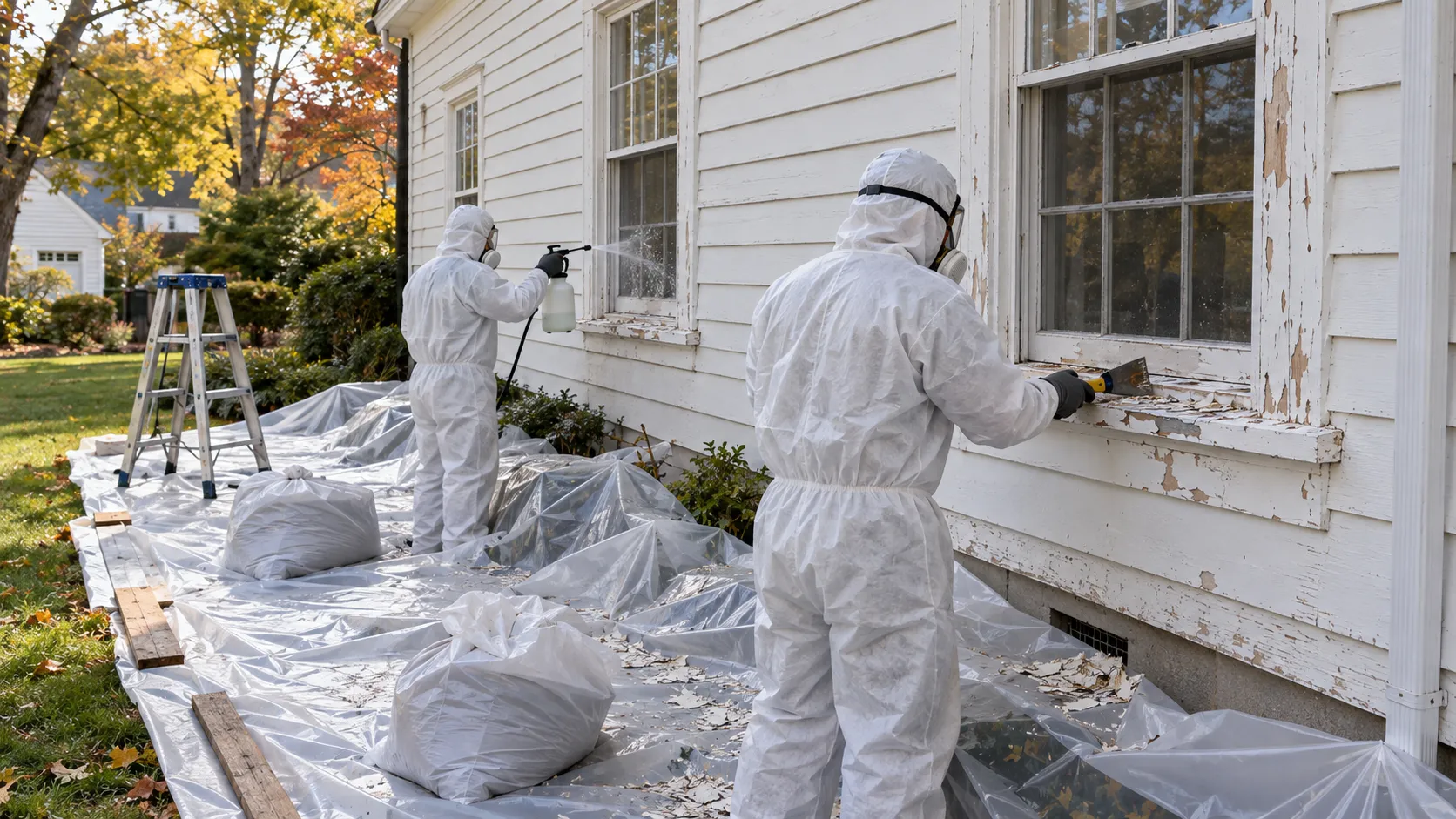
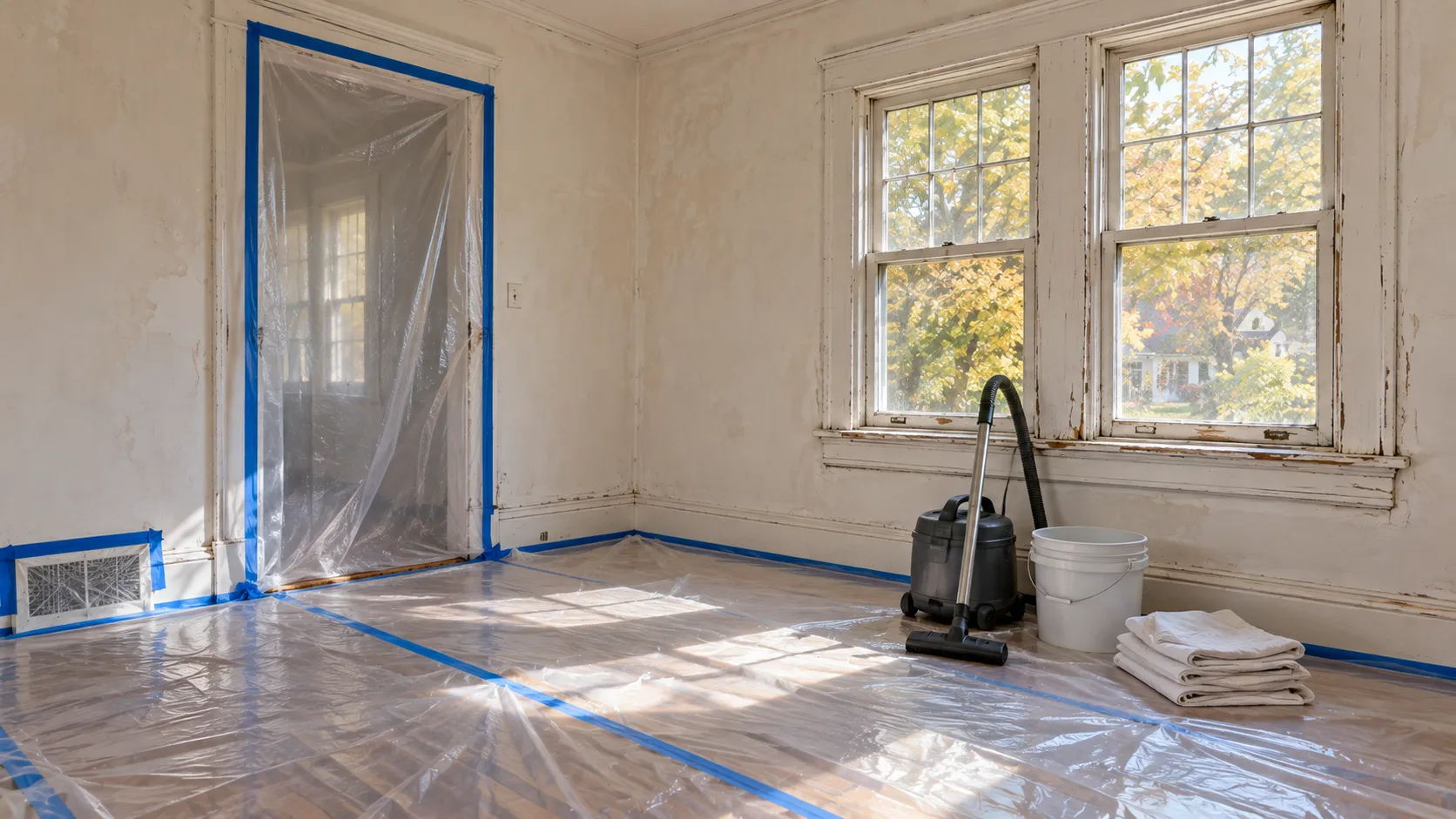
Inside, the firm must "cover the floor surface, including installed carpet, with taped-down plastic sheeting or other impermeable material in the work area 6 feet beyond the perimeter of surfaces undergoing renovation," or farther if needed to contain the dust. Outside, it must "cover the ground with plastic sheeting or other disposable impermeable material extending 10 feet beyond the perimeter of surfaces undergoing renovation," unless the property line prevents it. After the work, surfaces are HEPA-vacuumed and wet-cleaned, and then checked: the renovator wipes each windowsill "with a wet disposable cleaning cloth," and "if the cloth matches or is lighter than the cleaning verification card, the windowsill has been adequately cleaned."
What a Lead-Safe Painter Does Differently
The federal pamphlet boils the RRP rules down to four duties: contain the work area, avoid methods that make large amounts of lead dust, clean up thoroughly, and dispose of waste properly. On a pre-1978 repaint, that looks like this:
- Test or presume. Test the surfaces to be disturbed with a recognized kit or lab sample, or treat them as lead paint.
- Hand over the Renovate Right pamphlet and get your signature before starting.
- Post warning signs and set up containment: furniture out or wrapped, vents and doorways sealed, taped plastic on the floor inside, and plastic on the ground outside.
- Remove loose paint by hand, wet. Misting before scraping keeps dust down. No torches, no open power sanders, and heat guns only below 1,100°F.
- Use HEPA-shrouded tools if a surface truly needs machine sanding.
- Clean as you go each day, and keep children, pets and belongings out of the work area.
- Fix the cause of failing paint (a leak, a sticking sash, a rotted sill) before priming, so the new coat does not fail over the old.
- Prime and paint with quality products, applied at the manufacturer's recommended rates.
- Final cleaning and verification: HEPA vacuuming, wet wiping, and the cleaning verification check against the EPA's card.
- Bag and seal waste in heavy-duty plastic before it leaves the house.
The difference you will notice as a homeowner is mostly at the start and end of each day. Setup is slower, the plastic stays down until the job is checked, and the cleanup is far more thorough than a normal paint job.
New Jersey Lead Paint Rules You Should Know
The rental lead-safe certification law
If you own a rental in New Jersey, this one applies to you. According to the DCA's July 2024 announcement, P.L. 2021, c.182 "requires inspections for lead-based paint hazards to be performed on certain pre-1978 single-family, two-family, and multiple-rental dwellings," with inspections completed "by no later than July 22, 2024, or upon tenant turnover, whichever is earlier." The DCA's lead-based paint inspection page explains that after that, municipalities inspect covered rentals "every three years or upon tenant turnover where there is no valid lead-safe certification," and that "lead-safe certificates are valid for two years from the date of issuance."
Exemptions listed by the DCA include dwellings built in or after 1978, single- and two-family seasonal rentals rented for less than six months, and "dwellings that have been certified to be free of lead-based paint." If an inspection finds hazards, the DCA says "the owner of the dwelling is required to remediate the hazards through abatement or lead-based paint hazard control mechanisms." Landlords should confirm current requirements with their municipality, since towns run the inspections.
Abatement contractors must be DCA-certified
The DCA's Lead Hazard Abatement office states that "any company offering to perform lead hazard evaluation or abatement in New Jersey must be certified." The rules are the Lead Hazard Evaluation and Abatement Code, N.J.A.C. 5:17. Before you hire an abatement or evaluation firm, the DCA suggests verifying its certification by calling Lead Hazard Abatement at (609) 633-6224.
Buying, selling and renting
The federal pamphlet says that before a pre-1978 home is sold or rented, federal law requires sellers, landlords and agents to "disclose known information about the presence of lead-based paint or lead-based paint hazards (or state there is none)," and to give buyers up to 10 days to have a certified inspector or risk assessor check for lead. If you are buying an older home and plan to repaint, that inspection window is the cheapest time to find out what you have.
DIY: What Homeowners Can and Cannot Safely Do
Plenty of lead-related upkeep is reasonable for a homeowner. Wholesale paint removal is not. These lists come from the EPA's guidance on protecting your family from lead and the federal pamphlet.
Do
- Keep painted surfaces in good shape. The EPA says to "inspect and maintain all painted surfaces to guard against chipping, peeling or deteriorating paint," especially windows and doors.
- Fix small spots quickly. The EPA's advice is to "fix small areas (under 6 square feet) of damaged paint as soon as possible without sanding."
- Clean with water, not a broom. "Wet mop floors and hard surfaces to reduce lead dust," wipe sills with damp cloths, and "clean your home weekly to minimize dust."
- Clean up chips right away without creating dust, and wash children's hands, toys and pacifiers often.
- Wet-sand only if you must. "If you must sand, wet the area first, sand the minimum area needed and clean up thoroughly."
- Talk to your pediatrician about a blood lead test for young children.
Don't
- Don't strip lead paint yourself. The EPA says: "Avoid DIY removal of lead-based paint (e.g. lead abatement). Do not attempt to remove lead-based paint yourself."
- Don't dry-sand, power-sand or use a torch. The pamphlet warns that lead dust "can form when lead-based paint is scraped, sanded or heated."
- Don't pressure-wash old exterior paint onto the lawn and garden; chips end up in soil where children play.
- Don't do it with kids or a pregnant family member in the house if you can avoid it, and never let children into the work area.
- Don't carry dust home. If you work on old paint, change and wash your work clothes separately, as the pamphlet advises for anyone whose work involves lead.
Who You Should Hire for a Pre-1978 Home, and Why It Is Not Us
We should be plain about this, because the rest of the guide is only useful if you know where it is coming from. NJ Painting Co. is not an EPA Lead-Safe Certified firm. Work that disturbs painted surfaces in a pre-1978 home has to be done by a certified firm using certified renovators, and because we are not one, that work is not a service we list. We do not perform lead abatement either; that is a separate licensed discipline, and in New Jersey it belongs to DCA-certified abatement contractors.
So for a pre-1978 house, the order to work in is:
- Find out what you have. A certified inspector or risk assessor, using an XRF analyzer and lab samples, tells you where lead paint is and whether it is causing a hazard.
- For a repaint that disturbs paint, hire an EPA Lead-Safe Certified firm. Ask for the firm certificate and the name of the certified renovator who will be on the job, and verify it through the EPA's database or the National Lead Information Center at 1-800-424-LEAD. Checking that is not an insult; it is what the rule assumes you will do.
- For a permanent fix, hire a DCA-certified abatement contractor and get written quotes against the surfaces named in your inspection report.
We also will not pretend a repaint is something it isn't. Paint over sound lead paint buys you a clean, sealed surface that needs to be kept up. It does not make the lead go away, whoever applies it.
When you interview bidders, our checklist on how to choose a painting contractor in NJ covers registration, insurance and the contract, and our guides to painting historic homes, why paint peels and living in your house while it is painted cover the rest of an older-house repaint.
What We Do Paint
NJ Painting Co. is a family-owned, fully insured painting company at 36 Church Rd, Morganville, NJ 07751, working on New Jersey homes for more than 20 years with Benjamin Moore and Sherwin-Williams products. What we take on is interior and exterior painting on homes where lead is not in the picture: see our interior painting and exterior painting services, and our cabinet painting. If your house is pre-1978 and you want a repaint, say so when you call and we will tell you straight away that it needs a Lead-Safe Certified firm instead, rather than quoting work we are not certified to do. Every estimate is free, includes an in-home color consultation, and spells out prep, products and number of coats; our work carries a two-year workmanship warranty. We serve homeowners throughout Monmouth, Middlesex and Ocean counties and the rest of our Central and North Jersey service area. Call (732) 239-0932 or request a free estimate.
Frequently Asked Questions
How much does lead paint removal cost?
Fixr's national figures (updated January 2025) put lead paint removal at $8 to $17 per square foot, with whole-house projects commonly $10,000 to $30,000 and an average of about $15,000. Encapsulation runs about $1 to $4 per square foot and enclosure $6 to $12. New Jersey quotes vary; get written quotes from DCA-certified abatement contractors.
Can you paint over lead paint?
Yes, if the old paint is intact, well bonded and not on a friction or impact surface like a window sash, and if any scraping or sanding is done lead-safe. Painting over lead paint is not a permanent fix; the EPA says painting over hazards with regular paint will not permanently address them, and the new coat has to be maintained.
How do I know if my house has lead paint?
If it was built before 1978, it may. The only way to know is testing: a certified lead-based paint inspection, usually with a portable XRF analyzer, tells you where lead paint is; a risk assessment tells you whether it is causing a hazard. EPA-recognized test kits used by certified renovators can confirm that lead paint is not present on a surface.
Do painters have to be lead certified in NJ?
Any firm paid to disturb painted surfaces in a pre-1978 home must be an EPA Lead-Safe Certified firm using trained, certified renovators, unless the job falls under the minor repair exemption of 6 square feet per room inside or 20 square feet outside, or a certified inspector, risk assessor or renovator has determined in writing that the surfaces being disturbed are lead-free. Ask for the firm certificate and verify it through the EPA. Lead abatement companies must also be certified by the New Jersey DCA.
Is NJ Painting Co. lead-safe certified?
No. We are not an EPA Lead-Safe Certified firm, so work that disturbs painted surfaces in a pre-1978 home is not a service we list, and we do not perform lead abatement. For a pre-1978 repaint, hire a Lead-Safe Certified firm and verify the certificate; for abatement, a DCA-certified contractor. This guide exists so you know what to ask them for.
What is the difference between lead abatement and lead-safe painting?
Abatement is designed to permanently eliminate lead paint hazards by removal, component replacement, enclosure or long-life encapsulation, and in New Jersey it is done by DCA-certified abatement contractors. Lead-safe painting follows the EPA RRP rules to repaint without spreading lead dust. It reduces risk but is not permanent.
Is lead paint dangerous if it is not peeling?
The EPA says lead-based paint in good condition is usually not a problem. The risk rises when it peels, chips, chalks or wears on friction surfaces such as windows and doors, or when it is scraped, sanded or heated during work. Keep old paint in good shape and hire lead-safe certified contractors for any work that disturbs it.
Does New Jersey require lead inspections?
For many rentals, yes. P.L. 2021, c.182 requires inspections of certain pre-1978 single-family, two-family and multiple rental dwellings, with a July 22, 2024 deadline or at tenant turnover, whichever came first, and ongoing inspections every three years or at turnover without a valid lead-safe certificate. Exemptions include seasonal rentals of less than six months, homes built in or after 1978, and dwellings certified free of lead-based paint.
Is there help paying for lead paint removal in New Jersey?
The DCA's Lead Remediation and Abatement Program (LRAP), funded by a $180 million federal grant, supports lead hazard removal for households at or below 80 percent of the county's area median income living in one- to ten-family homes built before 1978. Applications go through the DCA's DCAid portal; confirm the year your home was built first, because the DCA says at least 20 percent of applications are rejected on that point.
Do the EPA lead-safe rules apply if I paint my own house?
Not to an owner-occupant working on their own home. The EPA says the RRP rule does not apply to homeowners doing projects in their own pre-1978 homes, but it does apply if you rent out all or part of the home, run a childcare center there, or renovate homes to sell. The health risk is the same either way, so follow the EPA's do's and don'ts above.
Should my child be tested for lead?
New Jersey's Department of Health says all children should be tested at 12 and 24 months, and any child aged 25 to 72 months who has never been tested should be. Ask your pediatrician; if your child is uninsured, the state says free testing is available from your local health department.
About the author
Written by the NJ Painting Co. team
NJ Painting Co. is a family-owned painting contractor based in Monmouth County, in business since 2004. We are licensed and fully insured, work with Benjamin Moore and Sherwin-Williams paints, and back our work with a 2-year workmanship warranty. We serve Monmouth, Middlesex, Ocean, Mercer, Somerset and Burlington counties, plus Union, Essex, Hudson, Bergen and Passaic in North Jersey.