Yes, you can live in your house while it is being painted, and most of our customers do. An interior repaint is not a gut renovation: the crew works one or two rooms at a time, the rest of the house stays in service, and the work area is cleaned at the end of every day. What makes it workable is sequencing and containment, not luck. The parts people underestimate are the two or three days a freshly painted bedroom should be ventilated before anyone sleeps in it, the fact that trim enamel ties a room up far longer than wall paint does, and what happens to your heating and air conditioning while the work is going on.
We are a family-owned painting company in Morganville and have painted homes across Monmouth, Middlesex, Ocean, Mercer, Somerset and Burlington counties, and in Essex, Hudson, Union, Bergen and Passaic, for more than 20 years, using Benjamin Moore and Sherwin-Williams products. Almost every one of those jobs was an occupied house with people still living in it, so this guide is the scheduling conversation we have at the estimate, written down. The health, ventilation and dust guidance below is quoted from the EPA and from the federal renovation rules; the dry and recoat times come from the manufacturers' current technical data sheets, read on 14 October 2026. There are no prices here. For money, see our NJ painting cost guide and our cost to paint a room guide.
The Short Answer: Can You Live in a House While It Is Being Painted?
- Yes, for a normal interior repaint. The crew works room by room, not house-wide, so you keep the rooms that are not in play that day.
- Plan to be out of each painted room for two to three days afterward, not two to three weeks. The EPA's homeowner guidance is to keep windows wide open "for about 2 to 3 days after painting" and to "avoid freshly painted rooms for 2 to 3 days, whenever possible."
- Bedrooms are the one room worth planning around. If a bedroom is painted on Tuesday, plan to sleep somewhere else Tuesday night, and ideally Wednesday too. Painting the guest room or the kids' rooms first gives you somewhere to go.
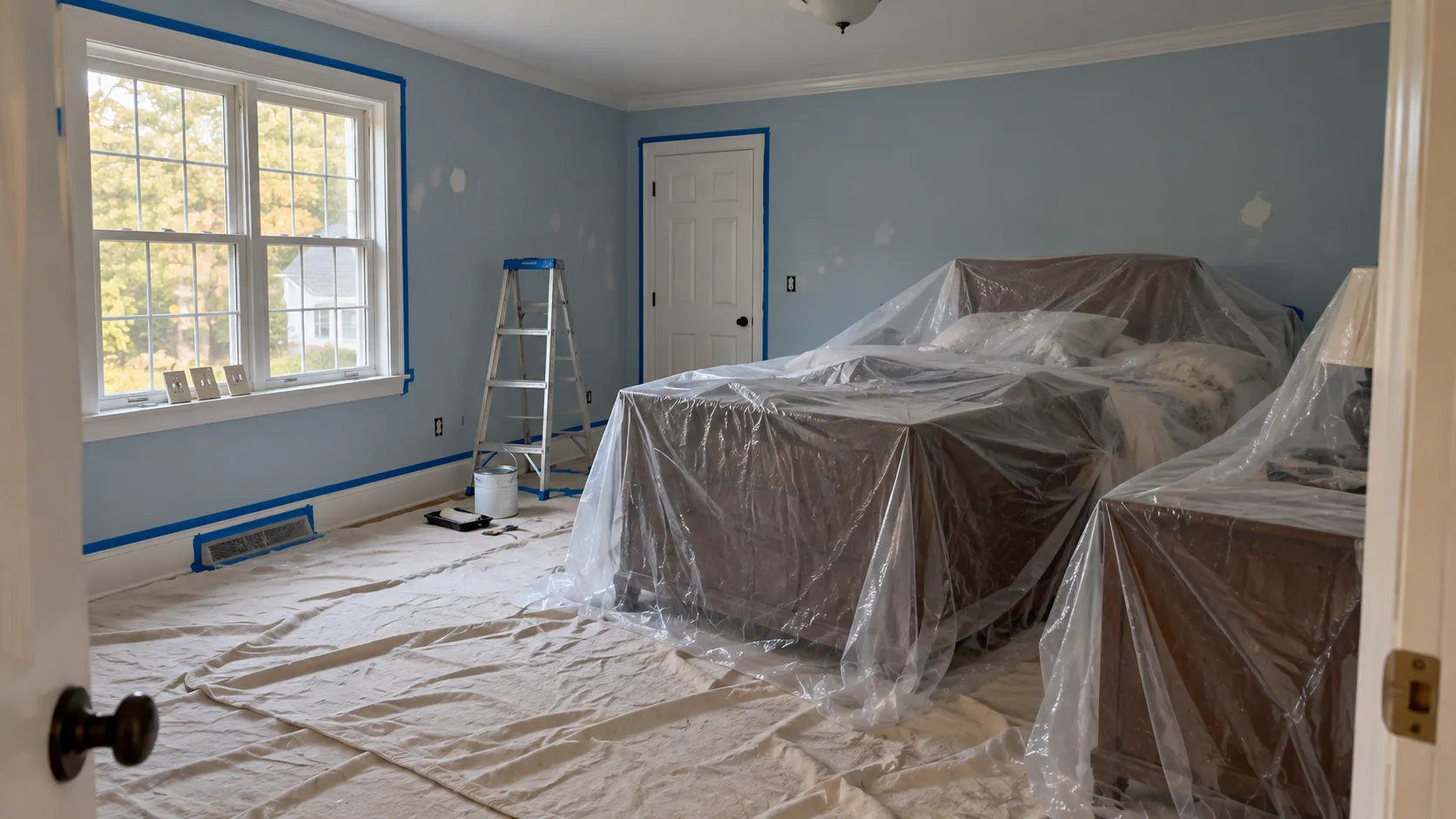
- Furniture moves to the middle of the room and gets covered. We move what two people can carry safely; pianos, large safes, aquariums and wall-mounted televisions are the exceptions we ask you to handle.
- Your HVAC vents get sealed in the work area. The EPA's own remodeling guidance is to "block any heating or air-conditioning return openings … in the rooms you are painting to prevent circulating air from the work area to other areas of the home."
- Trim and doors are the long pole. Wall paint recoats in one to four hours. A waterborne alkyd trim enamel recoats in 16 hours and should not have shelves or tabletops returned to it for five to seven days.
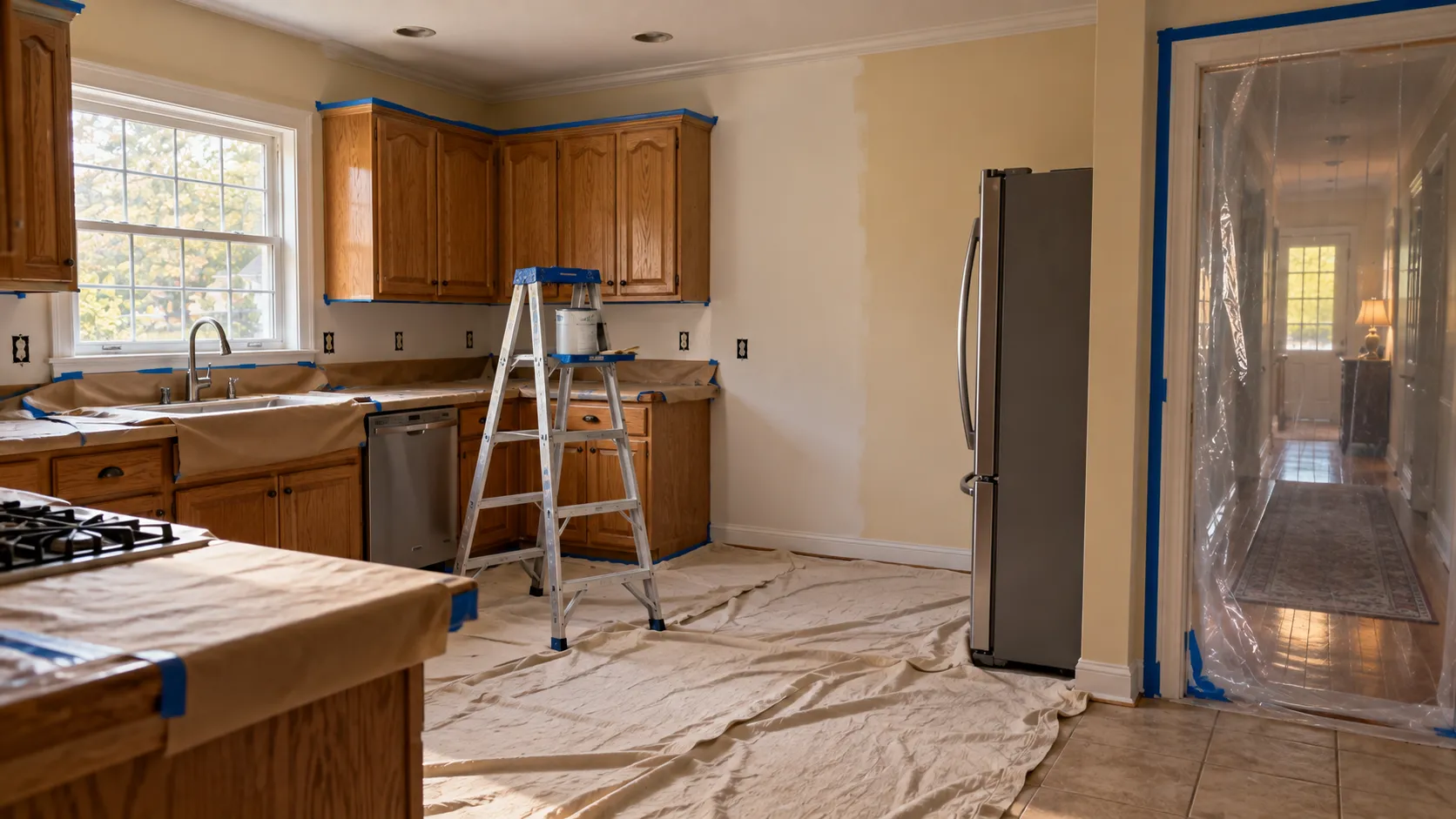
- Kitchens and bathrooms are out of service for part of a day, not a week. A powder room is usually back in use the same evening; a kitchen loses its counters and backsplash area for a day.
- Moving out is worth it in three cases: whole-house work on a tight timeline, solvent-heavy finishes on a lot of trim, and a household with an infant, a pregnancy or someone with significant respiratory problems.
How a Crew Sequences an Occupied House
The single thing that makes living in a painted house tolerable is that we never open more rooms than we can finish. A crew that strips three bedrooms and a hallway down to bare drywall patches on a Monday morning has turned your second floor into a construction site. A crew that takes one bedroom from furniture-move to final touch-up in a day leaves you a house you can still use that night.
One room at a time, or one floor at a time
For a typical repaint we work in a rolling sequence: protect and prep room one, paint room one, and while room one is drying, protect and prep room two. Most single rooms are finished in a day. On a two-story colonial we usually take the second floor first and the main floor second, because bedrooms are the rooms you most want finished and aired out early, and because it keeps the ladder traffic off your living space while you are still at work.
We agree the order at the estimate, and the order is yours to set. The three questions worth answering before the first day are: which room do you need back first, which room can you lose for two nights, and is there a room you would rather we did while you were on vacation or at the office. If you work from home, tell us which room is your office and we will schedule it for a Friday or for a day you are out.
What a painting day actually looks like
Our crews work the same six steps in every room, and the day has a shape you can plan around:
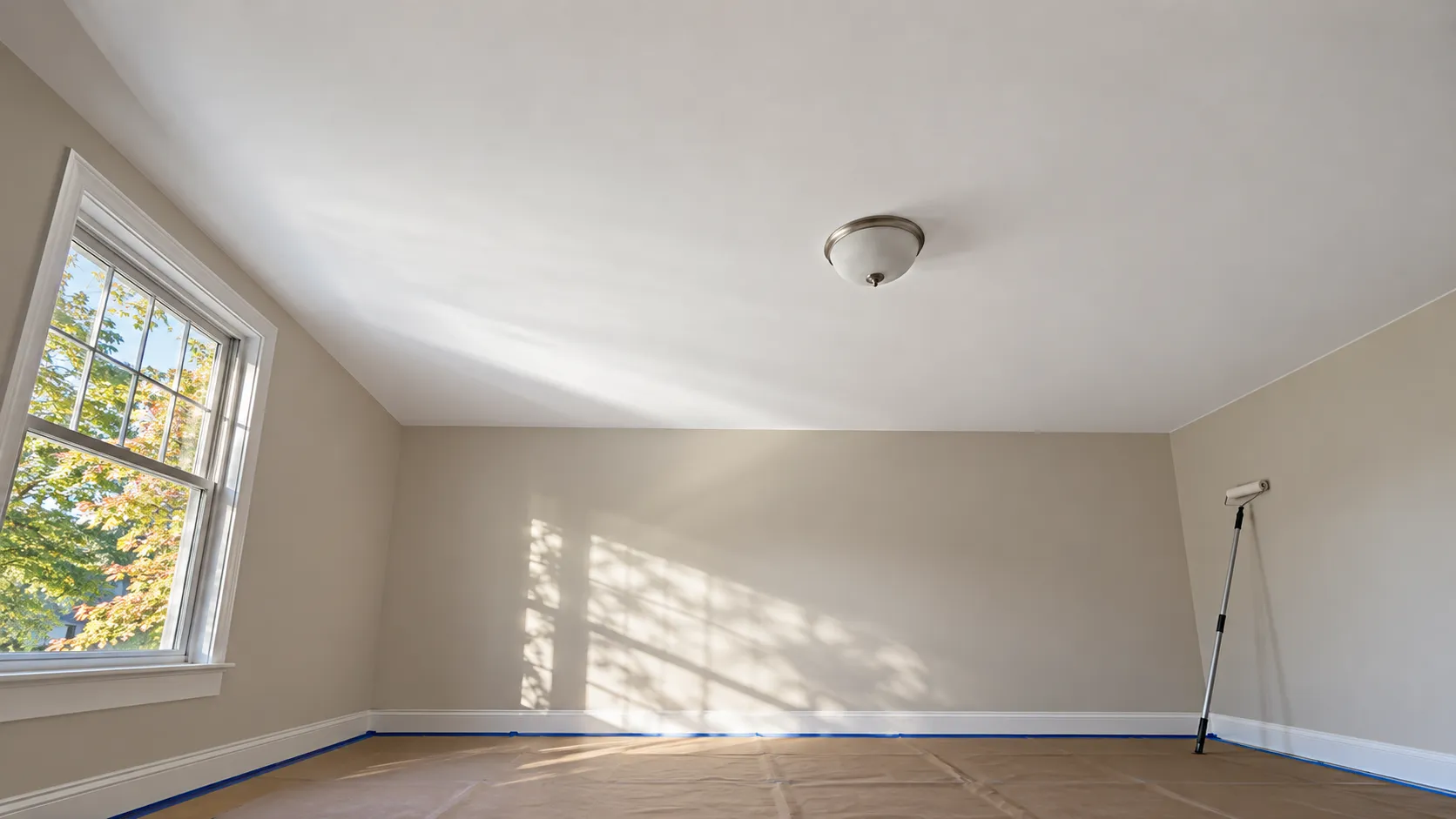
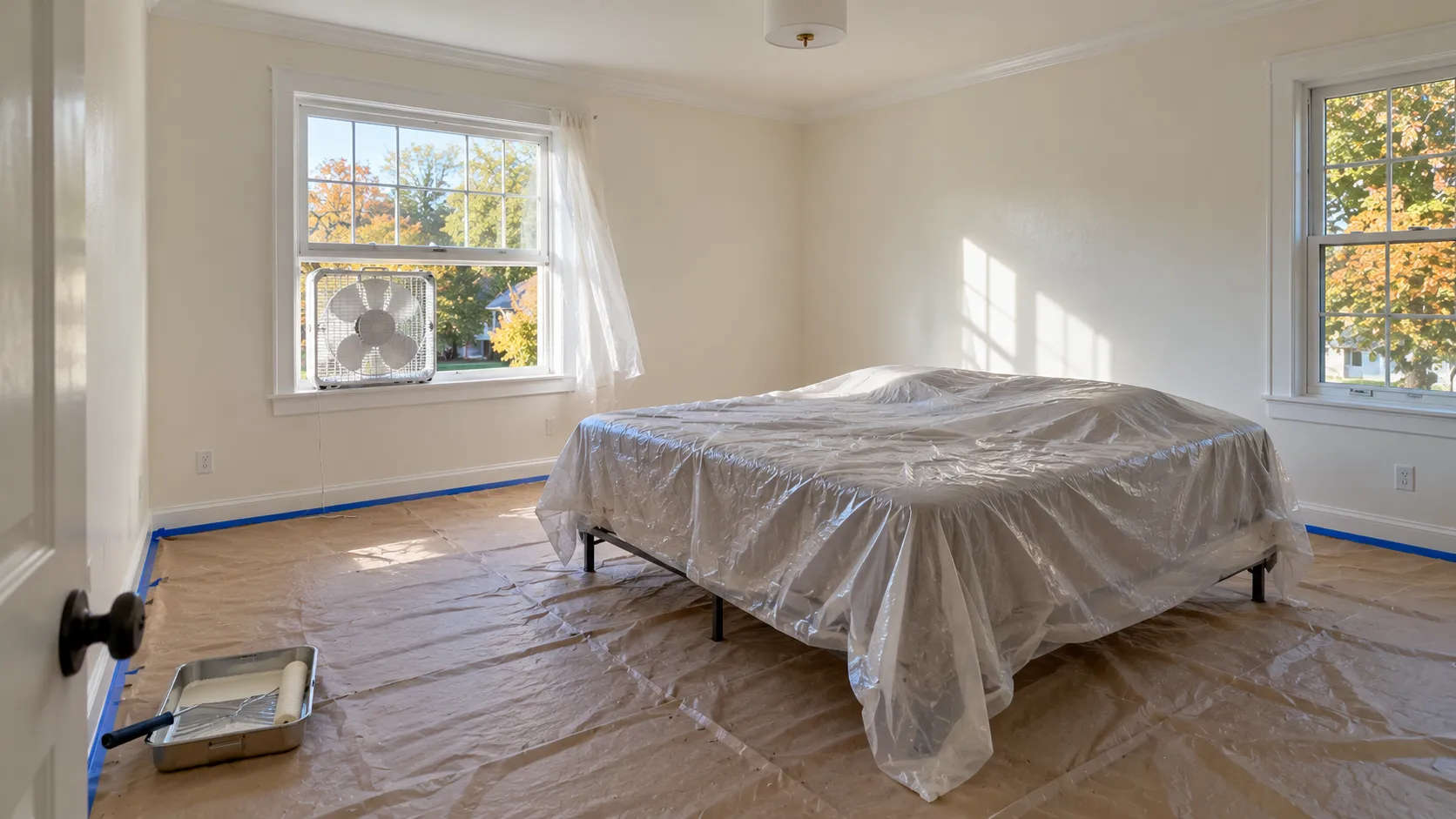
- Protect. Furniture goes to the center of the room and is covered, floors are covered and taped, switch plates and outlet covers come off, and vents in the room are sealed. This is the first hour to ninety minutes.
- Repair. Nail holes, dents and cracks are patched and sanded smooth, and gaps where trim meets walls and ceilings are caulked. This is the dusty part of the day, and it is the part we contain hardest. Larger holes are a separate conversation, covered in our drywall repair cost guide.
- Prime. Every patch and stain is spot-primed, with a full primer coat wherever a big color change or the surface calls for it.
- Paint. Two finish coats, cut in by hand at every edge. Ceilings first, then walls, then trim and doors.
- Clean up. The work area is cleaned at the end of every day, so you can use your home in the evening. Tools and open cans go out to the truck or into a closed container, not into your hallway.
- Walkthrough. We walk every room with you at the end and touch up anything you point out before we pack up.
In practice that means the noisy, dusty hours are the morning, and the quiet hours are the afternoon. If you have a call you cannot move, give us the time and we will put the sanding on the other side of it.
Where your furniture goes
Into the middle of the room, under cover. That is the honest answer, and it is also the answer the federal renovation rules give for lead-safe work: remove objects from the work area, "or cover them with plastic sheeting or other impermeable material with all seams and edges taped or otherwise sealed."
What we move: beds, dressers, nightstands, sofas, chairs, dining tables, bookcases once you have emptied them, and rugs. What we ask you to handle before we arrive: anything irreplaceable, anything electronic you would rather unplug yourself, the contents of bookshelves and china cabinets, wall art and photographs, curtains and blinds if you want them off, and anything with a documented value. What we do not move: pianos, gun safes, aquariums, large wall-mounted televisions and appliances that are plumbed or hard-wired. Those need a specialist or a second pair of hands you trust, and we would rather say so at the estimate than find out on day one.
The practical consequence is that a painted room is not a usable room on its painting day. You cannot get into the closet behind the dresser, and you should not be moving around a room full of covered furniture in the dark. Budget for the room being gone for the day, not for ten minutes.
Dust, Fumes and Your Heating and Air Conditioning
Two things travel out of a work area and into the rest of a house: sanding dust and paint vapor. Both move most efficiently through your ductwork, which is why the vents matter more than the doorway does.
Sealing the vents and shutting the system down
The EPA's guidance on indoor environmental concerns during remodeling is explicit: "Block any heating or air-conditioning return openings … in the rooms you are painting to prevent circulating air from the work area to other areas of the home." Its separate guidance on air duct cleaning goes further and addresses the system itself: "During construction or renovation work that produces dust in your home, seal off supply and return registers and do not operate the heating and cooling system until after cleaning up the dust."
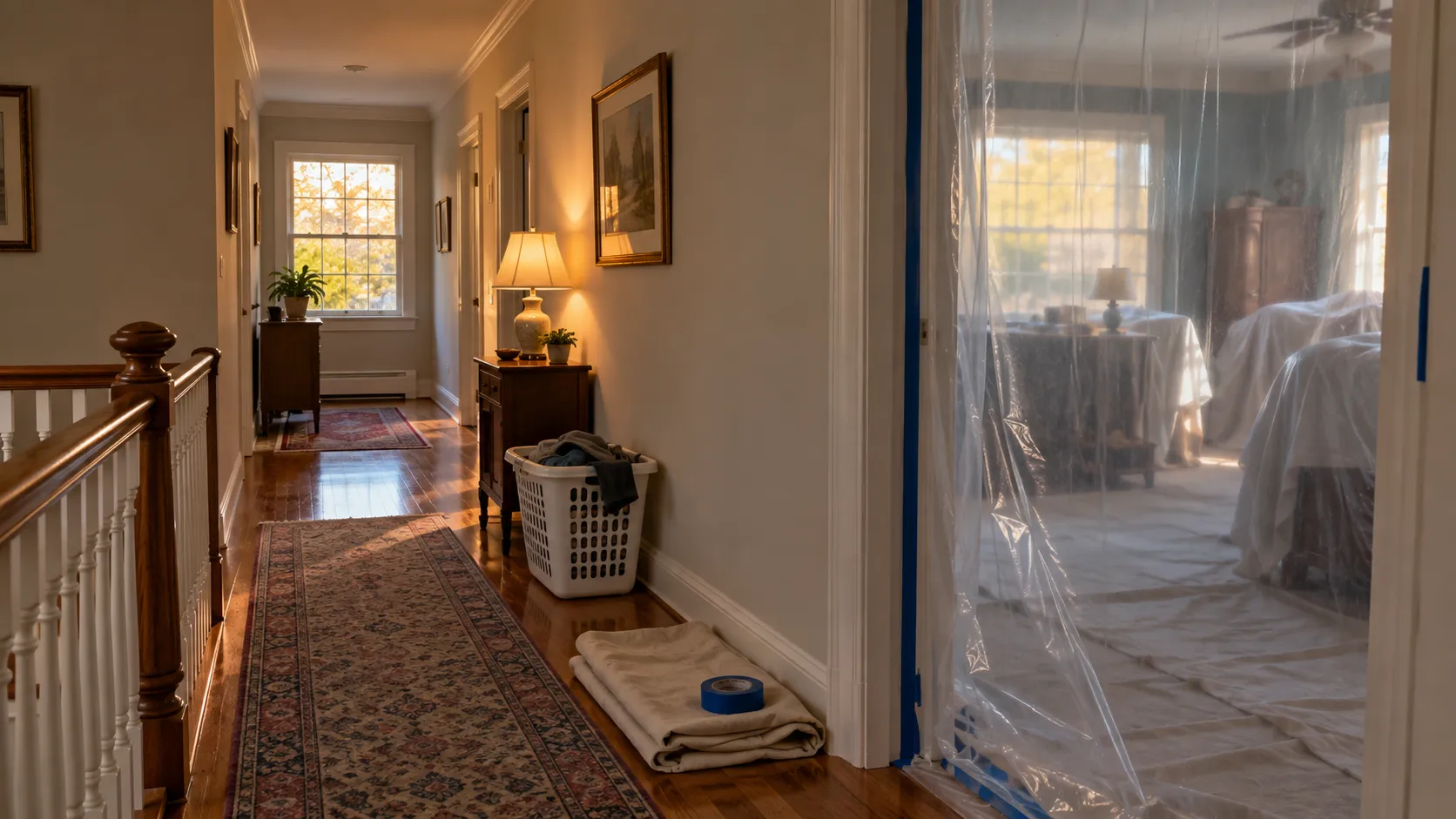
The federal renovation rules say the same thing as a requirement rather than a suggestion. 40 CFR 745.85 directs a firm working in a pre-1978 home to "close and cover all ducts opening in the work area with taped-down plastic sheeting or other impermeable material," to "close windows and doors in the work area," and to "isolate the work area so that no dust or debris leaves the work area while the renovation is being performed."
So: supply and return registers in the work area are sealed with plastic and tape, and we ask you to leave the system off while sanding is in progress. In a New Jersey August or a New Jersey January that is not nothing, which is the real reason October and April are the easiest months to repaint an interior while living in it. The EPA's painting guide makes the same point for a different reason, recommending you "try to schedule painting for dry periods in the fall or spring, when windows are more easily left open for ventilation."
Ventilation, and the two-to-three-day rule
The most useful document a homeowner can read before an interior job is the EPA's Healthy Indoor Painting Practices safety guide. Its recommendations for residents are short and specific:
- "Keep windows wide-open, as weather permits, for about 2 to 3 days after painting to avoid unwanted exposure to paint vapors (and to return to acceptable indoor air quality)."
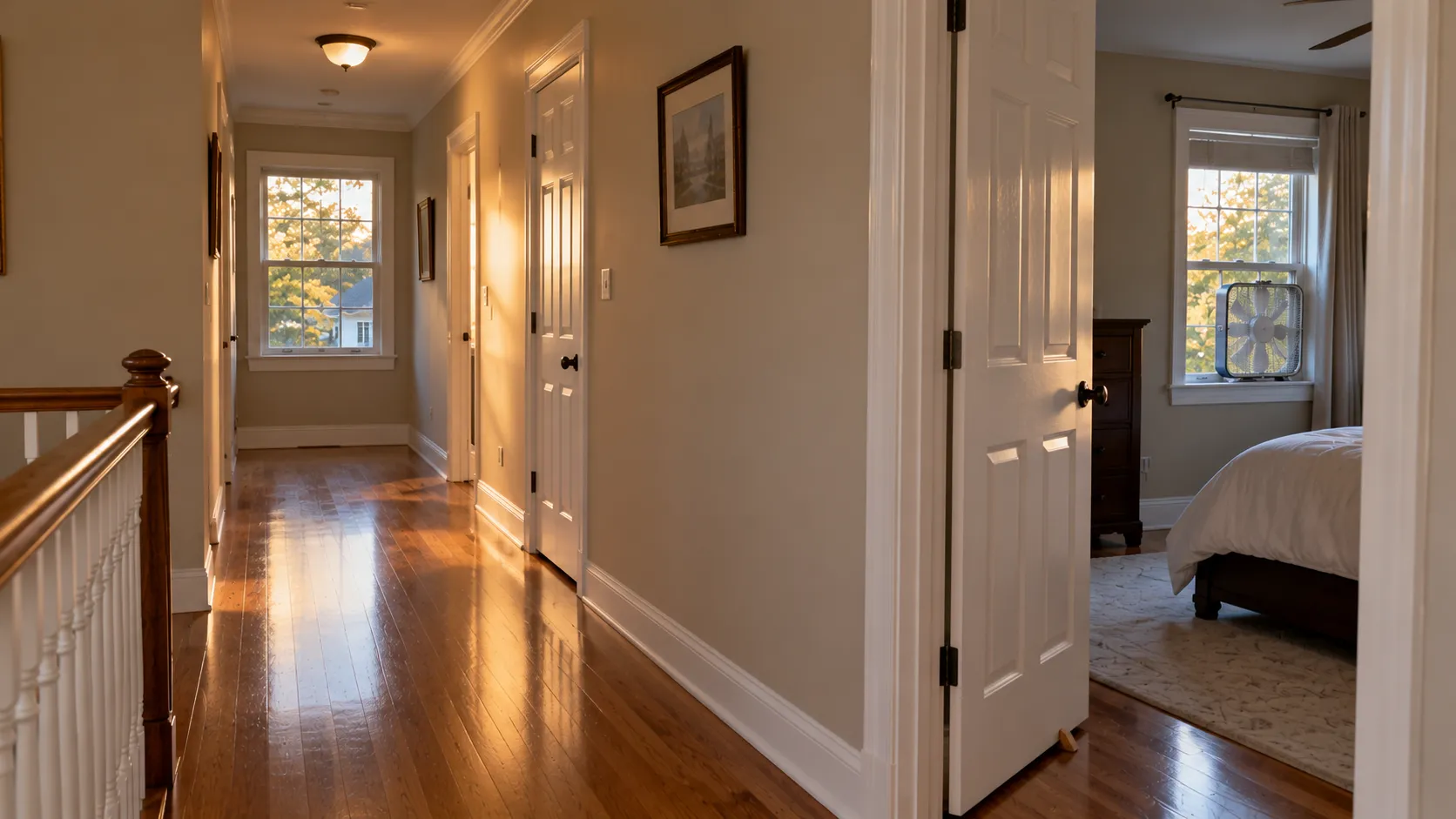
- "Use window-mounted box fans to exhaust vapors from the work area. Make sure they cannot fall out of the window. If fans cannot be used, make sure that rooms being painted have adequate cross-ventilation."
- "Avoid freshly painted rooms for 2 to 3 days, whenever possible. Keep young children and individuals with breathing problems from freshly painted rooms. Leave painted areas if you experience eye watering, headaches, dizziness, or breathing problems."
- "Open all doors and windows to the outside (not to hallways)." The guide also warns that "an air conditioning unit should not be substituted for the use of a fan," and that "bathroom/kitchen exhaust fans do not always vent out-of-doors and should not be relied upon to increase ventilation."
The guide explains why the clock runs past the point where the paint feels dry: "Part of the risk with indoor painting arises from the idea that dry paints are safe. While some paints may have only a small quantity of volatile materials that evaporate quickly, other paints may have a significant amount of organic solvents or drying oils that take several days to go away."
The EPA's general guidance on volatile organic compounds puts the scale of it plainly: "Concentrations of many VOCs are consistently higher indoors (up to ten times higher) than outdoors," and "during and for several hours immediately after certain activities, such as paint stripping, levels may be 1,000 times background outdoor levels." Its advice is the same as ours: "increase ventilation when using products that emit VOCs" and "meet or exceed any label precautions."
Product choice does real work here. The EPA notes that "in general, water-based paints will emit fewer chemicals and lower levels of chemical vapors. Short-term exposure to solvents from alkyd paints can be significantly higher than from latex paints." We use premium low-VOC interior lines from Benjamin Moore and Sherwin-Williams, and the data sheets back the labels: Benjamin Moore's Regal Select eggshell lists VOC at "< 50 g/L" and Sherwin-Williams' Duration Home satin lists "less than 50 grams per litre." Low-VOC is not no-VOC, which is why both sheets still say to use the product only with adequate ventilation. There is more detail in our companion article on paint fumes and VOC safety.
Sanding dust and the daily cleanup
Dust is the complaint we hear more often than fumes, and it comes almost entirely from the repair step rather than the painting step. The fix is containment plus a cleanup that happens every single day, not once at the end. Under the federal rules, a firm must contain waste "to prevent releases of dust and debris before the waste is removed from the work area," and after the work must "clean the work area until no dust, debris or residue remains."
Practically, that means plastic at the doorways, drop cloths that are rolled inward rather than shaken out, vacuuming before the plastic comes down, and a wet wipe of horizontal surfaces. If you have an air purifier, run it in the adjacent room rather than in the work area. The EPA's note on air cleaners is worth keeping in mind: "some air cleaners are highly effective at particle removal, while others, including most table-top models, are much less so." A purifier is a supplement to an open window, not a replacement for one.
If your house was built before 1978
This changes the job. The EPA's Renovation, Repair and Painting program requires that "anyone paid to perform work that disturbs painted surfaces in homes, childcare facilities and preschools built before 1978 be certified," and that certified firms use "lead-safe work practices that minimize occupants' exposure to lead hazards." The containment described above stops being good practice and becomes a legal standard, and a great deal of New Jersey housing stock predates 1978. Ask any painter you are considering to show you their EPA Lead-Safe Certified firm status before work that disturbs paint in an older home, and read our guide to lead paint in older New Jersey homes first. Benjamin Moore's own data sheet carries the warning on the label: "If you scrape, sand, or remove old paint, you may release lead dust. LEAD IS TOXIC … PREGNANT WOMEN SHOULD ALSO AVOID EXPOSURE."
Sleeping, Showering and Cooking Around the Work
Bedrooms
This is the question behind the question. A bedroom painted on Tuesday should not be slept in on Tuesday night if you can avoid it, and ideally not Wednesday either, which is simply the EPA's two-to-three-day window applied to the room where you spend eight unventilated hours with the door shut.
The workable sequences, in order of how often we use them:
- Paint the guest room or a kid's room first. It is aired out and back in service by the time the primary bedroom is painted, and it becomes the place to sleep for two nights.
- Split the primary bedroom from the rest of the second floor. Do the hallway, the kids' rooms and the bathroom first; the primary bedroom last, on a Friday, so the weekend does the airing out.
- Two nights elsewhere. Family, a hotel, or the finished basement. This is the one most often chosen by people with a newborn.
Whichever you choose, leave the window open and a box fan blowing out, and keep the bedroom door closed so the vapor goes out the window rather than down the hall. The EPA's instruction is to open doors and windows "to the outside (not to hallways)."
Bathrooms
A powder room or hall bath is usually out of service for most of one day and back that evening. The constraint is not the paint, it is the physical obstruction: a toilet and vanity you cannot reach past a ladder. If you have only one full bathroom, say so at the estimate and we will do it in a single uninterrupted push rather than spreading it over two days.
The sheen conversation matters more in a bathroom than anywhere else, because a bathroom paint has to survive being wiped and has to live in steam. Sherwin-Williams describes Duration Home Interior Latex as "offering quick return to service & durability in moist environments like bathrooms." One thing to put on the calendar: the same sheet says "to assure maximum washability and durability, wait at least 14 days before washing Duration Home coating," and Benjamin Moore's Regal Select sheet says "painted surfaces can be washed after two weeks." A shower is fine on day two; scrubbing the wall is not. Our satin vs eggshell sheen guide goes through the numbers.
Kitchens
A kitchen loses its counters for a day. We clear and cover the countertops, the stovetop and the sink surround, and cut in around cabinets, backsplash and appliances, which is slow, detailed work. Plan on takeout or a slow cooker in another room for one evening, move the coffee maker somewhere else the night before, and expect the refrigerator to be pulled out and pushed back.
Cabinets are a different job on a different timeline and are almost never painted in place while a kitchen stays in use. If cabinets are in scope, that is a separate conversation at the estimate.
Kids, Pets and Working From Home
Children, and pregnancy
The EPA's painting guide is direct about this: "susceptible people, such as young children and individuals with breathing problems, should avoid paint vapors. To avoid any health risks for themselves and their unborn babies, pregnant women should avoid undertaking painting projects and should limit their time in freshly painted rooms, especially when oil-based paints are being used." It also lists the symptoms that mean leave the room now: "eye watering, headaches, dizziness, or breathing problems."
In an occupied house that translates into something simple. Children should not be in the work area at all, not because of drama but because of ladders, open cans, extension cords and tool bags. The federal rules require a firm to "post signs clearly defining the work area and warning occupants and other persons not involved in renovation activities to remain outside of the work area," and that is a sensible standard even in a house with no lead in it. If there is a pregnancy in the household, tell us at the estimate: it changes which rooms we do when, and it is a reason to schedule the work for days the house is empty. The EPA's blunt advice on scheduling is to "try to schedule interior painting when the home is unoccupied, for example: when people are at work or school, or on vacation."
Pets
Dogs and cats are the single most common cause of a ruined finish and a recurring safety problem on an occupied job. The issues are mundane and all of them are preventable:
- Doors. A crew carrying a ladder cannot also watch a door. Crate the dog, shut the cat in a finished room, or board them for the day.
- Wet paint. A cat that walks a baseboard leaves a trail through the house, and the paint comes off the floor harder than it comes off the cat.
- Air. The same ventilation logic that applies to children applies to a pet that sleeps in a freshly painted room. Move the bed and the litter box out of the work area for the same two to three days.
- Noise. Sanders, compressors and six hours of strangers in the house are stressful for an animal. A day at daycare is cheaper than a repair.
Working from home
Most of our customers work from home at least part of the week, and it is entirely manageable if you plan it. Tell us which room is the office and we will do it on a day you are out. Give us your meeting times and we will schedule sanding around them. Expect noise in the morning and quiet in the afternoon, expect the crew to need the driveway, and expect to lose Wi-Fi coverage briefly if a router sits in a room that is being painted. Unplug and move it yourself the night before rather than leaving it to a painter.
One practical note: do not set up a laptop in a room next to a room that is being sanded. Fine drywall dust is the one thing that will get past a doorway plastic if the door is opened often, and a fan running in an open window in the work area will pull air toward itself, not toward you, which is exactly what you want.
Dry Time, Recoat Time, and When the Room Is Yours Again
Three different clocks get mixed together in the same question, and only the first one has anything to do with when the room looks finished. Dry to touch means the surface will not transfer paint. Recoat means the next coat can go on. Cure means the film has reached its final hardness, which is when it will survive being scrubbed, leaned on or loaded with objects. Every figure below is from the manufacturer's current data sheet at 77 degrees F and 50 percent relative humidity.
| Product | Dry to touch | Recoat | Back in service |
|---|---|---|---|
| Benjamin Moore Regal Select eggshell N549 (walls) | 1 hour | 1 to 2 hours | "Painted surfaces can be washed after two weeks." |
| Sherwin-Williams Duration Home satin A97 (walls) | 1 hour | 4 hours | "Wait at least 14 days before washing." |
| Benjamin Moore Advance satin 792 (trim, doors, cabinets) | 4 to 6 hours | 16 hours | No shelves or tabletops "for at least 5 – 7 days"; up to 30 days "to reach optimum hardness and final sheen." |
Read the bottom row again, because it is the line that surprises people. A waterborne alkyd trim enamel is the right product for doors, casing and baseboard, and it is slow on purpose: the long open time is what gives it the flow and leveling that makes brush marks disappear. The cost of that is a door that cannot be closed against its stop for a day and a built-in bookcase that should stay empty for most of a week. If your job includes a lot of trim, this is the scheduling constraint, and our article on what it costs to paint trim, doors and baseboards explains why that scope is priced and scheduled separately.
Both Benjamin Moore and Sherwin-Williams attach the same caveat to every one of those numbers. Benjamin Moore: "High humidity and cool temperatures will result in longer dry, recoat and service times." Sherwin-Williams: "Drying and recoat times are temperature, humidity, and film thickness dependent." In a humid New Jersey July with the air conditioning off, assume the long end of every range. Rushing a recoat is one of the ways a finish fails early, which we cover in why paint peels.
What About Exterior Painting?
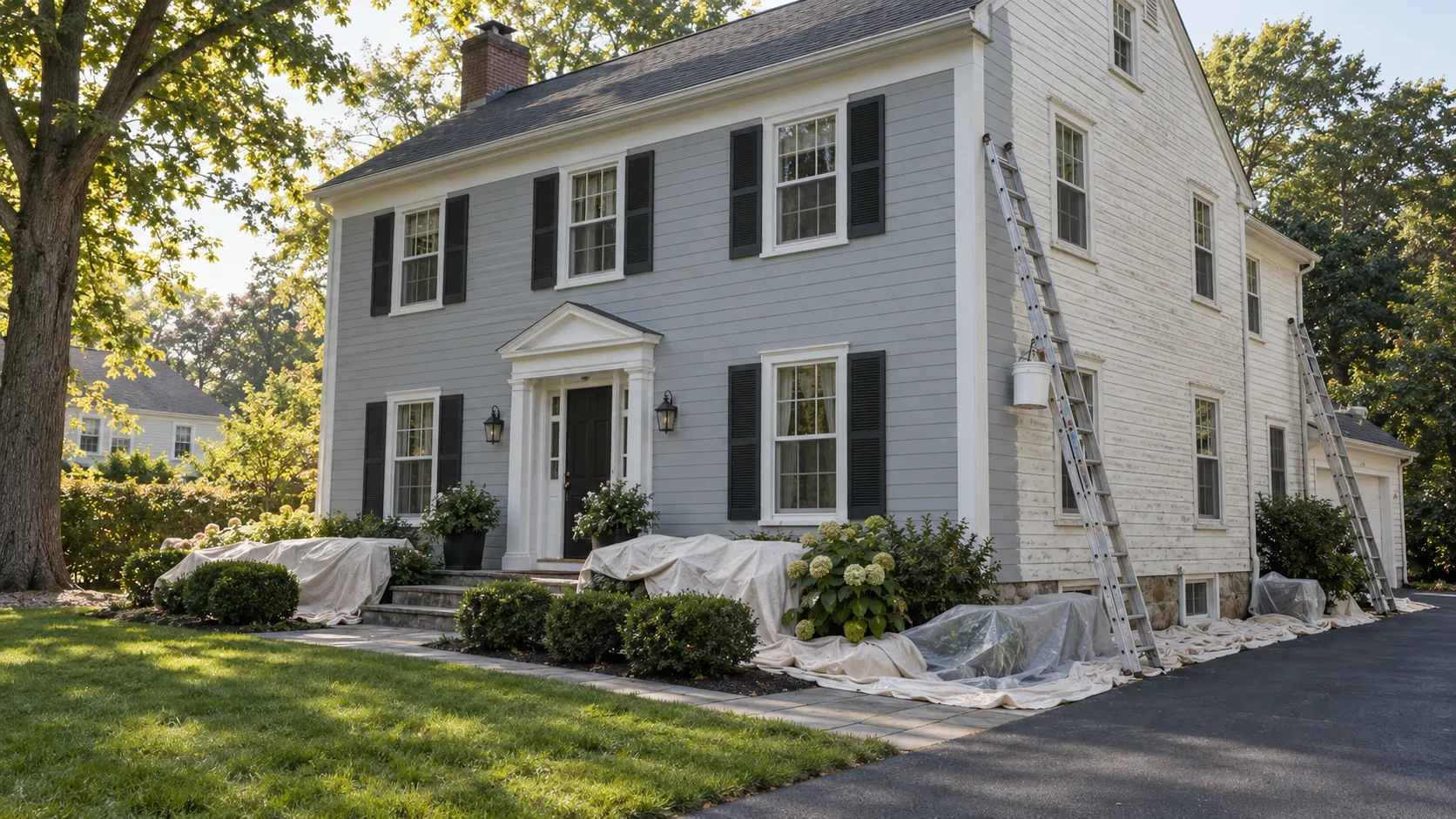
Everything above is about interiors, because that is where living in the house is the hard part. An exterior repaint is much easier to live through: the crew is outside, the paint vapor is outside, and you keep every room. What changes is the outside of the house, and a few habits for the length of the job:
- Wash day comes first. Keep windows shut and doors closed while the house is being washed, and move anything on the porch or deck you do not want soaked. Our power washing guide covers what that step involves.
- Windows and doors on the side being painted stay closed while the sashes, frames and door edges dry, and wet doors get propped rather than shut against their stops. Expect one elevation at a time, not the whole house at once.
- Clear a path around the house. Ladders need firm ground beside every wall. Move cars out of the driveway on the days the garage side is being done, and pull grills, planters and patio furniture away from the walls.
- Turn the lawn sprinklers off for the duration. Fresh exterior paint and a sprinkler head pointed at the siding do not mix.
- Keep pets in. A dog in the yard is a dog under a ladder.
- The weather sets the schedule. Exterior coatings have minimum temperatures and need the surface dry, so a wet week moves the dates. Our article on painting in cold weather in NJ explains the limits.
On a pre-1978 house, the same federal rule as inside applies outside. Paid work that disturbs the old paint, scraping included, has to be done by a certified firm, and 40 CFR 745.85 tells that firm to "close all doors and windows within 20 feet of the renovation" and to cover the ground with plastic sheeting "extending 10 feet beyond the perimeter of surfaces undergoing renovation." Ask any bidder how they are handling it, and see our exterior painting page for what our own exterior scope covers.
What to Do Before the Crew Arrives
The jobs that go smoothly all have the same morning. Here is the list we give at the estimate:
- Empty the bookshelves, china cabinets and closets that sit against walls being painted. We move the furniture; you decide what is in it.
- Take down what you care about. Wall art, photographs, mirrors and anything with sentimental value. Everything else can be covered in place.
- Pack a two-night bag if a bedroom is on the schedule, and decide now where you are sleeping those two nights.
- Plan the pets. Daycare, a crate in a finished room, or a neighbor. Decide before the morning of, not during it.
- Clear a parking space and a path. The driveway, and a clear route from it to the work area.
- Flag the fragile and the fixed. Alarm sensors, smart thermostats, radiator covers, anything plumbed or hard-wired, and anything you would rather we did not touch.
- Tell us the no-noise hours and which room is your office.
- Buy or borrow two box fans if the weather allows windows to be open. They do more for the air in your house over the following three days than anything else on this list.
- Agree the room order in writing. Which room first, which room last, which room you need back soonest.
When Living In Is the Wrong Call
We would rather tell you to move out for two nights than have you grit your teeth for a week. Four situations where staying is a bad trade:
- A whole-house repaint on a compressed schedule. If every room has to be done in five days, there is no rolling sequence and no unaffected room to retreat to. This is the classic move-out-for-the-week job, and it is usually the one happening between a closing and a move-in anyway.
- Oil-based or solvent-heavy finishes over a large area. The EPA's comparison is clear that "short-term exposure to solvents from alkyd paints can be significantly higher than from latex paints." We use low-VOC waterborne products for interiors as a matter of course, but a specialty finish changes the calculation.
- A newborn, a pregnancy, or a household member with serious respiratory disease. The EPA names young children, people with breathing problems and pregnant women as the groups that should avoid paint vapors. Two nights at a relative's house is a cheap answer.
- Significant plaster or drywall demolition. If a ceiling is coming down, this is no longer a painting schedule, and the dust containment is a different order of problem.
For everything else, including almost every bedroom, hallway, living room and kitchen repaint we are asked for, staying is the normal and reasonable choice. You can see finished rooms from homes across Monmouth County in our project gallery, and the full scope of what an interior job covers on our interior painting services page. We work across Monmouth, Middlesex and Ocean counties and the rest of our service area.
Frequently Asked Questions
Can you live in a house while it is being painted?
Yes, for a normal interior repaint. The crew works one or two rooms at a time, the rest of the house stays usable, and the work area is cleaned at the end of every day. The rooms to plan around are bedrooms, where the EPA advises avoiding a freshly painted room for two to three days and keeping windows open for that period.
How long after painting can you sleep in the room?
The EPA's homeowner guide recommends keeping windows wide open "for about 2 to 3 days after painting" and avoiding freshly painted rooms "for 2 to 3 days, whenever possible." With a low-VOC waterborne wall paint and a window fan running, one night out is often enough in practice, but two is the guidance. Keep young children and anyone with breathing problems out for the full period.
Do interior house painters move furniture?
Yes. We move furniture to the center of the room and cover it, cover and tape the floors, and remove switch plates and outlet covers. We ask you to empty bookshelves, china cabinets and closets first, and to take down wall art and anything irreplaceable. We do not move pianos, safes, aquariums, wall-mounted televisions or anything plumbed or hard-wired.
Will my house be full of dust?
Most of the dust comes from sanding patched walls, not from painting, and it is contained to the work area with plastic at the doorways and sealed vents. The federal renovation standard, which is the right standard whatever the age of the house, is to isolate the work area "so that no dust or debris leaves the work area" and to clean afterward "until no dust, debris or residue remains."
Do the painters turn off my heat or air conditioning?
The registers in the work area are sealed with plastic and tape, and we ask that the system stay off while sanding is in progress. The EPA's advice is to "seal off supply and return registers and do not operate the heating and cooling system until after cleaning up the dust" during work that produces dust, and to block return openings in the rooms being painted so air does not carry the work area through the house.
Can I use my kitchen and bathrooms while the house is being painted?
Mostly. A powder room or hall bath is out of service for part of one day and usually back that evening. A kitchen loses its counters and the area around the backsplash for a day. If you have only one full bathroom, tell us at the estimate and we will do it in a single uninterrupted push.
Is it safe for kids and pets to be home while painting?
Children and pets should be kept out of the work area entirely, and out of freshly painted rooms for two to three days. The EPA advises that young children and people with breathing problems avoid paint vapors, and that pregnant women limit their time in freshly painted rooms. For pets, the bigger day-to-day risks are open doors, wet baseboards and stress from the noise.
How long before I can put furniture back against the wall?
Walls painted with a premium waterborne interior paint can take furniture back the next day. Trim is the slow one: Benjamin Moore's Advance data sheet says not to "return shelves/tabletops to service for at least 5 – 7 days," and notes that "it could take up to 30 days to reach optimum hardness and final sheen." Give painted doors and painted shelves the time.
Does low-VOC paint mean there is no smell?
No. Low-VOC means less, not none. The Benjamin Moore and Sherwin-Williams interior lines we use list VOC under 50 grams per litre, and both data sheets still say to use the product only with adequate ventilation and to "ensure fresh air entry during application and drying." Ventilate for two to three days regardless of the label.
Should I just move out instead?
Consider it for a whole-house repaint on a tight schedule, for solvent-heavy finishes over a large area, if there is a newborn or a pregnancy in the house, or if the job includes real demolition. For a room-by-room repaint, staying is the normal choice and almost all of our customers do.
Can you stay home while the outside of the house is painted?
Yes, and it is far easier than an interior job, because the crew and the paint vapor are outside and you keep every room. Keep windows shut on wash day and on the side being painted, move cars and patio furniture away from the walls, turn the sprinklers off and keep pets inside. The weather, not the crew, usually decides how many days it takes.
How long does the whole thing take?
Most single rooms are finished in a day, and a full interior usually runs several working days depending on the house, the amount of trim and how much repair the walls need. Our guide to how long it takes to paint a house in NJ breaks the schedule down by house size.
Talk to Us Before You Book the Hotel
The room order is the part of an interior job that costs nothing to get right and is miserable to get wrong. At the free on-site estimate we walk the house with you, agree which room goes first and which goes last, note the office, the single bathroom, the pets and anyone the schedule has to work around, and put it in the estimate so the crew arrives knowing it. Call us at (732) 239-0932 or send us a message, and we will tell you honestly which nights, if any, you will want to be somewhere else.
About the author
Written by the NJ Painting Co. team
NJ Painting Co. is a family-owned painting contractor based in Monmouth County, in business since 2004. We are licensed and fully insured, work with Benjamin Moore and Sherwin-Williams paints, and back our work with a 2-year workmanship warranty. We serve Monmouth, Middlesex, Ocean, Mercer, Somerset and Burlington counties, plus Union, Essex, Hudson, Bergen and Passaic in North Jersey.