Most latex wall paint is dry to the touch in about an hour and ready for a second coat in one to four hours, but it needs about two weeks before you can wash it and three to four weeks to cure completely. Trim enamels and oil-based paints are slower to dry and recoat: four to eight hours to the touch and eight to twenty-four hours before the next coat. Cure is where they part company. Oil hardens sooner than latex, in about five days, while a waterborne trim enamel can take up to a month.
Those are three different clocks, and most of the trouble we see on jobs comes from treating them as one. A wall that is dry to the touch at lunchtime can still be scuffed by a chair pushed against it that afternoon. A door that feels dry can glue itself to the frame when it is closed the same day. A deck that looks dry by dinner can be marked by the first person who drags a planter across it. The paint is not doing anything wrong in any of those cases; it simply has not finished yet.
We are a family-owned painting company in Morganville and have painted New Jersey homes across Monmouth, Middlesex, Ocean, Mercer, Somerset and Burlington counties, plus Union, Essex, Hudson, Bergen and Passaic in North Jersey, for more than 20 years, using Benjamin Moore and Sherwin-Williams products. Every schedule we write is built around these times, because the drying of the paint, not the speed of the crew, decides when a room or a side of the house is finished.
Every figure below is from a document we fetched and read on 15 November 2026: the dry, recoat and service times from the current Benjamin Moore and Sherwin-Williams technical data sheets for the products we actually use, the stain and floor-coating figures from their makers' sheets, the weather rules from the US Forest Products Laboratory and the National Weather Service, New Jersey's climate from the Office of the New Jersey State Climatologist at Rutgers, and the VOC limits from the New Jersey Department of Environmental Protection. Where something is our own practice rather than a published figure, we say so.
The Short Answer
- Interior wall paint: Benjamin Moore Regal Select is dry to touch in 1 hour and recoatable in 1 to 2 hours; Sherwin-Williams Duration Home is 1 hour and 4 hours. Both brands say to wait about two weeks before washing the wall.
- Ceiling paint: about an hour to the touch, 1 to 4 hours to recoat. A flat ceiling finish hides lap marks well, but it dries no faster than a wall, even worked overhead.
- Trim and door enamel: Benjamin Moore Advance is 4 to 6 hours to the touch and 16 hours to recoat, and "could take up to 30 days to reach optimum hardness." Sherwin-Williams ProClassic and Emerald Urethane recoat in 4 hours. Doors stick if they are closed too early; that is called blocking.
- Oil-based paint and primer: Fresh Start oil primer is 6 hours to the touch and 8 hours to recoat. Benjamin Moore says conventional alkyd paints "cure by oxidation in approximately five days." Expect some yellowing on interior work.
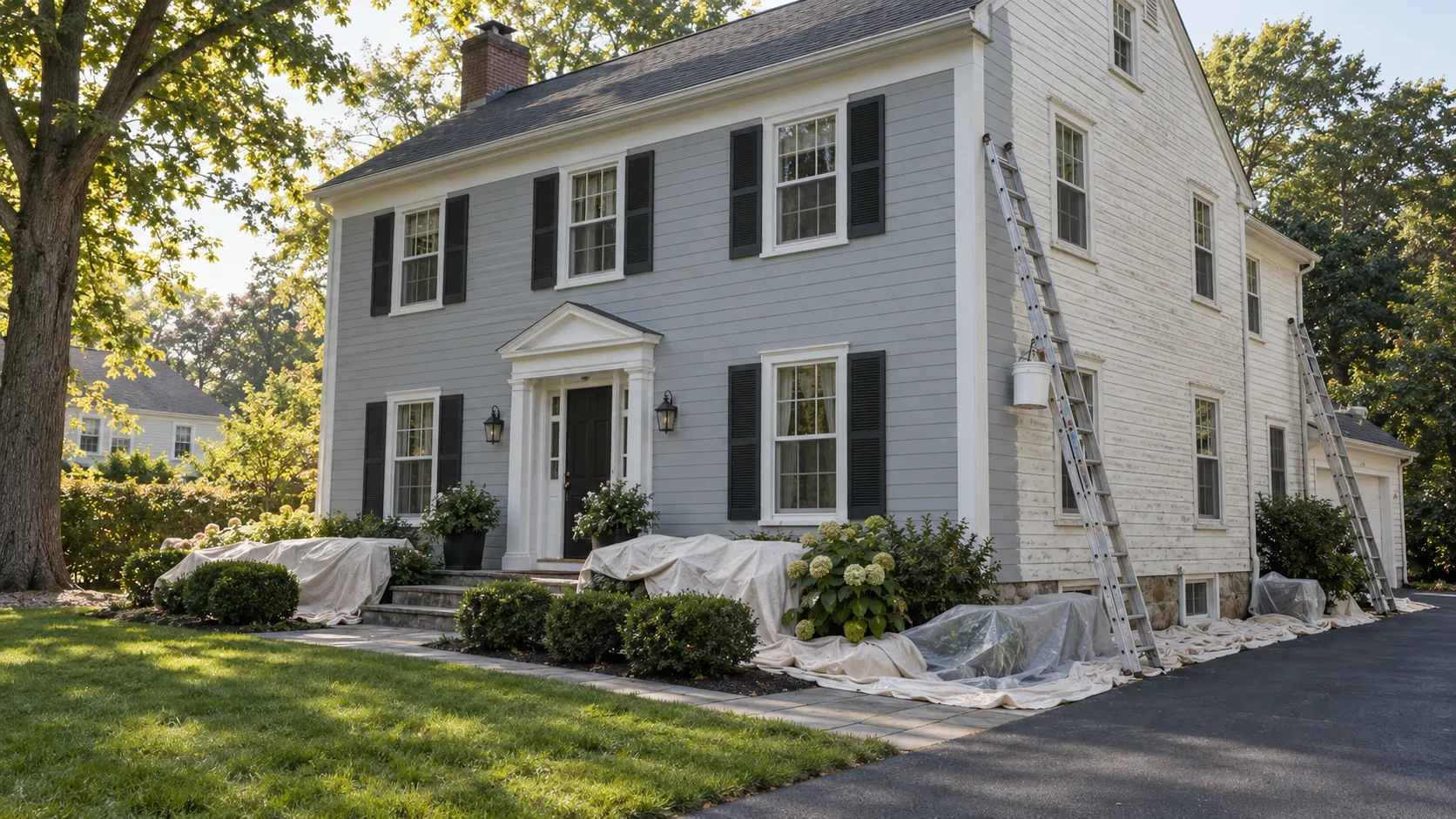
- Exterior paint: 1 hour to the touch and 4 hours to recoat above 45°F; 24 to 48 hours to recoat between 35 and 45°F on the Sherwin-Williams sheets. Keep rain off it for at least 2 to 3 hours, and finish early enough that dew does not land on it.
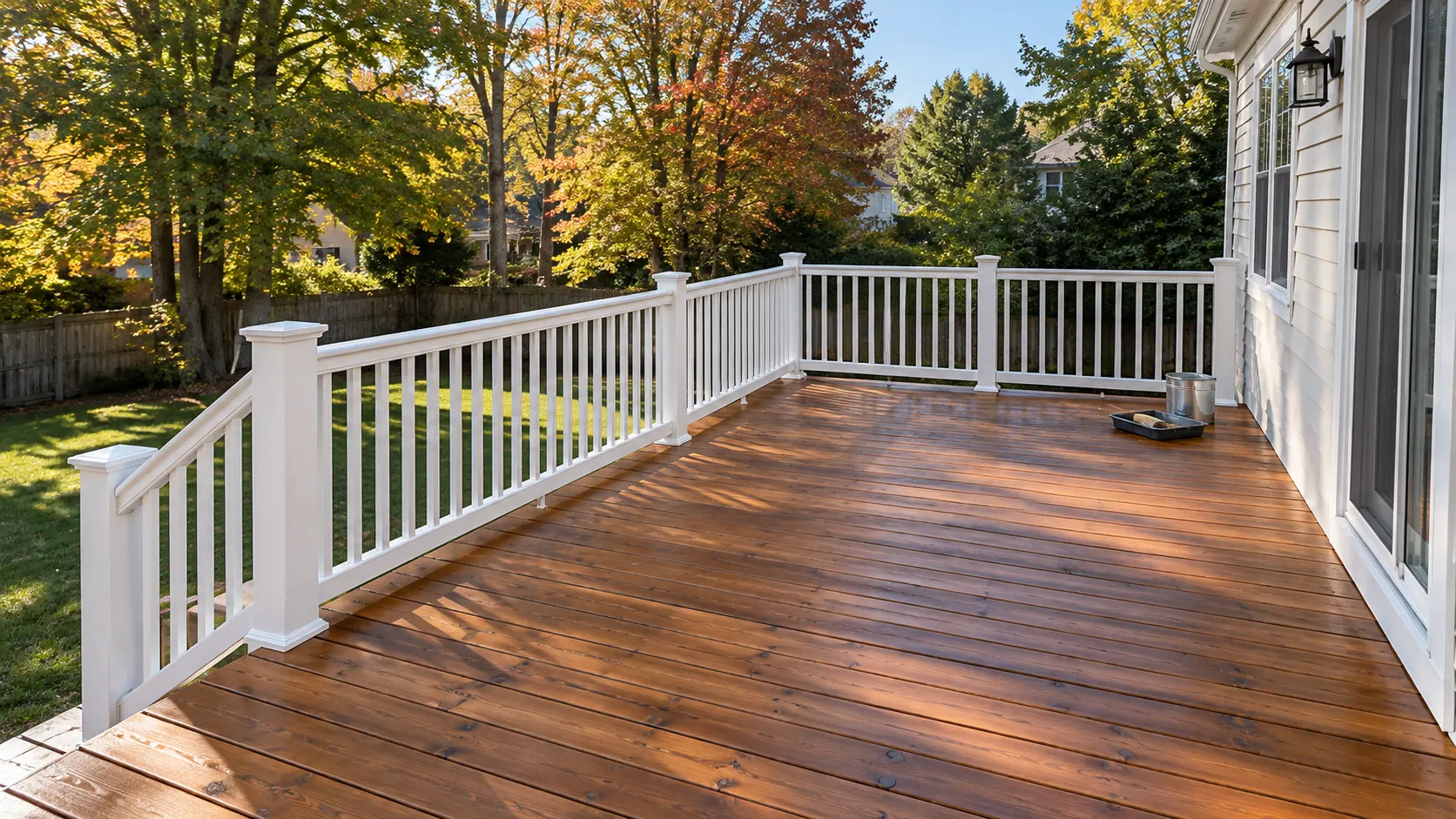
- Deck and fence stain: 30 minutes to an hour to the touch, but 24 to 48 hours before foot traffic on a deck, and 24 to 48 hours "to use" for an oil stain.
- Floors: a porch enamel takes light foot traffic in 24 hours and furniture in 7 days. A garage epoxy or polyaspartic coating needs about 72 hours before a car goes on it.
- Cure: Benjamin Moore puts a full cure for latex at "about three to four weeks." Humidity and cold stretch every one of these numbers.
What Is the Difference Between Dry, Recoat and Cure Time?
They are three points on the same curve, and the data sheets print them for a reason.
- Dry to the touch means the surface no longer transfers to a light finger touch. Sherwin-Williams' trim enamel sheet also gives a tack-free time a little earlier: "Tack Free: 20-40 minutes" for ProClassic.
- Recoat means the film underneath is firm enough to take another coat without being lifted, dragged or wrinkled by the wet paint on top. It is always later than dry to the touch.
- Cure means the film has reached its final hardness, adhesion, scrub resistance and sheen. Benjamin Moore's sheets call the wait before normal use "service" time, and print, beside it, when the wall can be washed.
How a paint gets from wet to cured depends on what it is. Latex, the water-based paint on most walls in New Jersey, cures by coalescence. The US Forest Products Laboratory's Wood Handbook describes the resin as "a synthetic polymer that coalesces to form a film as it loses water and other solvents," and notes that "solvents keep the polymer flexible while it coalesces." The water leaves first, which is why the wall feels dry in an hour. The particles of resin then fuse into one continuous film over the following weeks, which is why Benjamin Moore says "latex acrylic coatings take about three to four weeks to cure completely."
Oil paints and alkyd enamels cure differently. Benjamin Moore's Fresh Start oil primer sheet says it "Dries By Evaporation, Oxidation," and its alkyd guide says that "alkyd paints cure by oxidation in approximately five days to a hard, glossy finish." The resin reacts with oxygen in the air and hardens chemically, which is part of why oil films end up so hard and why they take longer to stop smelling. It also runs against the usual assumption: oil is slower to dry, but faster to cure. Sherwin-Williams says "acrylic and latex paints take two or three weeks to cure while oil-based paints take as little as five days to cure," and its own table gives oil 5 to 15 days.
The practical upshot is simple. Recoat time controls how fast a painter can work. Cure time controls how gently you treat the result. Our guides to how long it takes to paint a house and when it is safe to sleep in a painted room use the same three terms; this article is where every product's numbers live.
How Long Does Wall Paint Take to Dry?
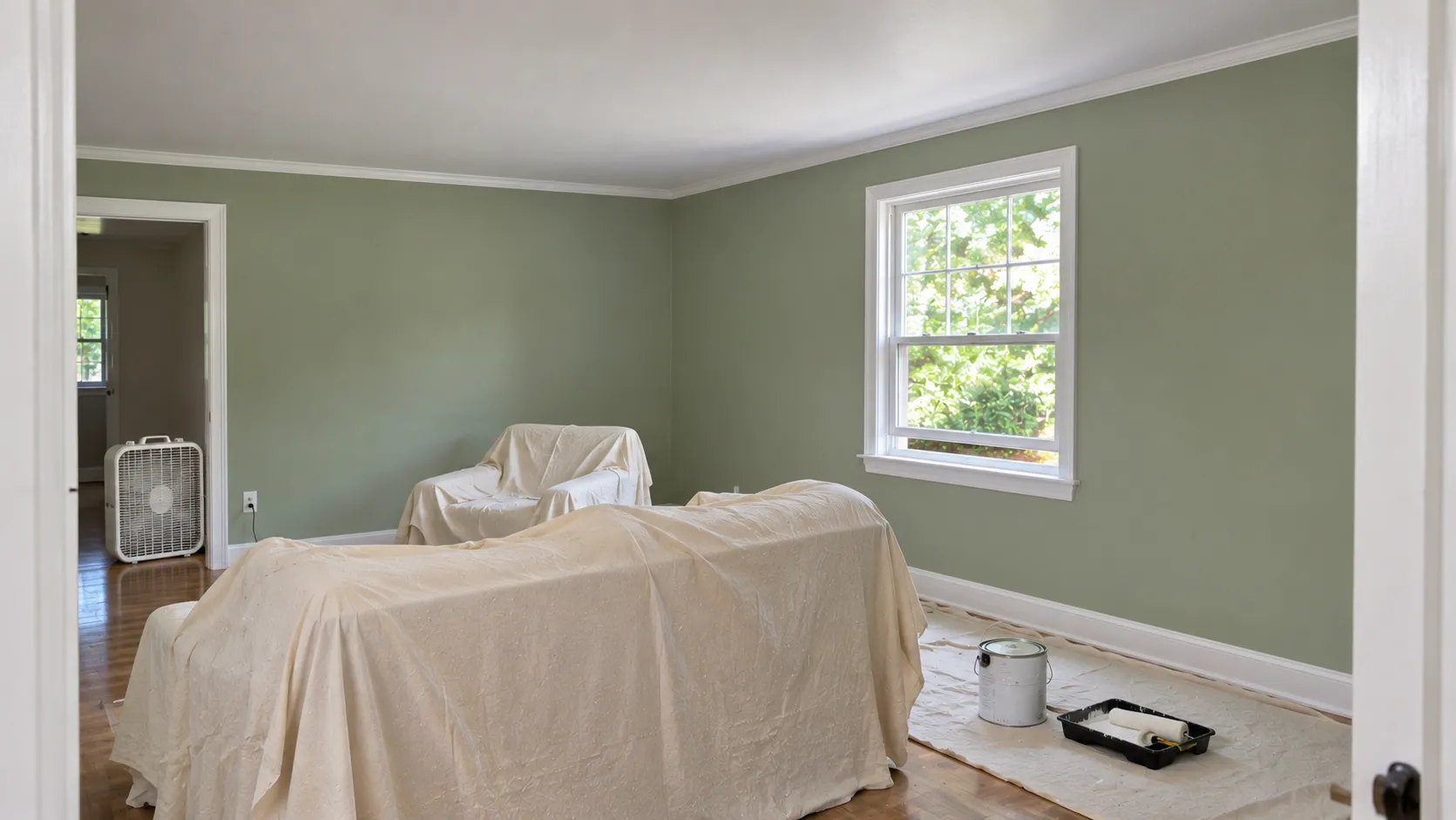
About an hour to the touch, one to four hours before the second coat, and two weeks before the first wash. That holds across every premium and mid-grade interior wall paint we use, in every sheen, at the laboratory conditions the makers test at: 77°F and 50 percent relative humidity.
| Interior wall paint (sheet read 15 Nov 2026) | Dry to touch | Recoat | Washing or full use, per the sheet | Lowest application temperature |
|---|---|---|---|---|
| Benjamin Moore Regal Select Eggshell N549 | 1 hour | 1–2 hours | "Painted surfaces can be washed after two weeks." | 50°F surface |
| Benjamin Moore Regal Select Semi-Gloss N551 | 1 hour | 3 hours | "Painted surfaces can be washed after two weeks." | 50°F |
| Benjamin Moore Aura Eggshell N524 | 1 hour | 1 hour | Washed after two weeks | 50°F surface |
| Benjamin Moore Ben Eggshell N626 | 1 hour | 2 hours | Washed after two weeks | 50°F surface |
| Benjamin Moore Ultra Spec 500 Eggshell N538 | 2 hours | 2–3 hours | Washed after two weeks | 50°F |
| Sherwin-Williams Duration Home Matte, Satin and Semi-Gloss (A96, A97, A98) | 1 hour | 4 hours | "Wait at least 14 days before washing" | Above 50°F |
| Sherwin-Williams Emerald Interior Satin K37 | 1 hour | 4 hours | No figure given | Above 50°F |
| Sherwin-Williams Cashmere Low Lustre | 1 hour | 4 hours | No figure given | Above 50°F |
Three things in that table matter more than the numbers themselves.
First, sheen changes the dry time a little at most. Duration Home prints the same 1 hour and 4 hours for its matte, satin and semi-gloss versions. Regal Select is the exception in this table: its semi-gloss asks for 3 hours before the second coat, against 1 to 2 for the eggshell, though all of them are dry to the touch in an hour. The type of paint matters far more than its sheen: a semi-gloss wall paint recoats in hours, a semi-gloss or satin trim enamel such as Advance in 16. Where sheen does matter is in what the finished wall tolerates while it cures, which we cover below.
Second, the recoat figures differ more than the dry figures. Aura can take its second coat after an hour. Duration Home asks for four. That is not a quality ranking; it is how each formula is built, and it is why we follow the sheet for the product actually on the wall rather than a rule of thumb.
Third, every Benjamin Moore sheet in the table carries the same caveat: "High humidity and cool temperatures will result in longer dry, recoat and service times." Sherwin-Williams says the same thing as "Drying and recoat times are temperature, humidity, and film thickness dependent." A basement in April or a closed-up bedroom in February is not 77°F and 50 percent. Neither is a Shore house in August.
In practice that means a room of walls takes two coats in one working day, and you can use the room the same day. We pull the painter's tape as soon as the last coat is dry to the touch, before the film has hardened over the tape edge. What you should not do is lean furniture on the walls, hang a heavy mirror, or scrub a mark off for about two weeks. Our interior painting service is scheduled on exactly that basis, and our guide to how many coats of paint you need and when to prime covers the number of coats.
How Long Does Ceiling Paint Take to Dry?
About the same as wall paint: an hour to the touch and one to four hours before the second coat.
| Ceiling paint (sheet read 15 Nov 2026) | Dry to touch | Recoat | Washing | Lowest application temperature |
|---|---|---|---|---|
| Benjamin Moore Waterborne Ceiling Paint Ultra Flat 508 | 1 hour | 1–2 hours | "Painted surfaces can be washed after two weeks." | 50°F surface |
| Sherwin-Williams Eminence Ceiling Paint Flat | 1 hour | 4 hours | No figure given | Above 50°F |
Ceiling paint is usually a dead-flat finish rather than the eggshell or matte used on walls. A ceiling is not slower to dry than a wall, but it is harder to judge. You are looking up at a flat finish in poor light, and a damp patch and a dry patch look almost the same from below. The usual mistake is rolling the second coat over a section that is dry at the edges and still soft in the middle, which pulls the first coat and leaves a rough, uneven patch that only shows when the sun comes across it.
Ceilings also hold heat and moisture. Warm, damp air rises, so a bathroom or kitchen ceiling sits in the most humid air in the room, and in our experience it is always the last surface in the house to be ready for a second coat. Our guide to painting a ceiling covers the rolling technique; for this article, the rule is to go by the sheet and then add time for steam, cold and airflow that does not reach the top of the room.
How Long Do Trim and Door Enamels Take to Dry and Harden?
Longer than walls, and this is where most real-world damage happens. Trim and door paints are built to level out flat and dry hard, and both of those properties take time.
| Trim and door enamel (sheet read 15 Nov 2026) | Tack free | Dry to touch | Recoat | What the sheet says about hardness |
|---|---|---|---|---|
| Benjamin Moore Advance Satin 792 (waterborne alkyd) | Not given | 4–6 hours | 16 hours | No heavy abrasion or shelves back "for at least 5 – 7 days"; "up to 30 days to reach optimum hardness and final sheen" |
| Sherwin-Williams ProClassic Waterbased Acrylic-Alkyd Semi-Gloss | 20–40 minutes | 1–2 hours | 4 hours | Gloss "24hours 41-51 units," "30days 34-44 units" |
| Sherwin-Williams Emerald Urethane Trim Enamel Semi-Gloss | Not given | 1 hour | 4 hours | No figure given |
The Advance line is the one to read twice. Sixteen hours to recoat means the second coat on trim is always tomorrow's work, however many painters are in the house. And "up to 30 days to reach optimum hardness and final sheen" means a door that looks finished on Friday is still curing for weeks. Benjamin Moore's alkyd guide, which describes Advance as having "a six-hour dry time," also says its waterborne alkyds "fully cure in approximately five days." The two figures come from the same company and describe different things: a usable hardness in about five days, and the last of the hardness and sheen over as long as a month. We plan around the longer one, and we put trim on in two thin coats with the full recoat time between them.
ProClassic, tack-free in 20 to 40 minutes and recoatable in 4 hours, tells the same story in a different way. Its sheet prints the gloss twice: 41 to 51 units at 24 hours, 34 to 44 at 30 days. The finish is still changing a month after it went on. That is worth knowing if you are touching up one door to match another.
Doors, windows and blocking
Blocking is Benjamin Moore's term for what happens when two fresh coats are pressed together: "Paint blocking occurs when two freshly painted, uncured surfaces bond when pressed against each other." It is the reason a freshly painted door feels sticky against its stop and then sticks to it, and why a painted shelf leaves a ring under the first book put on it. The company lists the causes as "not allowing the paint to sufficiently dry or cure before closing doors or windows," lower-grade semi-gloss and gloss latex paints, warm damp weather, and old coatings built up so thick the moving surface has no clearance. Its fix is to "follow the manufacturer's instructions regarding dry time."
Our practice: we paint doors and their stops early in the day, leave them open with a wedge so the edge does not touch the stop, and tell the homeowner not to close the door firmly for the first day. Bathroom and bedroom doors are the ones people need back first, so we schedule them to finish early. Baseboards get the same patience for a different reason: the vacuum cleaner and the dog both find them before the enamel is hard. Our guide to painting trim, moulding and interior doors covers the products and the order of work.
How Long Does Oil-Based Paint Take to Dry?
About six to eight hours to the touch, eight to twenty-four hours to recoat, and around five days to cure. Those figures come from the oil and alkyd products still on the market.
| Oil or alkyd product (sheet read 15 Nov 2026) | Dry to touch | Recoat | Cure or other note |
|---|---|---|---|
| Benjamin Moore Fresh Start Multi-Purpose Oil Based Primer 024 | 6 hours | 8 hours | "Dries By Evaporation, Oxidation"; washable after two weeks |
| Benjamin Moore Fresh Start Deck & Siding Primer 094 (alkyd) | 6 hours | 8 hours | Not below 50°F |
| Sherwin-Williams Exterior Oil-Based Wood Primer, above 45°F | 2–4 hours | 24 hours | Topcoat within 14 days outdoors |
| Sherwin-Williams SuperDeck Oil-Based Semi-Transparent Stain | 8 hours | Not given | "To Use: 24-48 hours" |
| Conventional alkyd paints (Benjamin Moore guide) | — | — | "Cure by oxidation in approximately five days" |
Oil-based paint is slower to reach the point where you can recoat, and it is much slower to lose its odor and fumes. It also yellows. Benjamin Moore's Advance sheet notes that even its waterborne alkyd "yellows less than conventional alkyds," and that the effect "is accelerated in dark or poorly ventilated areas and is more visible in lighter colors." On a white closet door or a north-facing bathroom, that is the whole case against oil for interior finish coats.
In New Jersey there is a regulatory reason too. The state's architectural coatings rule, N.J.A.C. 7:27-23, sets lower limits for products manufactured on or after 18 August 2026: 100 grams per litre for primers, sealers and undercoaters and for nonflat coatings, and 50 for flat. The Fresh Start 094 sheet lists its VOC as "< 350 g/L." The new column applies by manufacture date, so older stock on a shelf is not affected, but high-solvent primers now face a much lower limit, and the waterborne primers that replace them dry on a latex clock.
We still use oil-based primer, in small amounts, where a data sheet calls for it: knots that bleed through, water stains, and as a stain-blocking spot primer. For the full comparison, see our guide to oil vs latex paint and primer.
How Long Does Primer Need to Dry Before You Paint Over It?
It depends entirely on the primer. A waterborne all-purpose primer can take paint in an hour. An oil primer wants eight hours or a day. A primer on bare exterior wood needs its topcoat within two weeks.
| Primer (sheet read 15 Nov 2026) | Dry to touch | Recoat or topcoat | Note on the sheet |
|---|---|---|---|
| Benjamin Moore Fresh Start High-Hiding All Purpose Primer 046 | 30 minutes | 1 hour | On hard, non-porous surfaces, "maximum adhesion and hardness may take 3-4 days"; min 40°F |
| Benjamin Moore Fresh Start Multi-Purpose Oil Based Primer 024 | 6 hours | 8 hours | Same 3–4 day note for glazed ceramics and metal; not below 50°F |
| Benjamin Moore Fresh Start Deck & Siding Primer 094 | 6 hours | 8 hours | Min 50°F |
| Zinsser B-I-N Shellac-Base Primer | 20 minutes | 45 minutes | Film "develops full adhesion and hardness after it cures in 1 to 3 days"; relative humidity below 70% |
| Sherwin-Williams Exterior Oil-Based Wood Primer | 2–4 hours above 45°F | 24 hours above 45°F | "For exterior exposure, this primer must be topcoated within 14 days" |
Shellac primer is the quickest coat on any job, which is why it is the usual sealer over a ceiling water stain. Its humidity limit is the catch: B-I-N wants relative humidity below 70 percent, and many New Jersey summer days are above it.
Two notes on that table save a lot of grief.
The first is the three-to-four-day line on both Fresh Start sheets. A primer can be ready for its topcoat in an hour and still not be fully bonded to a slick surface for days. Over sound wall paint that does not matter. Over a glossy surface such as laminate, old oil enamel or metal, it is the reason a scratch test the next morning can make a good job look like a failure.
The second is the 14-day limit on the exterior oil primer. Primer is not built to face the weather on its own. In our experience, primed bare wood siding or trim left for a month starts to chalk, and the topcoat then sits on a weak layer.
In our experience the most common primer mistake inside a house is a spot prime on patched drywall that is painted over too soon. The patch looks fine wet and then shows as a dull spot in the finished wall, because the patching compound underneath was still drying. Joint compound has its own dry time, and it has to be finished before the primer goes on.
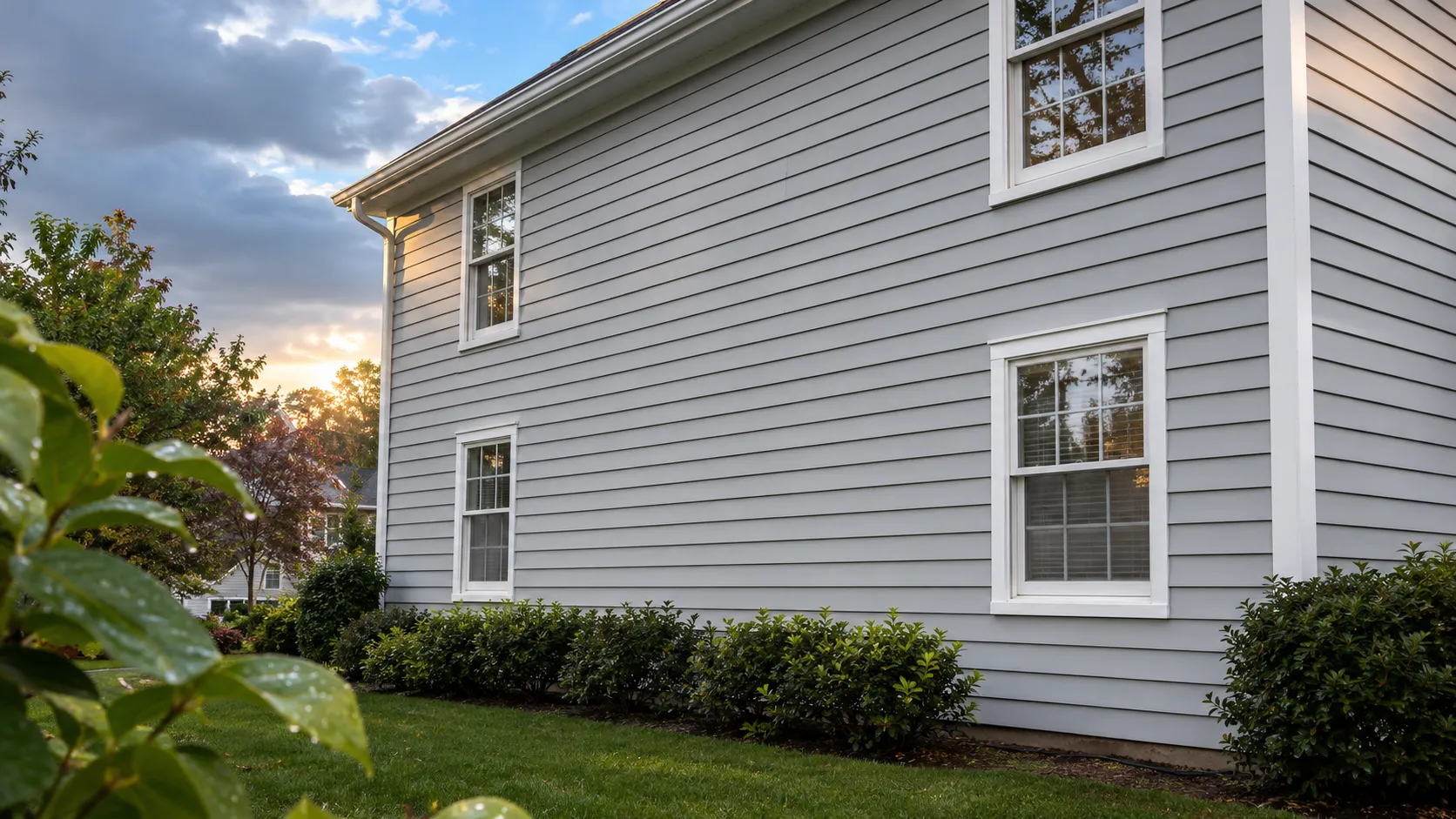
How Long Does Exterior Paint Take to Dry Outside?
On a mild, dry day, exterior latex is dry to the touch in an hour or two and ready for a second coat in about four hours. In cool weather the recoat time stretches to a day or two.
| Exterior paint (sheet read 15 Nov 2026) | Dry to touch | Recoat | Lowest temperature | Rain or weather note |
|---|---|---|---|---|
| Benjamin Moore Aura Exterior Low Lustre N634 (and Flat N629) | 1 hour | 4 hours | 35°F | Washable after two weeks |
| Benjamin Moore Regal Select Exterior High Build Low Lustre N401 | 1 hour | 4 hours | 35°F (limitations) | Washable after two weeks |
| Sherwin-Williams Duration Exterior Satin, 45°F and above | 1 hour | 4 hours | 35°F | "Avoid using if rain or snow is expected within 2-3 hours" |
| Sherwin-Williams Duration Exterior Satin, 35–45°F | 2 hours | 24–48 hours | — | Same |
| Sherwin-Williams Emerald Exterior Satin | Same two bands as Duration | Same | 35°F | Same |
| Sherwin-Williams SuperPaint Exterior Satin | 2 hours in both bands | 4 hours above 45°F; 24–48 hours at 35–45°F | 35°F | Same |
The Sherwin-Williams sheets are the only ones that print a cold-weather column, and it is the most useful line in this article for anyone painting outside in October. At 45°F and above, the recoat is 4 hours. Between 35 and 45°F, it is 24 to 48 hours. A ten-degree drop multiplies the wait by six or more. That is why a fall exterior job in New Jersey moves one side of the house at a time.
Those same sheets carry four more conditions that matter as much as the table:
- Air and surface above 35°F, and 5 degrees above the dew point. "Check to be sure the air, surface, and material temperature are above 35°F (1.7°C) and at least 5° above the dew point."
- No freezing for two days. "Do not apply at air or surface temperatures below 35°F (1.7°C) or when air or surface temperatures may drop below 35°F (1.7°C) within 48 hours."
- No direct sun. "Do not paint in direct sun."
- Hot days are fast days. "During application at temperatures above 80°F, Duration sets up quickly."
Low-temperature acrylic paints are a real advance, but the Forest Products Laboratory is careful about them. Its bulletin Why House Paint Fails says oil paints should go on at 40°F or above and latex at 50°F or above, that "conditions should remain above these temperatures for 24 hours after painting," and that "we do not know if paints formulated to be applied in even cooler temperatures perform as well as standard paints." We use the 35°F products in the shoulder seasons, and we treat 35°F as a floor, not a target. Our guide to how cold is too cold to paint outside covers the cold-weather limits in full.
Washed siding has to dry before it is painted. The FPL bulletin says that "if only the surface of the wood is wet, then only one sunny day is usually needed for drying prior to painting," and after power washing we allow at least that. On siding, the side of the house also matters. The FPL bulletin's advice is to "follow the sun around the house": the east side late in the morning, the south side in the middle of the afternoon, and the west side late in the afternoon, so that no wall is painted while the sun is beating on it. That is how our exterior painting crews sequence a house.
How Long Does Paint Need to Dry Before It Rains?
On the Sherwin-Williams exterior sheets, the answer is at least 2 to 3 hours: "Avoid using if rain or snow is expected within 2-3 hours." The Forest Products Laboratory adds that "at least 2 hours are needed for the fresh paint to dry before weather conditions cool to the point where dew forms." So the real question on a New Jersey afternoon is not only when the rain arrives, but when the dew does.
What a shower does to fresh paint depends on how far it has dried:
- Still wet (first 30 minutes or so): heavy rain can wash off paint, run it down the siding and spot the surface below.
- Dry to the touch but not coalesced (the first few hours): the film survives, but water sitting on it can leave marks. The FPL's Wood Handbook says that "water absorption into partially coalesced latexes can cause wrinkling, fading, loss of gloss, and streaking," and warns against painting late in the afternoon when heavy dew is expected.
- A day or more old: in our experience a normal shower does no harm to a good acrylic. The film is still curing, but it is no longer open to water.
The most common rain or dew mark on a new paint job is not a wash-off at all. It is surfactant leaching: brown or tan drips and streaks that appear on fresh latex the morning after a damp spell. Benjamin Moore describes it as "the appearance of brown residue or streaks on interior and exterior painted surfaces," caused by "paint drying in cool, humid conditions" and "condensed moisture," and says that it happens "when newly applied latex paint is exposed to high moisture or humidity while it's drying and/or curing." It is cosmetic. Benjamin Moore's advice is to "rinse the surface with water or wipe with a damp cloth as soon as you notice stains," and outside it usually weathers off. It is also common in bathrooms, for the same reason.
How we decide on a doubtful day:
- We check the hourly forecast for the rain arrival time and the dew point, not just the daily chance of rain.
- We stop painting a side of the house early enough to leave at least the sheet's 2 to 3 hours before rain, and longer when the air is humid and cool.
- We stop earlier still in spring and fall, when the temperature can fall to the dew point by late afternoon.
- If a shower catches fresh paint, we let it dry, look at it the next day, and repaint any washed or spotted area. Rinsing surfactant marks is usually all that is needed.
New Jersey makes this a real issue. The State Climatologist at Rutgers reports that "measurable precipitation falls on approximately 120 days" a year, and that many areas average "between 43 and 47 inches." Rain on one day in three is not a reason to stop painting outside. It is a reason to read the forecast hour by hour and never to start a south wall at three in the afternoon in October.
How Do Temperature and Humidity Change Drying Time?
They change every number on the sheet. All of the times in this article are measured at 77°F and 50 percent relative humidity, which is a pleasant indoor day. Colder or damper than that, and every stage is slower. Benjamin Moore's sheets say so plainly: "high humidity and cool temperatures will result in longer dry, recoat and service times." The Sherwin-Williams cold-weather column shows how much: an exterior recoat goes from 4 hours above 45°F to 24 to 48 hours between 35 and 45°F.
Temperature slows the chemistry. Cold latex paint loses its water slowly, and coalescence, the fusing of the resin into one film, slows down; below the label minimum it may never form a proper film at all. That is why a low temperature formula rated to 35°F is a real advance outside, and why it still needs the 48 hours above 35°F its sheet asks for. The FPL's Wood Handbook says that "most latex paints do not coalesce properly if the temperature drops below 10 °C (50 °F)," which is why the interior sheets set 50°F as their floor.
Humidity slows evaporation. Water-based paint dries by giving its water to the air, and air that is already full of water takes it slowly. The National Weather Service defines the dew point as "the temperature the air needs to be cooled to (at constant pressure) in order to achieve a relative humidity (RH) of 100%," and advises that "if you want a real judge of just how 'dry' or 'humid' it will feel outside, look at the dew point instead of the RH." When a surface cools to the dew point, water condenses on it, and on fresh paint that is the start of the streaking described above.
New Jersey's climate is humid for much of the painting season. Rutgers notes that "high humidity and moderate temperatures prevail when winds flow from the south or east," and that "sea breezes play a major role in the coastal climate." In our experience, a Shore house in July can take twice as long to reach recoat as the sheet says, while a crisp, breezy September day often beats the sheet. Inside, the slowest rooms are always the damp ones: basements, bathrooms without a working fan, and closed-up houses in winter with the heat turned down.
What speeds drying, and what does not, has its own section below. The short version is that ventilation and a moderate, steady temperature matter more than heat. Hot sun on an exterior wall is a hazard, not a help: Sherwin-Williams says "do not paint in direct sun," and Duration "sets up quickly" above 80°F, which leaves lap marks and can trap solvent under a skin that forms too fast. A tacky wall weeks later is often the result of a cold, damp room, not bad paint.
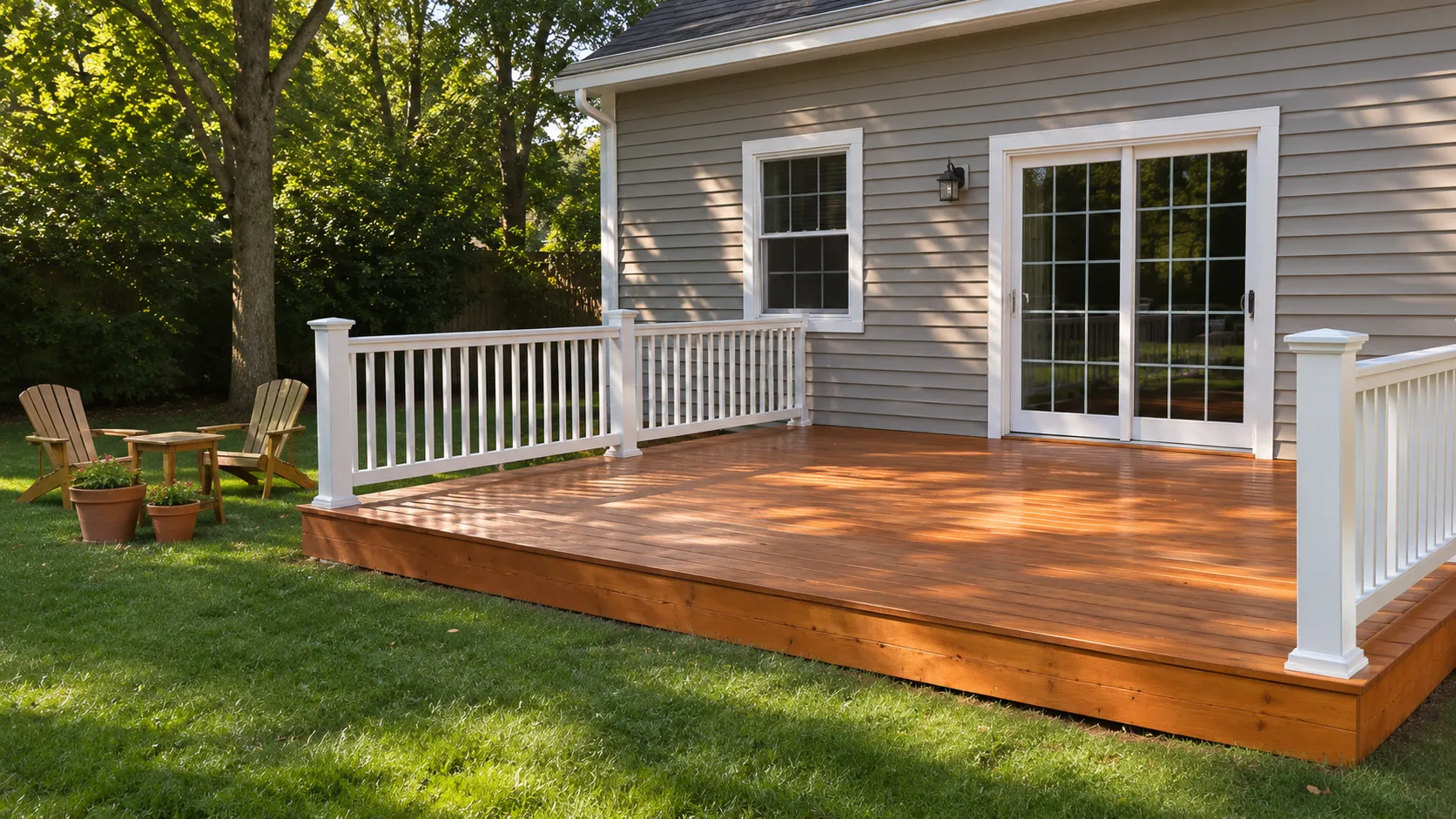
How Long Does Stain Take to Dry on a Deck or Fence?
Waterborne stain is dry to the touch in 30 minutes to an hour, but a deck needs 24 to 48 hours before it takes foot traffic and furniture. Oil-based stain is slower: 8 hours to the touch and 24 to 48 hours before use.
| Stain (sheet read 15 Nov 2026) | Dry to touch | Recoat or next step | Back in use | Other limits |
|---|---|---|---|---|
| Benjamin Moore Arborcoat Translucent N623 | ½ hour | Dry in 1–3 hours | "Allow 24 hours dry time before subjecting decks to normal foot traffic" | Min 40°F; wood under 15% moisture |
| Benjamin Moore Arborcoat Semi-Transparent N638 | ½ hour | Recoat 4 hours | 24 hours before foot traffic | Min 40°F; wood under 15% moisture |
| Benjamin Moore Arborcoat Semi-Solid 639 | ½ hour | Topcoat 4 hours | "Allow 48 hours dry time before subjecting decks to normal foot traffic" | Min 40°F |
| Benjamin Moore Arborcoat Solid Color 640 | 1 hour | Recoat 3–4 hours | "48 hours before putting furniture back on decks"; "dry 30 days before washing" | Min 40°F; wood under 15% moisture |
| Sherwin-Williams SuperDeck Waterborne Semi-Transparent | 1 hour | Recoat after 4 hours, within 7 days | Not given | Must stay above 50°F for 24 hours |
| Sherwin-Williams SuperDeck Oil-Based Semi-Transparent | 8 hours | Not given | "To Use: 24-48 hours" | 50–90°F; no rain within 24 hours |
The pattern is worth noticing: the more opaque the stain, the longer the wait. Arborcoat's translucent and semi-transparent stains allow foot traffic after 24 hours; its semi-solid and solid stain ask for 48. Solid stain behaves much more like paint, forming a film on top of the wood rather than soaking in. The SuperDeck waterborne sheet also sets a maximum, which is unusual: the second coat "MUST be applied within 7 days of the first coat."
Stain goes onto bare wood or onto old, weathered stain, and the wood has a dry time of its own before anything goes on it. Every Arborcoat sheet sets the wood's moisture content below 15 percent, and the Forest Products Laboratory's deck bulletin says that if a deck "is to be finished after cleaning, allow at least 2 warm, windy days to dry." So a deck washed on Monday is usually stained on Wednesday at the earliest, and a forecast of rain within a day of an oil stain moves the job, because in our experience a shower can spot or wash off stain that has not soaked in. A heavy coat does not help either: the Arborcoat Semi-Solid sheet says "do not apply excess amounts as this will prevent optimum cure."
Interior wood stain on furniture, floors or trim is a different product on a different clock. Minwax lists 2 to 3 hours for its oil-based Wood Finish before recoating, and says not to apply the clear topcoat "until the stain is no longer tacky and has been allowed to dry at least as long as the label recommends." It adds that "temperatures below the mid-70° F range can cause longer dry times," and that "the #1 problem caused by humidity is longer drying times for stains and clear protective finishes."
On a fence, there is no foot traffic, so the touch-dry time and the rain rule are the ones that matter. On a deck, plan on keeping the furniture, grill and planters off for two days after the last coat, and keep the dog off for the first day. Our guides to deck stain vs sealer and whether to paint or stain a wood fence cover the choice of product, and our deck and fence staining service covers how we schedule it.
How Long Before You Can Walk or Drive on a Painted or Epoxy Floor?
A day for light foot traffic on porch and floor paint, a week for furniture, and about three days before a car goes onto a garage coating.
| Floor coating (sheet read 15 Nov 2026) | Recoat | Light foot traffic | Full use | Note |
|---|---|---|---|---|
| Sherwin-Williams Porch & Floor Enamel (acrylic) | 4 hours | 24 hours | "Tables, Chairs and Heavy Foot Traffic: 7 days" | "Not suitable for garage floors" |
| Benjamin Moore Latex Floor & Patio Enamel N122 | 4 hours | After drying through to the next day | Not given | "Many tires contain compounds which may attack latex paints" |
| Westcoat EC-102 Polyaspartic (at 72°F, 50% RH) | When dry to the touch, about 3–5 hours, within 24 hours | 8 hours | Normal traffic 24 hours; vehicles 72 hours | 50–85°F only |
| Westcoat Liquid Granite chip system (epoxy base coat) | Within 24 hours | No traffic for 48 hours | Vehicles after 72 hours minimum | No heavy abrasion or chemicals for 5 days |
The difference between a painted floor and a coated one is mostly about tires. Sherwin-Williams' porch enamel sheet says it "is not suitable for use on garage floors or surfaces subject to automobile or truck traffic." Benjamin Moore's floor enamel sheet warns that "many tires contain compounds which may attack latex paints, resulting in loss of adhesion and film pickup." Hot tires soften latex, and the first time a warm car sits on a painted garage floor, the paint comes up with it.
That is why garage floors get a two-part epoxy or polyaspartic system instead. Even then, the 72-hour wait before driving on it is a real limit, not a precaution. Westcoat's polyaspartic sheet says that "permitting tire traffic prior to the 72 hour cure, may lead to plasticizer migration or tire staining." Those coatings also have a recoat window rather than just a minimum: Westcoat says to recoat "within 24 hours of application to insure adhesion," and to sand and solvent-wipe if that window is missed.
In our experience the hardest part of a garage coating is not the 72 hours but the slab temperature. Westcoat's sheet says "do not apply when ambient or substrate temperatures are below 50°F or above 85°F," and an unheated New Jersey garage is below that for much of the year. Our epoxy flooring service and our guide to epoxy garage floor coating types cover the systems. A painted porch floor is a two-coat job with a day between the second coat and the first footstep.
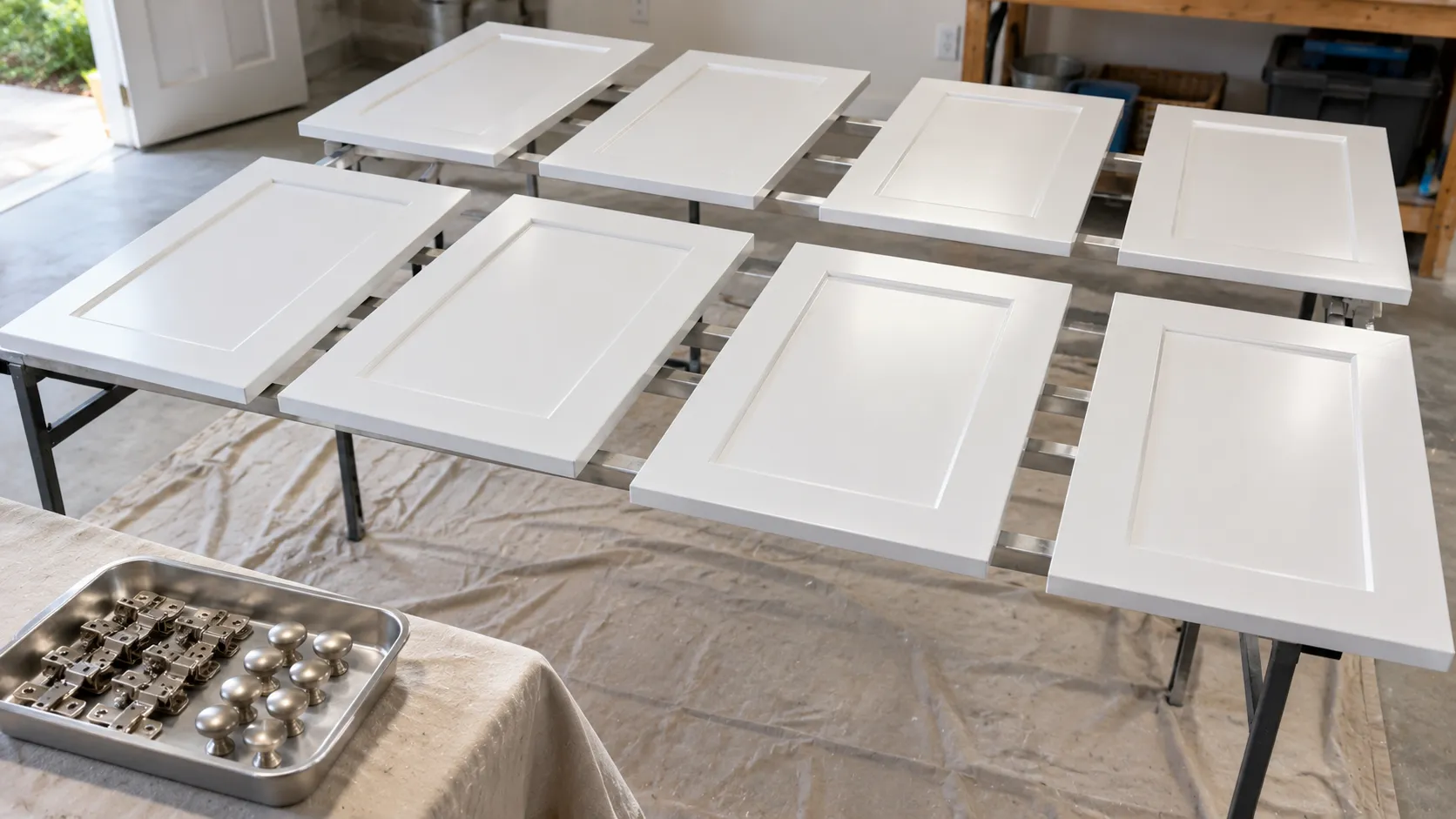
How Long Before Painted Cabinet Doors Can Go Back Up?
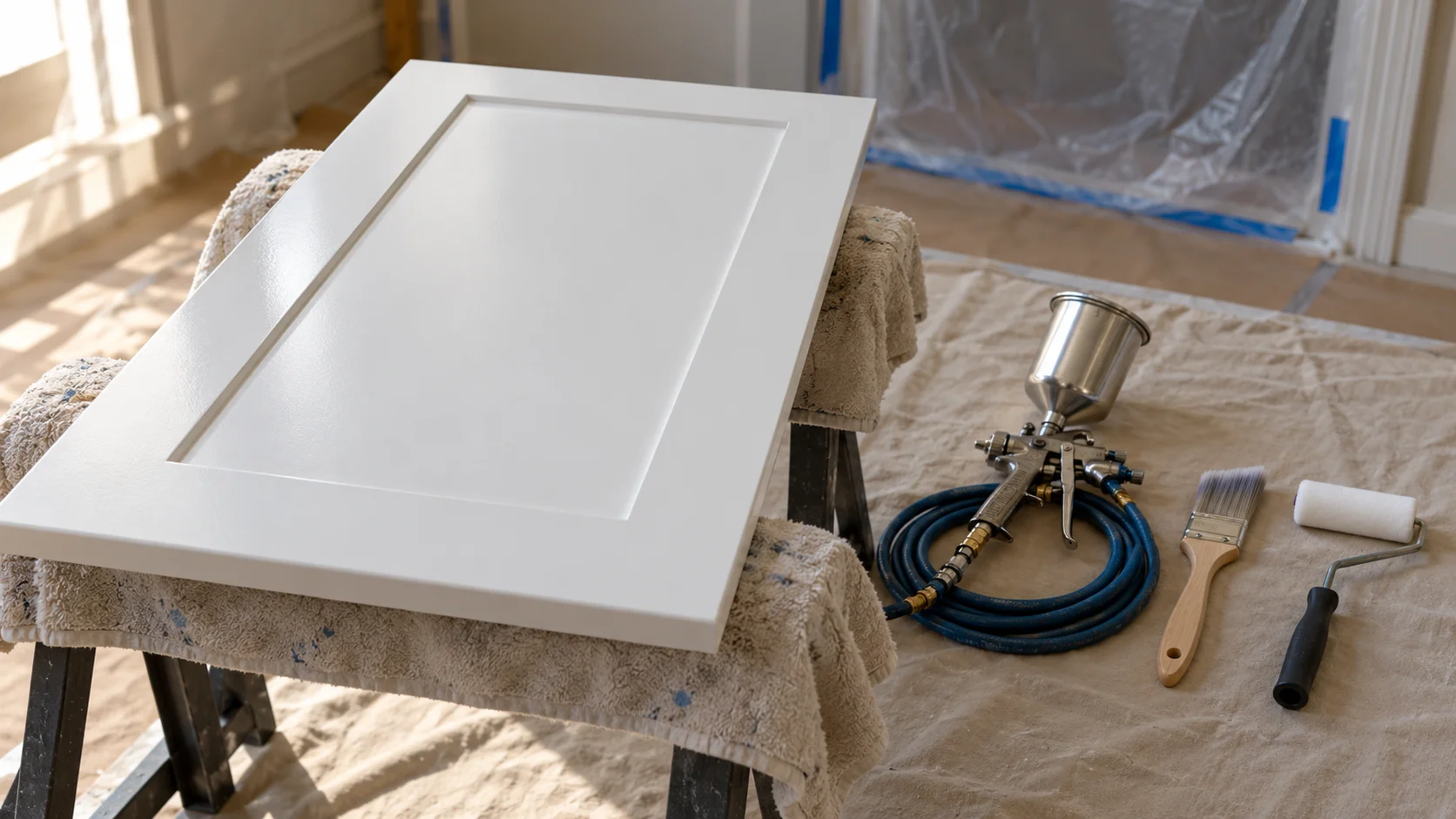
At least a day, and the doors stay delicate for about a week. Sherwin-Williams' cabinet refinishing guide puts it as "allow at least 24 hours of dry time—the longer the better," because you "want to avoid any dents or peeling that may occur with reattaching your doors, drawers and hardware." Benjamin Moore's Advance sheet is more specific about use: do not "return shelves/tabletops to service for at least 5 – 7 days," and full hardness may take up to 30 days.
Cabinets are the hardest test of cure time in a house. The doors are handled every day, the edges rub, and the paint is a hard enamel that is soft for longer than it looks. The usual damage comes from three places: hinges and knobs screwed down on paint that is not yet hard, which leaves a ring or a dent; doors stacked or wrapped before the enamel has cured, which causes blocking; and dishes and cans put back on painted shelves too soon.
Our practice: we finish cabinet doors flat on racks in a ventilated work area, let the last coat cure before we rehang them, and reinstall the hardware last, with care at the screws. Any dings found at that stage get a spot prime and a touch-up before the doors go back. Inside the boxes, we ask clients to keep plates off freshly painted shelves for the first week and to wipe up with a damp sponge and mild soap, not a scrub pad, for the first couple of weeks. The finish keeps hardening for a month. Our guide to spray vs brush cabinet painting covers the method, and our cabinet painting service covers the work itself.
When Can You Put Furniture Back, Hang Pictures and Close Doors?
Sooner than you would think for most things, later than you would like for a few. This is our own scheduling, built on the data-sheet figures and on more than 20 years of seeing what gets damaged first.
| What you want to do | Walls (latex) | Trim and doors (enamel) | Where the timing comes from |
|---|---|---|---|
| Walk through and use the room | Same day | Same day | Dry to the touch in about an hour (wall sheets) |
| Push furniture back into the room, away from the walls | Same day | Same day | Our practice |
| Push furniture against a wall or a baseboard | After a few days | After about a week | Advance's "5 – 7 days" before heavy abrasion |
| Remove painter's tape | As soon as the last coat is dry to the touch | Same | Our practice: pulled late, tape can lift a soft film |
| Close and latch a painted door | — | Gently after the first day; firmly after a few days | Benjamin Moore's blocking guidance; our practice |
| Hang pictures on nails or hooks | The next day | — | Our practice |
| Use adhesive strips or hooks | After 7 days | After 7 days | 3M Command strip sheet: "Wait 7 days after painting before use" |
| Put rugs back on a painted porch floor, or tables and chairs | — | — | Porch & Floor Enamel: "7 days" |
| Wash or scrub | After two weeks | After two weeks, gently | Benjamin Moore "two weeks"; Duration Home "14 days" |
| Treat it as fully cured | About three to four weeks | Up to about 30 days | Benjamin Moore alkyd guide and Advance sheet |
Cabinet doors follow the trim column: we rehang them and refit the hardware only once the last coat has cured enough to handle. Two of those lines cause most of the calls we get.
The first is adhesive hooks and strips. They bond to the surface of the paint, and if the paint underneath is not cured, the strip takes the paint with it when it comes off. 3M's own instruction for its Command picture-hanging strips is "Wait 7 days after painting before use," and in our experience a little longer is better on a new wall.
The second is furniture against walls. A sofa back or a headboard pressed against two-day-old paint can leave a shiny or rough patch where it rubs, even if it never sticks. Leave a gap of an inch or two for the first week. If the room is a nursery, paint it weeks ahead of when it is needed. The same is true of doors: the edge of a freshly painted door that rubs a freshly painted stop is a blocking problem waiting to happen. Living in the house through all of this is normal; our guide to living in your house while it is painted explains how we sequence rooms so you are never without a bedroom or a kitchen.
When Can You Wash Freshly Painted Walls or Siding?
Two weeks for interior walls, longer for stain and exterior siding. Benjamin Moore's interior sheets all say "painted surfaces can be washed after two weeks," and Sherwin-Williams' Duration Home sheet says "to assure maximum washability and durability, wait at least 14 days before washing." Arborcoat Solid Color says "newly stained surfaces should be allowed to dry 30 days before washing."
What you can do before then is spot-clean gently. Duration Home's sheet gives the method: "When removing stains, dirt, and marks, use a soft cloth or sponge with water." A damp cloth on a fingerprint is fine after a few days. A melamine sponge, a scrub brush or a cleaner with ammonia on two-week-old paint is not: it will burnish the finish into a shiny patch, or wear through it.
Washable paint is a cured-paint property. The scrub-resistance figures on the data sheets describe the film once it has finished curing, not the day after it goes on. On an exterior, the same logic applies to power washing. We do not power wash fresh paint or stain, and when a house needs washing before painting, the washing is done first, with drying time before any paint goes on. A garden hose rinse of a surfactant streak, as Benjamin Moore suggests, is a different and gentler thing, and it is fine.
How Can You Make Paint Dry Faster, and What Should You Not Do?
Move air, take moisture out of it, and keep the room at a steady, moderate temperature. Do not blast heat at it, and do not lay it on thick.
What helps:
- Air movement. A box fan placed in a doorway or window to pull air out of the room, not pointed at the wet wall, carries the moisture away. Benjamin Moore's blocking guidance says to "paint in a well-ventilated area to optimize drying and curing time."
- Dry air. In a basement or on a humid summer day, a dehumidifier running in the room does more than a heater would. In our experience it is the single most useful tool for a damp New Jersey basement.
- Steady warmth. Keep the room near the conditions the sheets test at, 77°F, rather than letting it fall to 55°F with the heat set back. Steady and moderate beats hot and short.
- Thin coats. Every sheet gives a spread rate and a film thickness. Benjamin Moore's Regal Select sheet recommends 3.6 to 4.0 mils wet. Two thin coats at the sheet's rate dry far faster, and look better, than one heavy one.
- Open windows on a dry, mild day, and the bathroom fan running for a bathroom. On a muggy one, keep them shut: Sherwin-Williams says to "avoid opening the windows on a humid day," and air conditioning with a fan in the room does better in a New Jersey July than open windows.
What does not help, or makes things worse:
- A space heater blowing on fresh paint. It can skin the surface while the paint underneath stays wet, which is how you get wrinkling and a soft film. It is also a fire risk with any solvent product.
- Hair dryers and heat guns. The same problem at closer range.
- Thinning the paint. Some guides suggest it. Sherwin-Williams' interior sheets say "no reduction needed," and Benjamin Moore allows only a small amount of water on Advance. Thinned paint goes on thinner but does not hide, so it ends up needing another coat.
- Painting in direct sun outside, or on a south wall in the afternoon, as above.
- Recoating early because the surface feels dry. Dry to the touch is not recoat.
None of these make cure faster in any useful way. Air movement and moderate temperature help the paint reach dry and recoat on the sheet's schedule; full cure still takes weeks. The ceiling of a bathroom is the place to start the fan first, because the steam collects there. Sherwin-Williams' advice on fresh bathroom paint is to "allow the paint to dry thoroughly before using the bath or shower" and to "ventilate your space between showers"; a bathroom painted in the morning is best left without a shower until the next day.
Why Is My Paint Still Tacky Days Later?
Usually one of five things, and only one of them is the paint.
- Cold or damp conditions. A room below the sheet's 50°F, or a bathroom with no fan, keeps latex soft long after the sheet's dry time. The fix is time, air and warmth: open windows on a dry day, or a dehumidifier in a damp room.
- Too much paint. A thick coat, usually from an overloaded roller or brush, traps water and solvent under a skin. Sherwin-Williams says dry times are "temperature, humidity, and film thickness dependent," and film thickness is the one you control. It will dry, but slowly, and it may sag.
- Coats too close together. A second coat over a first that had not reached its recoat time keeps both soft. On trim, that is the Advance 16-hour rule broken.
- Latex over glossy oil without preparation. The new paint dries but never really bonds, and stays soft or peels.
- Blocking-prone paint on a shelf or door. Benjamin Moore lists lower-grade semi-gloss and gloss latex paints among the causes of paint that sticks.
A finish that wrinkles as it dries has usually skinned too fast on top of a thick layer, often because of heat from a space heater or the sun. The FPL's Wood Handbook links wrinkling and streaking to water reaching latex before it has coalesced. If a wall is still tacky after a week in a warm, dry room, call whoever painted it.
Is It Safe to Sleep in a Room Once the Paint Is Dry?
Dry and odor-free are not the same thing, and neither is the same as cured. The smell comes from water and the small amount of solvent leaving the film, which goes on for a while after the surface is dry. The data sheets' own safety wording asks for fresh air "during application and drying," and with the low-VOC waterborne paints we use, a bedroom painted in the morning with a window open and a fan drawing air out is usually comfortable by the next day. Oil and alkyd enamels smell stronger and longer.
We have written a separate, detailed guide to that question: when it is safe to sleep in a freshly painted room. It covers what paint fumes are, what the VOC figure on a label means, ventilation in winter, and nurseries, pregnancy, asthma and pets. If you are painting a nursery, read that one rather than this.
What We Do, and Do Not Do, When We Schedule Around Dry Times
- We follow the data sheet for the product on the wall, not a rule of thumb, and add time when the room is cold or damp.
- We schedule trim, doors and cabinets with a day between coats where the product calls for it, and tell you on the estimate.
- We sequence exterior work around the sun, the dew point and the forecast, and stop a wall early rather than leave fresh paint for the dew.
- We tell you, room by room, when you can use it, close the doors, put furniture back and clean it.
- We put the products, the number of coats and the timeline on the written estimate, so you can compare bids line by line.
What we do not do: plaster repair, faux and texture finishes, wallpaper hanging, mould or mildew treatment (we do wash surfaces before painting), window trim and sill painting, re-caulking windows and doors, exterior rot repair, hardwood floor refinishing, pool deck coating, tile and bathtub painting, or historic restoration. We do paint siding, stain decks and fences, paint brick, coat garage floors and paint cabinets.
We are not an EPA Lead-Safe Certified firm and do not scrape or sand paint on homes built before 1978. The EPA's Renovation, Repair and Painting rule requires that "anyone paid to perform work that disturbs painted surfaces in homes, childcare facilities and preschools built before 1978" be certified. If your house was built before 1978 and the job involves sanding or scraping old paint, that work goes to a certified firm: ask for its firm certification number and check it on the EPA's Renovation, Repair and Painting program page. Our guide to lead paint in older NJ homes covers testing.
Get a Painting Schedule That Leaves Time for the Paint to Cure
A good painting schedule is mostly a drying schedule: which rooms come first, when the trim's second coat goes on, which side of the house is painted in the morning, and when you get each room back. We write that out on every estimate. For prices, see our painting cost guide. NJ Painting Co. is a family-owned painting company in Morganville, NJ, painting New Jersey homes for more than 20 years with Benjamin Moore and Sherwin-Williams products, and every estimate is free. Call (732) 239-0932 or request a free estimate, and ask us about the job minimum when you enquire.
Frequently Asked Questions
How long does it take for paint to dry?
Interior latex wall paint is dry to the touch in about an hour and ready for a second coat in one to four hours at 77°F and 50 percent humidity, according to the Benjamin Moore and Sherwin-Williams data sheets. Trim enamel such as Benjamin Moore Advance takes 4 to 6 hours to the touch and 16 to recoat. Oil primer takes about 6 hours to the touch. Cold or humid conditions make all of these longer.
How long does it take paint to cure?
Benjamin Moore says latex acrylic paint takes "about three to four weeks to cure completely," and its wall paint sheets say the surface can be washed after two weeks. Its Advance trim enamel can take "up to 30 days to reach optimum hardness and final sheen." Conventional alkyd paints cure by oxidation in about five days. Until then, treat the surface gently.
How long should paint dry between coats?
Follow the recoat time on the sheet for the product you are using. Most interior wall paints recoat in one to four hours, exterior latex in about four hours above 45°F, and Benjamin Moore Advance trim enamel in 16 hours. On the Sherwin-Williams exterior sheets the recoat stretches to 24 to 48 hours between 35 and 45°F. Dry to the touch is not the same as ready to recoat.
How long does exterior paint need to dry before rain?
Sherwin-Williams' exterior sheets say to avoid painting "if rain or snow is expected within 2-3 hours." The US Forest Products Laboratory says at least 2 hours are needed before conditions cool enough for dew to form. On a cool, humid afternoon, allow more. Rain on paint that is a day old does no harm to a good acrylic; brown streaks from dew are usually surfactant leaching and rinse off.
How long does oil-based paint take to dry?
Benjamin Moore's Fresh Start oil-based primer is dry to the touch in 6 hours and ready to recoat in 8. Sherwin-Williams' exterior oil-based wood primer is 2 to 4 hours to the touch and 24 hours to recoat above 45°F. Benjamin Moore says conventional alkyd paints cure by oxidation in approximately five days. Oil paints also yellow over time, especially in dark rooms.
How long does deck stain take to dry?
Benjamin Moore's Arborcoat waterborne stains are dry to the touch in 30 minutes to an hour. The translucent and semi-transparent versions take foot traffic after 24 hours, the semi-solid and solid stains after 48. Sherwin-Williams' SuperDeck oil-based stain is 8 hours to the touch and 24 to 48 hours before use, and no rain should be expected within 24 hours of applying it.
How long after painting can I put furniture back?
You can move furniture back into the middle of the room the same day. Keep it an inch or two off the walls for about a week, because the paint is still soft enough to mark. Benjamin Moore says not to put shelves or tabletops painted with Advance back into service for 5 to 7 days. Rugs and furniture on a painted porch floor wait 7 days.
How long should I wait to hang pictures or use Command strips?
Nails and hooks for pictures can go in the next day. Adhesive strips need longer, because they bond to the paint film itself. 3M's instruction sheet for its Command picture-hanging strips says to "wait 7 days after painting before use," and in our experience a little longer is better on new paint. Pulled off too soon, a strip can take the paint with it.
Why does freshly painted trim stick to the door?
That is blocking. Benjamin Moore defines it as two freshly painted, uncured surfaces bonding when pressed together. It is caused by closing doors and windows before the paint has dried or cured, by lower-grade semi-gloss and gloss latex, and by warm, damp weather. Leave painted doors open for the first day and close them gently for the first few.
How long before I can drive on an epoxy garage floor?
About 72 hours for the systems we have read. Westcoat's polyaspartic sheet allows light foot traffic in 8 hours, normal traffic in 24 and vehicles in 72 at 72°F and 50 percent humidity, and warns that tire traffic before the 72-hour cure can cause tire staining. Ordinary latex floor paint is not suitable for a garage, because hot tires lift it.
Does paint dry faster in heat or cold?
Paint dries faster in moderate warmth with moving, dry air, and much slower in cold, damp air. The data sheets measure their times at 77°F and 50 percent humidity. Hot sun is not better: Sherwin-Williams says not to paint in direct sun, and its exterior paints set up quickly above 80°F. Below 50°F, most interior latex paints should not be applied at all.
How long does semi-gloss paint take to dry?
A latex semi-gloss is dry to the touch in about an hour. Benjamin Moore's Regal Select Semi-Gloss recoats in 3 hours, a little slower than the eggshell in the same line, while Sherwin-Williams' Duration Home prints the same 4 hours for every sheen. A semi-gloss trim enamel is much slower: Benjamin Moore Advance needs 16 hours before the second coat. Read the sheet for the product, not the sheen.
Can you paint a second coat the next day?
Yes, and with oil paints and waterborne alkyd trim enamels you have to: Benjamin Moore Advance asks for 16 hours between coats, and its oil primer 8. With latex wall paint the second coat can go on the same day, one to four hours after the first. Waiting longer than the minimum does no harm, as long as the surface stays clean between coats, with one exception: Sherwin-Williams' waterborne SuperDeck stain must get its second coat within 7 days.
About the author
Written by the NJ Painting Co. team
NJ Painting Co. is a family-owned painting contractor based in Monmouth County, in business since 2004. We are licensed and fully insured, work with Benjamin Moore and Sherwin-Williams paints, and back our work with a 2-year workmanship warranty. We serve Monmouth, Middlesex, Ocean, Mercer, Somerset and Burlington counties, plus Union, Essex, Hudson, Bergen and Passaic in North Jersey.