- 4.973 Google Reviews
- Licensed & Insured
- Family-Owned & Local · Morganville, NJ
- Satisfaction Guaranteed
“I can't say enough about Matthew, Mustafa, Fico et al. They were considerate, professional, and some of the greatest people I've had the pleasure of meeting. They treated my home like their own. They…”
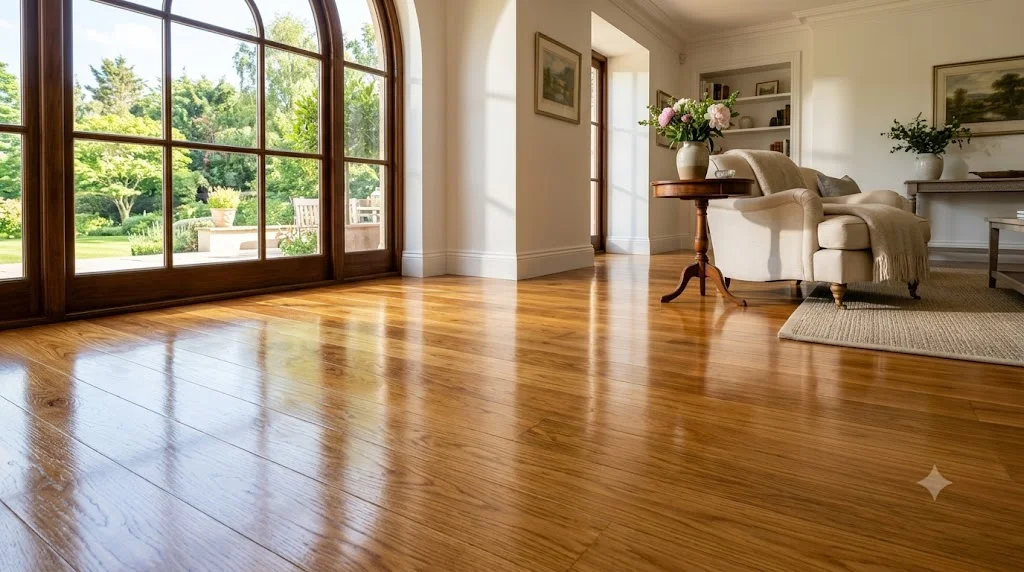
Hardwood Floor Installation & Refinishing in New Jersey
Bring tired, scratched hardwood back to life — or install new — with precision sanding, expert staining, and a durable multi-coat finish, all through a dust-minimized process.
Hardwood floor refinishing in New Jersey homes usually means sanding through years of wear, gray traffic lanes and old finish to bare wood, testing stain samples on your actual boards, and building up a durable topcoat — about 2 to 4 days for a typical room. Our breakdown of hardwood floor refinishing cost in NJ explains what moves the price per square foot, and the cost guide covers refinishing and installation side by side; for garages and basements where wood is not the right answer, see epoxy flooring, and pair a new floor with fresh walls through our interior painting service.
Not every tired floor needs to go back to bare wood. If the finish is dull and scuffed but still sealing the wood, a buff and recoat brings the shine back for a fraction of the price of a full sanding. If the finish has worn through, the wood has gone gray, or you want a new color, the floor needs a full sand. We tell you which one your floor needs at the estimate, and we put it in writing along with the finish, the number of coats and the schedule. We work in homes across Monmouth, Middlesex, Ocean, Mercer, Somerset and Burlington counties.
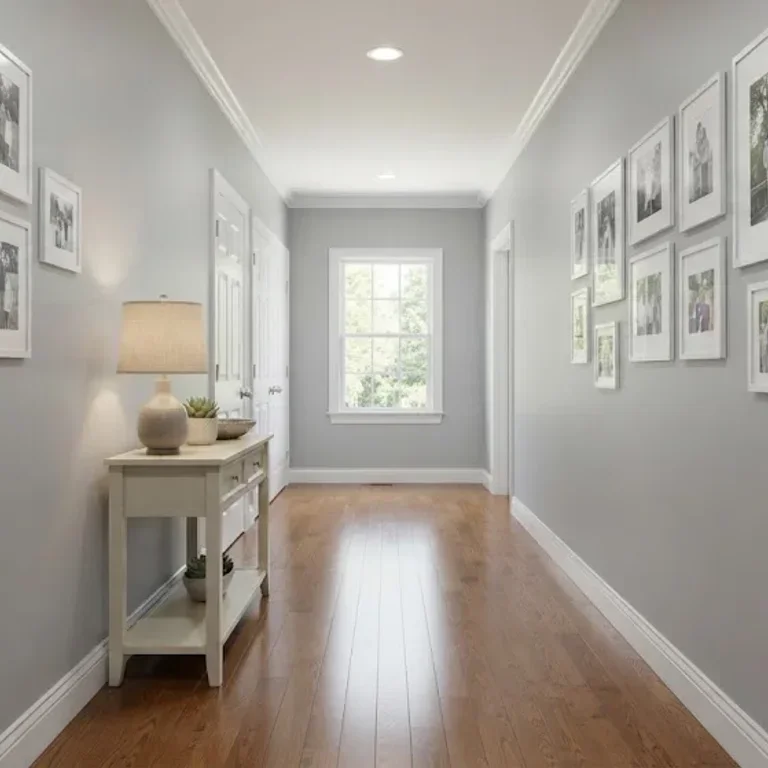
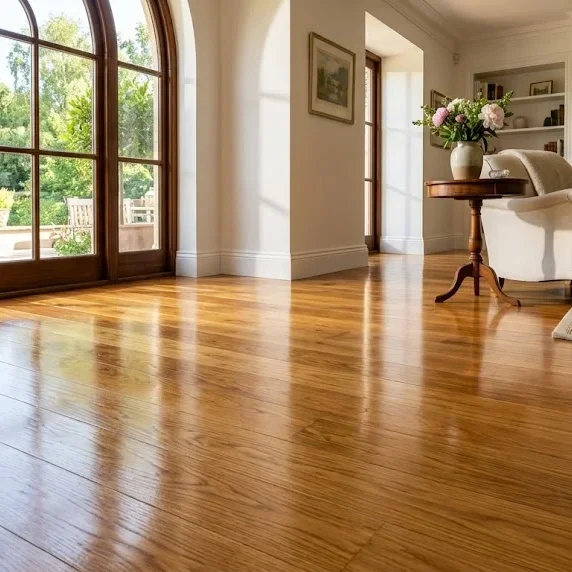
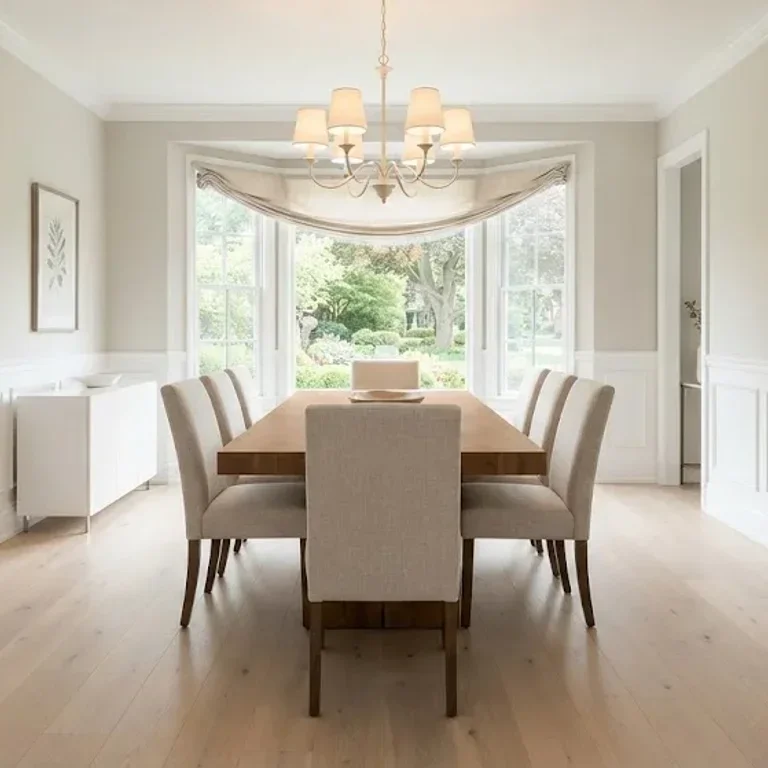
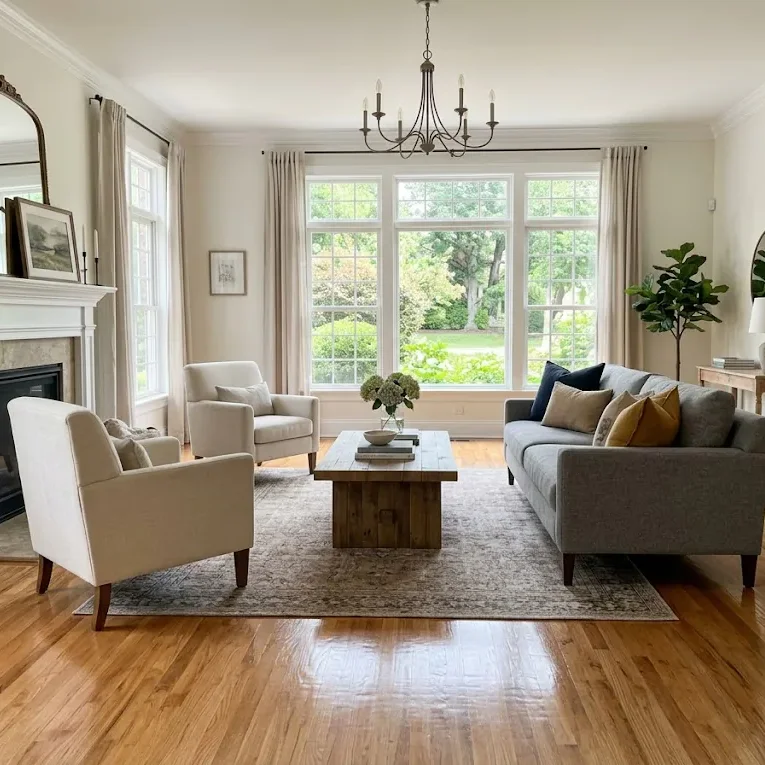
Hardwood Floor Staining, Tested on Your Own Boards
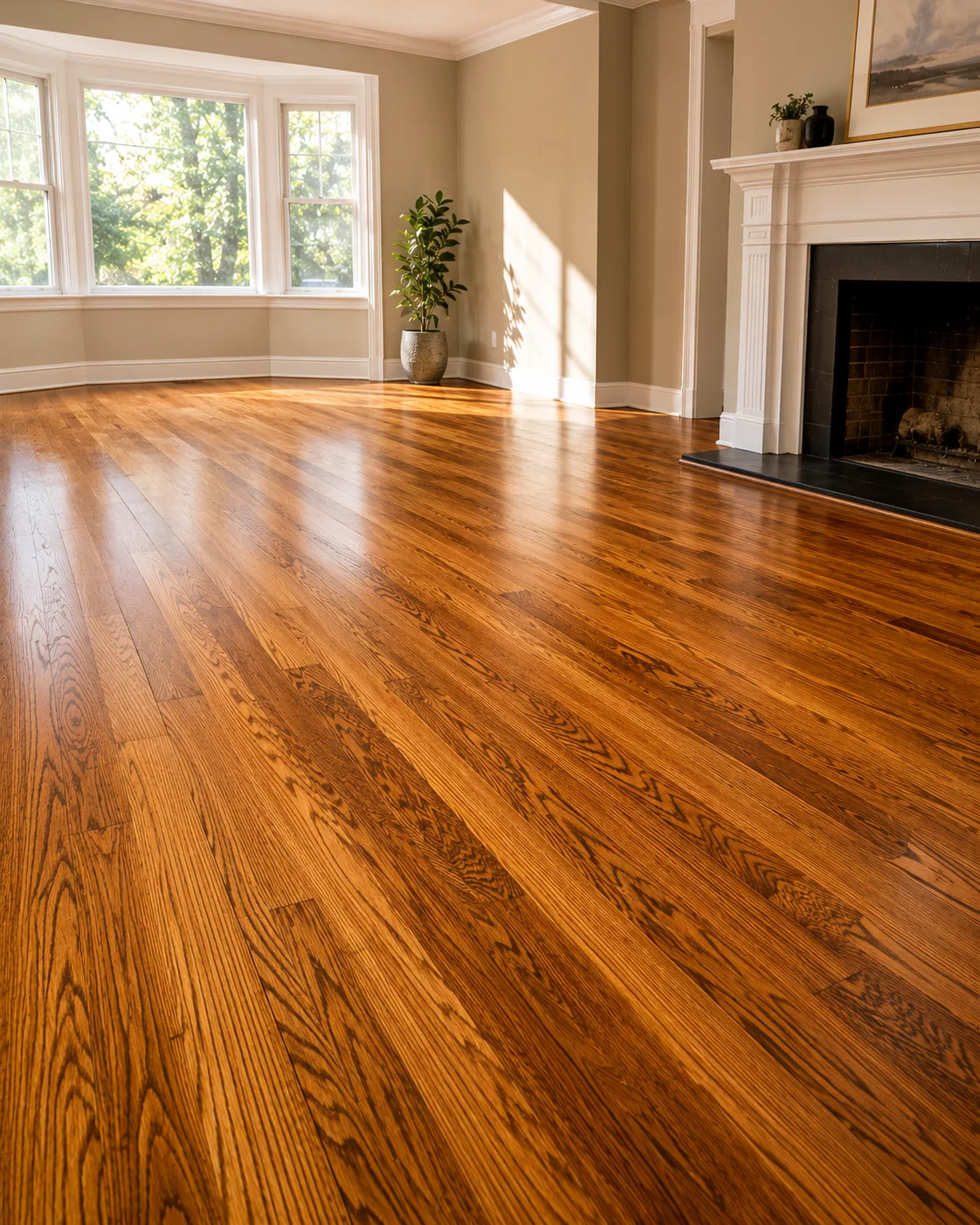
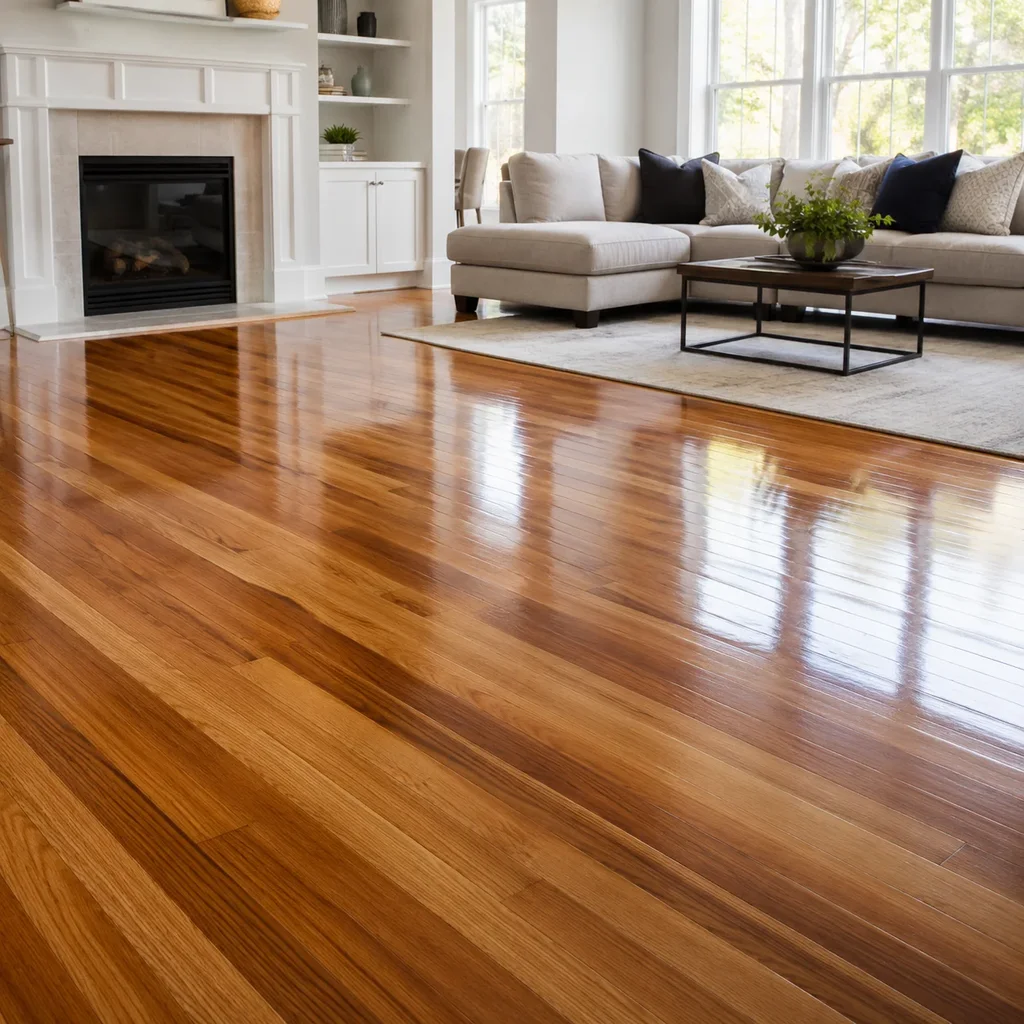
Stain is where a floor gets its color, and it is the step most worth slowing down for. Floor stain behaves nothing like paint: the same can looks different on red oak, white oak and maple, and different again on a board that was sanded a grit finer. So we never pick a color from a chip or a photo. After the final sanding we put down several samples on your own boards, in the room where they will live, and you choose in daylight and lamplight before a drop goes on the rest of the floor.
A natural floor skips stain and goes straight to sealer and finish, which keeps the wood's own color and costs less. A stained floor adds a finer final sanding, the stain coat and its dry time — usually an extra day. Professional floor stains dry in hours, not minutes: Bona's DriFast Stain data sheet lists 2 hours for wood tones, at least 6 hours for white, and 12 to 18 hours for its darkest colors such as Ebony, with finish to follow within 48 hours. For deep, even dark colors on oak we can water-pop the floor first, which raises the grain so it takes more stain. Maple and pine absorb stain unevenly, so on those species we test harder and steer toward lighter or natural looks.
Matching is the other half of staining. When a refinished room meets an untouched hallway, or new boards are woven into an old floor, we mix and test until the stain blends. The finish over the stain matters too: oil-based polyurethane adds an amber tone that warms the color, and most waterborne finishes stay clear, so we sample stain and finish together. Our refinishing cost guide covers what staining adds to the price.
- Samples on Your Own Boards
- Natural (Unstained) Floors
- Light, Gray & Whitewashed Tones
- Mid Browns & Classic Walnut
- Dark Stains, Ebony & Jacobean
- Water-Popping for Dark Colors
- Matching Adjoining Rooms
- Blending New Boards Into Old
How We Sand, Stain and Refinish a Hardwood Floor
The same five stages on a single bedroom and a whole first floor. A natural floor skips the stain coat; a recoat skips the sanding.
Inspect & Test
We check what finish is on the floor, test for wax, look at the wear and any water or pet damage, and tell you whether it needs a recoat or a full sanding.
Protect & Contain
Rooms are emptied, doorways sealed with plastic, vents covered, and the sanders connected to dust extraction that pulls dust off at the source.
Sand to Bare Wood
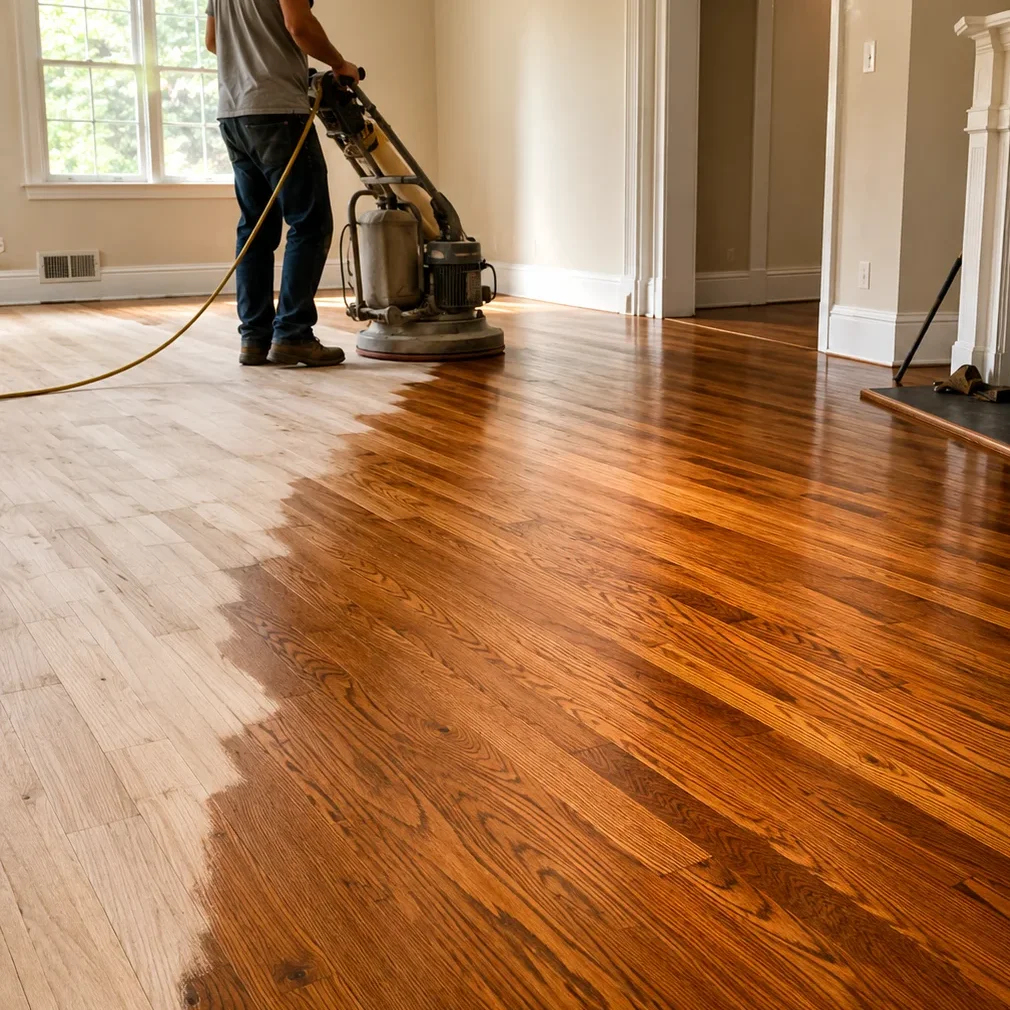
Coarse to fine passes with the big machine and the edger, then hand work in corners and along the walls where a drum sander cannot reach.
Stain or Natural
Stain samples go down on your boards and you pick the color. We apply the stain and let it dry fully, or seal the wood natural.
Finish & Cure
Three coats of finish with an abrasion between coats, then a written schedule for socks, furniture and rugs.
Choosing a Hardwood Floor Finish
The finish is the part of the floor you live with. It sets the color over the stain, how long you wait to move back in, and how the floor wears.
Water-Based Polyurethane
Dries clear, recoats in hours and has a low odor. The usual choice for white oak, maple, and light, gray or whitewashed stains that should not turn yellow.
Oil-Based Polyurethane
Adds a warm amber tone that deepens red oak and traditional browns. Slower to dry between coats and stronger smelling while it cures.
Two-Component Waterborne
A waterborne finish with a hardener mixed in on site. The professional high-durability option for kitchens, hallways and busy family floors.
Hardwax & Penetrating Oils
Soak into the wood instead of building a film on top, for a low-sheen, natural matte look that shows the grain rather than a coating.
New Hardwood Floor Installation
New hardwood is a different job from refinishing, and most of it happens before the first board goes down. We check the subfloor for soft spots, squeaks and loose sheathing and put it right, because a floor nailed over a bad subfloor carries the problem with it. New boards are brought into the house to acclimate to its humidity before installation, so they move with the rest of the home rather than against it.
We install new hardwood floors from scratch, extend existing flooring into rooms that were carpeted, and weave new boards into old ones where a wall came out or boards were damaged. When new meets old, the whole area is sanded and finished together so the floor reads as one. Unfinished hardwood installed on site is then sanded, stained or left natural, and finished like any refinishing job. Current installed prices are on the cost guide.
- New Hardwood Installation
- Extending Existing Floors
- Board Repair & Weave-Ins
- Subfloor Prep & Squeak Repair
- All Wood Species
- Stairs, Treads & Landings
The NJ Painting Co. Difference
Every flooring project we take on is backed by the same commitment to craftsmanship, transparency, and customer satisfaction that has defined our company since 2004.
Expert Hardwood Installation
Whether you are installing new hardwood floors from scratch or extending existing flooring, our team delivers flawless results. We work with all wood species and handle subfloor prep to ensure a perfect, lasting installation.
Professional Sanding & Refinishing
Dull, scratched, or worn hardwood floors can look brand new again. Our refinishing process involves professional drum sanding, edge work, and multiple coats of a premium finish for a result that rivals a full replacement.
Dust-Minimized Process
We sand with dust-containment equipment that captures sanding dust at the source. Your home stays cleaner throughout the project, and cleanup after we leave is minimal.
Stain Color Matching
From natural blondes to rich espressos, we offer a full range of stain colors and can precisely match existing flooring in adjacent rooms. Our team provides samples on your actual wood before committing to a color.
Flooring Transformations in New Jersey
Drag across the image to reveal the before & after — this is the difference proper prep and premium materials make. Pick any project type below to see more of our results.
 After
 Before
Living Room transformation
Illustrative example
Wondering what flooring costs?
See real price ranges and what drives the cost — free, no phone call required.
Floor Refinishing & Staining Questions
Here are answers to the questions we hear most often from homeowners considering hardwood floor refinishing, staining or installation.
A standard hardwood floor refinishing project for an average-sized room takes 2 to 4 days from sanding to final coat. Larger areas or projects requiring multiple coats may take a day or two longer. We will give you a precise timeline during your free estimate.
Light foot traffic is generally safe 24 hours after the final coat. We recommend waiting 48 to 72 hours before placing furniture back, and avoiding area rugs for at least 2 weeks to allow the finish to fully cure.
Yes. Floor staining is part of most refinishing jobs we do, and we also stain newly installed unfinished hardwood. After the final sanding we put several stain samples down on your own boards so you can see the real color on your wood, in your light, before we stain the floor. We can also match a stain to an adjoining room or blend new boards into an existing floor.
Natural keeps the wood's own color, costs less and saves a day, and it suits white oak and maple well. Stain lets you change the color entirely, hide some of the variation between boards, or match other rooms. Stain takes some care on maple and pine, which absorb it unevenly, so on those species we test samples first and often recommend lighter tones or a natural finish.
It depends on the product and the color. Bona's technical data sheet for its DriFast floor stain lists 2 hours for wood tones, at least 6 hours for white, and 12 to 18 hours for its darkest colors such as Ebony, under ideal temperature and humidity. That is why a stained floor usually adds a day to the schedule. Finish goes on only after the stain has dried thoroughly.
Darker, almost always: a full sanding takes the floor back to bare wood, and stain can then go as dark as you like, with water-popping on oak for deep, even dark colors. Lighter is limited by the wood itself. Sanding removes the old stain, but the natural color of the species is the lightest you can go with stain alone, and red oak will still read warmer than white oak under a gray or whitewash tone.
Both are durable when applied correctly. Oil-based polyurethane adds an amber tone that warms red oak and brown stains. Water-based finishes generally dry clear, recoat faster and have less odor, so they suit white oak, maple and light or gray stains. Two-component waterborne finishes are the high-durability professional option, and hardwax oils give a low-sheen natural look. We sample the stain and finish together so you see the final color.
Most solid hardwood floors can be refinished multiple times depending on the thickness of the wood above the tongue and groove. Engineered hardwood can sometimes be refinished as well, depending on the wear layer. We assess your specific floors during the estimate to let you know what is possible.
Our dust-minimized sanding system greatly reduces airborne particles, but we do recommend keeping family members and pets out of the work area during active sanding and coating. Many clients stay in other parts of the home without issue. We will advise based on the scope of your project.
Yes. We install new hardwood floors, extend existing flooring into rooms that were carpeted, and weave new boards into old floors where walls came out or boards were damaged. Subfloor prep comes first, and new wood is left in the house to acclimate before it goes down. Where new meets old, the whole area is sanded and finished together so it reads as one floor.
Yes, and it is worth doing in the right order. As a painting company that also refinishes floors, we schedule the walls, ceilings and trim before the floors are finished, so ladders and drips never touch the new finish. One crew, one schedule and one point of contact covers both.
Yes. Treads, risers, nosings and landings are sanded largely by hand and stained to match the floor they meet. Stairs are priced per step rather than per square foot because of the hand work involved.
Still have questions?
Can't find the answer you're looking for? Give us a call or send a message.